

Published October 27, 2026 03:00PM
Ryan Dudgeon emerged from waist-deep quicksand, her raspberry-pink drysuit caked in desert mud. The Farmington, New Mexico, whitewater paddler towed a 14-foot inflatable raft through flooded streets with a team of fellow guides on October 23. The group was searching for pets left behind after historic flooding devastated the Four Corners region the night before, destroying homes and displacing thousands.
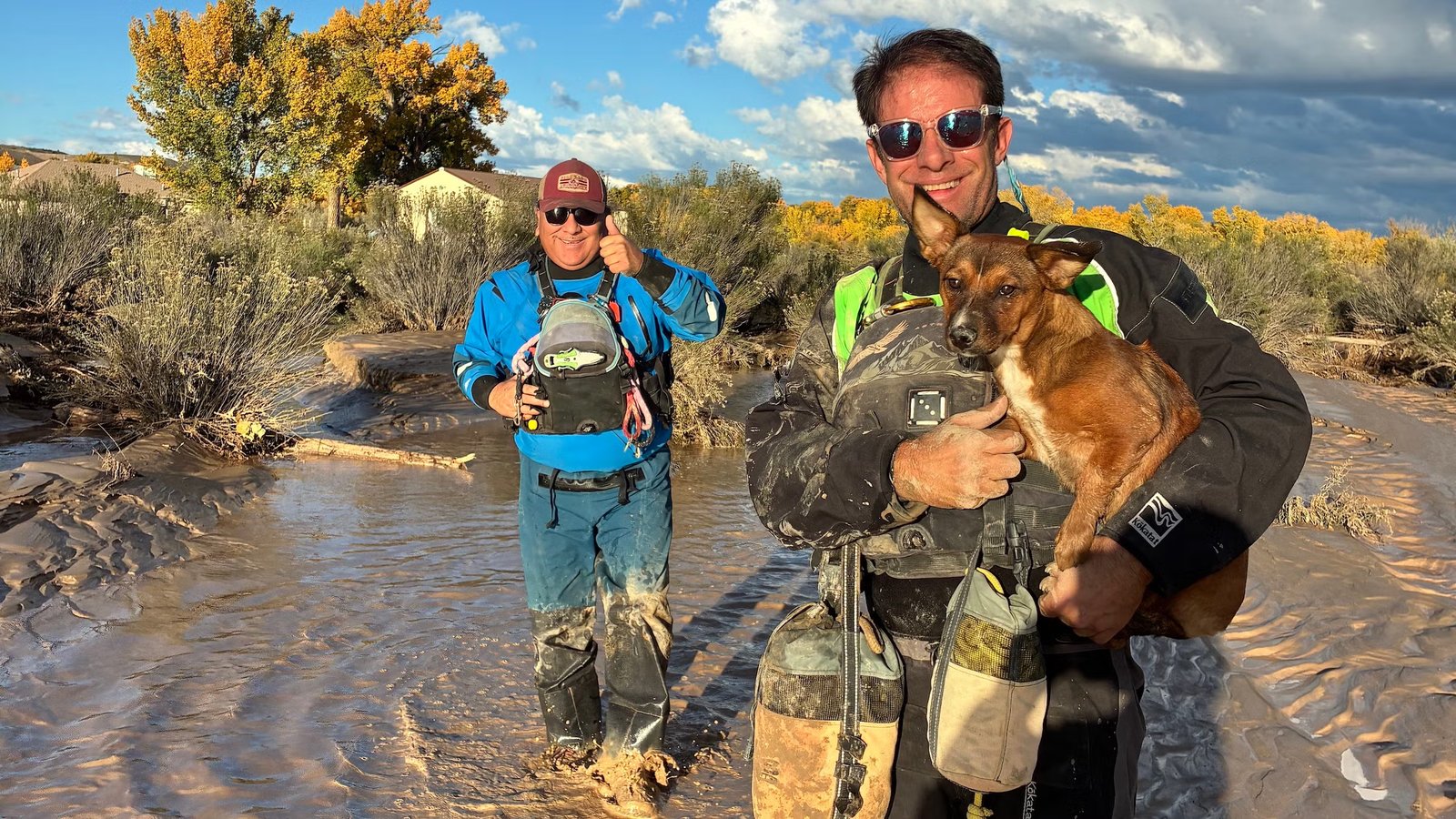
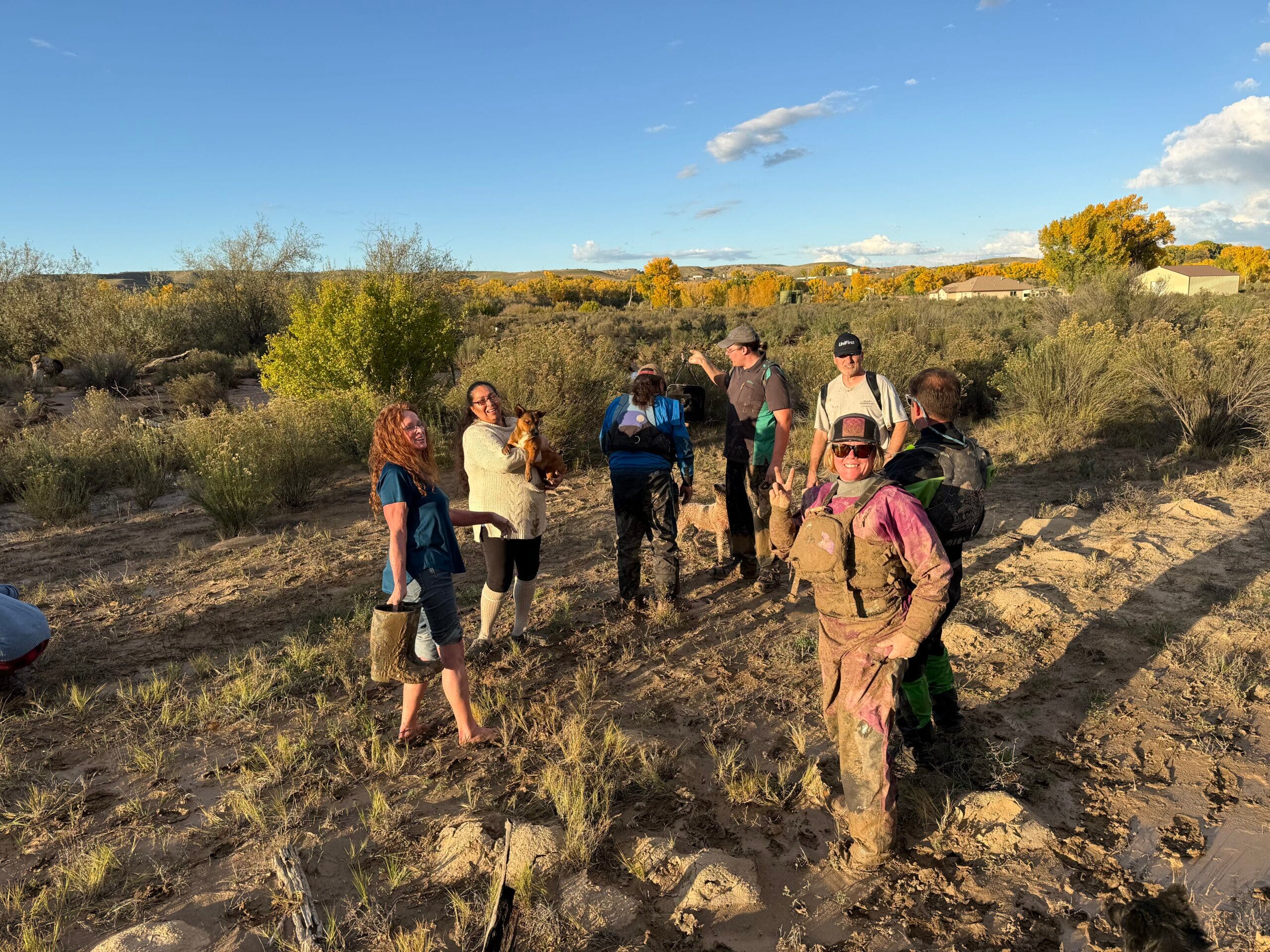
Using their swiftwater rescue skills and drysuits, Ryan and her volunteer team spent several days rescuing animals stranded in flooded homes, locked in corrals, or trapped in submerged kennels and cages.
“We are the only ones in the county qualified to do anything like this, aside from Search and Rescue,” Ryan, 41, told Outside over the phone. Ryan and her husband Cody, 46, own Desert River Guides, a rafting company that leads trips down the Animas and San Juan Rivers. The couple has lived in Farmington their entire lives and said they have never experienced flooding like this.
“We aren’t used to natural disasters here,” Ryan said. “None of us know what to do because we’ve never dealt with something like this.”
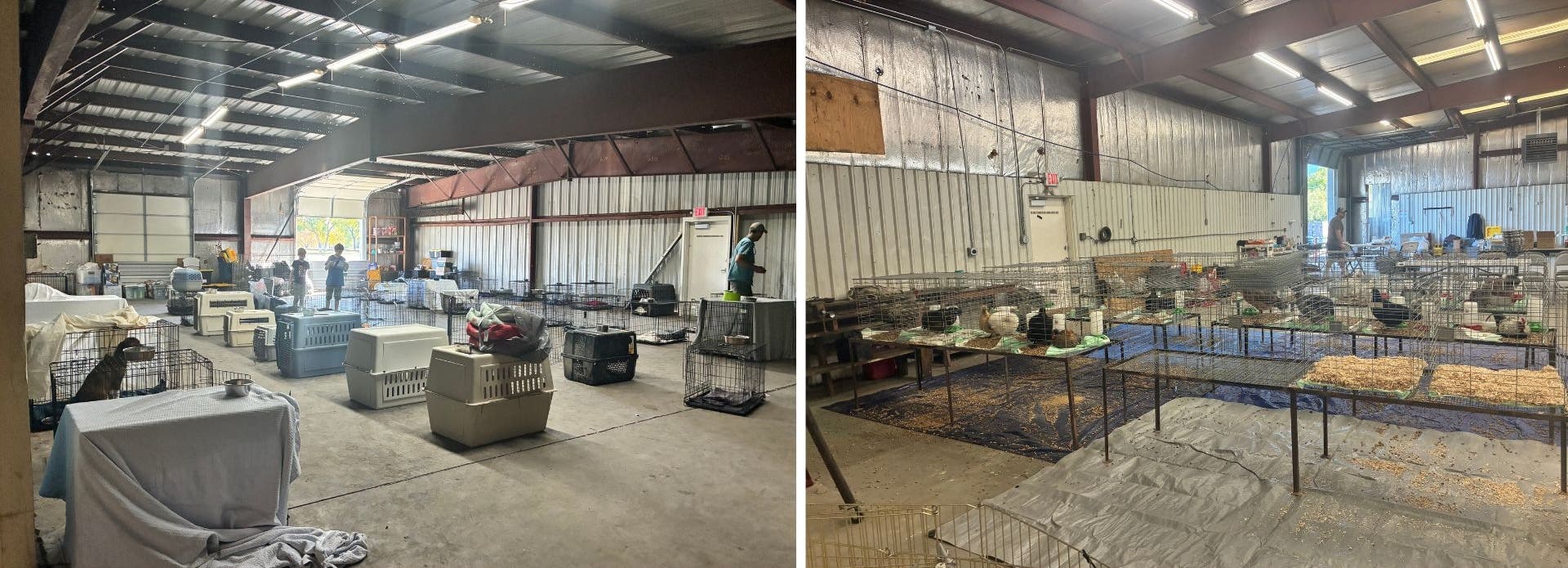
With guidance from the Farmington Regional Animal Shelter and the City of Farmington, the Dudgeons turned their commercial rafting warehouse and equipment into a temporary emergency animal shelter and holding area for lost pets after the floods.
“We have kittens and puppies all over the place,” Ryan said. “More and more are showing up now that the waters have receded and other people are finding lost animals.”
Across the Four Corners region, community members have been displaced and their homes decimated; rockslides have closed trails like Bridal Veil Falls in Utah, and Lake Powell has risen at least ten feet since the flooding began.
Ryan believes their guide shop will store animals—chickens, cats, dogs, rabbits, and more—for weeks to come.
Paddling in Where Others Couldn’t Go
Over the phone, Ryan described the heartbreak of watching floodwaters swallow her home on October 23. She knew she had to do something to help her community.
“We got in our dry suits, loaded up the van with the boat, and we went out there,” Ryan said.
The group paddled their raft through inundated neighborhoods and, where possible, walked the streets while towing it.
“People needed help,” she said. “People were scared. They left their homes, but they also left their pets locked inside their houses, which is why we went out.”
The Dudgeons rescued dozens of animals, pets, and livestock that were left behind. Farmington is an agricultural community with thousands of ranches and farms in the surrounding San Juan County. Ryan recalled trying to reach a goat farm and hearing the animals bleating in the distance. The team of paddlers was unable to reach the goats and, like many other livestock, the herd drowned.
“There were dead animals everywhere,” Ryan said. “People were calling us, and we went out with our boats and gear, and we spent two days trying to rescue animals in rafts and float people out. Just as much as we could help, just as much as we were allowed to do.”
Deceased pigs, horses and goats floated through the streets alongside housing debris and logjams.
“I heard them drowning,” Ryan said.
Historic Destruction Across the Four Corners
Longtime residents like the Dudgeons compared the event to the historic 100-year floods of October 1911, when historic rains tore through the Four Corners region. The 2026 floods have been so bad that, Ryan said, rumors circulated through town that a nearby dam had broken. In reality, it was just flooding from swollen rivers.
Rivers are measured in cubic feet per second (CFS). One cubic foot is roughly the size of a basketball. The Animas River, for example, usually runs between 1,000 and 4,000 CFS, but on October 26 it was pushing 12,000 CFS—roughly that many basketballs pummeling through one point every second. The Dudgeons usually raft the nearby San Juan River at around 500 CFS. During peak floods, it surged to 33,500 CFS in Farmington.
Many residents have lost everything. A friend is staying with her now after the floodwaters inundated his house, she said. Now it’s filled with nearly one foot of mud.
“He can’t go home, and he doesn’t know what to do,” Ryan said. “He has nowhere else to go.”
Upstream, mobile home parks in Bloomfield and areas downriver through Shiprock and the Navajo Nation suffered severe inundation, with homes washed off foundations and submerged to the rooflines.
“Trailers were moved off the foundations and houses were taken downstream—they’re stuck on bridges or on the side of the river,” Ryan said. “They’ve lost everything. I can’t imagine how long this recon will take. It’s literally unbelievable.”
Floodwaters also left behind thick layers of contaminated river mud that make re-entering inundated homes nearly impossible, Ryan said. Sewage treatment plants have been flooded, further contaminating waterways in the area.
“None of us know what to do because we’ve never dealt with something like this,” Ryan said.
A Whitewater Warehouse Turned Into an Ark
Shortly after the Dudgeons opened their warehouse to the animals, officials placed the shop under an immediate flood watch around 10 P.M. on October 23.
“We moved out all of our rafts onto the bus, and started moving animal crates in,” Ryan said. “And then all of a sudden, after we got everything perfectly set up, officials called us around 10 P.M. on a Friday night.”
Her friends and colleagues called and showed up to help move the animals and their things out of the building to another on higher ground.
“It was just the most incredible community involvement, and I will never be able to thank these people enough,” Ryan said. “It was just the most incredible community involvement, and I will never be able to thank these people enough.”
The following morning, she said up to four inches of rain fell within ten minutes, flooding the town.
“I have my whole life in that building,” Ryan said. “Rain was just pouring down the hills, all toward our shop and river. The river was breaching its banks.”
A Community Banding Together
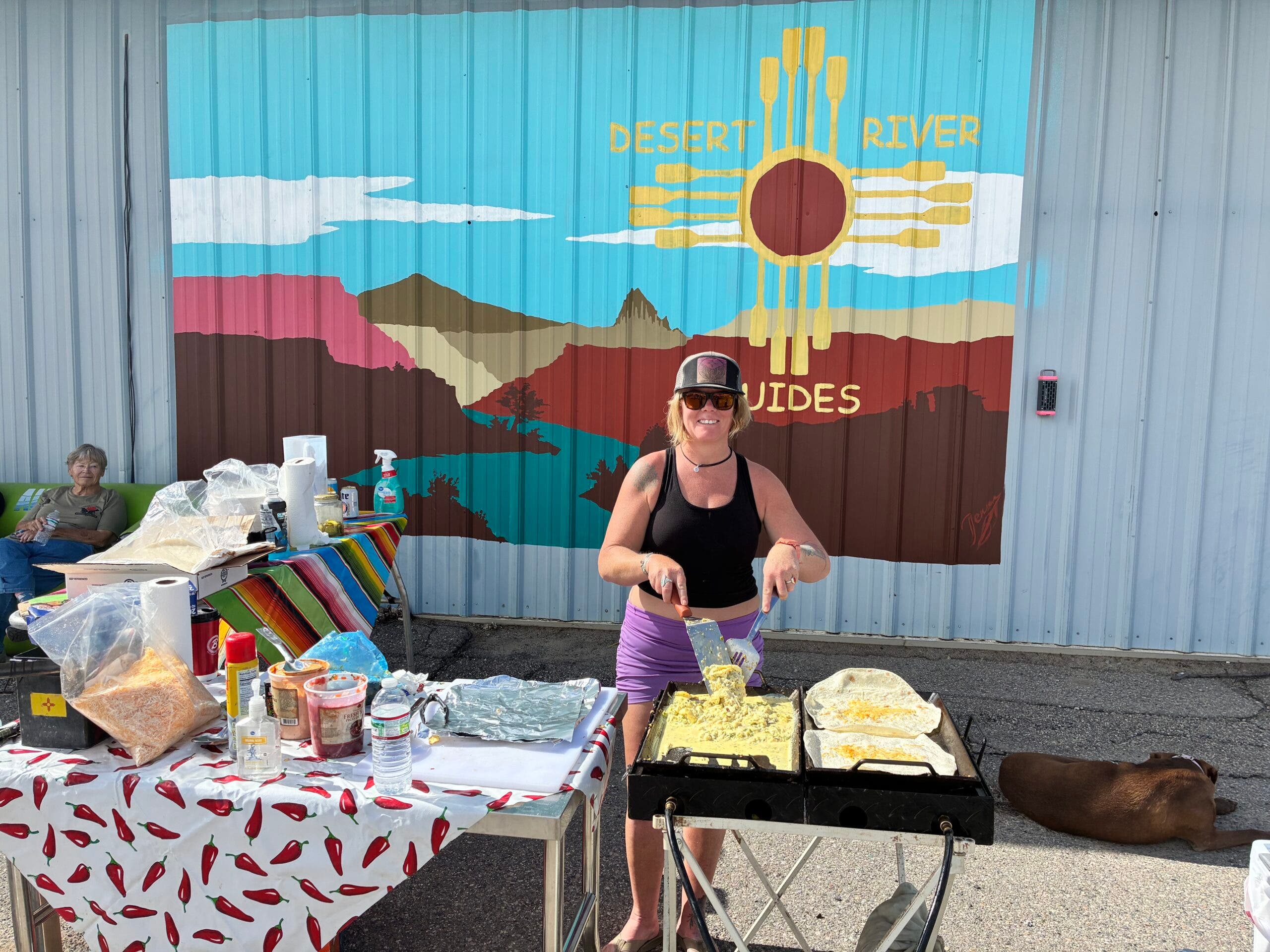
For now, the warehouse houses not only rescued animals but also those keeping them safe. People stay at the warehouse, sleeping on the guide company’s camping gear, using the pool table and grill, and cooking breakfast on the camp stoves.
“It’s a rafting company, and now it’s a rafting company turned into an animal shelter,” Ryan said.
Ryan, an elementary teacher and parent of two, said her next job is to be a face of hope for her classroom and the two children she and her husband share.
“Everybody in the community has come together. I’ve never seen anything like this or experienced anything like this,” Ryan said. “Tomorrow, everybody’s going back to school, and as a fourth-grade teacher, I’m just going to try to make my kids’ lives feel as normal as possible.”
Though she hasn’t convinced Cody to adopt any of the displaced animals, she said the couple did get a chance to paddle the Animas River at its record-breaking flow, just for fun.
“I will tell you, best float of my life,” Ryan said.
