

Discoveries of 1950s dam-blasting cord in Arizona and Civil War artillery in Maryland forced closures across two National Park Service locations, highlighting the unexpected hazards left behind in historic landscapes.
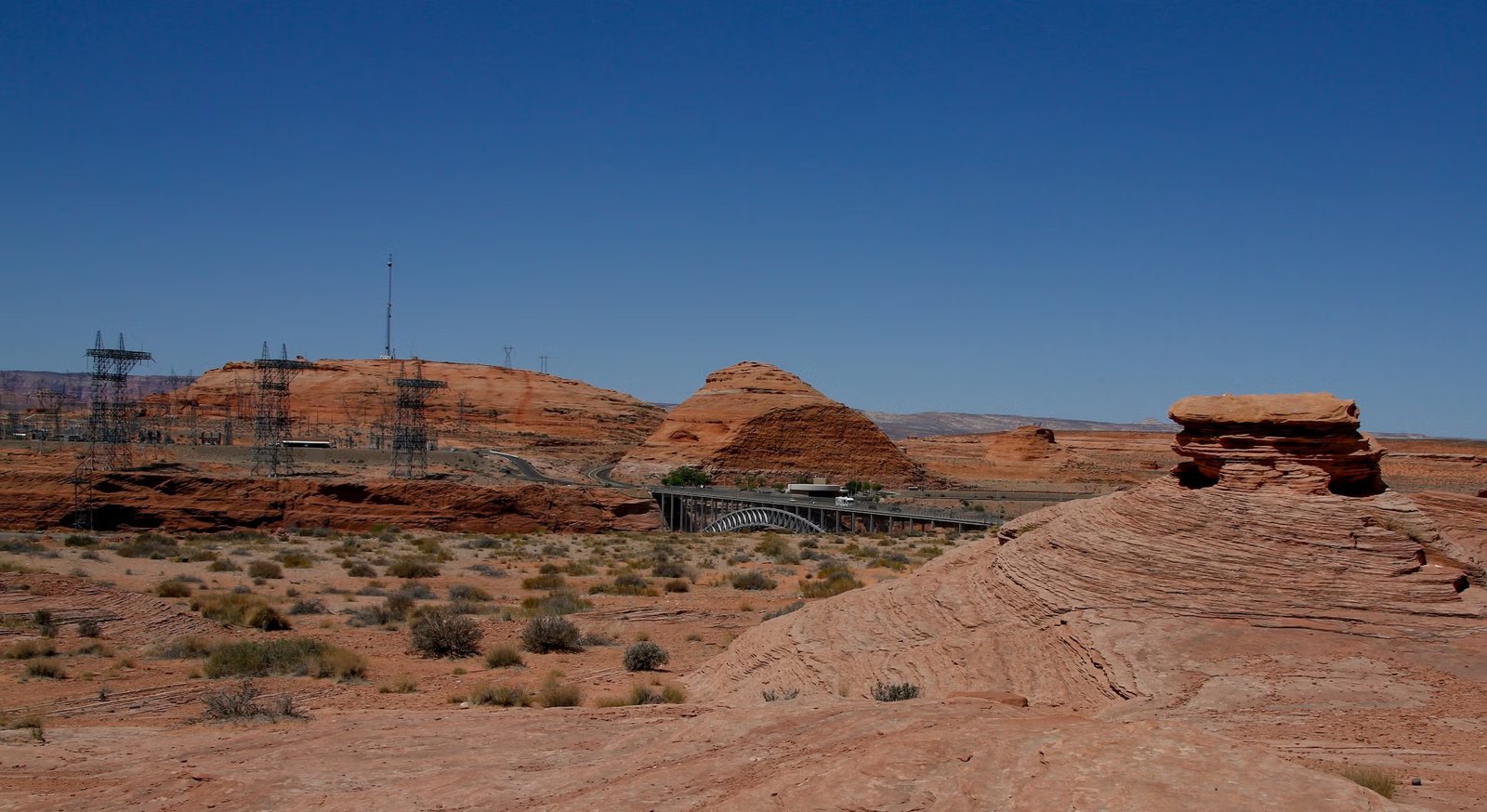
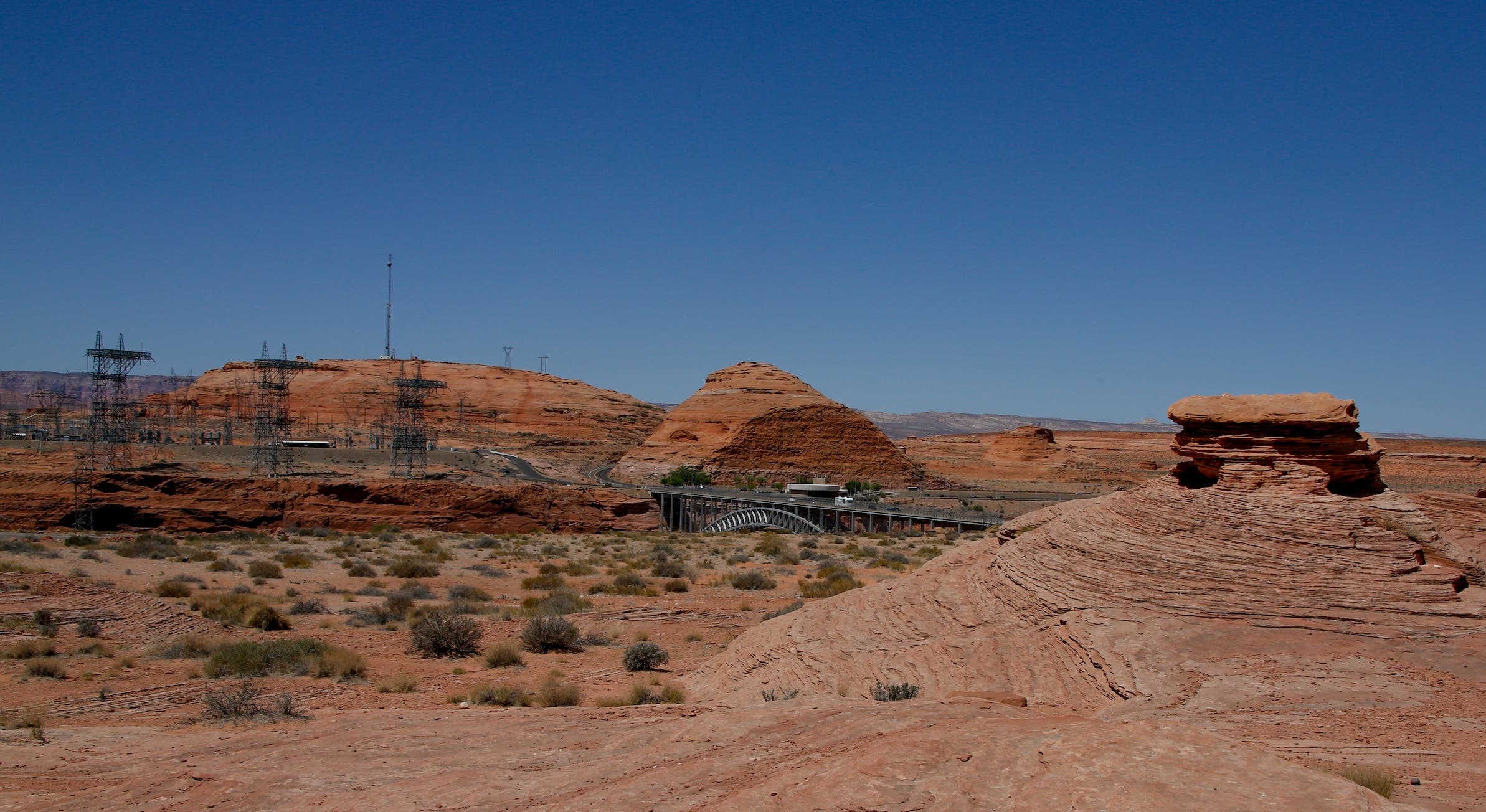
Glen Canyon Dam rises above the Colorado River near Page, Arizona. The National Park Service temporarily closed nearby Chains Road and The Chains day-use area after workers discovered detonation cord dating to the dam’s original construction in the 1950s and 1960s. (Photo: Gabe Ginsberg/Getty)
Published November 3, 2026 05:32PM
In a span of days, federal officials had to deal with explosives that were found at National Park Service sites on opposite sides of the country.
On Oct. 30, the National Park Service announced in a public alert that workers had discovered detonation cord near Glen Canyon Dam in Arizona, temporarily closing a recreation area at Lake Powell. The release said the cord was likely left over from the dam’s construction in the fifties or sixties.
That closure came shortly after an Oct. 21 announcement from officials at Maryland’s Antietam National Battlefield, where Marine Corps technicians removed unexploded Civil War-era cannonballs that were embedded in the monument’s concrete base.
While incidents like these are rare, the Park Service has developed procedures for dealing with the discoveries of unexploded munitions or construction explosives. In 2022, the agency began reviewing museum collections for potentially explosive ammunition, according to information officials provided to The Herald-Mail. That same year, NPS published guidance for handling historic munitions, followed by additional safety procedures in 2023 after an investigation involving the transportation of a live 19th-century cannonball from Fort Larned.
Forgotten in the Boreholes
Workers found several boreholes containing detonation cord along a restricted service road near Glen Canyon Dam, outside Page, Arizona. The cord is a flexible line filled with high explosives used to initiate blasting charges, according to the National Institute of Standards and Technology.
An explosive ordnance disposal team traced the material to the dam’s original construction in the 1950s and 1960s. Officials said there was no threat to public safety and the dam faced low risk, but closed Chains Road and The Chains day-use area while evaluating mitigation options.
The closure restricts access to a popular shoreline spot for swimming, fishing and picnicking, though the wider national recreation area remains open.
A Blast From the Past
The discovery points back to one of the most ambitious engineering projects in the American West. Construction on the 710-foot-tall Glen Canyon Dam began in 1956, requiring crews to blast diversion tunnels through sandstone canyon walls and excavate foundations down to bedrock.
The project began with a dramatic display of patriotic pyrotechnics on Oct. 15, 1956, when President Dwight D. Eisenhower pressed a telegraph key in Washington, D.C., remotely triggering the first dynamite blast at the site, according to the Bureau of Reclamation.
Nearly 70 years later, the newly discovered detonation cord has brought explosives specialists back to the area, although officials have not linked it to Eisenhower’s ceremonial blast.
Another Park, Another Set of Explosives
Roughly 2,000 miles east, at Antietam National Battlefield in Sharpsburg, Maryland, the Park Service faced historic ammunition of a different sort. On Oct. 21, park officials issued a press release detailing plans to remove ten pieces of cannon ammunition set into the concrete base of the battlefield’s O.T. Reilly Monument. Fought on September 17, 1862, the Battle of Antietam was the bloodiest single-day battle of the American Civil War.
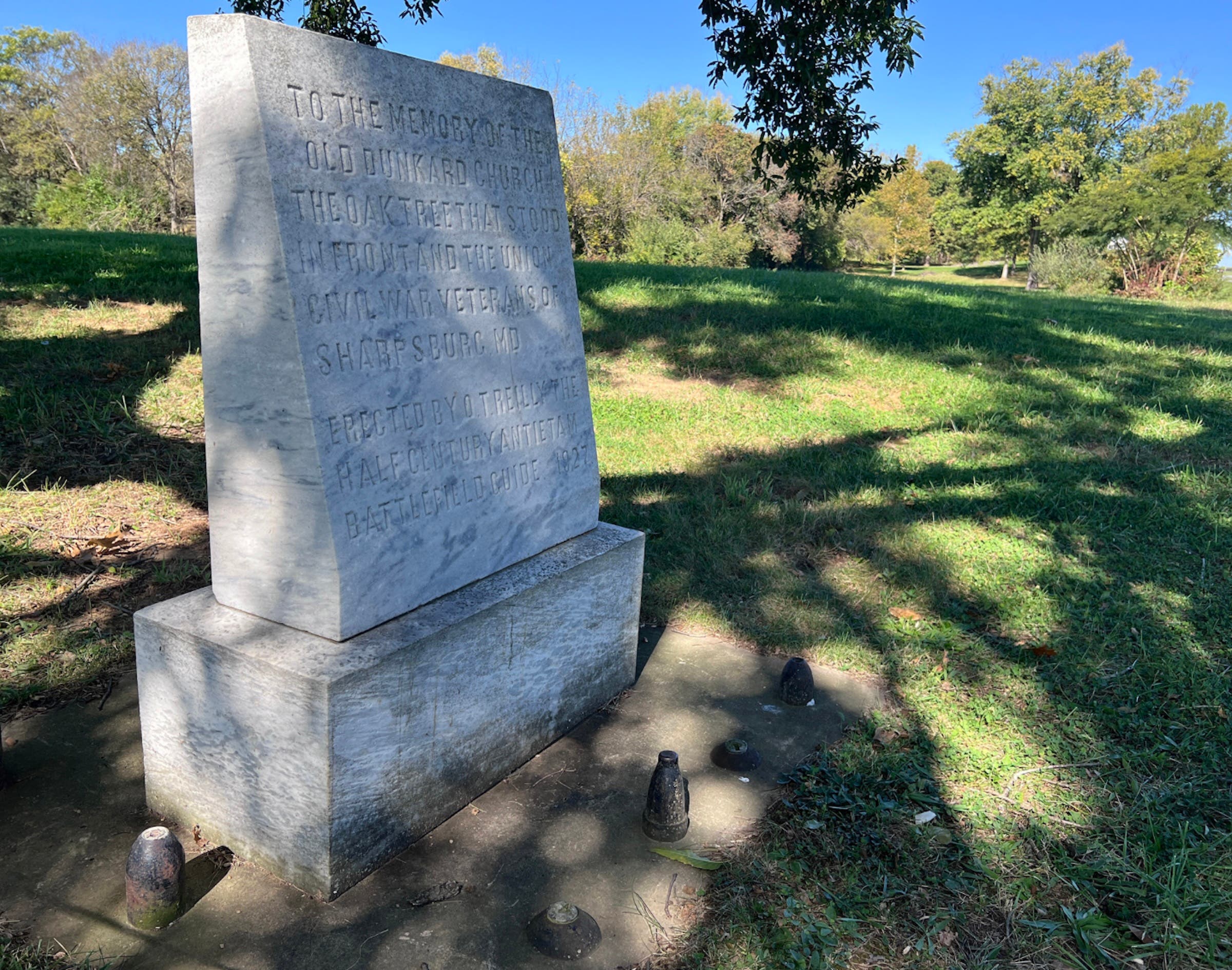
A team of Marine Corps explosive ordnance disposal specialists from Quantico, Virginia, was scheduled to handle the extraction on Oct. 27 and possibly Oct. 28. Because the ammunition might still contain explosives, officials planned to close the visitor center, historic Dunker Church, adjacent roads and two walking trails, keeping the operation closed to public viewing.
Monumentally Questionable Building Materials
The monument’s unusual masonry was the work of Oliver T. Reilly, a local figure who witnessed the Battle of Antietam as a boy in 1862. He spent his adulthood in Sharpsburg, Maryland, working as a battlefield guide, local historian, and collector, according to a historical profile from the National Park Service.
Reilly dedicated his monument in 1927, honoring the Dunker Church, a historic oak tree and local Union Army veterans, the profile said. He embedded 10 artillery projectiles from his private collection into the concrete base, giving a place of worship, an old tree and retired servicemen a rather unexpected amount of firepower.
Antietam isn’t the first park to contend with potentially explosive remnants of its military past. A Civil War-era cannonball interrupted tours at Fort Sumter in 2022, while another discovered at Fort McHenry in 2025 prompted an evacuation before technicians determined it was inert.
At Antietam, officials planned to transport the ammunition to Quantico and return Reilly’s monument to a rebuilt base. At Glen Canyon, no reopening date has been announced for The Chains, leaving a former construction staging ground closed to the people who now come there to swim.
