

Published November 9, 2026 06:00AM
Overview: The best ski boots for narrow feet are low-volume models with lasts of 97 to 98 mm. Our picks are the Lange Shadow LV, Lange Code 130 LV BOA, Salomon S/Pro Alpha C BOA, Nordica Promachine 3, Rossignol Hi-Speed Elite LV, and Tecnica Mach1 LV 130, with most priced between $550 and $950.
Skiers with narrow feet have a unique problem when it comes to shopping for ski boots. While bootfitters can easily grind, punch, and stretch shells and liners to better accommodate wide feet, it’s more difficult for them to fill up space in a boot to get a narrow foot and heel to stay put. That’s why getting the fit right off the wall matters even more for skiers with narrow feet.
If your feet, ankle, heel, and calf are slim—or your instep low—chances are you’re a candidate for a low-volume boot with a last of around 98 millimeters. It used to be that only a handful of brands made low-volume boots that weren’t the vice grips racers wear on the World Cup circuit. Fortunately, that’s changed. These days, skiers with narrow feet have an abundance of low-volume, narrow-lasted options across flex ranges. Here are the picks our boot testers recommend for 2027.
The Best Ski Boots for Narrow Feet: At a Glance
| Product | Last | Price Range | Flex Options |
| Lange Shadow LV | 97 mm | $700–$900 | 140, 130, 120, 110 (men’s); 115, 95 (women’s) |
| Salomon S/Pro Alpha C BOA | 98 mm | $550–$900 | 130, 110 (men’s); 115, 95, 85 (women’s) |
| Nordica Promachine 3 | 98 mm | $650–$900 | 130, 120 (men’s); 115, 95 (women’s) |
| Rossignol Hi-Speed Elite LV | 98 mm | $750–$850 | 140, 120 |
| Lange Code 130 LV BOA | 97 mm | $750–$950 | 140, 130, 120 (men’s); 115, 95 (women’s) |
| Tecnica Mach1 LV 130 | 98 mm | $700–$900 | 130, 120 (men’s); 115, 95 (women’s) |
Lange Shadow LV
Last: 97 mm
Flexes: 140, 130, 120, 110 (men’s); 115, 95 (women’s)
Sizes: 24.5–31.5
Pros and Cons
+ Extremely responsive flex
+ Snug heel pockets for high-performance fit
– Generic Velcro power strap may not be strong enough for expert skiers
The Shadow series replaced Lange’s long-running RX line, and the payoff for narrow feet is in the fit. If you felt the old RX heel was too wide and blocky, the Shadow LV’s snugged-up heel pocket will put a smile on your face. The forefoot is winnowed down, and the medial wall skips the RX’s familiar navicular and ankle-bone pressure. The instep stays generous, but the liner’s auxetic shaping and reduced material over the cuneiform bones kept us secure without feeling like we were swimming. On snow, the Suspension Blade (a boltless, overlapping spine) and the Dual Pivot send force through the sole to the tip of the ski. The flex curve is much steeper than the RX’s long, slow one: almost any pressure on the tongue drives the shovel, and a few of us found it almost twitchy on a 70-millimter-waisted cheater slalom ski. In longer turns it felt plush and powerful, with resounding feedback in deep powder. Our one gripe: a generic Velcro power strap on a boot this luxe.
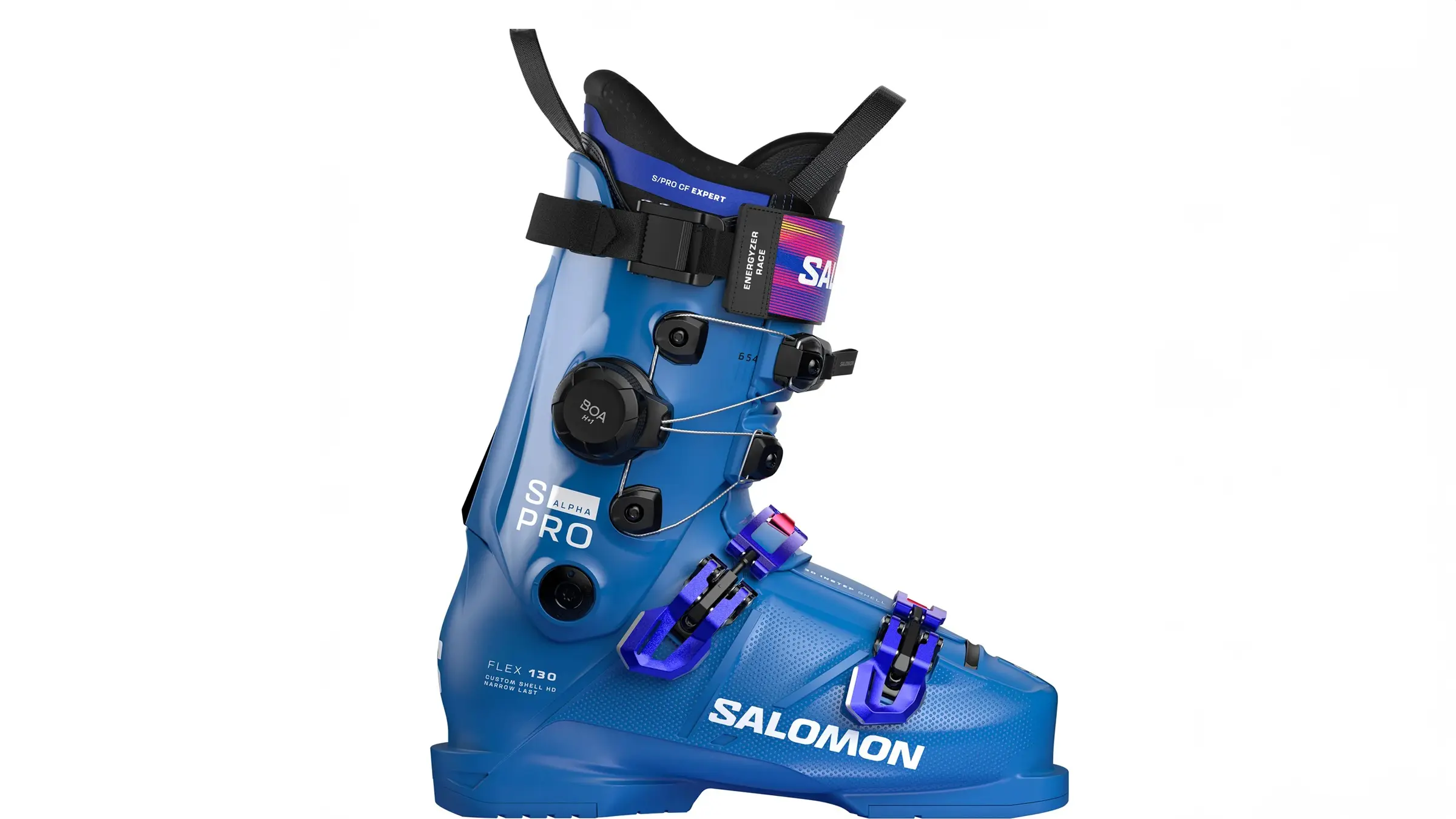
Salomon S/Pro Alpha C BOA
Last: 98 mm
Flexes: 130, 110 (men’s); 115, 95, 85 (women’s)
Sizes: 22–30.5
Pros and Cons
+ Much easier entry than previous narrow model
+ Very snug but well-contoured low-volume fit
+ Highly tactile edging feel and responsiveness
– Long-travel flex feel may take getting used to
The all-new Salomon S/Pro Alpha C BOA is a tight boot—old-school narrow—but shaped in a modern way that accounts for the foot’s natural curves and bony spots rather than fighting them. Testers were struck by how easily the foot slid into such a snug shell, unusually easy entry and exit for a narrow-fitting boot, and they loved the fit and feel of the cuff-only BOA closure. But the most notable feature of this boot is the new shell design: it lacks a traditional cuff attachment and pivot point on the inner ankle. The cuff curves smoothly around the ankle with no screws or rivets in sight and anchors low near the sole with two screws and a small metal plate called Powerlink. That low connection creates a direct line from leg to ski edge, with a longer flex feel that took some of us a bit to adjust to. Once we did, we were won over by the connection to the edge and the sensitivity underfoot at any speed.
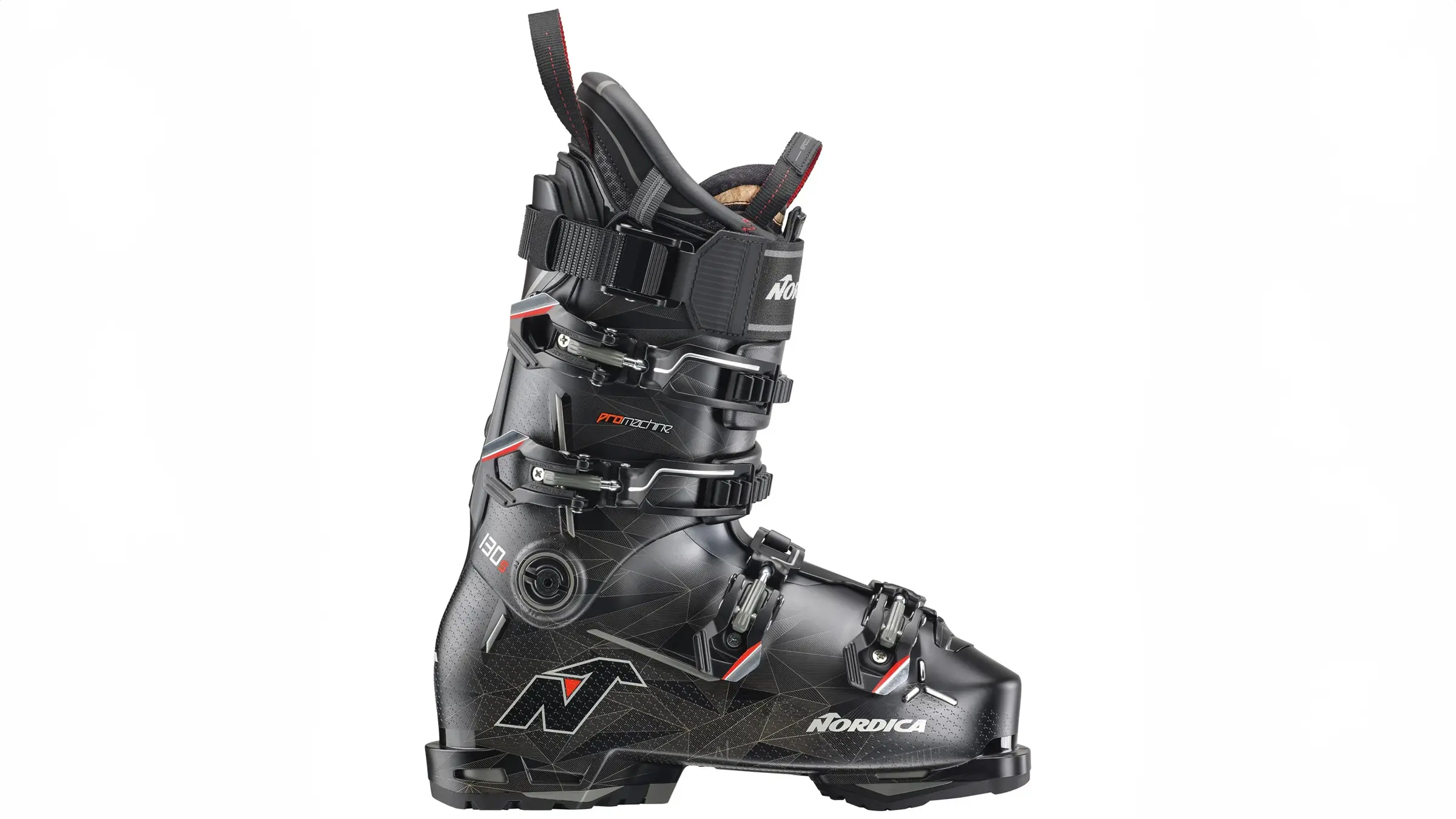
Nordica Promachine 3
Last: 98 mm
Flexes: 130, 120 (men’s); 115, 95 (women’s)
Sizes: 22.5–30.5
Pros and Cons
+ New 3Force shell is lighter and stiffer for better responsiveness
+ New lace-up liner improves fit for slender legs
+ Still one of the tightest fits but avoids hotspots
– Lace-up liner makes entry more difficult
The Promachine was the last of the Nordica Machine family to get a “3,” probably because the old boot didn’t need fixing. For low-volume skiers who want more performance, the wait paid off. The new 3Force Frame—a light, stiff skeleton co-molded into the softer polyurethane of the lower shell—sharpens energy transfer and cuts weight, while the shell shape barely changed. That’s good news if you have narrow feet: with its 98-millimeter last, this is still one of the snuggest all-mountain boots on the market, and we were impressed by how free of hotspots the fit stays. The 130-flex model also gets a lace-up version of the cork-lined liner that tightens the instep and lower leg. We loved the extra containment—less so the harder entry—but for slender-legged skiers chasing a gap-free fit, it’s worth the hassle.
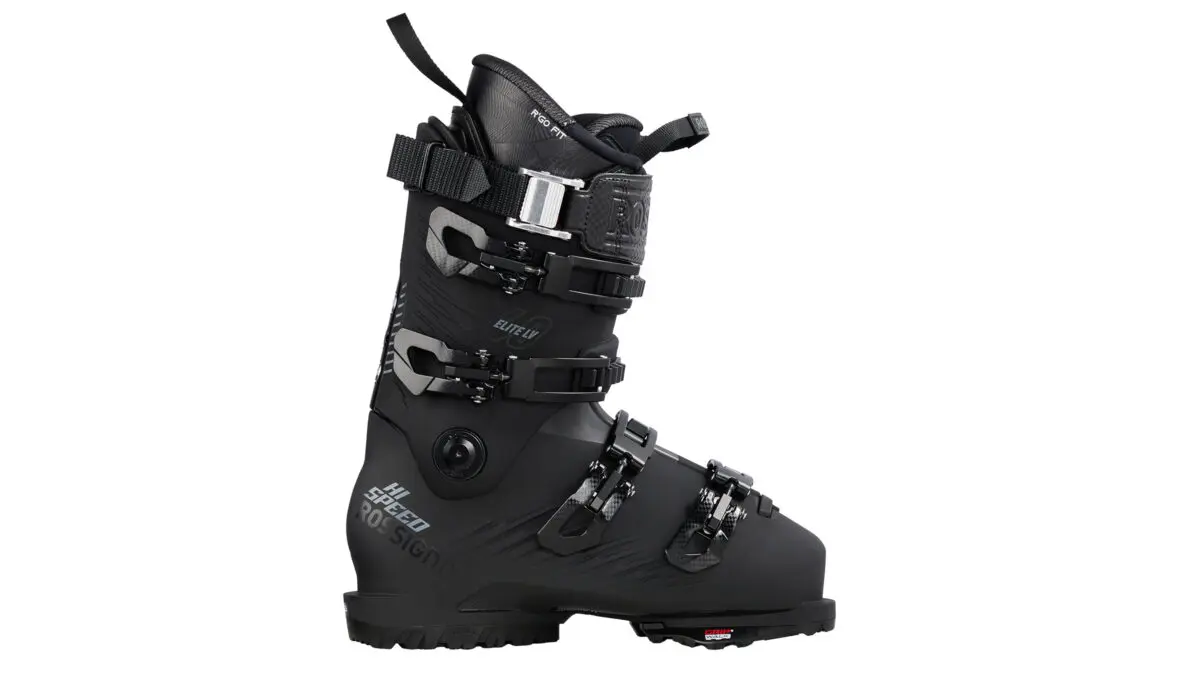
Rossignol Hi-Speed Elite LV
Last: 98 mm
Flexes: 140, 120
Sizes: 24.5–31.5
Pros and Cons
+ Precise fit and feel matches on-snow experience
+ More snug fit throughout than previous version
+ Updated liner offers less pack-out
– Only available in two flex models
The Rossignol Hi-Speed Elite LV isn’t an all-new boot, but a few key updates make it a better one—and a better fit for narrow feet. The 140 flex we tested (a 120 is also available) is stiffer than before, but the real gains come from the new R-Go Fit liner. Different foams around the heel and ankle give more sculpted grip and a 15 percent cut in pack-out where it matters most. A thicker, more textured sock-side material kept us firmly in place without the slippery feel of past versions. A thin, rubberized polyurethane film on the liner’s exterior also helps it mold tighter to the shell. It might sound like liner-ado about nothing, but several of us said it made a bigger difference than most full shell redesigns we test in a year. We called it the perfect narrow boot: firm, snug, and consistent in feel, flex, and power. What you feel at try-on matches what you get on snow, no molding session required.
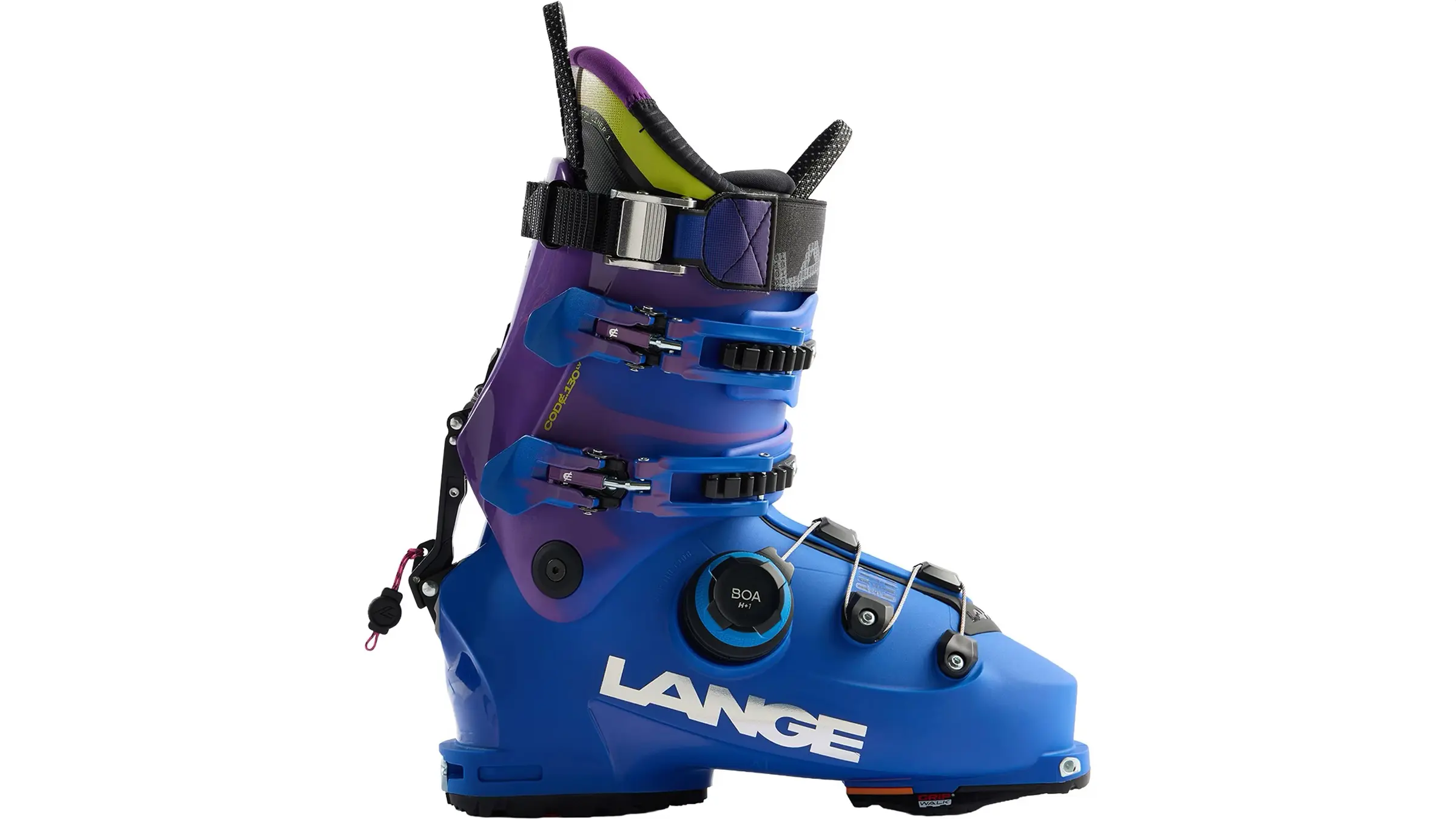
Lange Code LV BOA
Last: 97 mm (also 100 mm)
Flex: 140, 130, 120 (men’s); 115, 95 (women’s)
Sizes: 23.5-29.5
Pros and Cons
+ Excellent low-volume fit
+ Damp and powerful
+ Responsive flex shines in both the resort and the backcountry
– Heavy, with poor range of motion
The Lange Code 130 LV is a true low-volume boot in an 80/20 package: a boot worn inbounds most of the time that can sneak out a gate, skin back to the base area, or, frankly, be a little more comfortable on the dance floor. It replaces the much-loved XT3, and the narrow fit is the headline—the anatomical liner provided stellar heel hold and really locked our tester’s foot in. Don’t knock its skiing chops, though. He reported top-tier precision on piste, thanks (he thinks) to the Active Blade in the spine, which made the boot feel almost like it had a bolted spine rather than a walk-mode lever. Dual Core plastic delivered the classic Lange damping, especially on a walk outside Kirkwood where spring powder had set up sooner than he anticipated. The trade-off: a 1,910-gram boot with 54 degrees of range of motion isn’t the best bet for climbing 6,000 vertical feet or banging out lap after lap in a secret stash. But for skiers who want one narrow boot to ski a few laps out of bounds and hammer bumps or groomers all day, the Code is an excellent bet.

Tecnica Mach1 LV
Last: 98 mm
Flex: 130, 120 (men’s)’ 115, 95 (women’s)
Sizes: 22.5–30.5
Pros and Cons
+ More room in toebox
+ Snappy rebound
+ Improved frontside performance
– Not as damp as previous version
The previous Mach1 LV was the lowest-volume, 98mm-lasted boot on the market, a favorite of expert skiers with narrow feet who didn’t mind some time in the boot shop. The newest update still has a low-volume, 98-millimeter last, but it’s the most forgiving fit here. Our tester, who has logged well over 300 days in the old boot, says Tecnica raised the toebox ceiling—the old one left his big toe unable to move, even with the thinnest sock—and opened the heel pocket a fair bit wider below the Achilles. He felt no heel movement to speak of, and the stock liner is still one of the best on the market for fit and ease of customization. The new T-Drive and carbon-coinjected cuff give a snappier rebound from the bottom of the flex, and on his “janky kitchen scale,” the boot weighs almost 100 grams less than the previous model. The trade-off is damping: it’s palpably less damp off-piste than the old Mach1. He still calls it a best-in-class all-mountain boot, just one with a balance shifted toward the frontside.
Ski Boot Buying Guide for Narrow Feet
Fit makes or breaks a ski boot, and narrow feet make it harder to get right, because a boot that’s too roomy is tough to fix. Expert skiers vetted and tested every boot here, but the best one for you depends on your own feet. A professional bootfitter is still the fastest way to narrow the field. Until you get there, here’s what to know.
What counts as a narrow ski boot?
Boot width is listed as the last: the internal width at the forefoot, in millimeters, measured on a size 26/26.5 shell. The number also hints at overall volume—the height over your instep and the room around your lower leg in the cuff. Narrower boots generally have a lower instep and a snugger cuff, while wider boots have a higher instep and a roomier cuff. Boots sort into three groups:
- Low-volume (LV): 96–98 mm
- Medium-volume (MV): 99–101 mm
- High-volume (HV): 102 mm and up
Every boot in this guide is a low-volume model, with lasts of 97 to 98mm.
Do I need a low-volume boot?
Not always. Some skiers with narrower feet are comfortable in a medium-volume boot. A bootfitter can stretch a shell more easily than fill one, though, so a boot that’s too roomy is harder to fix than one that’s too snug. Everyone’s tolerance for a snug fit differs, so try several widths at a ski shop and go with what your feet tell you.
How We Test Ski Boots
Feet and legs come in too many shapes for one tester to speak for everyone. A boot that feels custom-made on one skier can feel punishing on another. That’s why we partner with professional bootfitter Mark Elling, who leads the Masterfit/America’s Best Bootfitters annual ski boot test. Every brand, large or small, is invited to submit models. Over two weeks, 10 expert testers—evenly split between men and women—skied 50 boots, averaging three runs per boot across a range of conditions. For this guide, we pulled the low-volume boots with lasts under 100mm from SKI’s tests and reviews.
Meet the Ski Boot Expert
Mark Elling has worked full-time in the ski industry for more than 35 years as a writer, a level 3 PSIA-certified instructor, a snowcat skiing guide and a professional bootfitter. He runs a year-round specialty bootfitting lab in Bend, Oregon (BootRX.com), and is a former board-certified pedorthist. Elling coordinates Masterfit’s annual boot test, and he’s the author of The All-Mountain Skier: The Way to Expert Skiing.
