

Every entrepreneur knows what it means to chase something nobody else can see yet — there’s self-doubt, exhaustion, and long stretches where the only result you’re seeing is money going out the door. But still, you press on.
That pursuit is at the heart of Neptune’s Fortune: The Billion-Dollar Shipwreck and the Ghosts of the Spanish Empire, historian Julian Sancton’s account of one man’s relentless hunt for a legendary sunken Spanish galleon.
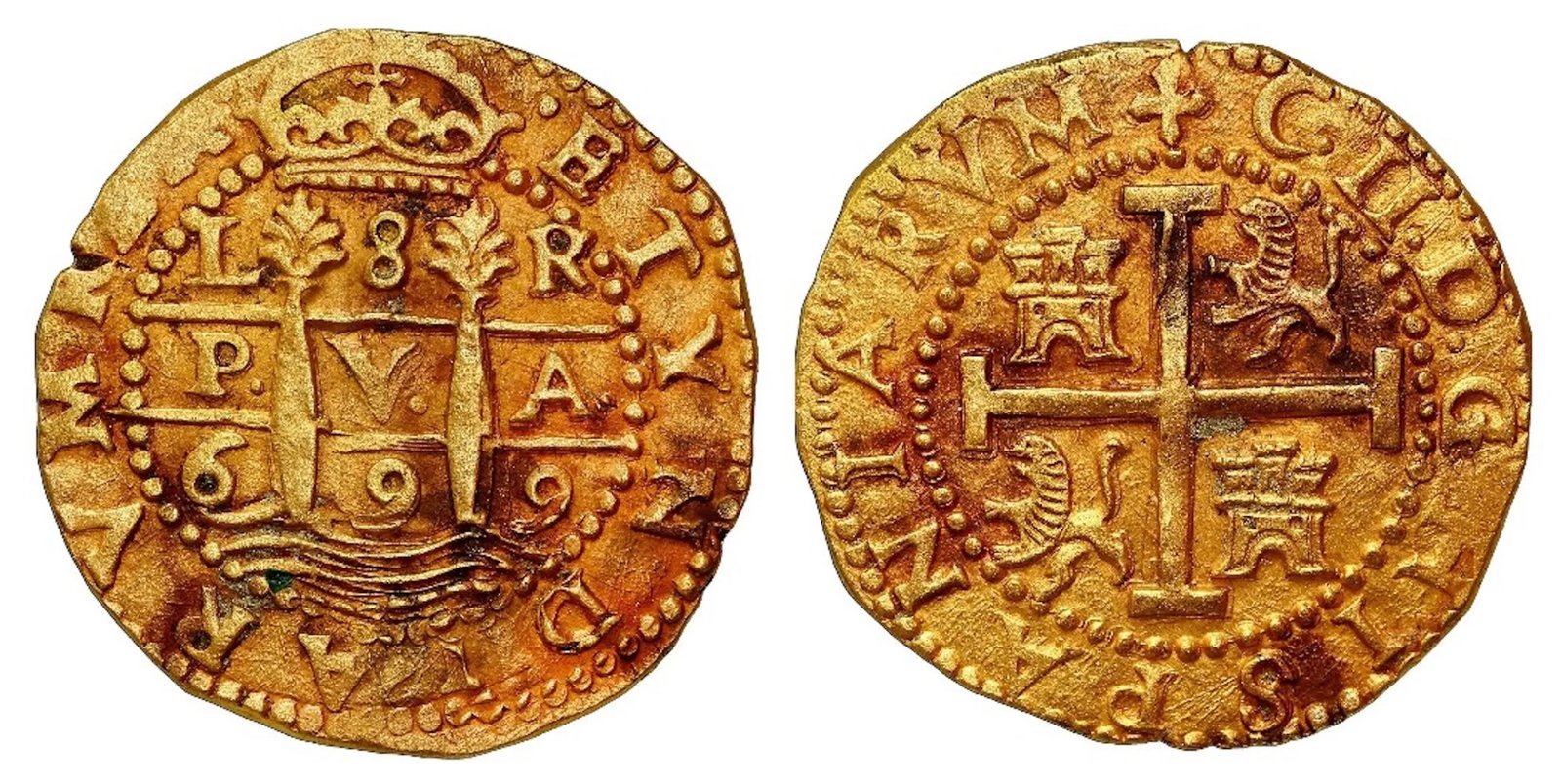
The book, named one of Barnes & Noble’s Best Books of 2026, tells the story of the San José, a Spanish galleon loaded with gold and silver that sank off the coast of Colombia in 1708 during a battle with a British squadron. Centuries later, Roger Dooley, a mostly self-taught underwater archaeologist born in New Jersey and raised in Cuba, dove deeply into Spanish archives, found maps that pointed where nobody else was looking, rounded up his own investors and, in 2015, located the wreck 2,000 feet below the surface. His reward? Getting left out of Colombia’s national celebration and an avalanche of lawsuits that have stalled efforts to raise the ship.
This incredible adventure story, Sancton’s follow-up to his New York Times bestselling book Madhouse at the End of the Earth, is a must-read for anyone who has chased a big idea and refused to take no for an answer. I spoke with the author about the book and the countless hours of work that went into writing it, which, as it turns out, has a lot in common with treasure hunting. Here are some highlights of our conversation, edited for length.
Writing a book like this takes years and untold hours of research. Where did it all start?
After Madhouse at the End of the Earth, I was looking for my second book, and I didn’t want to be pigeonholed as a writer of harrowing nautical stories. But there was one story that would not let me go. I remembered this almost fairy-tale-like headline about a sunken galleon containing billions of dollars’ worth of gold and silver. But I really didn’t know the story yet. I had no expertise.
So I got it commissioned as an article with my former employer, Vanity Fair. I had another story I was working on at the same time, and I kind of A/B tested it. I’m speaking to Entrepreneur now, so that’s a close analogy to how you road test two products and realize which one is more viable. In writing that article, I discovered my main character, Roger Dooley, who I had really no idea about when I started reporting. People were trying to present him as the villain. And I realized that, no, he was far, far from the villain. He was the person without whom we would not be discussing the San José. I knew that the article just skimmed the surface, and went ahead with the book.
Dan Bova: You describe a scene where Dooley is looking for clues to the sunken ship’s location in an archive that has no discernible organization, and he stumbles onto a map with markings that tell him, “It’s here!” As a historian, do you have those moments?
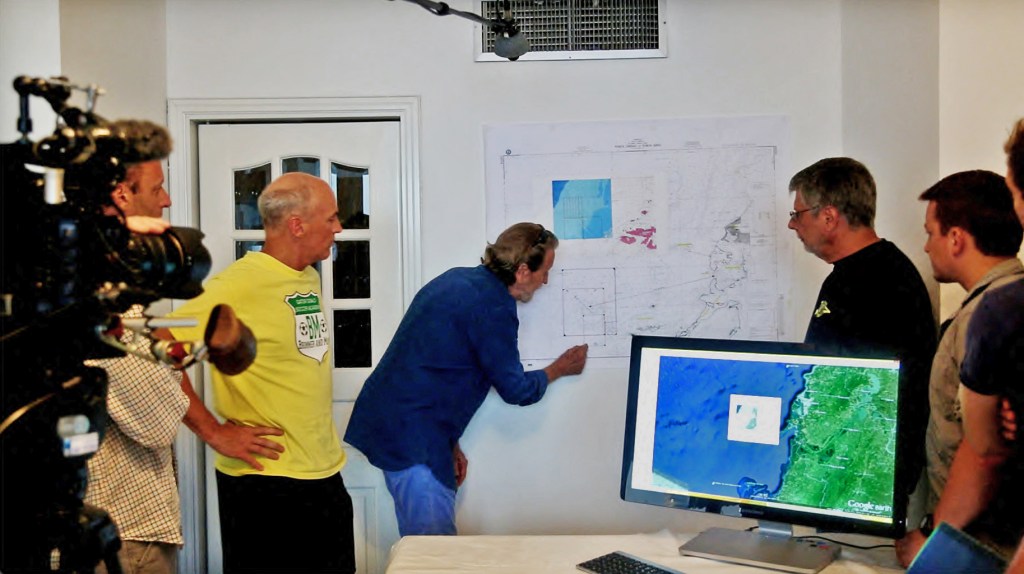
Julian Sancton: Absolutely. I spend a lot of time diving into archives without really knowing what I’m going to find in there — those archives are the equivalent of an ocean for me. And when you find something that can make the facts come alive, those are nuggets of gold. With Madhouse, one of the characters who dies early on is this Norwegian deckhand. While talking to archivists who talk to other archivists, his diary popped up. And it gave all kinds of details and poignant observations about life on that boat. Those finds are the equivalent of Roger Dooley chancing on this critical map, which led him to shift his search area to an area that nobody else was looking at.
Dooley pitched the search for the San José to financial backers and government officials, got yeses, then things fell apart, and he had to start over again. Multiple times. Did that teach you anything?
Well, perseverance. Push, push, push. He is absolutely relentless, even now in his 80s. Since the book was published, he’s been giving me advice on how to promote it. He’s saying, “You need to get it in this store and that hand. I went to the Barnes & Noble the other day — it wasn’t even there. You gotta talk to them!” And by the way, I’m proud to inform you that Barnes & Noble selected the book as one of their best books of 2026, so maybe Roger’s sending good vibes out there.
Subscribe to How Success Happens podcast: Apple | Spotify | YouTube
While examining the sea floor, I loved the mindset about why it was good not to find anything. Can you explain that way of thinking?
They broke Roger’s search area into sections that could be surveyed using a tried-and-true technique of all surveyors and treasure hunters, which is called “mowing the lawn.” It involves methodically going over an area strip by strip.
By the end of the spring, they hadn’t found anything, and the Colombian authorities were starting to get impatient. But one of his investors, who you would have expected would be upset by this news, was not upset at all. He said something cryptic like, “The remaining 50% is 100%.”
The idea is that when you’re surveying an area, not finding something is determining where it isn’t, and that is very helpful, because it reduces the amount to be searched. But that implies that your research is correct. Not finding something sometimes just also means not finding it.
At Entrepreneur, we talk a lot about imposter syndrome. Dooley seems like the polar opposite. This man was utterly convinced he was the man for the mission, despite not having “official” qualifications and training. What lessons did you learn from him?
Dooley believes very much that he has a seat at the table. He never thinks that he’s an imposter, even though many people think that he is. He’s kind of a fake it till you make it guy. In Cuba, he invented the field of maritime archaeology. Did not wait to have a degree in it. He created his own course of study. Because nobody else was cataloging the wrecks around Cuba, he started doing it himself, and then he became the de facto authority.
As eccentric as he is, his drive and his motivation are infectious. He learned valuable lessons working in the film industry in Cuba, and he understood the value of showmanship and presentation and narrative. He created these amazing presentations. He understands the value of a colorful, exciting deck, and that is probably more effective than some exhaustively researched survey.
As you said before, Dooley has been villainized as a “treasure hunter,” which I never really thought of as a derogatory term.
I think it’s easy to villainize treasure hunters. But I think their entrepreneurial spirit is actually quite admirable. Treasure hunters like Mel Fisher, Kip Wagner, or Bert Webber embody a kind of quintessential American entrepreneurship. It’s literal venture capitalism. You’re out there taking a massive risk. Frequently, you’re not the one putting down the money, but you’re convincing capitalists of the value of what you’re doing. They’re investing not just because they’re gonna get a huge return on investment if they find something, but because they wanna be involved in something grand. And I think if it weren’t for the adventurism of treasure hunters, a lot of these wouldn’t be found at all.
Subscribe to the How Success Happens newsletter for weekly inspiration.
Legal battles continue over ownership of the shipwreck and its treasure. What do you think would be the fairest outcome?
I am in the position of having no horse in the race and just observing this as a writer, as ultimately a romantic. But what I would like to see happen is some kind of international collaboration between the stakeholders in Spain, in Colombia, in the UK. I would love to see a rigorous academic excavation and some kind of museum that would involve Roger as a principal architect. He deserves that not only because of his past accomplishments, but because he knows more about the San José than anybody on earth.
And for the treasure, I mean not just the gold and silver and emeralds, but all the contents — this should be preserved and available for study and admiration for the public and academia. There is no other Spanish galleon from this era that has been rigorously and ethically excavated.
We both live in Westchester. Say you’re kayaking around the Long Island Sound and you tip over and you hit your head on a sunken treasure. Do you report it?
Of course!… Well, how big is this treasure? [Laughs]
Every entrepreneur knows what it means to chase something nobody else can see yet — there’s self-doubt, exhaustion, and long stretches where the only result you’re seeing is money going out the door. But still, you press on.
That pursuit is at the heart of Neptune’s Fortune: The Billion-Dollar Shipwreck and the Ghosts of the Spanish Empire, historian Julian Sancton’s account of one man’s relentless hunt for a legendary sunken Spanish galleon.
The book, named one of Barnes & Noble’s Best Books of 2026, tells the story of the San José, a Spanish galleon loaded with gold and silver that sank off the coast of Colombia in 1708 during a battle with a British squadron. Centuries later, Roger Dooley, a mostly self-taught underwater archaeologist born in New Jersey and raised in Cuba, dove deeply into Spanish archives, found maps that pointed where nobody else was looking, rounded up his own investors and, in 2015, located the wreck 2,000 feet below the surface. His reward? Getting left out of Colombia’s national celebration and an avalanche of lawsuits that have stalled efforts to raise the ship.
