

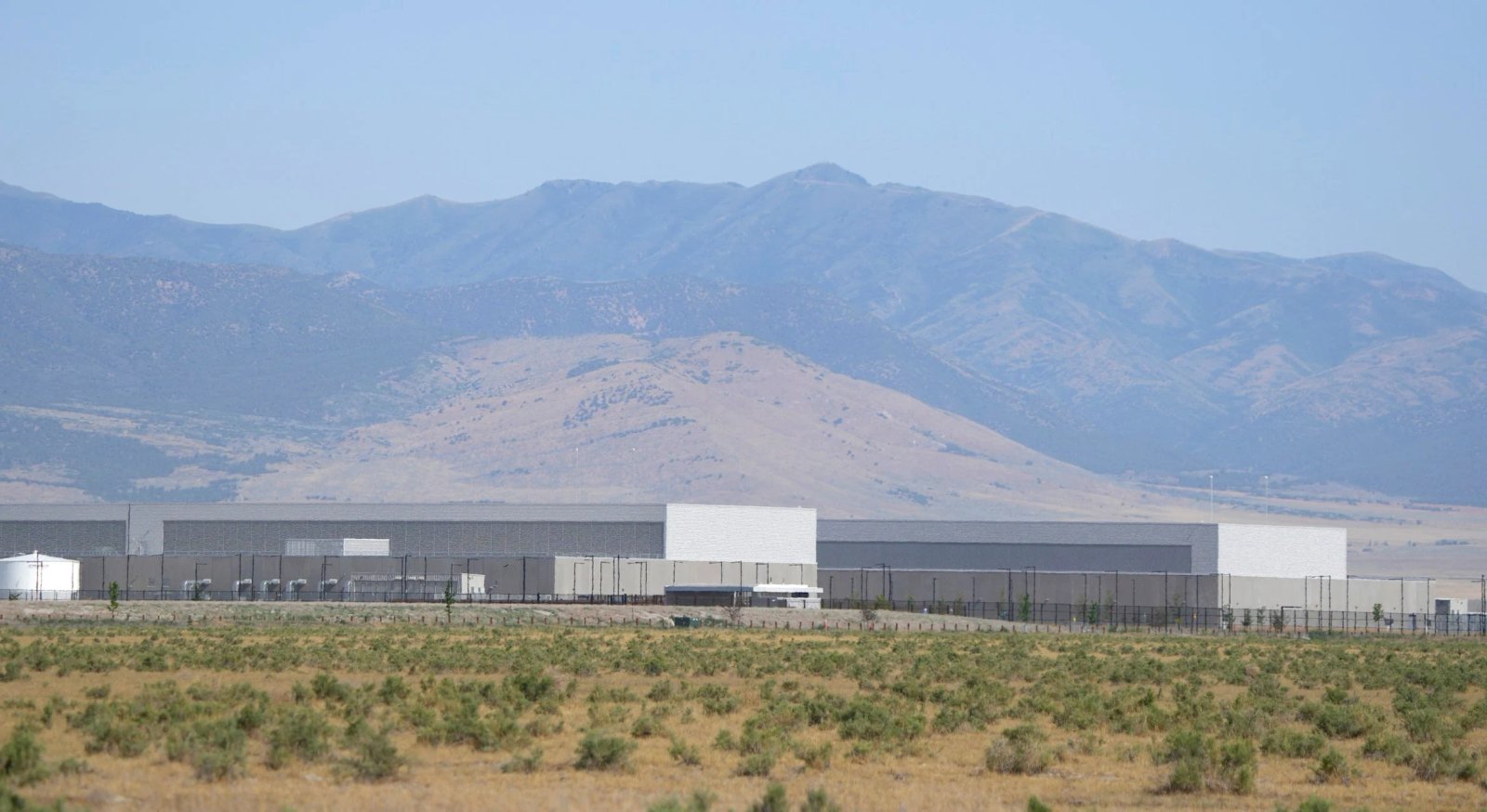
Oregon Rep. Maxine Dexter introduced legislation to ban data centers on national forests and Interior-managed lands. With at least 14 facilities already proposed within ten miles of national parks, advocates warn that resource-heavy tech hubs are encroaching on shared landscapes.
Meta’s 2.4-million-square-foot data center in Eagle Mountain, Utah. A new bill introduced in Congress would prohibit construction of data centers on federally managed public lands. (Photo: George Frey/Getty)
Published November 17, 2026 02:11PM
There’s a new plan in Washington to prohibit the construction of AI data centers on public lands.
On November 11, Oregon Representative Maxine Dexter introduced the Protecting Our Public Lands from Data Centers Act, which would ban new data centers on national forests and lands managed by the U.S. Department of the Interior.
The legislation, backed by 13 Democratic cosponsors, would also require federal land sold or transferred to return to government ownership if used for a data center without congressional authorization.
“Public lands belong in public hands and Oregonians must have a say before the federal government hands over millions of acres of public land managed by the Bureau of Land Management (BLM) for data centers,” Dexter said in a November 11 press release. “These treasured lands are where people hunt, fish, hike and graze livestock. They are where wildlife habitat and our critical watersheds are protected. My bill keeps these lands safe from data centers now, and for the generations who come after us.”
The bill arrived just one day after the Interior Department published its strategic plan for fiscal years 2026 through 2030, which outlines proposals to sell federal land to states, local governments, and tribes, while expanding energy and infrastructure development to support growing demand from data centers.
The plan drew criticism from public lands advocates, including Tracy Stone-Manning, who led the BLM under President Joe Biden and now serves as president of the Wilderness Society.
“They want to sell it off for data centers. They want to sell it off to oil and gas companies,” Stone-Manning said in a November 14 NPR interview. “They want to sell it off because they don’t like the idea of the American public owning these lands.”
Data Centers Are Already Eyeing Public Lands
Throughout 2026 the Trump Administration has sought to build data centers on public lands. According to a November 6 investigation from ProPublica, the BLM is reviewing permit applications for approximately 15 data centers and 17 related infrastructure projects across six Western states. In its five-year strategic plan for public lands management, the DOI says it will find ways to address “the growing demand from Super Intelligence data centers.”
In July, Outside reported that the BLM approved plans for an 86-acre AI data center roughly ten miles from Lake Mead National Recreation Area in Nevada. An Interior Department appeals board has since paused the project for further review, ProPublica reported.
The rise of artificial intelligence and cloud-based computing has accelerated the need for these centers. But data centers can place significant demands on electricity and water supplies, and throughout 2026, the centers have grown unpopular with voters. A September report by Pew Research found that 54 percent of Americans found data centers to be bad for the environment, up from just 39 percent in January.
More municipalities have passed moratoriums on the construction of the data centers, leading officials to look to rural or backcountry settings for them. But the construction of the centers can disrupt wildlife habitat and restrict public access to formerly open land, according to the November 11 release.
“Data centers have no place on public lands,” said Randi Spivak of the nonprofit group Center for Biological Diversity in a release. “They’re water-guzzling, pollution-spewing facilities that turn lands meant for wildlife and recreation into corporate industrial sites.”
More recently, an interactive map covered by Outside identified at least 14 proposed data centers within ten miles of national park boundaries.
Dexter’s legislation has been referred to the House Natural Resources and Agriculture committees. The bill has no Republican cosponsors, and a similar measure introduced by Oregon Senator Ron Wyden was blocked by Republican Senator Rand Paul in September. No new restrictions have taken effect.
