

A hiker slipped on ice while trying to help his son on Mount Baden-Powell. A local hiking guide explains how snow can turn the popular summer trail into dangerous mountaineering terrain.
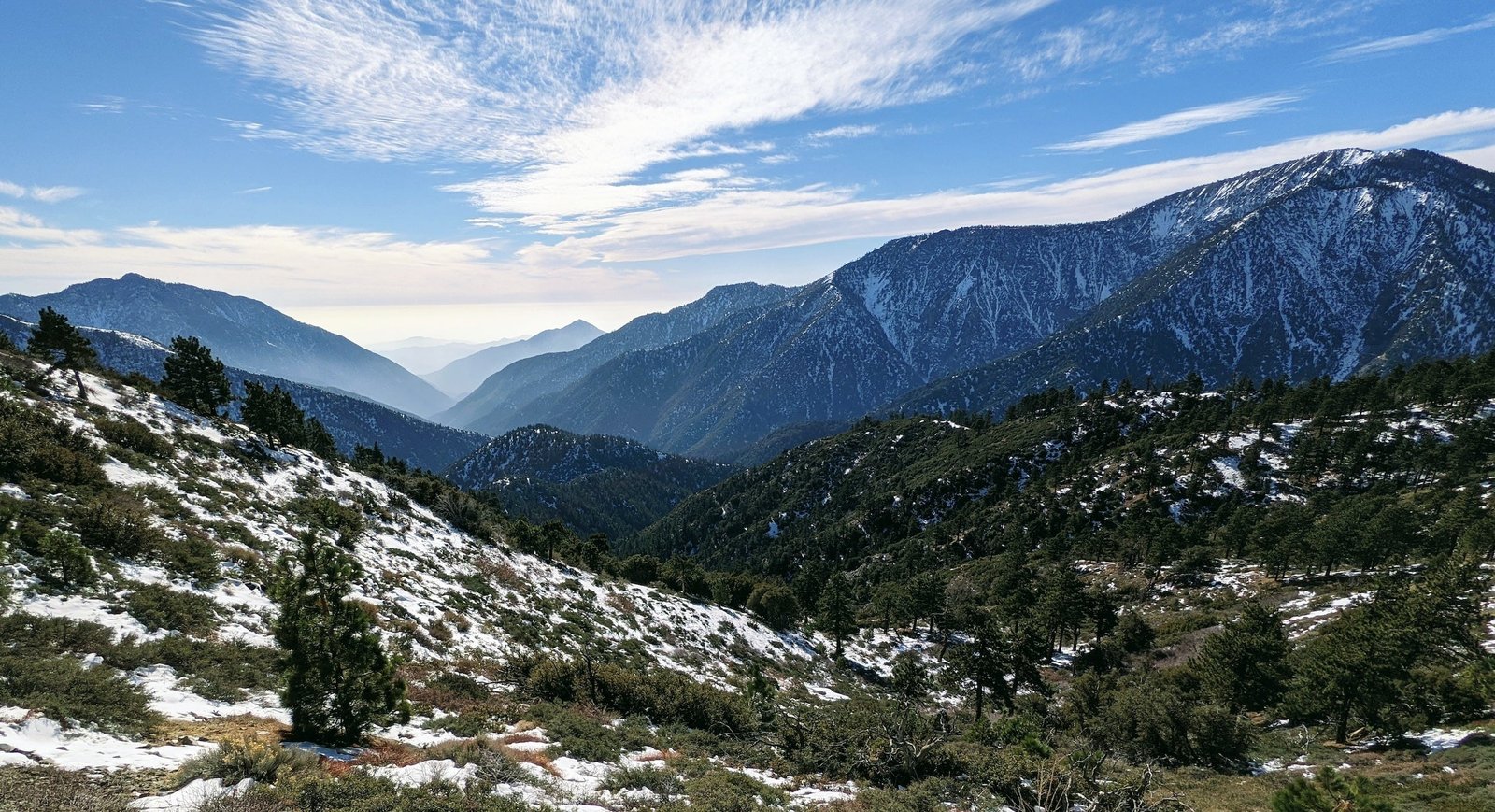
Snow covers the slopes of Southern California’s San Gabriel Mountains, where a hiker died on November 22 after reportedly slipping on ice and falling approximately 500 feet on Mount Baden-Powell (Photo: Noah Sauve/Getty Images)
Published November 23, 2026 01:26PM
A hiker died on November 22 after reportedly slipping on ice and falling approximately 500 feet while trying to help his son on Mount Baden-Powell, a 9,399-foot peak in Southern California’s San Gabriel Mountains, according to a GoFundMe organized by the hiker’s niece.
The GoFundMe page identified the man as Guillermo Alejandro Batres. His niece, Jennifer Morse, wrote on the fundraising page that Batres and his son were attempting to summit the mountain when the younger man slipped and fell. When Batres tried to help him up, he lost his footing and fell down a steep gulch.
“On this mountain, there’s no room for error if you slip when it’s snowy or icy out,” Cris Hazzard, a Southern California hiking expert who has climbed Baden-Powell dozens of times, told Outside. “If you slip in the summer, you probably just fall on your butt, maybe go down some gravel. You slip in the winter, you’re going down hundreds, if not thousands, of feet.”
AV Scanner News, a local outlet that monitors emergency dispatches, reported that authorities received a call about the incident around 10:09 A.M. after the hikers encountered snow and ice roughly three miles from the Vincent Gap trailhead. Los Angeles County firefighters and sheriff’s deputies responded near mile marker 71 on Angeles Crest Highway. Authorities also requested the sheriff’s department’s Air Rescue 5 helicopter crew to recover Batres’s body, according to the outlet.
Authorities have not independently confirmed the family’s account of the fall, and the sheriff’s department did not respond to Outside‘s request for comment before publication.
Why Baden-Powell Becomes Dangerous in Winter
Located in Angeles National Forest northeast of Los Angeles, Baden-Powell is a popular warm-weather climb. The standard summit route begins at Vincent Gap, a 6,585-foot mountain pass along Angeles Crest Highway. From there, hikers follow the Pacific Crest Trail for roughly four miles, climbing more than 2,800 feet through 35 wooded switchbacks up the mountain’s north face before reaching an exposed ridge near the summit.
Because the mountain’s north-facing slopes receive less direct sunlight, snow tends to linger there, Hazzard told Outside. During warmer days, that snow can melt and refreeze overnight, leaving patches of ice along the trail. Although the San Gabriel Mountains receive snow every winter, the conditions can catch visitors off guard so close to Los Angeles.
Batres had hiked Baden-Powell at least once before, according to the GoFundMe, and Hazzard noted that even experienced hikers face heightened risk once ice forms on the route.
“If you are experienced and you know the dangers, there’s still a higher risk of something going wrong than there would be without that snow or ice, regardless of how careful you are,” Hazzard said. “Each winter, we get people going up there who don’t really understand that the hike they did in the summer is now a mountaineering exercise. It’s so steep, and there are dangerous runouts. If you slip, you might hit your head. There’s a lot you can bang into on the way down.”
Another Hiker Recently Slid More Than 300 Feet
Batres’s death occurred just two days after another hiker survived a serious fall on the same mountain. In a November 21 statement on X, the Los Angeles County Sheriff’s Department described rescuing a hiker who had slid more than 300 feet down a snowy chute on Baden-Powell on November 20.
Responders initially struggled to locate the person due to inaccurate GPS coordinates, completing the rescue shortly before worsening weather would have grounded the helicopter.
Similar falls have occurred in past winters. In February 2016, a 69-year-old hiker slid roughly 100 feet down an icy chute before a sheriff’s helicopter airlifted him to a trauma center. Nearby Mount Baldy has also experienced deadly winter accidents, including three hiking fatalities in the first week of January 2026.
Despite having climbed Baden-Powell in winter with experienced mountaineers using crampons, Hazzard said he now avoids the peak once snow arrives. Instead, he recommends seeking formal mountaineering training before attempting snow-covered summits or choosing lower-elevation desert trails around Joshua Tree and Palm Springs.
“They shouldn’t do it in the winter,” Hazzard said. “But winter is the great time to go and do the hikes you can’t safely do in summer, and leave the high peaks alone.”
