

A personal trainer explains how exercise can help you move better in your outdoor sport.
(Photo: автор/Getty; Design: Ayana Underwood/Canva)
Published November 28, 2026 03:00AM
Planks are a stellar core exercise that trains different midsection muscles at once. As a certified personal trainer, I especially love that there are tons of ways to tweak this move to match your fitness level, which means they can be challenging for a wide variety of athletes.
I thought I was familiar with most every plank variation out there. But when scrolling social media recently, I came across one I’d never seen before: a reverse plank hinge. After trying it myself, I became a big fan—and I think a lot of outdoor athletes could gain from incorporating this move into their training routines, too.
What Is the Reverse Plank Hinge?
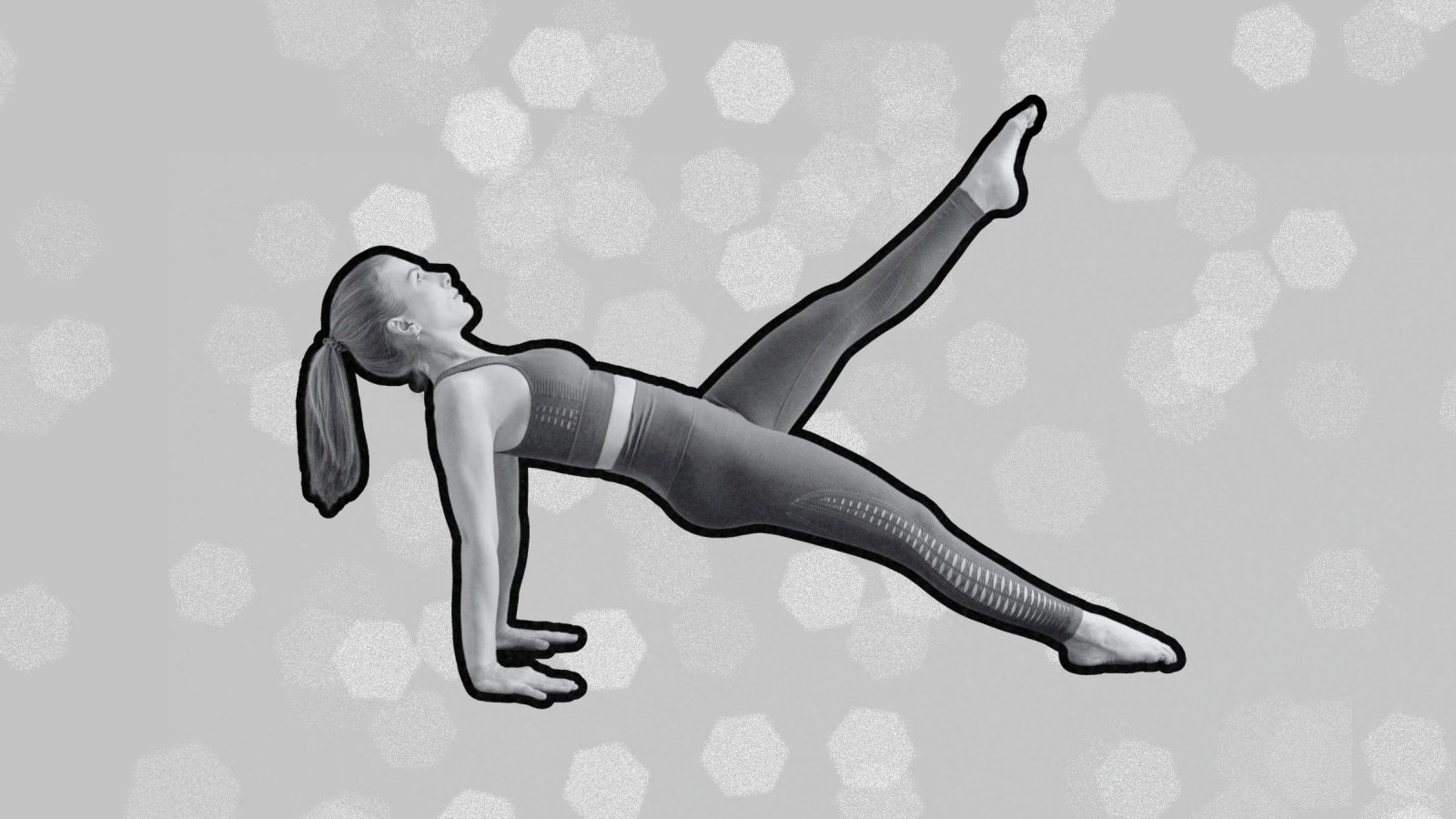
Posted to Instagram by Adi Shalev, a professional dancer and barre instructor (according to her IG bio), the move starts with a reverse plank. This is the opposite of a regular plank. You can watch Shalev do it here and read below for a step-by-step guide.
How to Do It:
- Sit on the floor with your palms and feet flat; your fingertips should face away from your body.
- Slide your feet forward until your knees are at a 45-degree angle.
- Lift up your body toward the sky. You’re now in the reverse plank position.
- Place one foot flat on top of a stack of foam blocks.
- Lift your other leg straight up as you hinge your hips back and bend your elbows. Then lower that leg toward the ground as you push your hips forward and straighten your arms.
- Switch sides and repeat.
How the Reverse Plank Hinge Can Benefit Outdoor Athletes
Doing the reverse plank hinge comes with a few benefits.
It Can Boost Glute Strength
Because Shalev makes the move look elegant and effortless, I didn’t expect my butt muscles to be burning so intensely after just a few reps. But glute activation is one of the move’s biggest perks, in my opinion. You feel it in the leg that’s stationary on the block (really pressing that foot down emphasizes the glute activation), and you also notice it in the moving leg, particularly when you push your hips forward and lower that leg towards the ground.
Plus, your side glute muscles (in particular, the glute medius) have to fire up to keep your hips level the whole time. Your hips naturally want to rotate toward your moving leg, and the glute medius plays a big role in preventing that.
Having strong glutes is important for a bunch of reasons, including the fact that your glutes play a big role in stabilizing your knees when you walk, run, hike, and ski. By strengthening your glutes with moves like the reverse plank hinge, you can improve your ability to keep your knees in good alignment as you participate in outdoor sports (versus allowing them to collapse inward, a common mistake that places a lot of stress on the joint). This, in turn, can lower your risk of knee pain and injury.
It Activates Your Core
Beyond the glute benefits, the reverse plank hinge is also great for activating your core. Your ab muscles are engaged the whole time to keep your body stable and balanced in the asymmetrical position and to prevent your low back from taking on stress it’s not designed to handle.
The total core activation this move trains is relevant to really any outdoor sport. Having a strong, stable core helps protect your spine and keeps you balanced and upright as you traverse shifting terrain on the trails, slopes, and roads.
It Engages Your Triceps
This move also offers some triceps work, too, especially if you really bend and straighten your arms with each rep. Having strong triceps (the muscles on the backs of your upper arms) can come in handy for activities like rock climbing and using ski poles, for example.
It Can Improve Posture
Lastly, there’s the posture element. So many of us spend our days hunched forward over screens, which creates mobility and strength imbalances between our chest and back. The reverse plank takes you out of that position by pulling your shoulder blades back and gently stretching your chest muscles. Doing this move regularly can help train your body to adopt better posture in general, including during outdoor sports.
How to Incorporate the Reverse Plank Hinge Into Your Exercise Routine
This move is a great one to add to your current strength training routine a few times a week for an extra dose of glute, core, triceps, and posture work. Do as many reps as you can on each side until you feel like you can’t continue with good form, then repeat for two to three total sets.
To ensure good glute activation, focus on pressing your grounded foot into the block and also squeeze your glute on the lifted leg as you press your hips up.
Also important: you could easily strain your neck doing this move if you’re not careful, so avoid that by making sure your spine is neutral the whole time. Think about tucking your chin and keeping your gaze straight.
Start with the bodyweight version that Shalev showed in her IG video. If you get to a point where that feels too easy? First off, wow, you’re a beast. Secondly, you can up the ante by strapping an ankle weight onto your moving leg.
Want more Outside health stories? Sign up for the Bodywork newsletter. And for tips on how to train, fuel, and recover better, sign up for the Sweat Science 101 newsletter.
