

Published March 18, 2026 10:43AM
Fear is part and parcel of any outdoor adventurer’s experience, but unlike many of us, Lucas Bravo likes that feeling.
“I like to go to places where I could be scared,” the actor told Outside. At just 37 years old, Bravo has already spent a lifetime testing his mettle in the great outdoors, from living in the Into the Wild bus to traveling to the North Pole. “There’s no better feeling than being in nature and feeling strong, independent, and fearless,” he said.
Bravo currently stars in Netflix’s Emily in Paris as Gabriel, a talented chef in a complicated on-again, off-again romance with Lily Collins’s Emily. The hit series was renewed for a sixth season in January.
We caught up with Bravo to talk about roughing it in Alaska, studying the Arctic Ocean, and why you should always pack a rope.
What were some of your formative experiences of getting outside?
My father was a [professional] soccer player, and he would get transferred a lot, meaning that we would move cities. I was in Monaco, then Nice, [France,] then Lyon, then Marseille, then Parma [Italy]. We’d always have a house in a small village, or somewhere completely secluded. We settled in Paris when I was 14, and then when I graduated, I watched Into the Wild. It was my first big revelation. I booked a ticket to Seattle, and from Seattle, I flew to Fairbanks [Alaska]. I hitchhiked to a little town called Healy, and I walked into the tundra under Denali. Three days later, I found Chris McCandless’s bus, and I lived in the bus for a week.
What did living in that bus feel like?
It was like a little sanctuary. It felt like being in a chapel. That movie just shook me—I couldn’t believe you could leave everything behind and go measure yourself against nature.
That bus held so much of Chris’s energy and history—the things he carved in the metal, the bags of rice he left behind. The little pan with holes in it that you’d use as a shower was hanging from a tree, and it made me think, “Wow, this story is real, and this really happened to him.” It changed a lot of things for me. I realized that things are not as scary as they appear to be. It gave me a sense of trusting the universe.
Have you ever been in a situation in nature where you thought, “I might be beyond my depth here”?
Hiking to find the bus was definitely one of them. You have to put your stuff into a tree to protect against bears, who can smell food from miles away. Some of my food was in a tree, but I left a little dry fruit in my pockets. As I was sleeping in the tent, I heard a bear come by and start eating all my food from the tree. I was lying in the tent thinking, “This isn’t a game anymore. I’m in nature and I’m playing with my life.” I started feeling small and a little stupid. It really gave me the sense that you need to respect nature when you confront yourself with it.
My food was gone, and I had to make a decision: do I keep going? I decided that I came here to be challenged, so I kept going, and eventually, I found the bus. Thank God there was rice in the bus! I had to melt snow over a fire to cook the rice. My canteen froze because it was so cold—you’re supposed to keep your water close to your heart, inside your jacket, but mine was clipped to my backpack. It took me an entire day to find a little stream, and I had to go through the ice with my machete to find water. That was the most amazing glass of water I’ve ever had.
Could you ever see yourself doing something like that again?
Absolutely. Ever since, I’ve kept on challenging myself. I like to go to places where I could be scared. Or places where nobody goes—a lot of people go to exotic places, but I want to go somewhere nobody has an opinion about. After that, I went to the North Pole. I got into a little boat with scientists in Svalbard, and we started cruising until we hit the North Pole. We were measuring the oxygenation of the water, which gives you clues about how much the icebergs are melting. I saw polar bears—every time I go into the wild, there are always bears. My ultimate dream would be to climb Everest, but I’m not there yet.
How have these experiences shaped you as a person?
There’s no better feeling than being in nature and feeling strong, independent, and fearless. Nature is not as crazy as society paints it to be. If you really connect with your environment, if you find solutions and feel independent, it gives you such strength.
Does it put things in perspective when you’re back in the city?
Absolutely. When I came back from my Into the Wild trip, even just getting water from the sink or opening the fridge to find food amazed me. Everything is so easy and accessible, and we take it for granted.
You once said, “My comfort zone is just sitting in nature and silence.” Living in Paris, it might be hard to create that peace. Where do you go to recharge?
I live near a little lake with a forest called Domaniale. There are a few weeping willows surrounding the lake. I like to go underneath—it’s like a protective shell. I go there to do breathing exercises, or meditate, or listen to music. Whenever I need to recharge, I try to find a spot where I can be barefoot in the grass and near some water.
When you were initially passed over for Emily in Paris, you went to the mountains in Corsica. How did that environment nourish you during a tough moment?
After months of back and forth doing auditions, I decided that instead of sitting there in despair, I might as well go straight to nature, because nature puts everything in perspective. When you’re away from society, everything seems so ridiculous. None of the things that matter in society can save you in the wild. Once you’re there, you’re like, “All I need is water from that river, fresh air in my lungs, lying in the sun, going barefoot in the grass, and seeing wild horses.” I went there to forget about it, and little did I know, they called me back.
If somebody wants to test their mettle in the great outdoors, what skills would you advise them to cultivate?
Walking—that’s the first step. You need to get comfortable with walking long distances. You also need to train your psyche. Going into the wild is a lot like running marathons—there’s always a moment where it’s not about how strong you are, but it’s about how your mind can keep up with the fact that you’re stepping away from your comfort zone. Also, become a master of the elements. [You should] know how to make a quick fire and cook in the wild.
What do you always have in your pack?
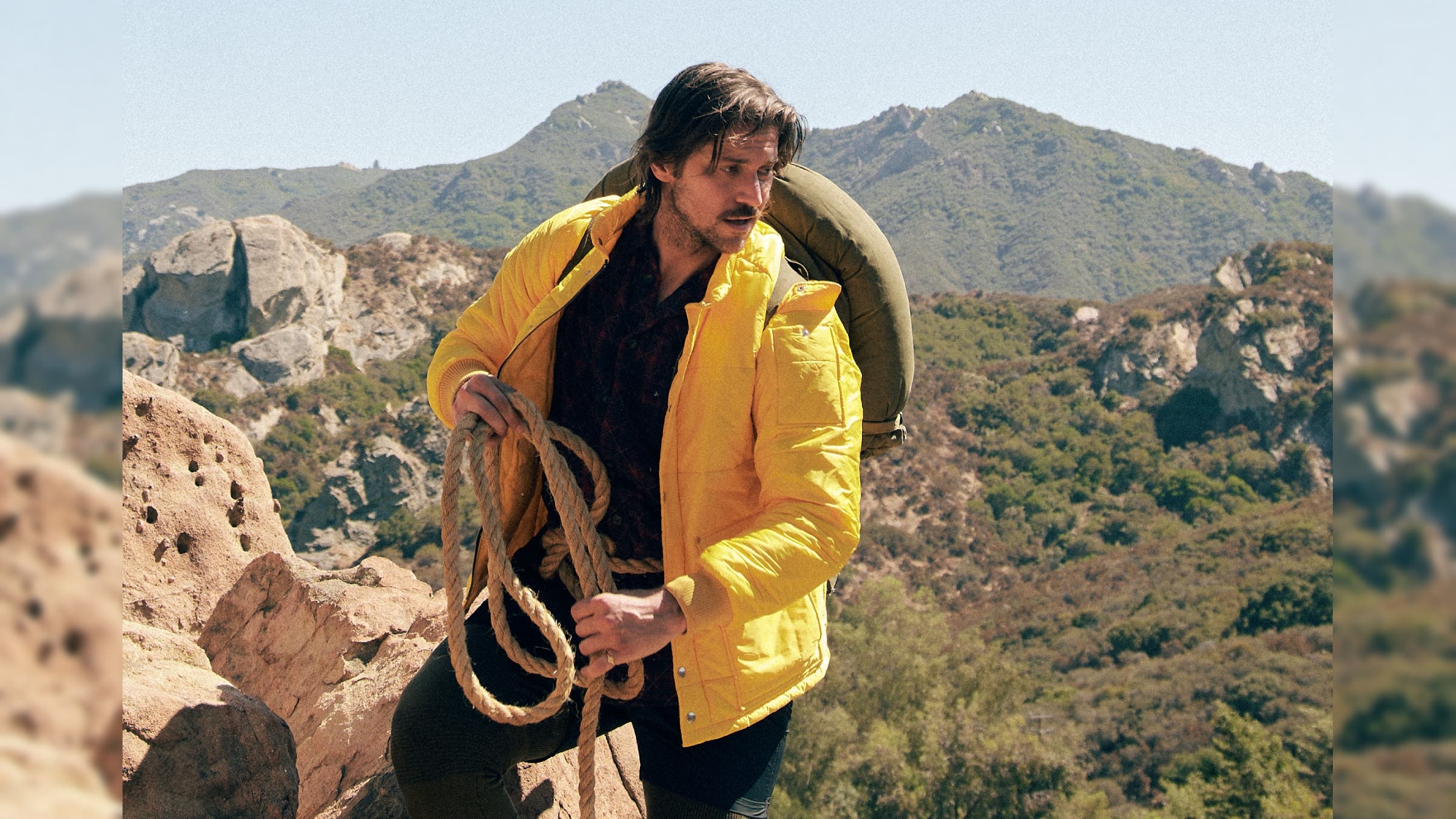
I have a little key chain that can create a flame—it’s like an infinite match. That, for me, is the most important tool. I always have a rope, too. You would never imagine how important a rope is in the wild. It can help you cross distances, escape from danger, tie your food up in a tree, and lash some wood together to create a shelter. You can also use it to create a weapon with a stone at the end of it. Be sure to have a knife, too. A knife, a rope, and something to make fire—those are my three basics.
