

Published March 19, 2026 03:23AM
This story discusses sexual assault and violence. If you or someone you know is a victim of sexual violence, you can call the National Sexual Assault Hotline toll-free from anywhere in the U.S. at 1-800-656-4673.
“Give me your passcode or I’ll slit your throat, ” he threatened, pinning me to the rocky ground. Trying to make space between his knife and my throat, I inhaled. The stench of stale cigarettes and sweat made me want to vomit. But this man didn’t look like a vagrant. His beard was well-manicured. I hated that I thought he was handsome.
As his dark eyes darted left and right, checking for other hikers, I stole a glance at the knife. It looked like a well-used hunting knife. But this man wasn’t dressed like a hunter. He also wasn’t dressed for hiking, as I and the other hikers I’d passed on the trail were. In his long khaki pants and hooded jacket, both far too heavy for this warm, sunny morning, the man hovering over me seemed as out of place.
“What’s your passcode?” he demanded again, putting pressure on the blade. No numbers left my lips. My brain couldn’t remember the six digits I typed in dozens of times a day. It couldn’t process the scene I’d somehow found myself cast in.
As I lay there, frozen, the man started groping me. I felt like I was watching the assault from above. My body didn’t belong to me again until he wrapped his calloused hands around my neck and started strangling me. Reflexively, I screamed.
A dog barked, and someone shouted in the distance. My tormentor bolted, leaving me behind—bloody, battered, and confused. Violent crimes happen at night and in alleys, I thought, not on cloudless, windless mornings on a pristine hiking trail where the victim has postcard-perfect views.
Nature Is Our Safe Space
Nature used to be my base. It was where I went when I didn’t want to be bothered. I knew wildlife, weather, and topography could hurt me. But I accepted those risks for the reward of dopamine hits that only hiking could deliver. On the trail, I didn’t consider other humans a threat. Most of us don’t.
“It’s unspoken,” says Danielle LaRock, who hosts the podcast National Park After Dark, a self-described “true crime + nature” podcast with 56.5 million downloads, with Cassandra Yahnian. “We’re all here for the same reason, right? Peace, love, unity, being one with nature.” It’s easy to view hikers, cyclists, and anyone recreating outdoors as off-limits.
According to my friend Katie d’Autremont, who is a licensed clinical professional counselor in my home state of Montana, it’s not outdoor enthusiasts who are sacred. It’s the setting.
“Our brains tend to code recreation in nature in a context of restoration and reduced threat,” says d’Autremont. “That set of cues signals safety to the nervous system, often activating our parasympathetic ‘rest and digest’ state. Nature is where we downshift.”
Compare that to our commutes, offices, and trips to the grocery store, all places where we expect to encounter hostility from other humans.
When social friction or, in extreme cases, acts of violence encroach on the outdoors, it upends our worldview. D’Autremont describes this dynamic as a “double trauma,” including the primary event plus the shattering of a sanctuary. “It’s not just an assault on the person, it’s an assault on what the environment is supposed to provide,” she explains.
But Attacks Do Happen in the Wild
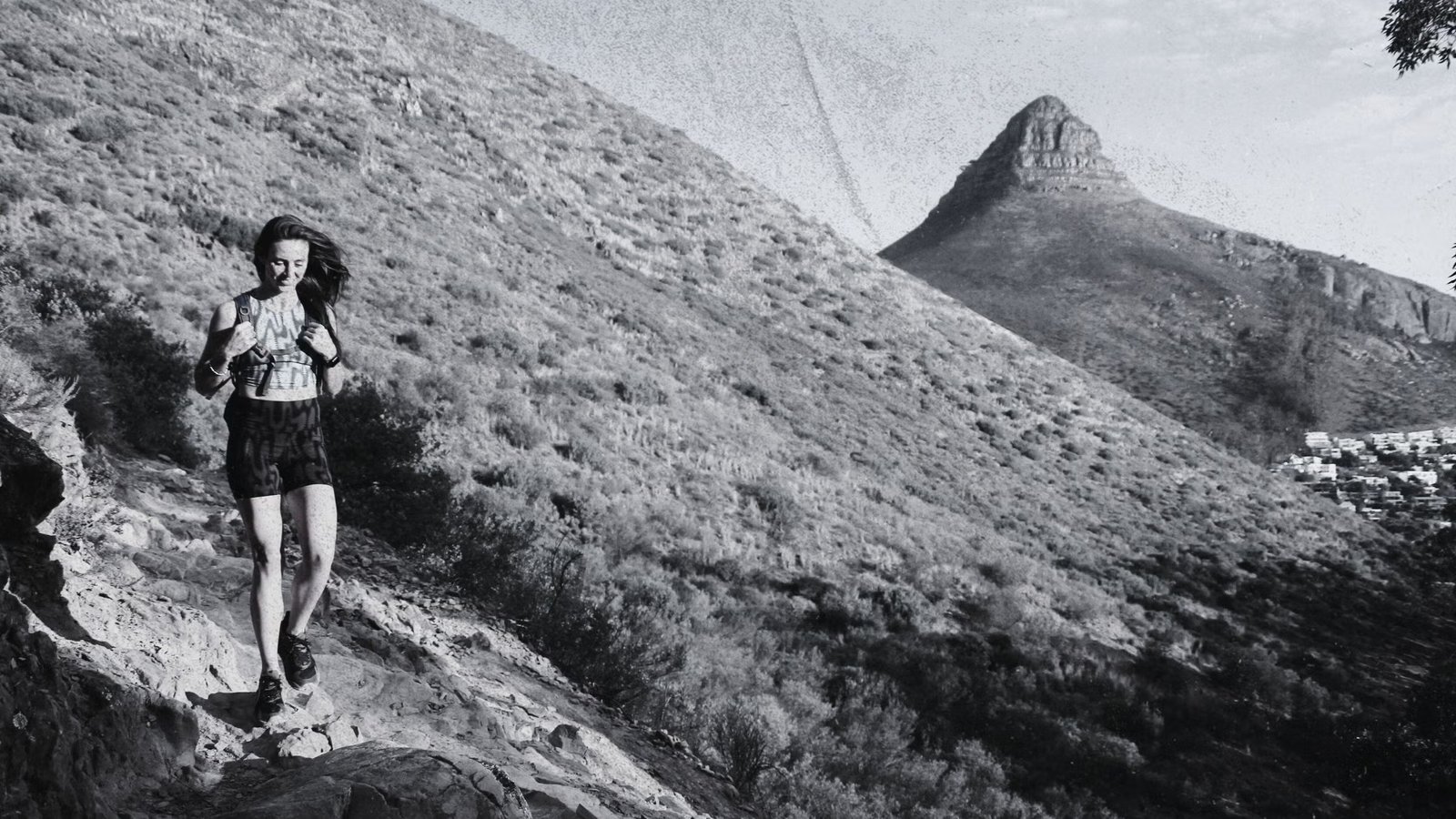
My attack happened in 2023 on Signal Hill in Table Mountain National Park, which overlooks Cape Town, South Africa. I’d been taking month-long sabbaticals in Cape Town since 2021, when I wrote Travel + Leisure’s guide to the city. One of my best friends, a South African named Lian, lived there and introduced me to the trail. By 2023, the route had become a refuge, where I often escaped the hustle of downtown to clear my head. Skirting the city, and boasting sweeping views of the Atlantic Ocean, it’s beloved by hikers, mountain bikers, and paragliders. There is one marked trail.
One year after my attack, I walked the trail alongside Senior Inspector Ishmael Bagley, a tourism safety officer with the City of Cape Town, and he pointed out the offshoots. “They’re escape routes,” he tells me when we revisit the scene of the crime a year after my attack. Mine was one of 96 reported muggings in Table Mountain National Park in 2023.
“The wilderness actually presents a very open and inviting field to target individuals from a criminal perspective,” says Reid Meloy, PhD, a forensic psychologist and author of the International Handbook of Threat Assessment. In nature, there are few potential eyewitnesses, limited infrastructure, and distance from traditional law enforcement domains. The same elements—lack of lighting, cell phone service, and CCTV—that make a place enticing for outdoor enthusiasts are easily exploited by criminals.
Meloy tells me that the outdoors attracts a physically agile and prepared perpetrator. “We essentially categorize violence as being either affective or predatory,” he explains. “Affective violence is typically violence that’s a result of intense anger. It’s very reactive.”
Criminal acts that occur in the wild tend to be more predatory because they involve more organization. “These individuals are hunting,” he says.
While not as notorious as the Boston Strangler or the Zodiac Killer, several serial killers preyed on people recreating outdoors. David Joseph Carpenter, the so-called Trailside Killer, terrorized Northern California trails where he murdered at least seven people in an eight-month span between 1980 and 1981. Now 95 years old, Carpenter is the oldest inmate currently serving a death sentence in California.
On the East Coast, Gary Michael Hilton, dubbed the National Forest Serial Killer, was convicted of murdering four people in 2007 and 2008. Yahnian, who researched him for her podcast, believes Hilton, who now sits on death row in Florida, is behind more missing persons cases on the Appalachian Trail.
Meanwhile, the Appalachian Trail Killer moniker can refer to Randall Lee Smith or James Jordan. Smith was convicted of murdering two hikers in 1981. Shortly after his release from prison in 2008, he returned to the forest and attempted to kill two fishermen near the original murder scene. Jordan attacked two hikers with a machete in 2019. One survived by playing dead.
And in Western New York, a man named Altemio Sanchez, who had been known as the Bike Path Rapist, became the Bike Path Killer after pleading guilty to murdering three women in 2007. Sanchez is thought to have assaulted dozens of women along the path over the course of nearly 40 years.
Here in Montana, where I live, the murder of Dustin Kjersem, who was beaten and axed to death by a stranger while camping in 2024, still haunts the outdoor community. “If you are a fish or an antelope, the world just became a safer place,” his obituary read.
Of course, close calls are far more common. “We have people who have written in who have experienced some type of assault on the trails as well,” says Yahnian.
What the Numbers Say
In the minutes before my attack happened, I remember walking toward my assailant. For some reason, my gut told me he was bad news. But not wanting to appear rude, I stayed my course.
Another hiker, Madison “Peg Leg” Blagden, had a different response while hiking alone on the Appalachian Trail in April 2025. She approached a stranger who made her feel uneasy, even from afar. “He started to make statements that were nonsensical,” she recalls. Blagden turned and ran.
“The game warden told me that the way I responded was exactly what I should have done,” she tells me. “I’m typically not very afraid of people in a public setting and always feel like I can hold my own. But out in the middle of the woods with a strange, screaming man had me feeling very vulnerable.”
Blagden says a blog post she wrote about the incident racked up millions of views. Comments poured in from strangers accusing her of overreacting. But unlike me, she has no regrets. “The fear was so valid and real that no number of internet people could make me feel ashamed.”
Statistically speaking, you’re about twice as likely to be the victim of a crime within city limits compared to in a rural setting. In 2024, urban areas saw 34 incidents of violent victimization per 1,000 people. Rural areas saw 16.7 incidents. Both figures are slightly up over 2023, but violent crime is far from rampant, especially in nature. A study published in 2025 found that U.S. national parks are “overwhelmingly safe.” Traffic offenses accounted for two-thirds of tickets issued, and verbal assault and property theft were the most common forms of victimization.
Still, M. Dylan Spencer, an assistant professor of criminology at Georgia Southern University and one of the study’s researchers, tells me things could get worse if annual National Park visits continue to climb. “When you put more people in these places and convergence spaces, you’re going to have potential issues,” he says.
I asked a National Park Service spokesperson if current funding and staffing levels are sufficient for preventing and investigating crime. “We remain committed to ensuring that our law-enforcement program has the resources required to protect visitors,” Elizabeth Peace told me over email. “The National Park Service welcomes well over 330 million annual visitors, and violent crime incidents represent a very small portion of total law-enforcement activity.”
Nature Is Not a Refuge
Eight months after he attacked me, the same man and an accomplice assaulted a group of nine hikers on the Pipe Track, another popular trail in Table Mountain National Park. “He told us to sit down and not ‘try anything’ as he would slit the woman’s throat,” recalls Matthew Pinker, the professional guide leading the group. Still, Pinker took a chance and deployed his pepper spray. My attacker ran, and blinded, fell to his death.
Like me, Pinker also suffered from weeks of sleeplessness and anxiety. And his relationship with the outdoors will never be the same. “I’m now extremely cautious whenever I head into the mountains,” he says.
I haven’t given up hiking either, even hiking solo. For me, the rewards—laying the first tracks of the day, smelling the forest after a fresh rain, and making eye contact with a chipmunk—far outweigh the risks.
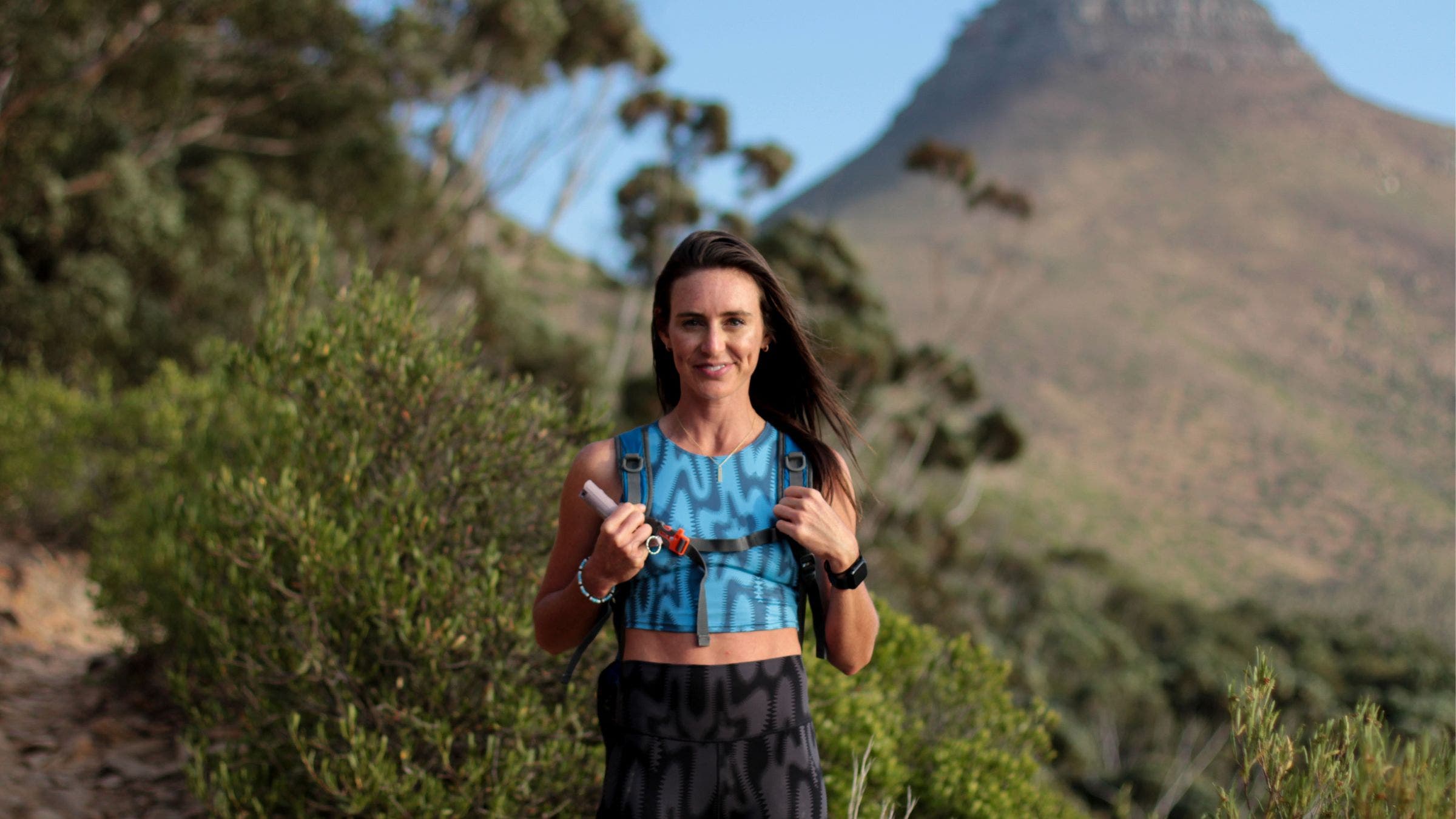
These days, I always pack a self-defense spray, whether I’m walking my dog in our backyard along the Yellowstone River, or if I’m halfway around the world. I’m no longer playing tag, I’m playing chess. I now know that nature is restorative, but it’s not a refuge. It demands vigilance just as much as it demands reverence.
