

Published March 19, 2026 03:04AM
Scientists have long known that air quality affects running. It was a major concern in the 2008 Summer Olympics, for example, when runners had to compete under infamously polluted conditions in Beijing, China. Not to mention what many Americans have discovered back home, when their running routes are so choked with forest fire smoke that visibility is cut to only a couple of miles.
But it isn’t just the air you breathe outside while training and racing that matters. At the UAE Tour, a premiere seven-day cycling stage race in February, early leader Remco Evenepoel fell apart in stage 3, later saying that malfunctioning air conditioning in his hotel room might have played a role. In Evenepoel’s case, the primary problem appears to have been that his room was too warm.
But a recent study published in Scientific Reports suggests that a sleepless night from an overly warm room might not be the only thing affecting next-day performance. Particulate matter, humidity, and ventilation may also all play a specific role.
How the Study Monitored Bedroom Air Quality and Assessed Its Impact on Performance
The study, conducted by researchers from the departments of architecture and physical education at Shanghai Jiao Tong University in Shanghai, China, recruited 183 undergraduate students living in the university’s dorms. These students’ rooms were then equipped with air-quality monitors, and the students were given Fitbits to assess their sleep quality on the night before a physical fitness test they were required to take, and apparently pass, in order to graduate.
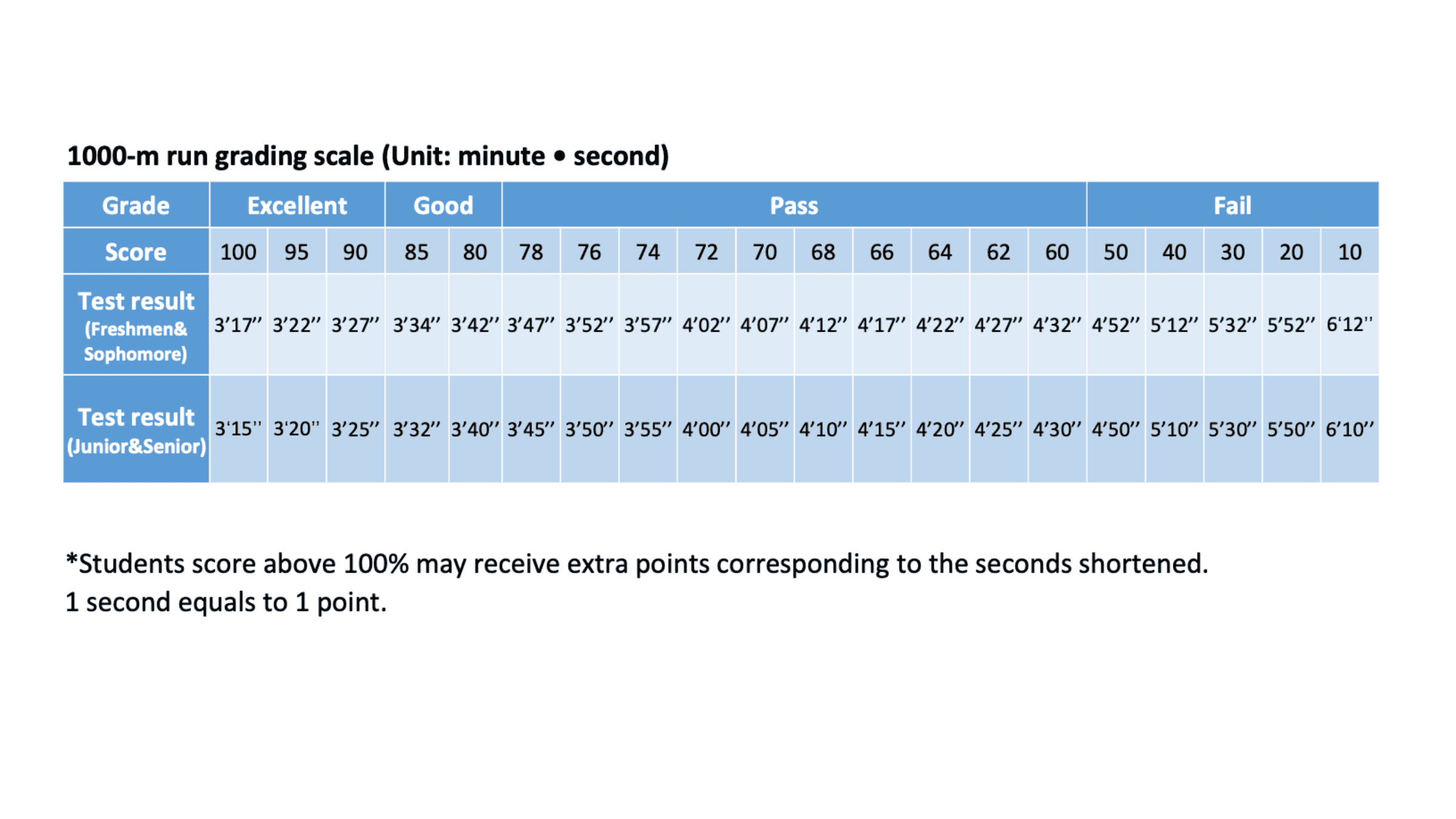
The test included one minute of sit-ups (for women) or pull-ups (for men), a 50-meter sprint and a standing long jump (for both), and a time trial of 1,000 meters (for men) and 800 meters (for women). Results were scored for each event on a 100-point scale, and at least as of 2019, those who can’t average at least 60 points can’t get diplomas. In other words, the study participants were seriously motivated to perform as well as they could.
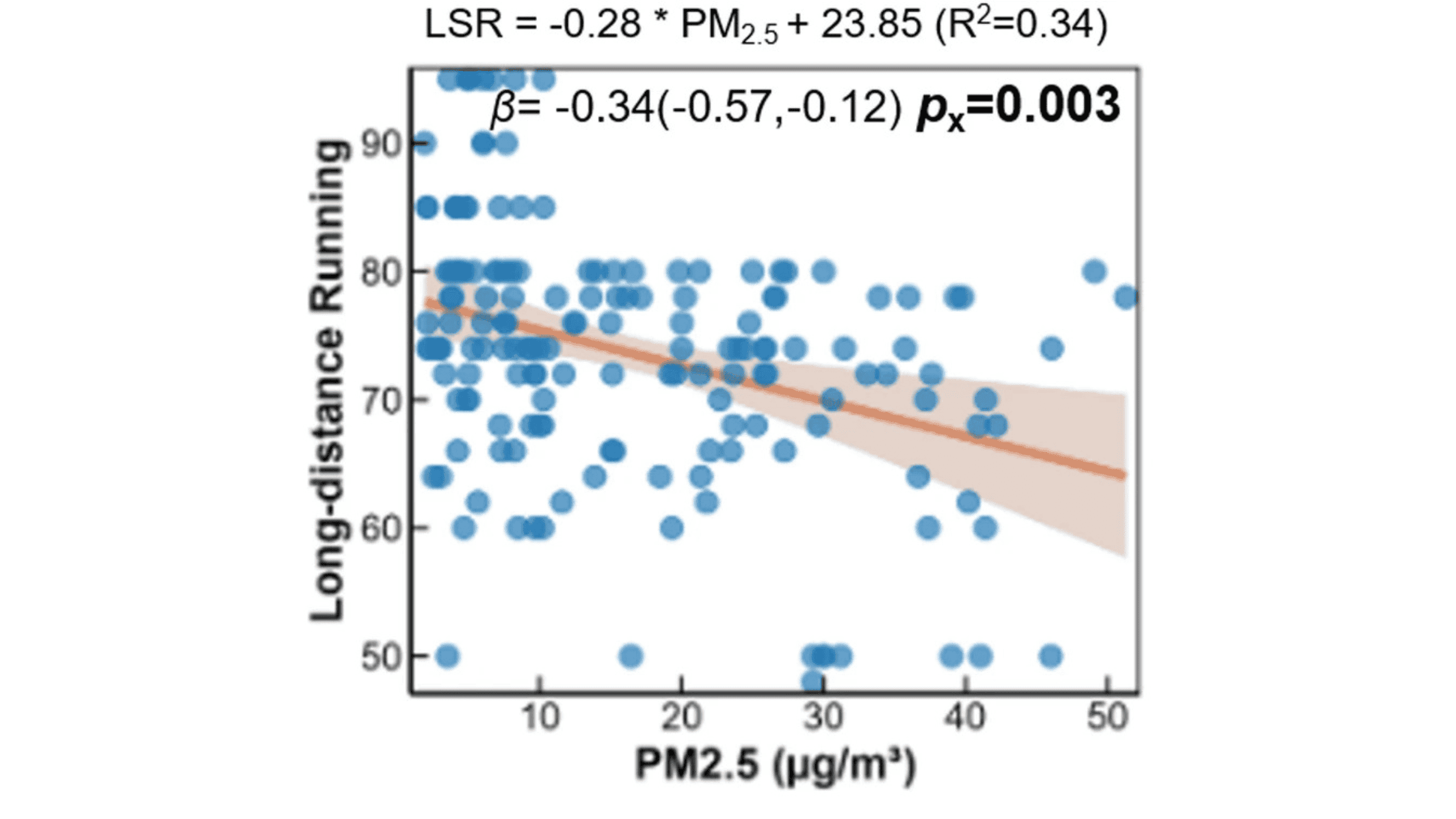
For distance runners, the time trial is the most interesting part of this study, and—not surprisingly—it was the part most strongly affected by bedroom air quality.
How Poor Bedroom Air Quality Affects Athletic Performance
What the study found will make you want to consider investing in an air purifier, even if your bedroom air seems crystal clear.
Large Airborne Particles May Slow You Down
When it comes to air quality’s effect on running performance, the biggest culprit, the researchers found, was an air particle less than 2.5 microns in diameter—or about 30 times smaller than the width of a hair on your head. That is, time trial scores were most impacted by the levels of PM 2.5 particulates in the bedroom air. PM 2.5 particulates are tiny, airborne particles known to penetrate deep within the lungs. They have been linked to a vast number of health risks, but their effect on athletic performance has generally been studied only when people are racing or training in polluted environments.
What the research team found was that at bedroom PM 2.5 levels of 11 micrograms per cubic meter, equivalent to an air quality index of 46 (near the top of, but nevertheless still in, the zone the U.S. Environmental Protection Agency considers “good”), there was a fall-off in next-day running scores of about four percent. At the highest PM 2.5 levels examined (equivalent to an air quality index of 136), running scores fell off by a whopping 20 percent.
The Chinese fitness tables, however, are highly non-linear, with a four percent difference in score corresponding not to a four percent difference in speed, but instead to a roughly 7-second difference in minutes-per-mile pace (for students running the time trial faster than about 7:00 minutes-per-mile).
Poor Bedroom Air Quality May Slow You Down By Up to 15 Minutes
To put this in context, if you are a 3-hour marathoner, a 7-second-per-mile loss in speed from sleeping in ever-so-compromised air quality the night before your race could slow you down by about 3 minutes, while sleeping in air quality that is “unhealthy for sensitive groups” might slow you down by a staggering 15 minutes over the course of 26.2 miles.
Bedroom Temperature, Humidity, and Carbon Dioxide Levels Matter, Too
Also important was carbon dioxide, which ranged from the ambient atmospheric level of about 425 parts per million to, in the case of some students’ bedrooms, 4,000 parts per million—nearly ten times higher. This, and bedroom humidity (either too low or too high), magnified the effects of PM 2.5, as did bedroom temperature.
Does Unhealthy Bedroom Air Impact Sleep Quality?
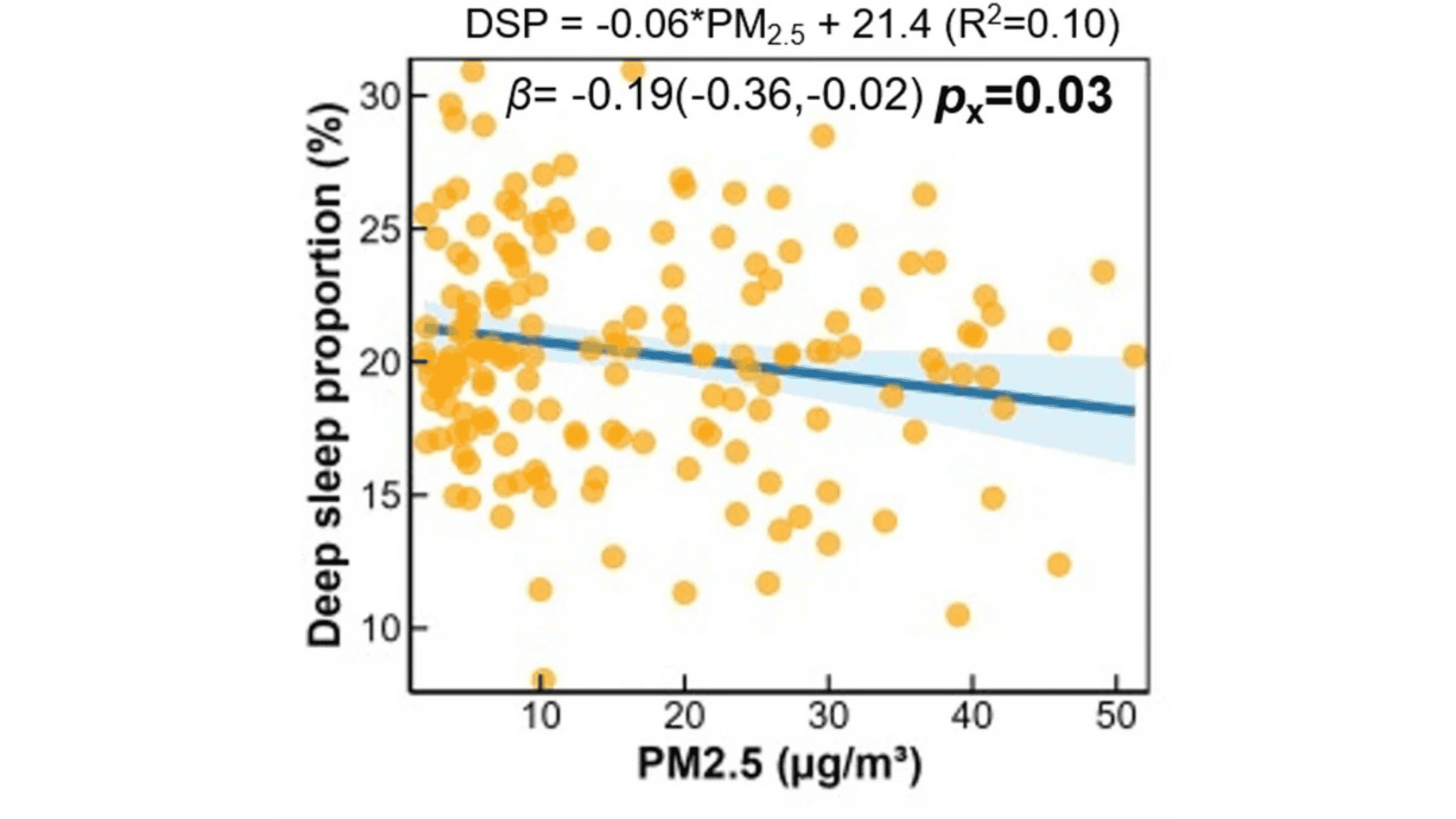
The exact hows and whys of air quality’s impact on running performance, however, are somewhat uncertain. One thing that did appear to play a direct role was the effect of indoor air quality on sleep quality.
PM 2.5, carbon dioxide buildup, and temperature all had effects on sleep quality that might have spilled over into next-day performance. There might also be physiological effects directly related to the pollutants, but the study method didn’t allow those to be assessed.
Limitations of the Study
“This study did not collect physiological data such as blood oxygen saturation, blood pressure, or heart rate variability…limiting insights into the physiological mechanisms,” the authors wrote. (The authors could not be reached for a detailed comment.)
As with all such studies, there are caveats. To start with, says Michael Koehle, a sport and exercise medicine physician and professor at the University of British Columbia in Vancouver, it is an “observational” study that looks for associations but doesn’t prove causality. That said, Koehle says, “From other work, we know that exposure to particulate matter could lead to impaired exercise performance. This study just reinforces that.”
Also important is that this study only examined dorm room air quality on a single night. It did not examine whether the students with poor performances were experiencing the same subpar air quality day after day or week after week.
Other caveats:
- Running performances were assessed from points scored on the Chinese physical fitness tables. “We do not have times for the run, just scores,” Koehle says. “That’s hard to interpret.”
- The study was done in a major city. Shanghai is far from being one of the most polluted cities on the planet (in one listing, it ranks as somewhere between Washington, D.C., and New York), but at the time of the study, it had a PM 2.5 level of 23 micrograms per cubic meter, equivalent to an AQI of 73, twenty-three points above EPA’s level for “good.” The average indoor air pollution was better, but it is likely that some of the outdoor air pollution leaked into the dorms.
Simple Lifestyle Tweaks That Can Improve Your Sleep and Performance
Caveats aside, this study is definitely a wake-up call to those of us who think of air pollution solely in terms of what’s going on beyond our windows. “Often, air pollution exposure during exercise gets a lot of attention,” Koehle says, “when the air pollution dose we receive the other 23 hours of the day adds up to significantly more.”
1. Consider Sleeping with Your Windows Open or Invest in an Air Purifier
The sources of indoor pollutants vary, Koehle notes, but can include outdoor pollutants penetrating into the building or indoor sources such as candles or gas stoves.
Other experts advise sleeping with your window at least partially open (unless the outdoor air is polluted) to reduce the buildup of exhaled carbon dioxide in your bedroom. And you can further improve the air quality in your bedroom with an air purifier.
2. Keeping Your Bedroom Slightly Warmer Might Be the Way to Go
Also important might be controlling the temperature of your bedroom (and your bed) while you sleep. And, contrary to the expectations of people who like to sleep cool, warmer was generally better at least over the range of temperatures examined in this study (67 to 74 degrees), which were not warm enough to produce Evenepoel’s overheating problem. The reason, the authors reported, appears to be that other research has shown that a “comfortably warm” environment keeps the blood vessels of your skin from contracting against the chill. This facilitates the core body temperature drop that is related to certain stages of sleep associated with good sleep quality.
That said, what you want is the sleeping temperature that gives you the best possible night’s sleep.
The bottom line: If you want to run well, you need to pay attention to environmental factors not only when you are training and racing, but also when you are at your least active: sleeping.
Want more Outside health stories? Sign up for the Bodywork newsletter. If you’re ready to become a runner, join The Weekly 45 Challenge on MapMy. The goal is to log 45 minutes of running or run-walking each week in March. That’s it. You can use these tips for guidance. Plus, you can earn badges along the way and even win some cool prizes.
