

Published March 19, 2026 08:00AM
Hey there, adventure rig owner. Are you interested in making your truck slower and less fuel-efficient? Harder to U-turn and park? Want to increase stress on driveline components—and make it significantly harder to stop?
I didn’t think so. And yet, slapping on bigger tires is often the first thing a lot of overlanders (myself included) do after buying a new truck. I learned this lesson the hard way nearly 20 years ago when I lifted a 2000 Jeep Cherokee and turned it into an off-road beast. In the process, I ruined what had been a practical, capable, and surprisingly fuel-efficient SUV. It became great at rock crawling but miserable on the highway and guzzled gas like crazy.
Apparently I have a short memory, because when I bought my 2018 Toyota Tundra a few years ago, I installed larger tires within a month. The truck came with a set of P 275/65/18 all-season highway tires that rode nicely and helped the truck achieve pretty decent fuel economy (for a truck with a very thirsty reputation) and a range of over 500 miles. I swapped them for LT275/70R18 Toyo Open Country ATIIIs, a tire of the same width but about an inch taller overall (from a 32in-tall tire to a 33). My range immediately dropped to just over 400 miles. Yikes.
Then I got fully sucked into the overland world and proceeded to modify the truck and bump up tire sizes several times over the years. Why? Because that’s what the overland and off-road world tells you to do to make your truck more capable off-road—and, let’s be honest: big tires look awesome.
Each time I went up a size I noticed a modest difference in how the truck handled and drove, but felt the compromise was worth it for all that extra “off-road capability” those tires were getting me. I’ve run the following sizes in several different models of all-terrain tire on the truck, all in load range E:
- LT275/70R18 (“33s”)
- LT285/75R17 (“34s”)
- LT285/70R17 (“33s”)
- LT35x12.5R18 (“35s”)
Nine months ago, I made the final jump to 35s—partly because I wanted the wheels they came on, partly because they looked great, and partly because I wanted to test what bigger tires actually do to a truck.
You can find a lot of information online about how to fit larger tires. What’s harder to find is what those tires actually do to how a vehicle drives. My goal was simple: gather real data and see how much a 35-inch tire changes performance.
Before I get into the numbers, it’s important to point out that this isn’t perfect science, and results will vary by vehicle and tire choice. But after months of driving and testing, the conclusions felt broadly applicable to anyone modifying a midsize or half-ton truck.
The Tests: Stock-Size vs. 35s
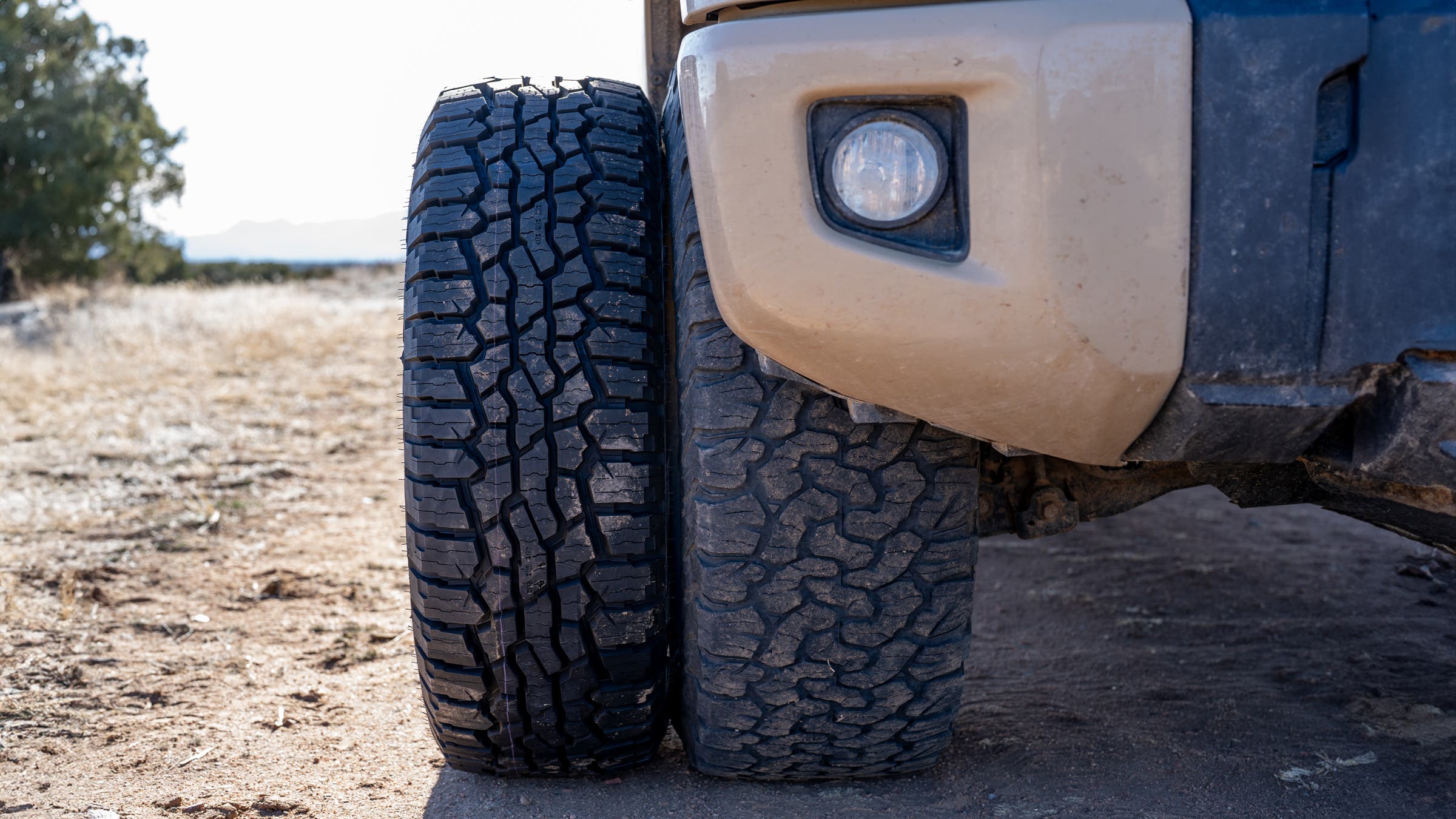
My admittedly unscientific comparison involved two different all-terrain tires:
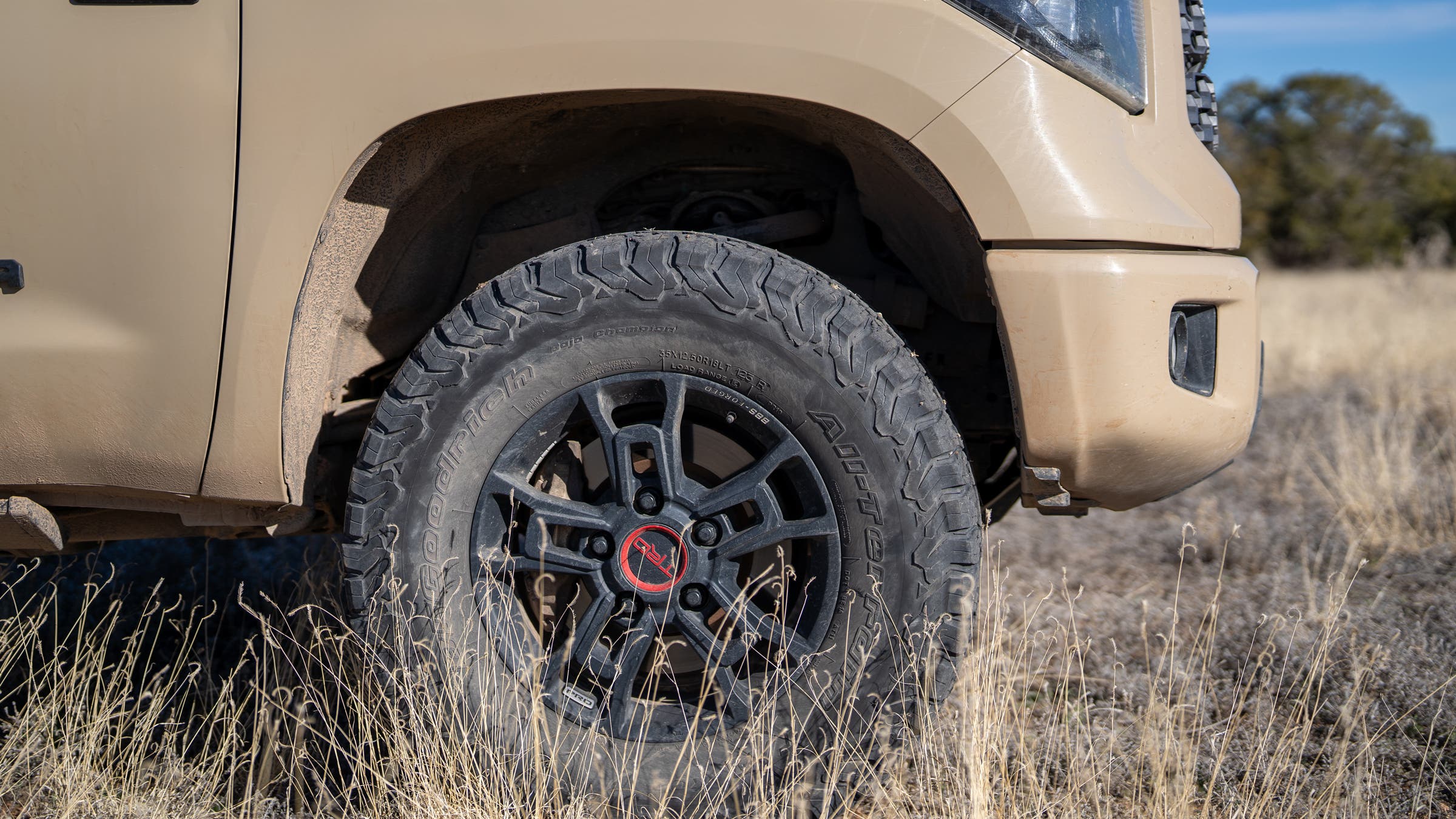
- 35s: BFGoodrich All-Terrain T/A KO2, LT35x12.5R18 (Load Range E)
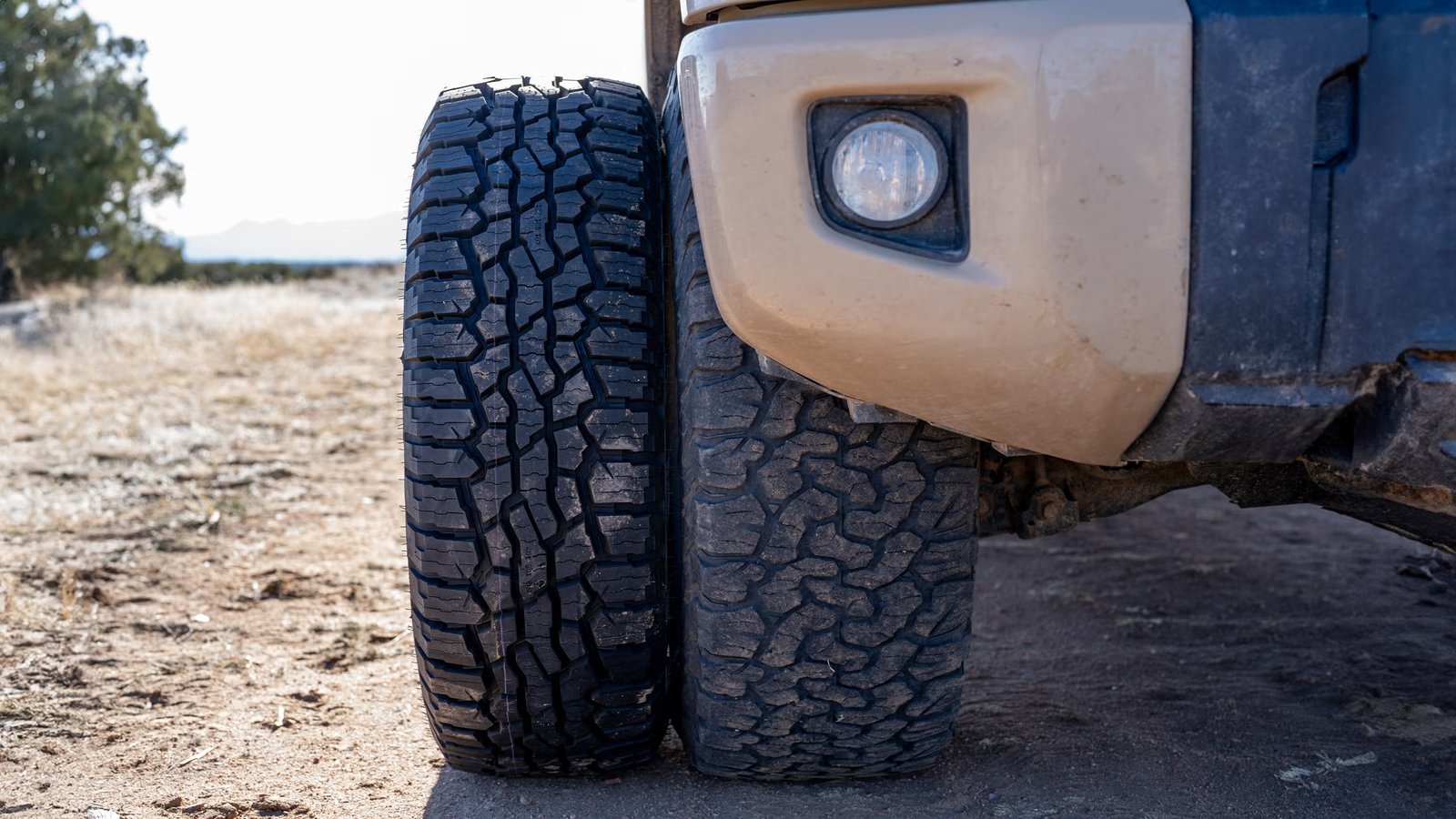
- Stock size: Nokian Outpost nAT, LT275/65R18 (Load Range E)
They aren’t identical tires, but both are aggressive all-terrain tires designed for light trucks. The BFGs were well used; the Nokians were brand new. I chose the Nokians intentionally—they’re among the lightest all-terrain tires available while still offering serious off-road capability and excellent snow performance.
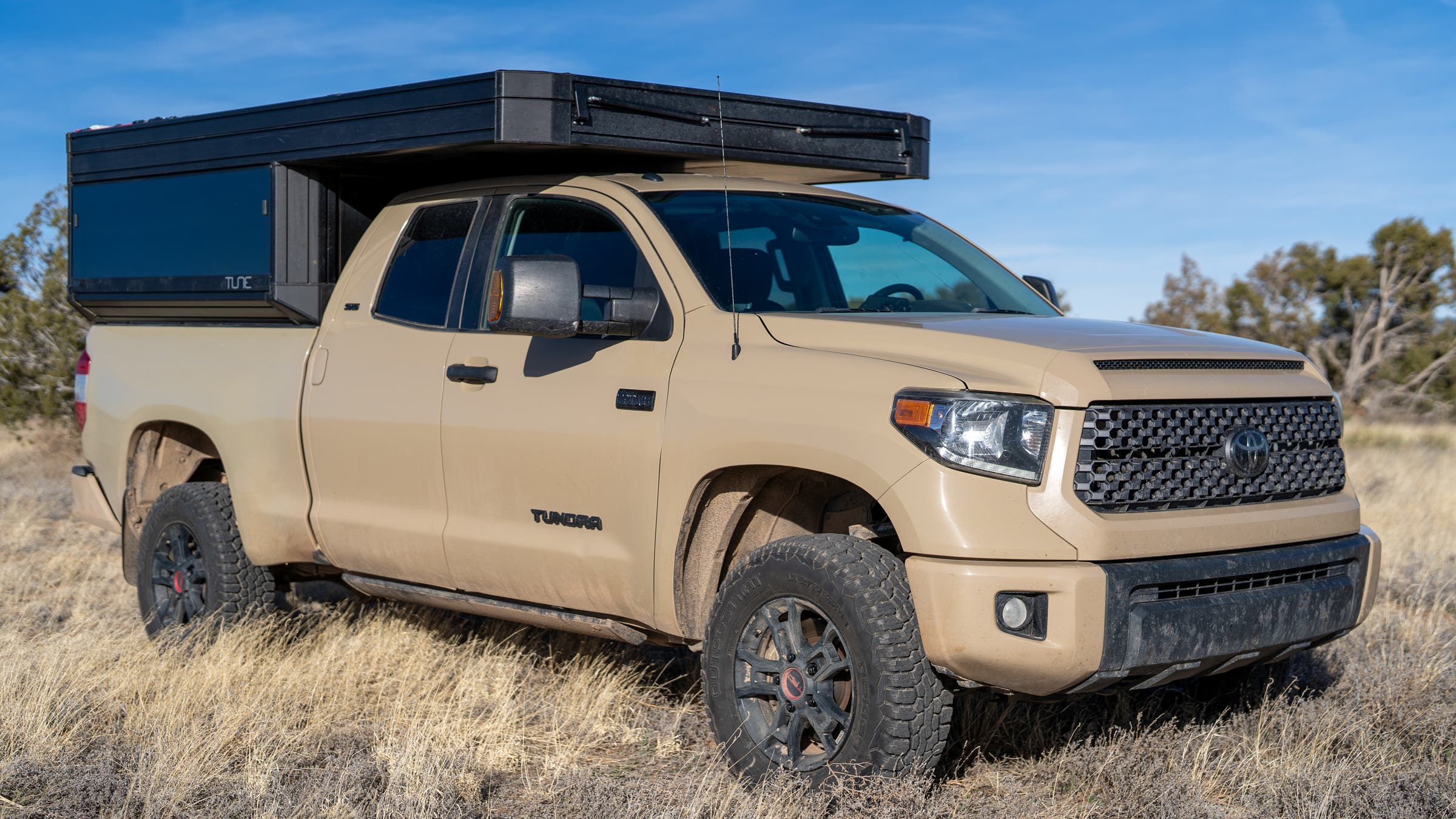
My truck also isn’t stock. It runs a 2.5-inch lift and a lightweight Tune M1 camper, both of which reduce fuel economy through added weight and drag. Those variables stayed constant; only the tires changed.
I evaluated drivability (acceleration, maneuverability, highway gear hunting, ride quality), fuel economy, braking performance, and off-road capability. While some of these things are inherently subjective, I designed some tests to give me real numbers: For fuel economy, I drove the same 100-mile mixed loop and hand-calculated mileage rather than relying on the truck’s computer.
Here’s the data I compiled.
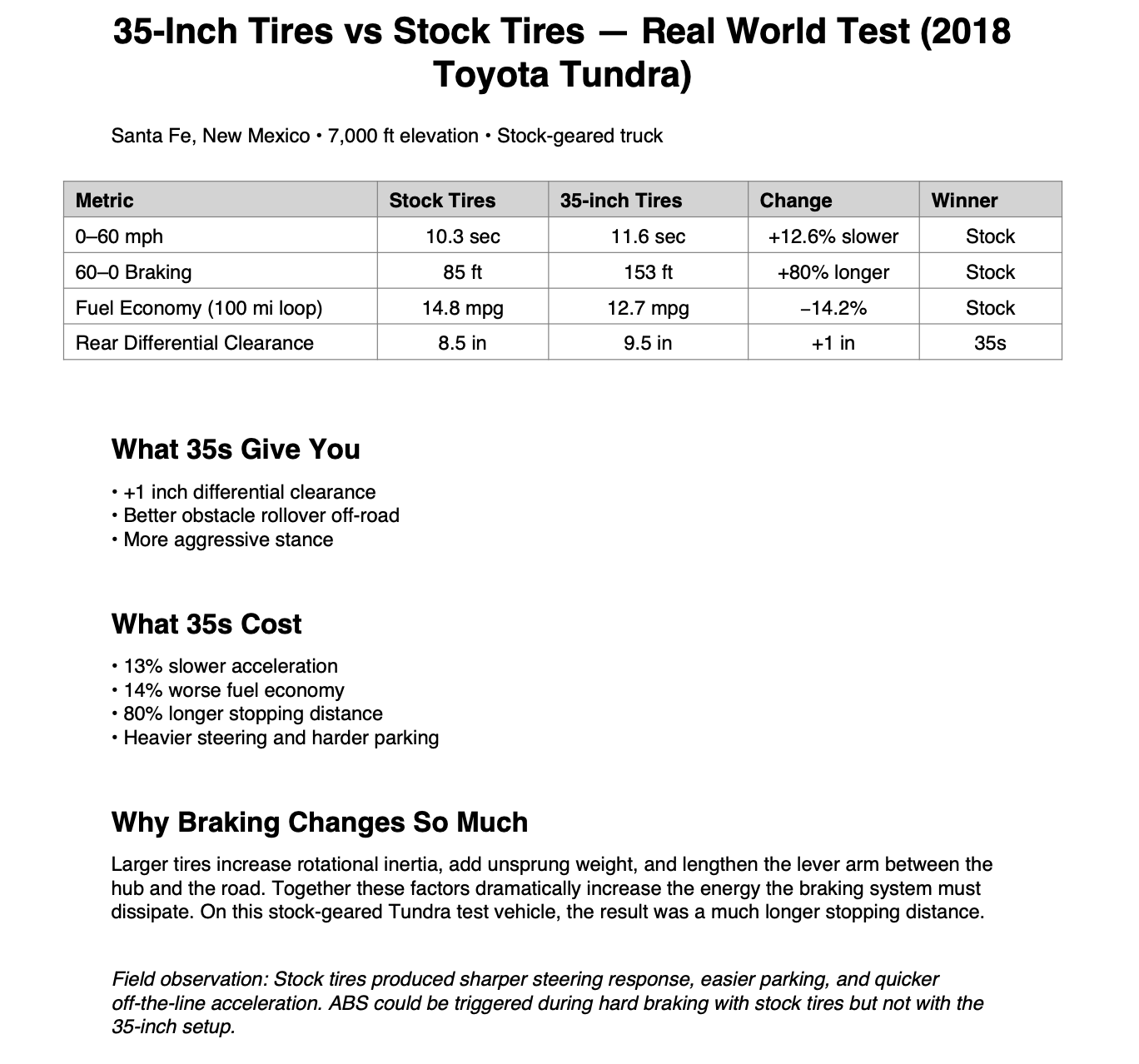
A quick glance at the cart makes one thing obvious: the truck objectively performed worse on the road with 35s on it (duh). But what surprised me was how noticeable the difference felt from the driver’s seat.
With stock-sized tires, the truck accelerated more eagerly, steering felt sharper, and parking was easier. The smaller tires also eliminated gear hunting while going up a grade on the highway (which used to drive me nuts), and the tires no longer rubbed when the steering wheel was at full lock.
But the biggest surprise was braking.
During repeated simulated panic stops from 60 mph, I couldn’t get ABS to activate with the 35s installed. With the stock-sized tires, ABS engaged immediately. I knew the brake pedal felt softer with the larger tires, but I had no idea stopping distances had increased by roughly 80 percent. That’s enormous—and also a topic you almost never see covered whenever you read or watch content about overland builds online.
Why Stopping Distance Changes So Much
Some differences likely come from tread compound and tire age, but the primary factors are weight and physics.
The BFGs weigh 68 pounds each; the Nokians weigh 53. Switching tires removed 15 pounds per wheel. That might not sound like a lot of weight for a pickup truck—and in terms of fuel economy and acceleration, it really isn’t—but my results showed it was a lot for the Tundra’s brakes. (And for those wondering, I just had the brakes serviced in July of 2025, or about 10,000 miles ago). Larger tires increase rotational inertia and lengthen the lever arm between hub and road, forcing the braking system to work harder. Those 35s were also an inch and a half wider, so the weight of the truck was spread out more over the larger contact patch. That’s a plus off-road in low traction situations, but clearly doesn’t do you any favors when trying to stop on pavement.
It’s the same reason folks often opt for narrower snow tires: a narrower tire concentrates the vehicle’s weight onto a smaller surface area, putting more weight per square inch on the ground and creating higher pressure on the road for better grip.
Can You Fix the Downsides of Bigger Tires?
If you insist on oversized tires, you can mitigate some issues—but it gets expensive quickly.
To address the loss of power and fuel economy, many folks “re-gear” their rigs. Re-gearing your truck’s axles with a numerically higher aftermarket ring and pinion set basically brings the vehicle’s gear ratio back to what it was from the factory when running larger tires (you can sort of think of it like switching to a larger front chainring on your mountain bike).
I did this to my 2000 Jeep Cherokee years ago, switching from the factory 3.55 gears to 4.56 gears when I mounted 33-inch tires. It makes a tremendous difference in drivability, but it’s expensive: It typically costs between $3,000-$5,000, and it’s a difficult job best left to a seasoned, 4×4 mechanic.
Aftermarket brake kits from companies like Alcon or PowerStop can help address stopping performance, though kits for my truck range from $1,200 to more than $5,000 before installation.
On some vehicles, you might also need to buy an aftermarket programmer to re-calibrate your rig’s speedometer. When you fit larger tires on a truck, those tires spin at less revolutions per mile, so they throw off your odometer, too—TireSize.com is a great tool where you can play around with this and see how various tire sizes compare. When my truck was running 35s, my speedometer read 80mph when I was actually traveling 87.2 mph.
And depending on vehicle and tire size, additional upgrades—CV axles, steering components, and other driveline parts—may become necessary to handle the added stress.Spending thousands of dollars just to make your vehicle drive like it did from the factory never really penciled out for me.
But Don’t You Need Big Tires Off-Road?
If you’re reading this and thinking, “yeah, nerd, got it… but I need big tires for all the serious off-roading I do,” chances are you’re wrong and you’re sacrificing a lot just for looks.
Unless you’re rock crawling or running “Difficult” to “Extreme” trails every weekend, a high-quality all-terrain tire in the factory size will get a modern 4WD truck or SUV to 99 percent of the places most people want to go.
I spent nine months running 35s over rough Forest Service and BLM roads during hunting season. Despite the extra inch of ground clearance and larger footprint those tires afforded, I rarely noticed a meaningful advantage for the kind of driving I actually do. Since returning to stock-sized tires, I haven’t encountered a single obstacle where bigger tires would have made the difference.
Conclusion
If all of this resonates, I highly recommend reading this article by overlanding legend and co-founder of Overland Journal, Jonathan Hanson. In it, he makes a case for why you should actually avoid several popular adventure rig modifications—including big tires.
Another important point: you can still modify your vehicle’s suspension without slapping on a big tire. I upgraded my truck’s suspension several years ago in order to better handle the weight of a camper and improve the ride on rough dirt roads. Typically, folks also add larger tires when they do that, so I did, even though it’s unnecessary. Now I wish I hadn’t.
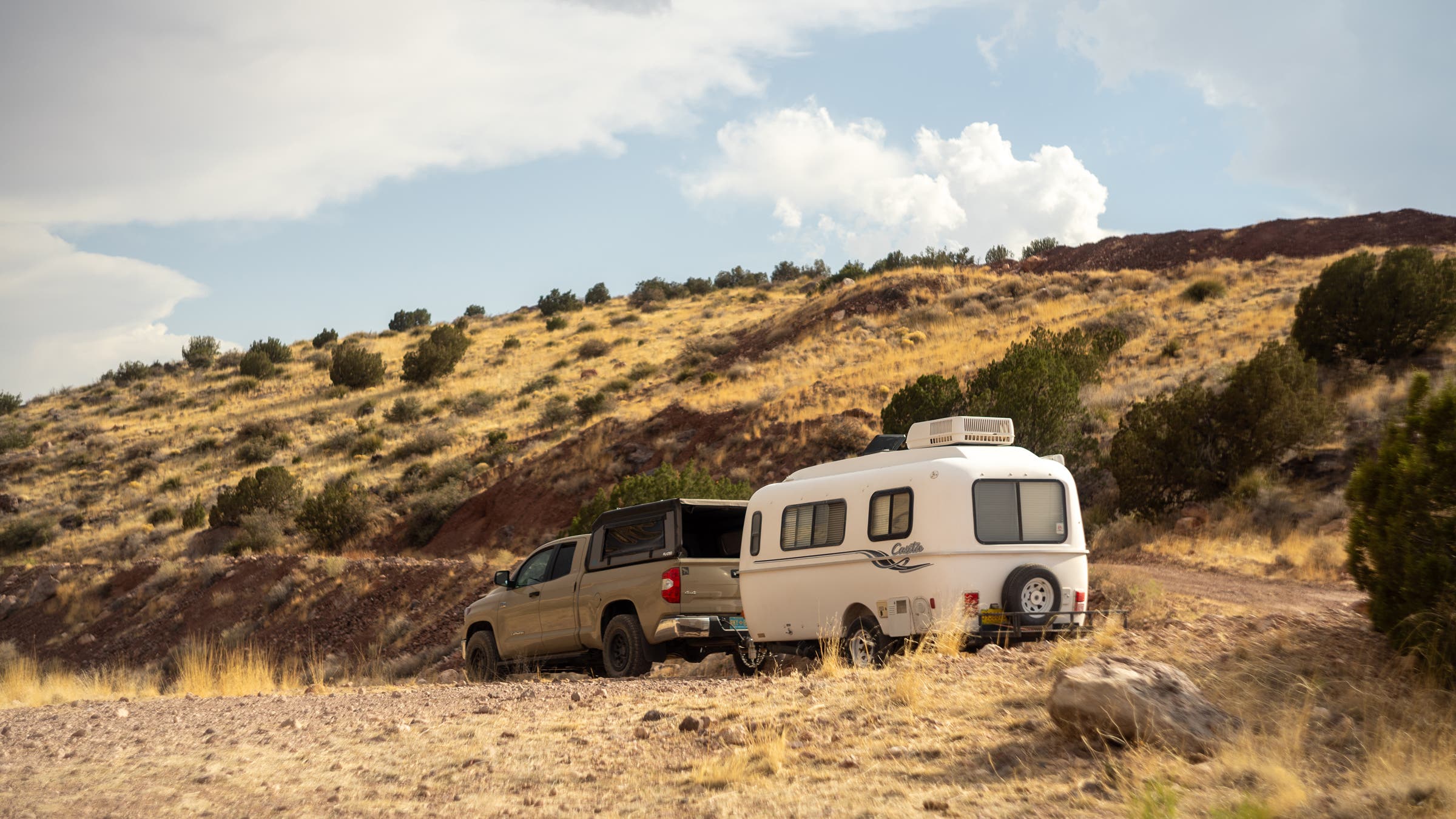
My truck might not look as cool as it did on 35s, but I’ll trade a few style points for a vehicle that works as designed, puts less stress on components, and—most importantly—stops dramatically faster. That lesson hit home the day after reinstalling stock-sized tires on my truck. Driving to a backcountry hut through northern New Mexico and southern Colorado, we encountered more elk along the highway than I’d seen in a decade. I had to slam on the brakes three separate times to avoid hitting one. And I was very thankful for those lame little tires.
