

Published March 21, 2026 06:09AM
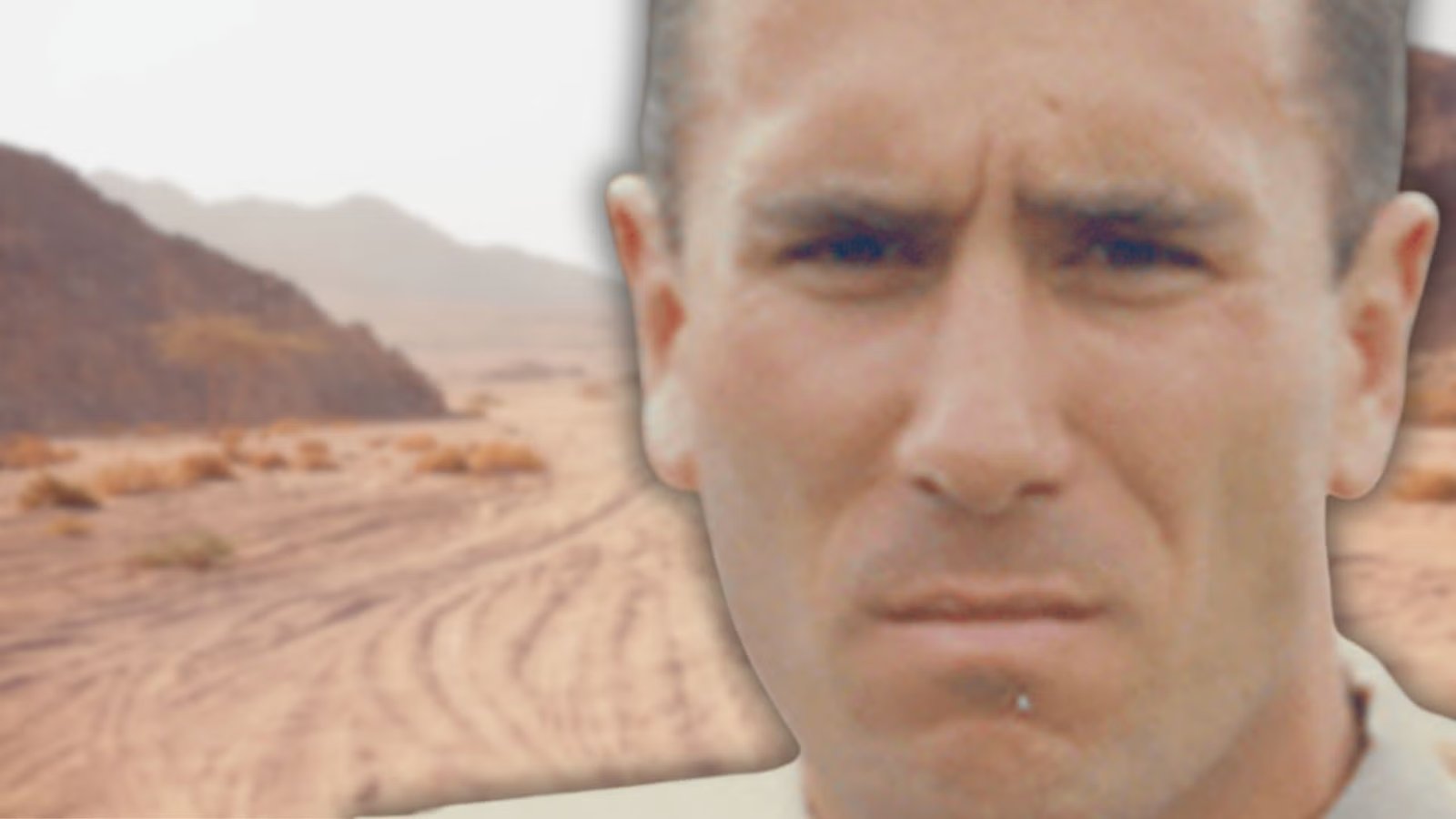
On the morning of June 11, 1998, former Los Angeles County Sheriff’s Deputy (LASD) John Aujay set out for what was meant to be a routine training run at the Devil’s Punchbowl—a high-desert nature preserve where the rugged terrain of the San Gabriel Mountains meets the arid edge of the Mojave Desert. At the time, the 38-year-old Army special forces veteran was training for the upcoming Western States 100-Mile Endurance Run, a challenging race through steep mountain terrain in Northern California.
He was never seen or heard from again.
Decades later, journalists Hayley Fox and Betsy Shepherd spent more than a year investigating Aujay’s disappearance as part of the eight-part limited-series podcast, Valley of Shadows. The story takes listeners on a tour of Southern California subculture in the nineties, exploring themes of its extreme desert landscapes and outdoor-adventure terrain.
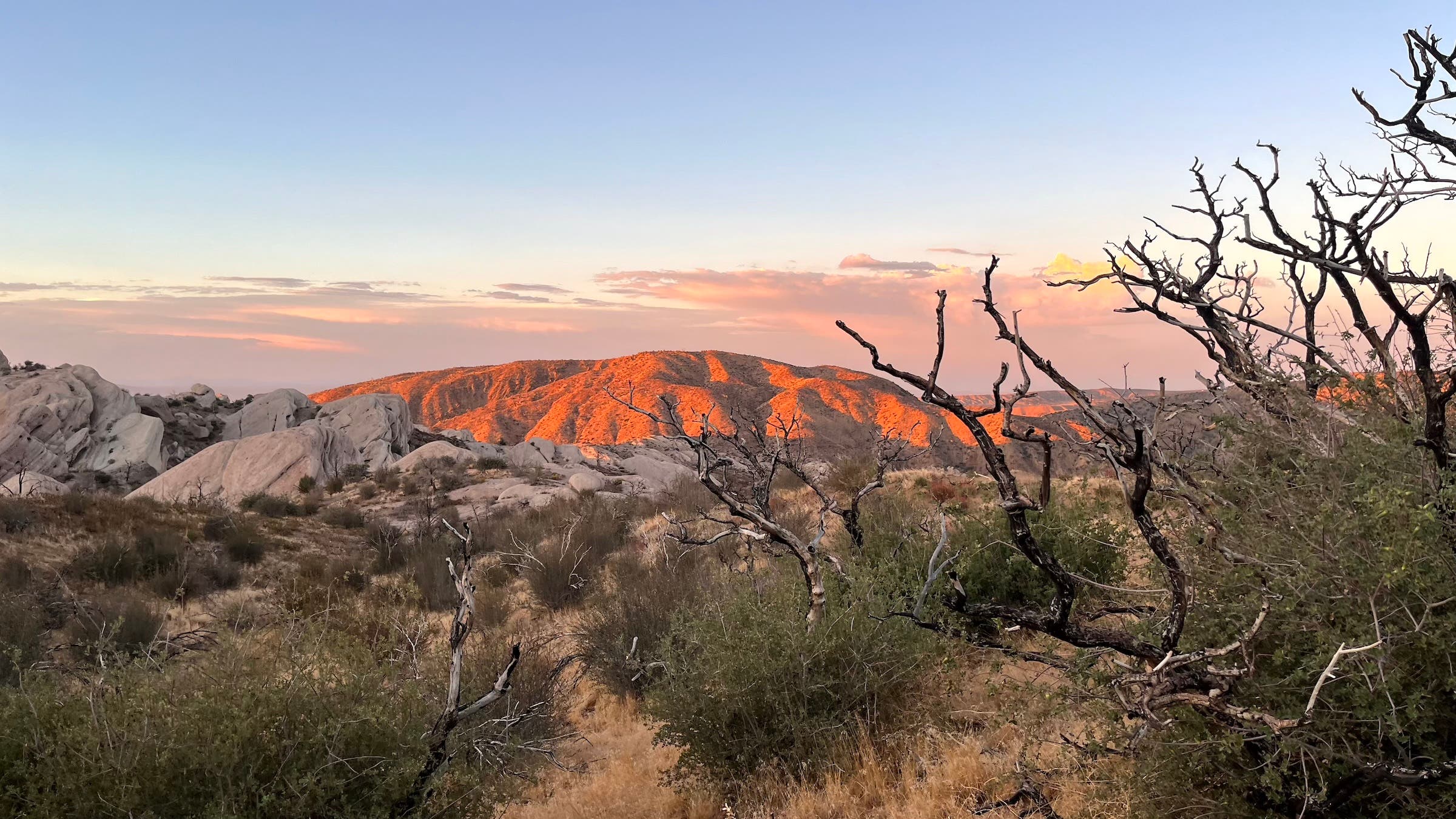
“The Devil’s Punchbowl is this really beautiful, stark, kind of otherworldly landscape. It’s where the Angeles National Forest, the Mojave Desert, and the San Gabriel Mountains all converge. Aujay would make this big loop around the area, going through all of these different landscapes,” Shepherd told Outside.
Aujay was a survivalist, an experienced runner, and a self-efficient outdoorsman. He was also a member of the LASD elite Special Enforcement Bureau, which handled SWAT and K-9 operations. Before joining the LASD, Aujay served as a paratrooper in the U.S. Army’s Special Forces.
“Then he vanishes into thin air,” Shepherd said. “That’s where our story begins.”
Antelope Valley’s Remote Body Dumping Ground
Located roughly an hour northeast of Los Angeles, the isolated Devil’s Punchbowl Natural Area spans about 1,300 acres in L.A. County. Known for its dramatic 300-foot canyon walls, scenic overlooks, and opportunities for hiking and climbing, the remote landscape is also part of the Antelope Valley. This area has gained notoriety in true-crime discussions as a so-called “body dumping zone,” Fox and Shepherd told Outside. During their reporting, the two came across reports of dozens of corpses turning up in the area around the time of Aujay’s disappearance.
“This is not just a story about one person’s disappearance. This is a story about a larger true crime phenomenon that’s happening outside of the normal checks and balances of modern society in a place that’s remote, hard to get to, and beyond the purview of public safety,” said Shepherd.
Sparsely populated and enormously vast, the Antalope Valley, where Devil’s Punchbowl is located, is separated from L.A. by the San Gabriel Mountains. A combination of geography and lack of law enforcement resources has created a criminal subculture that the podcast hosts described as a hotbed of violence, violent crime, and drug activity.
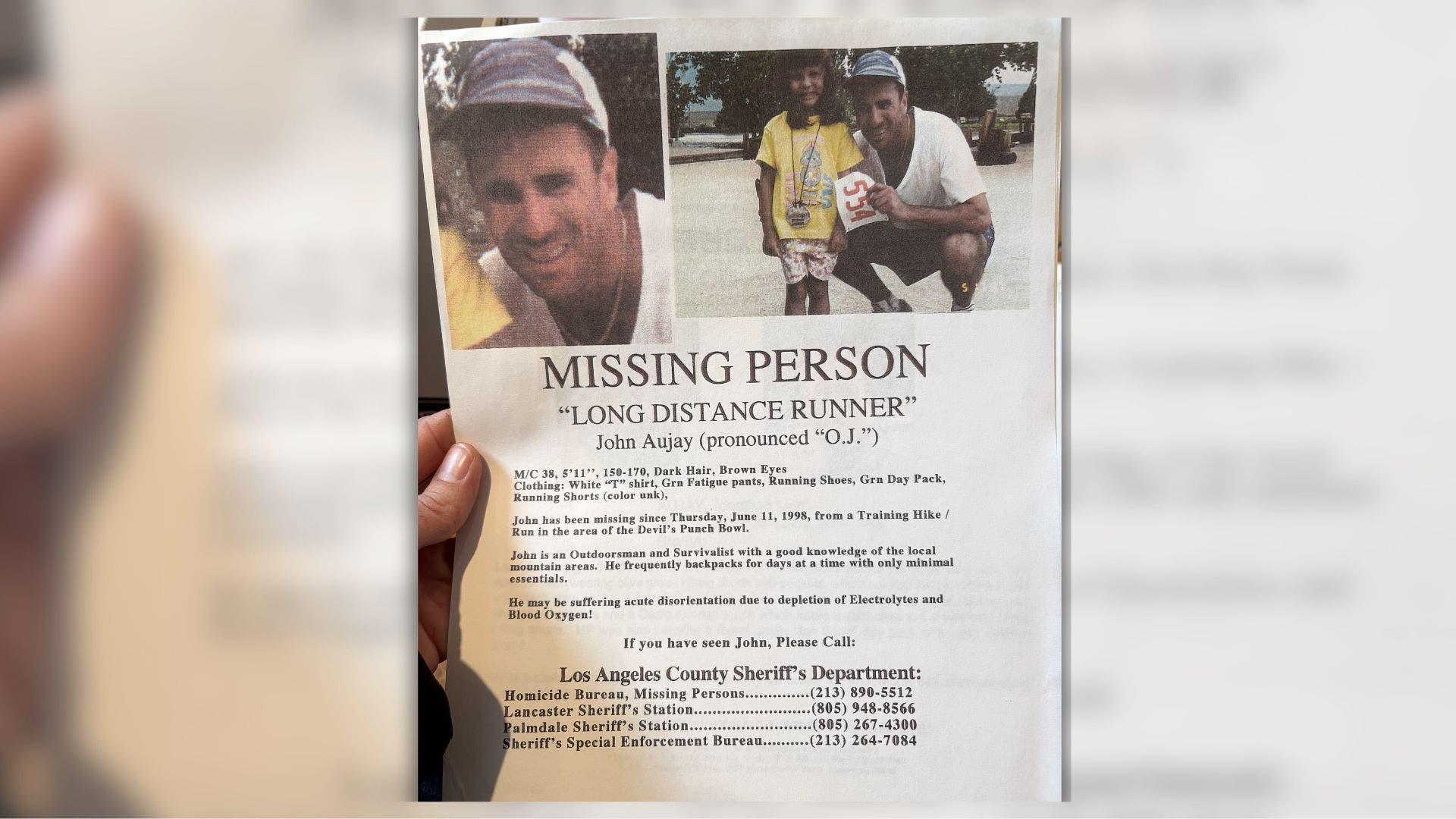
At five feet eleven inches and 165 pounds, the Aujay was described on his missing person poster as being an “outdoorsman and survivalist with a good knowledge of the local mountain areas.” He frequently backpacked for days at a time with only minimal essentials, it read. A California missing person report also noted that he was last seen wearing a white T-shirt, green fatigue pants, running shoes, and a green day pack.
Theories of Foul Play in Aujay’s Disappearance
According to the podcast, shortly before 11 P.M. on the night of his June 11 run, Aujay’s wife, Debbie, called law enforcement to report her husband missing. She said she had last spoken to him around noon and had expected him to be home before dark.
Officials began searching for their colleague late at night. They found his white Ford F150 parked in a space near the trailhead entrance, a spot that Park Ranger Jack Farley told the hosts was his usual one. The vehicle sat locked, with a sun visor propping his off-duty silver five-shot revolver in the dash.
The next morning, search-and-rescue efforts included dozens of responders, tracking dogs, and a newly established command post in the park. Witnesses reported seeing Aujay at area picnic tables and running the trail before his disappearance, with at least one person saying they saw him pass through the area around 6 P.M. One local resident near the trailhead reported hearing a single gunshot ring that evening.
The Valley of Shadows summarizes the numerous tips received by the department’s missing persons unit. Many alleged that Aujay was the victim of foul play. In the nineties, Antelope Valley was a known methamphetamine trafficking area frequented by outlaw motorcycle clubs and other forms of criminal activity. In 2001, three years after Aujay’s disappearance, law enforcement arrested nearly 300 people tied to illegal drug trafficking as part of a sting known as Operation Silent Thunder.
LASD called off the search after six days. Former deputies who spoke with the podcast said the department seriously pursued one theory: that Aujay died by suicide.
Authorities never found his body. Some believe Aujay could have had an accident during his run and fallen into a hard-to-reach space. Fox and Shepherd believe something more nefarious happened to Aujay.
A Brutal, Stark Yet Stunning Landscape
As part of their investigation, the journalists weave through allegations of institutional corruption, secret police operations, drug trafficking, and an overnight visit to the Devil’s Punchbowl. Aujay’s story is closely tied to the landscape where he disappeared, and the duo knew early on they wanted to experience it firsthand.
“Of course, we wanted to explore what happened to him, but also get to what it is about this place that draws people to it. It’s beautiful. It’s stark. It’s a brutal landscape that appears inhospitable to human life,” Shepherd said.
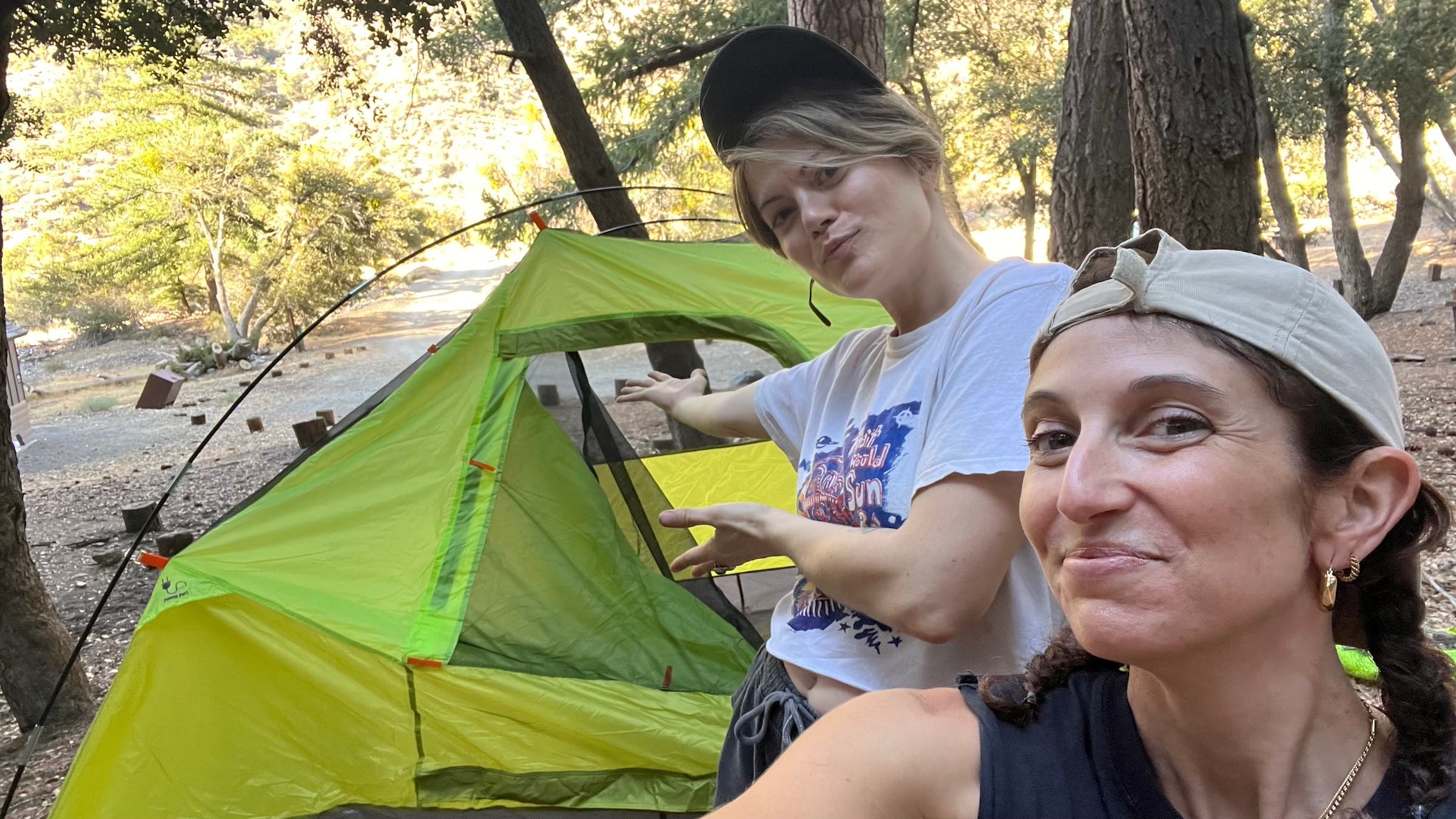
In the fifth episode, Fox, who described herself as a city mouse, and Shepherd go camping in the wilderness, near where Aujay disappeared.
“Reporting this story specifically takes the listeners and us to some uncomfortable places. It really is so necessary to get the full texture and nuances of the story to figure out what happened to Aujay,” Fox told Outside.
On the Valley of Shadows podcast, the two spoke of the smells of sagebrush and cowboy cologne that wafted by when the wind picked up. The sunset skies are cotton-candy colored.
“You really do have this experience of the sublime, and we tried to capture that, especially in the later episodes, as we realized that this was the place that we kept returning to,” Shepherd told Outside.
Aujay’s Mystery Reveals the Hidden Dangers Lurking Beyond the City
Understanding the character of the Mojave Desert was key to unraveling the circumstances of Aujay’s disappearance and the suspicion surrounding it, the hosts told Outside. Desert landscapes are conducive to crime because they are desolate and out of sight of watchful eyes, said Shepherd.
While the podcast itself goes into the specifics of Aujay’s case, Shepherd and Fox say there are still many unanswered questions they hope their story will help illuminate. The hosts added that they hope Aujay’s story will give listeners a chance to realize that complex, adventurous stories involving psychological, political, and cultural factors exist outside of metropolitan areas.
“Up until the last few years, I viewed nature as purely serene, attractive, beautiful refuges from the city. Despite my occasional discomfort with natural landscapes, they never posed a threat to me. That changed,” Fox said. “Oftentimes, it’s what is happening outside of cities and under the radar that can be the most troubling, disconcerting, and, frankly, surprising.”
The podcast emphasizes the importance of questioning authority and inherited narratives, and of pushing beyond one’s own bounds to uncover the truth.
“Once we started scratching at the surface of the Devil’s Punchbowl area, it was just layer after layer,” Shepherd said. “It was an adventure in terms of going out camping and hiking. It was also an adventure into understanding the things that are happening right here in our backyard.”
Anyone with information involving Aujay’s disappearance can contact the LASD or the FBI.
