

I expected a quiet family visit, but ended up in an assembly line of volunteers shoveling heavy mud away from flooded homes. This is the visceral reality of a record-breaking storm that has changed life on Oʻahu.
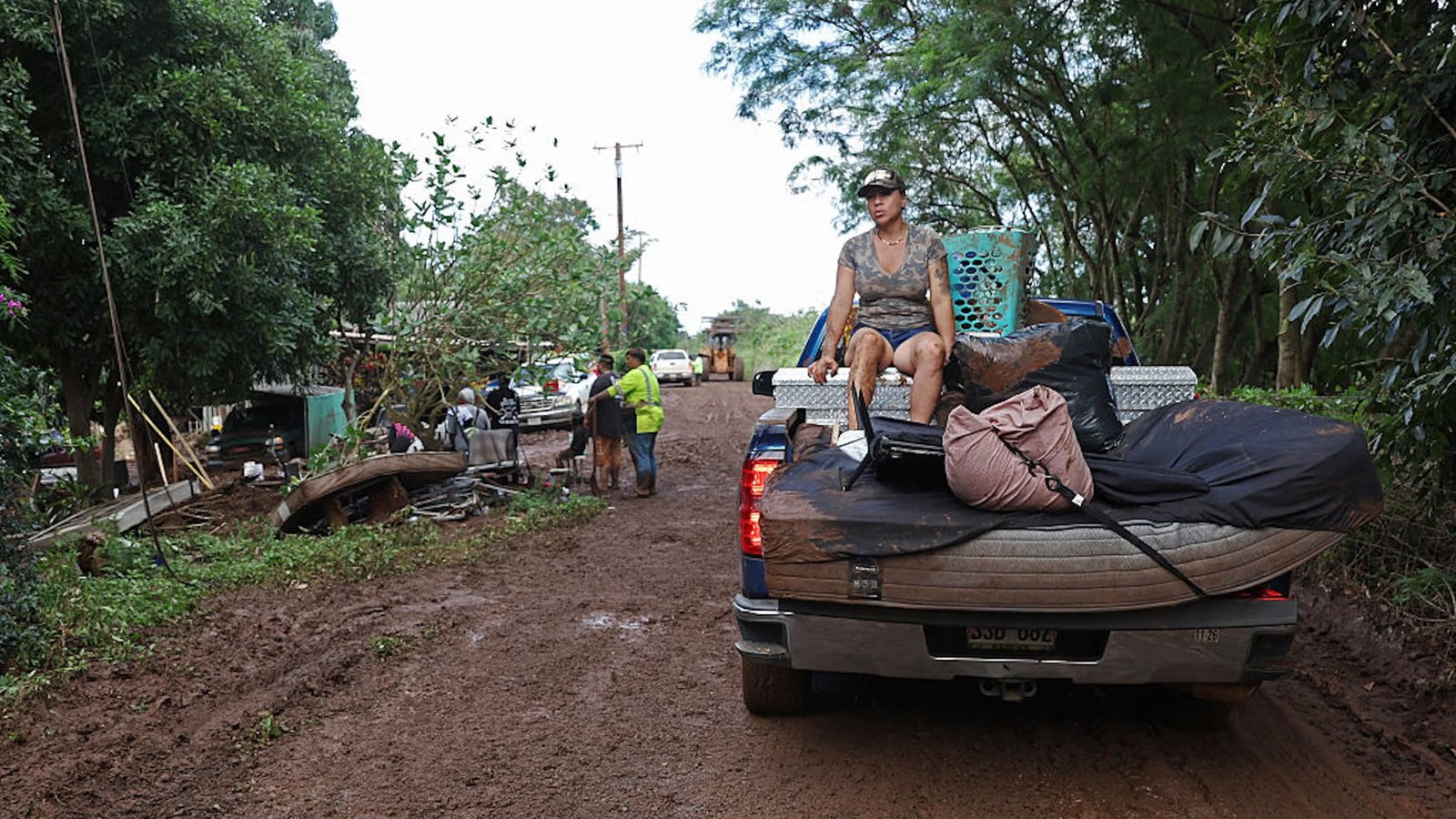
A woman sits on the back of a pickup carrying a ruined mattress and other home effects after the Kona Low storm flooding that devastated the Otake Camp community in Waialua, Hawaii (Photo: Marco GARCIA / AFP via Getty Images)
Published March 24, 2026 11:43AM
Last week, two major storms dumped four feet of rain in Oʻahu and Maui, according to CBS. It’s the worst flooding Hawaiʻi has seen in two decades, and early estimates say the storms could cost more than $1 billion in damage. More than 230 people were rescued, according to the AP, and there have so far been no reported deaths. Chantell Murphy, who was born in Hawaiʻi, was in the state visiting family when she learned of the extensive damage. She’s spent recent days on the ground volunteering to help flood victims and shared with Outside what it’s like in Hawaiʻi right now.
I came to Oʻahu to visit my family on March 10. I was planning to swim every day, hike, and climb, but it’s been raining every day since I arrived. Two massive storm systems called Kona low moved through and sat over the islands for a few days, dumping feet of rain, saturating the ground, and causing devastating flooding in parts of Oʻahu.
I was born in Honolulu, and my family lives on Oʻahu. I now live in New Mexico, so I’m all too familiar with another type of natural disaster: wildfire. I had to evacuate my house in 2011 due to the Las Conchas Fire, and then, in 2022, the Hermit’s Creek Fire, which burned 340,000 acres, got within a mile of my house—as the crow flies. I know what it’s like to see ash fall like snow on your car and have to scramble at the last minute to make difficult decisions about what to take with you and what to leave behind for chance. My family in Honolulu and on the leeward side of the island was not evacuated, but one of my friends in Honolulu had to move out of her apartment due to flooding.
My friend, whose apartment flooded, texted me to go up to Waialua to volunteer. Wailalau is about 30 miles north of Honolulu. On March 22, we loaded up a car with water, cleaning supplies, and snacks from Costco and Home Depot and drove up to the Waialua Sugar Mill, where a significant volunteer and donation mobilization effort is taking place. Word has spread thanks largely to Instagram, which is currently the most up-to-date source for information from the floods. The Haleiwa Distilling company, a popular destination that makes rum and moonshine, serves as a landing spot for donations and volunteers, mainly supported by the Lahui Foundation and a massive team of volunteers organized by locals Esme Damon and Brie Thomson.
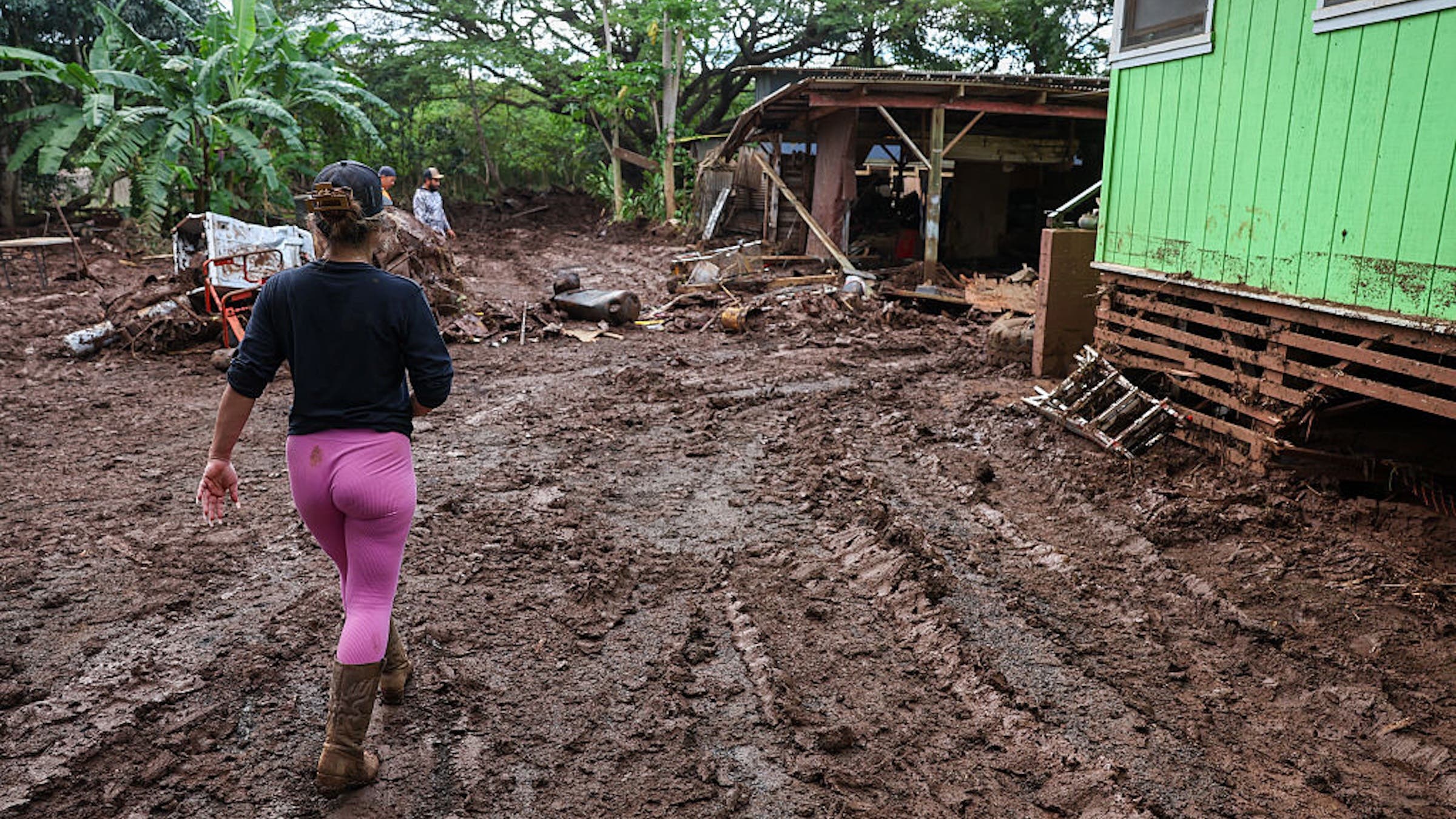
After we received direction, we hopped into the back of a truck and joined a cleanup crew. We were sent to Otake Camp in the nearby town of Wailua, a community of several houses next to the Kaukonahua stream. The flooding left the road, driveways, yards, cars, and homes covered in mud. Once we arrived, there were already multiple cleanup crews and backhoes shoveling and moving mud and hauling trash. Volunteers were handing out face masks in case anyone went inside the houses to mitigate the smell of septic overflow, agricultural runoff, and mildew.
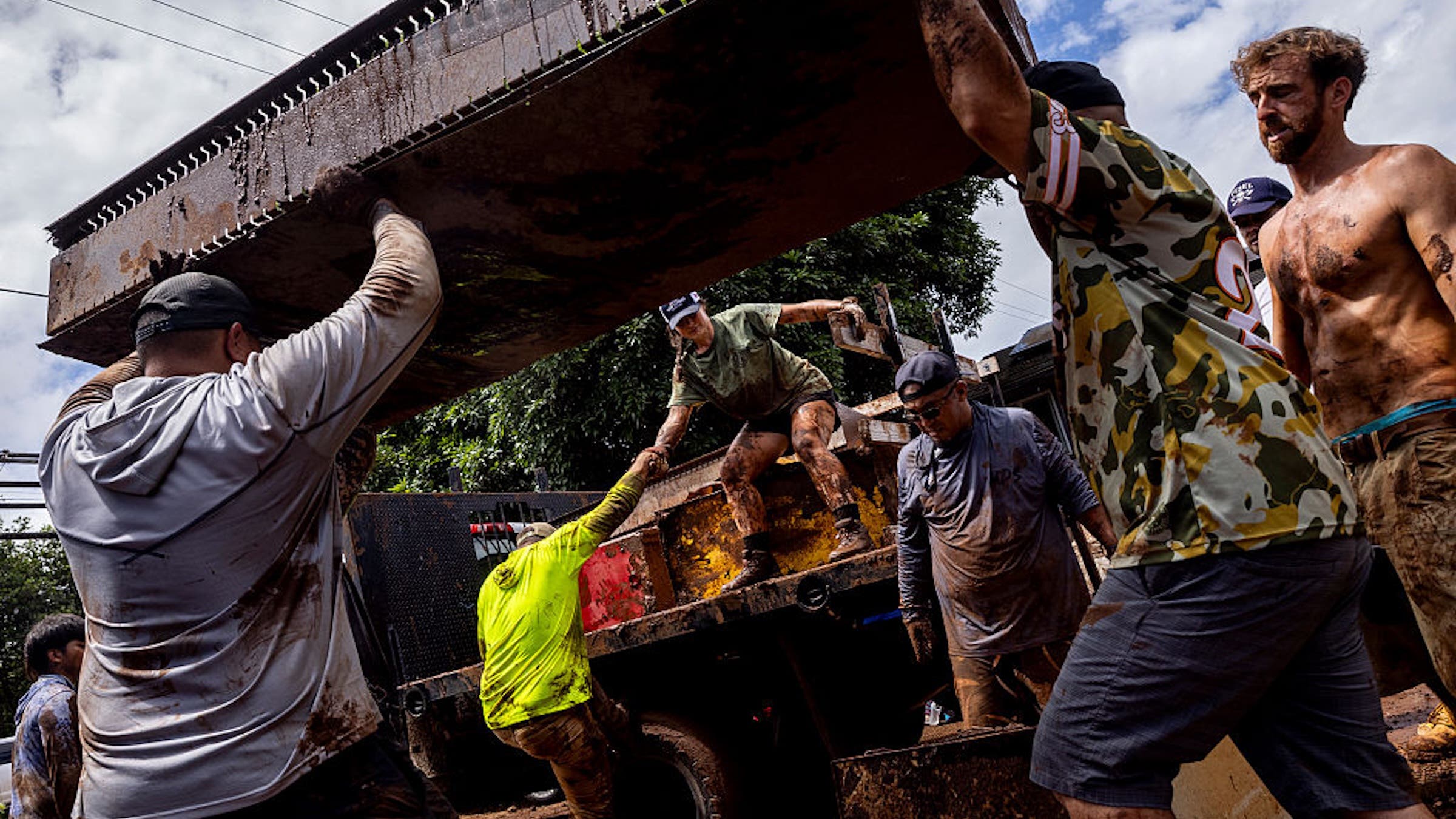
We grabbed gloves and shovels and started clearing mud from an area in front of a door. It was like moving fudge, heavy and slippery. But we were able to clear it with multiple people working together in an assembly line. It quickly became clear that heavy machinery was needed to effectively clear the mud from the area, so our crew of seven decided to give a work crew space and clear out, and we headed back to the distillery.
My friends and I stayed at the distillery for the rest of the day, organizing donations, loading and unloading cars, and assisting people who were picking up supplies. I was stationed outside helping to load and unload cars. It was nonstop. Cars kept coming, people were picking up supplies for themselves, for their neighbors, and for entire neighborhoods that did not have access to vehicles or were overwhelmed with the cleanup. The coordinators took note of areas with multiple families in need of help so we could dispatch teams to drop off supplies.
On the morning of March 23, after I dropped off my mom at work, I went back to Home Depot and picked up some of the items volunteer crews needed: brooms, dust pans, squeegees, trash bags, and towels. I sent out a message to a group chat to see if anyone wanted to carpool, but ended up heading up by myself.
Once there, I dropped off the donations and quickly hopped in another volunteer’s truck to deliver items directly to people’s homes. We could get a sense of the destruction during these drives. On Waialiua Beach Road, a major thoroughfare in town, where we delivered supplies to three houses, we saw a car wedged under a home, an entire home washed up on the side of a bridge, sidewalks washed out, and people and trucks everywhere shoveling mud and moving trash. Everywhere we looked—down side roads, at busy intersections—folks were giving out food and water, ensuring everyone from the community and volunteers were fed. Representative Sean Quinlan estimated thousands came to the Waialua Sugar Mill to get food, drop off donations, and volunteer on Sunday alone.
How to Help with the Hawaiʻi Floods
The early hours of the disaster relied on grassroots efforts, but with each passing hour, it’s becoming more and more organized. There are many ways you can help.
Rethink Your Vacation
If you come to Hawaiʻi for vacation, do not go to the North Shore of Oʻahu, which is overwhelmed with the flooding aftermath right now. Either reroute your trip, or plan a visit for another time.
How to Volunteer
If you are in the area and want to volunteer, don’t go out alone. Find a volunteer hub or fill out the volunteer form. Oʻahu Flood Relief or the Lāhui Foundation Post-flood Recovery Efforts are great places to start.
Donate
You can donate money. There are several recommended organizations to donate to right now, and the list is growing every day:
