

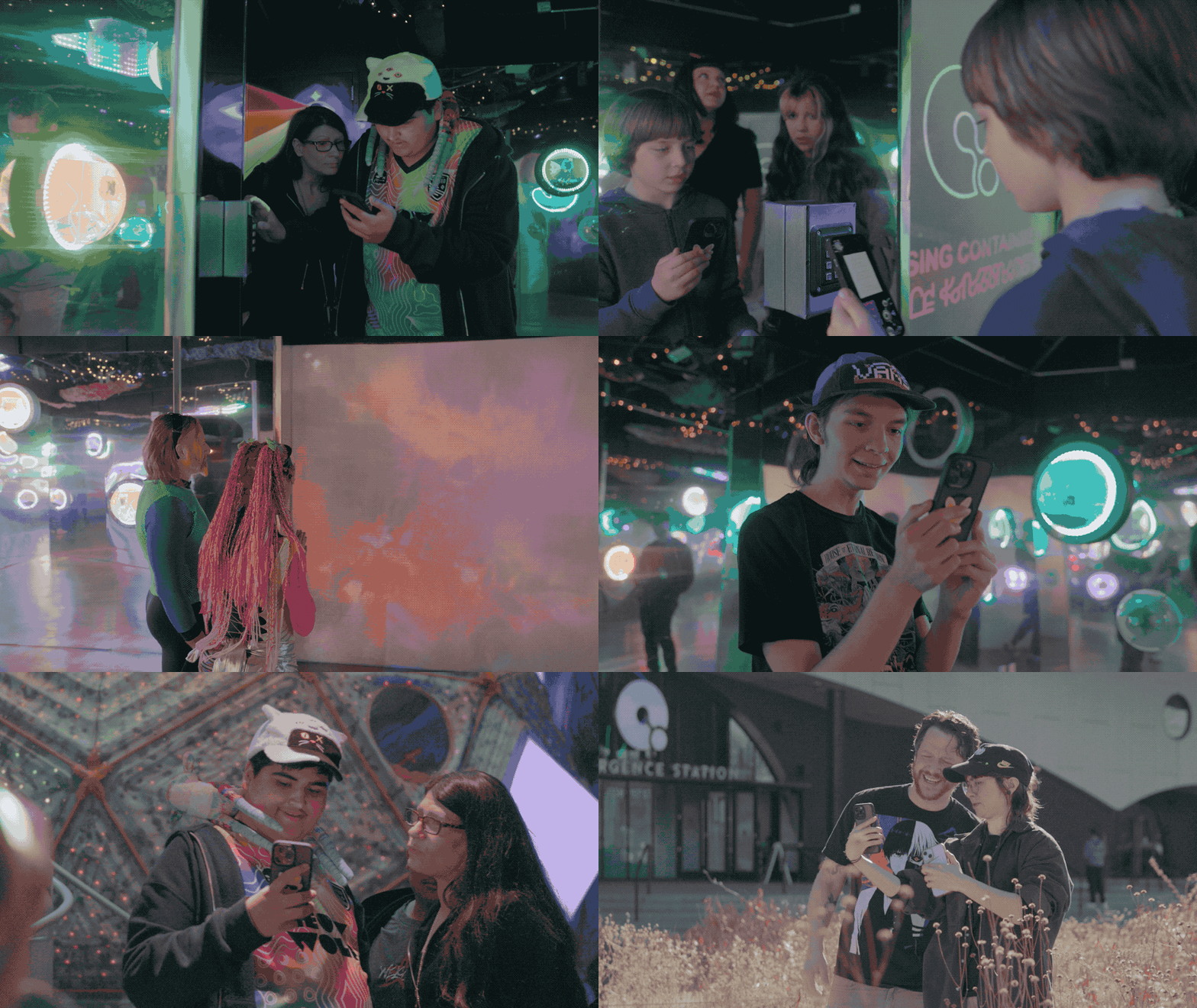
When the art collective Meow Wolf opened the doors of its very first immersive exhibition, House of Eternal Return, on March 18, 2016, it had roughly 100 employees, less than $1,000 in its corporate bank account, and a dream. Ten years later, the company employs more than 1,000 people, operates five permanent exhibitions (with two more on the way), and has welcomed more than 13 million visitors.
Meow Wolf’s early history reads like a tale of cosmic fortune: In 2008, a group of New Mexico-based artists got sick of the local art establishment; founded their own collective to host parties, rock shows, and art installations; and eventually parlayed that experience into a series of massive, surrealist fun houses backed by A Game of Thrones author George R.R. Martin.
As of 2022, Meow Wolf had amassed more than $200 million in investment capital. The company has undergone two rounds of layoffs since then—one in April 2024 and another in December of that same year—while moving forward with plans to expand its exhibition footprint. Meow Wolf declined to share current investment figures or annual revenue totals with Fast Company.
Plenty has already been written about the whirlwind of those early days. But now, looking back on it all, it’s become clear that Meow Wolf represents something much bigger than the sum of its trippy, psychedelic exhibitions. The company presaged, and in some ways kick-started, the boom of the “experience economy,” a concept business strategists Joseph Pine and James Gilmore invented in 1998 to describe a shift in consumer desire from goods and services to more intangible “experiences,” like adventures, sensations, and memories.
The experience economy is no longer a theory; it’s a flourishing business: Everyone seems to be cashing in, from the inflatable art-centric Balloon Museum to the golf-meets-art-meets-cocktails establishment Swingers and the recent immersive production of The Phantom of the Opera.
In 2022, the immersive entertainment industry was valued at more than $61 billion. In 2025, consulting firm Grand View Research more than doubled that figure to nearly $138 billion, projecting the sector will be worth a whopping $1.024 trillion by 2033. In other words, the experience economy has officially hit the mainstream.
Now, according to Vince Kadlubek, one of Meow Wolf’s original founders and its current “chief vision officer,” another big shift is coming. He believes that nascent tech and younger generations are kick-starting the “transformation economy”: the final step in Pine and Gilmore’s theory, wherein consumers are seeking not just an experience, but a personal, emotional, or spiritual outcome. They want to participate in something, and to be changed. Meow Wolf, Kadlubek says, has a plan to be ahead of that curve once again.
I sat down with Kadlubek to discuss Meow Wolf’s 10th anniversary and what’s next for the experience economy. In our conversation, he shared:
- What makes Gen Z and Gen Alpha seek different experiences
- What Meow Wolf believes is the next big play
- How Meow Wolf is doubling down on the physical world in the era of AI
- What to expect in the transformation economy
Meow Wolf may have already forged an impressive brand story, but if Kadlubek has anything to say about it, the best is yet to come.
“I think that we’re on the precipice of being able to have a next-generation storytelling ecosystem that is one-of-one in the world,” he tells me. “It’s crazy for me to say that, but that’s what the goal’s always been, and we’re literally on the doorstep of being able to achieve that.”
The extended deadline for Fast Company’s Best Workplaces for Innovators is Friday, April 3, at 11:59 p.m. PT. Apply today.
