

Published April 9, 2026 04:00AM
Imagine you’re browsing the gently used gear at an REI Re/Supply and come across a sleeping bag. It’s in good shape and priced right. You need a new sleeping bag anyway for camping this summer, but what if this one’s teeming with the previous owner’s germs? Ick.
But wait—alongside the price tag, you notice another tag certifying it has been cleaned by a company called Tersus Solutions. The ick-factor fades, and you head straight to checkout.
Tersus Handles the Dirty Work
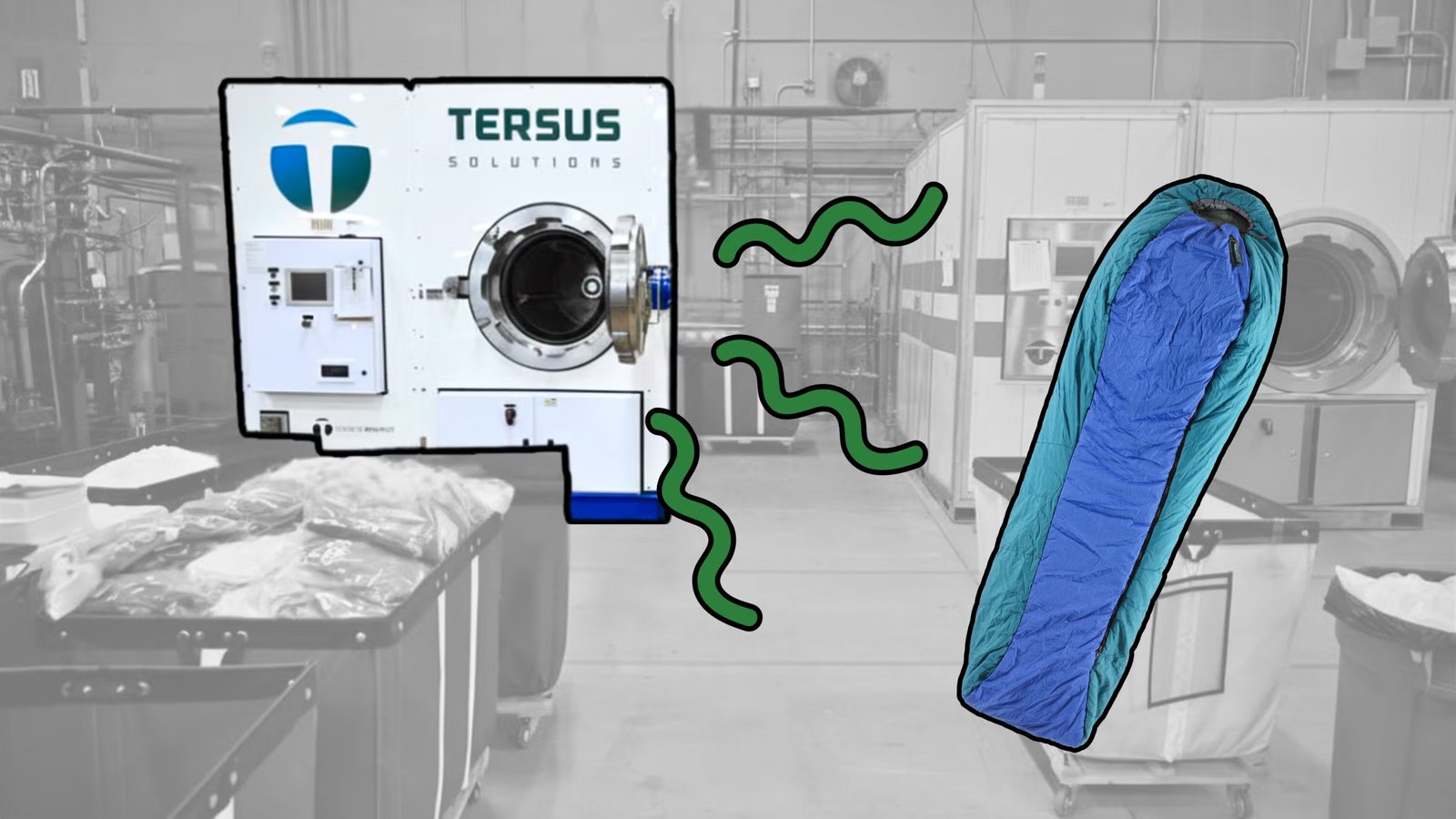
That little tag? It means your new-to-you sleeping bag wasn’t just cleaned on a normal soap and spin cycle. In a Denver warehouse, this bag was sealed inside a massive steel drum and flooded with carbon dioxide (CO2). Under pressure, the gas turned liquid, moving through the smallest pores of the fabric to pull out dirt, body oils, and whatever else it picked up in the backcountry.
Not a drop of water was used in the process—Tersus’s key differentiator. The Colorado-based waterless cleaning company partners with outdoor retailers like REI, Stio, Arc’teryx, The North Face, Cotopaxi, and Lululemon to power the logistics of in-house repair and recommerce programs, restoring gear to its fullest potential and getting items back into a customer’s hands.
Historically, brands make a product, sell it, and move on. Once a jacket or sleeping bag leaves the store, there’s little visibility into where it ends up unless it comes back as a return. Sometimes it’s reshelved, but often it’s diverted instead to liquidators, landfills, or incineration—where it’s broken down, buried, or burned, releasing carbon and other pollutants into the air and wasting perfectly good resources embedded in the material.
But as more outdoor brands take responsibility for what happens to gear after the sale, Tersus Solutions has become an alternative for those aiming for circularity and minimizing waste.
“We’ll find a way to revalorize or remonetize that product,” says Tersus Solutions CEO Peter Whitcomb, who once led REI’s circular commerce team. “The highest use is ideally a second home.”
Using CO2 as a Cleaning Tool
When Tersus first started out in 2009, it manufactured machines for industrial and commercial laundry operations in the hopes of replacing traditional dry cleaning, a notoriously (and ironically) dirty industry. (One of the most commonly used dry cleaning solvents is perchloroethylene, a potential human carcinogen, according to the U.S. Department of Labor.)
Among the first buyers of a Tersus machine was Patagonia, says Whitcomb. By 2017, Patagonia returned the equipment, finding it difficult to dedicate the internal resources necessary to keep the cleaners churning (especially since the initiative was outside their wheelhouse of manufacturing and merchandising gear). This shift prompted Tersus to evolve; if brands wanted to outsource labor, Tersus would fill the gap, transitioning into a dual role as a manufacturer and a full-service commercial cleaner.
These specialized washing machines come with a few caveats. Firstly, they’re enormous. One model has a 400-liter drum, another has a 700-liter drum, whereas your typical at-home washing machine drum is between 50 and 150 liters. Second, they require huge tanks of CO2—picture the vessels behind a brewery—to continuously power wash cycles.
Right now, Tersus gets its CO2 by “recycling” it from a nearby ethanol plant. The gas is a natural byproduct of the plant’s fermentation process—so instead of that CO2 ending up in the atmosphere, Tersus captures it and puts it to work. Whitcomb’s dream is to eventually recapture CO₂ directly from ambient air. About 95 percent of the CO2 is reused from cycle to cycle, Whitcomb says.
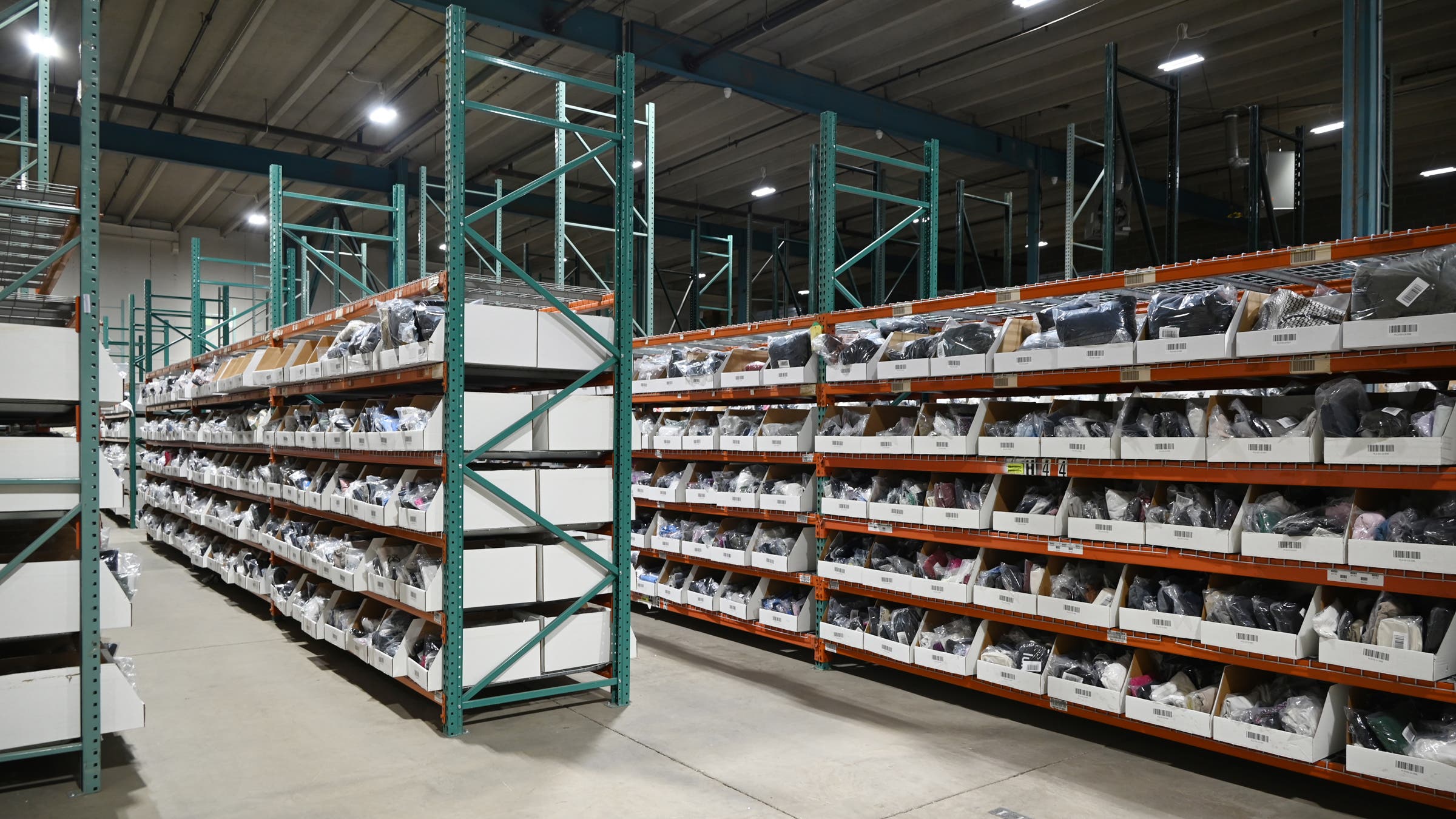
Before gear is loaded into the vat, Tersus employees evaluate, sort, and label items to ultimately determine if they’re acceptable for a brand’s recommerce program. If they don’t qualify, roughly 10 to 20 percent of items are recycled, upcycled, or donated instead.
Because liquid CO2 behaves more like a solvent than water, it moves through even the tightest woven fabrics without swelling fibers, leaving soapy residue, or stripping finishes. Instead, it lifts out the contaminants that, over time, can degrade waterproof membranes and insulation.
Those contaminates and particulates are then collected and disposed of “in accordance with all local, state, and federal environmental regulations” according to the company.
After the cycle ends, the machine depressurizes and the items—up to 200 garments or 12 sleeping bags in the 700-liter drum—come out completely dry. Conventional washing, by contrast, often requires multiple dryer cycles where heat can degrade technical coatings. Plus, the typical high-efficiency wet washers and dryers use about 90 percent more energy than the Tersus machine, notes Whitcomb.
Cleaning with liquid CO2 is a newer technology, so there aren’t many studies out yet or experts familiar with the approach. A white paper authored by Tersus for the California Energy Commission and U.S. Navy found that compared to conventional water-based industrial laundry systems, the CO2 system saved 15 percent more energy, water, and natural gas combined.
An independent study from 2022 found that liquid CO2 effectively removed an average 95.36 percent of carcinogenic contaminants from firefighter gear compared to a conventional wash which only removed 68.77 percent. (Tersus also washes firefighter gear.)
The Limits of Circularity in Textiles
Tersus is scaling its operation, including opening a fifth facility in Calgary, Canada later this year.
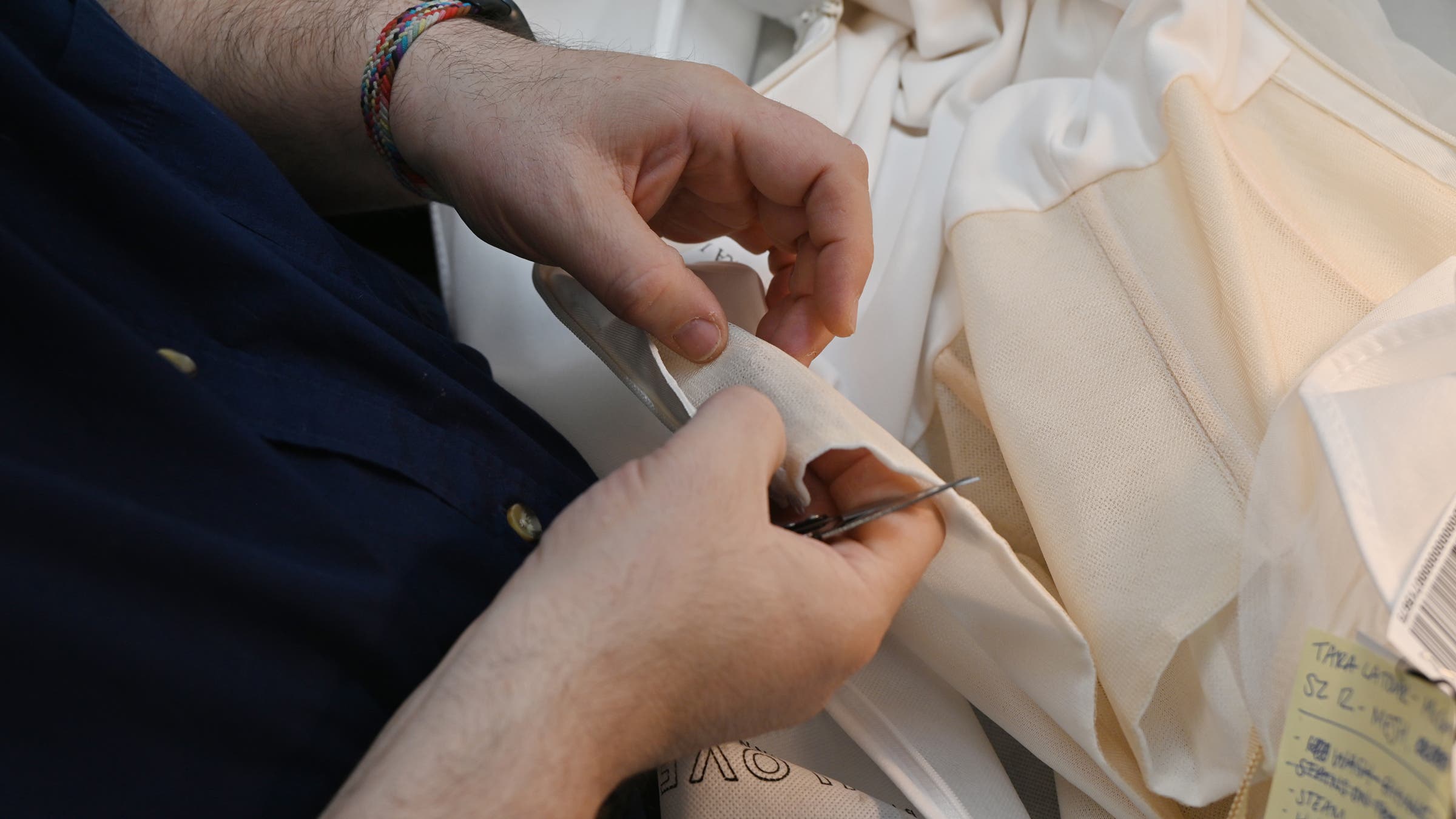
But the company is only one piece of a much larger system, with only so much capacity to clean, repair, and resell. When Stio sends products to Tersus, for example, items that get graded with an A or B get cleaned and then sold through the brand’s Second Turn program.
Items that receive a lower grade in sorting are sent directly—uncleaned—to Gear Trade in Salt Lake City, says Aaron Provine, CEO of the used outdoor clothing marketplace.
“That stuff still needs a place to go,” he says. “That’s where we come in.” According to Provine, Gear Trade customers are savvy and more willing to put in the effort to restore a product if it’s dirty or torn, especially at the discounted price. Meanwhile, gear that’s been cleaned and restored to a like-new quality inevitably has a higher price tag that makes it a better fit for other retailers.
And the harsh truth is that from a brand’s perspective, not every item makes sense to save. Cleaning and repair come at a cost, and the resale price has to cover it. “We have to make this as viable economically for a brand because there’s always a CFO or somebody who says ‘Does this make money?’” Whitcomb says.
The items that clear that bar—survive grading, logistics, cleaning—are the ones that actually make it back out into the world. Which is what makes a used sleeping bag at REI’s Re/Supply feel surprisingly valuable and rarified.
Tersus’s hope is that it doesn’t stay on the rack long; it goes home with you.
