

Moving Beyond the Ache: A Practical Guide to Living Well with DDD (Part 2)
Do you find yourself sitting or lying down for longer periods, hoping the rest will finally quiet your back pain? It feels like the safest choice, doesn’t it? But have you noticed that the longer you remain still, the stiffer and more daunting that first step becomes when you finally stand up?
The “Rest Trap”: Why Stillness is the Enemy
In my 15 years training clients in Sevenoaks, I’ve seen a recurring pattern: the “Rest Trap.” When movement hurts, our natural instinct is to stop. However, with Degenerative Disc Disease (DDD), complete rest is often a wolf in sheep’s clothing.

Your spine is a marvel of engineering designed for articulation. When we stop moving, the muscles supporting that spine—our internal scaffolding—begin to weaken. This leads to more pressure on the discs, more pain, and a vicious cycle of inactivity. As I tell my clients at the gym, “Movement is lotion for your joints.” We aren’t looking for high-impact strain; we are looking for consistent, gentle mobilization to keep the “rust” from settling in.
The “Hidden” Support: Glutes and Hip Flexors
If the spine is the mast of a ship, your glutes and hips are the heavy-duty cables holding it steady. To protect a degenerating disc, we must look at the joints above and below it.
-
The Power of the Glutes: Strong gluteal muscles take the “load” off your lower back during daily tasks like standing up from a chair or climbing stairs.
-
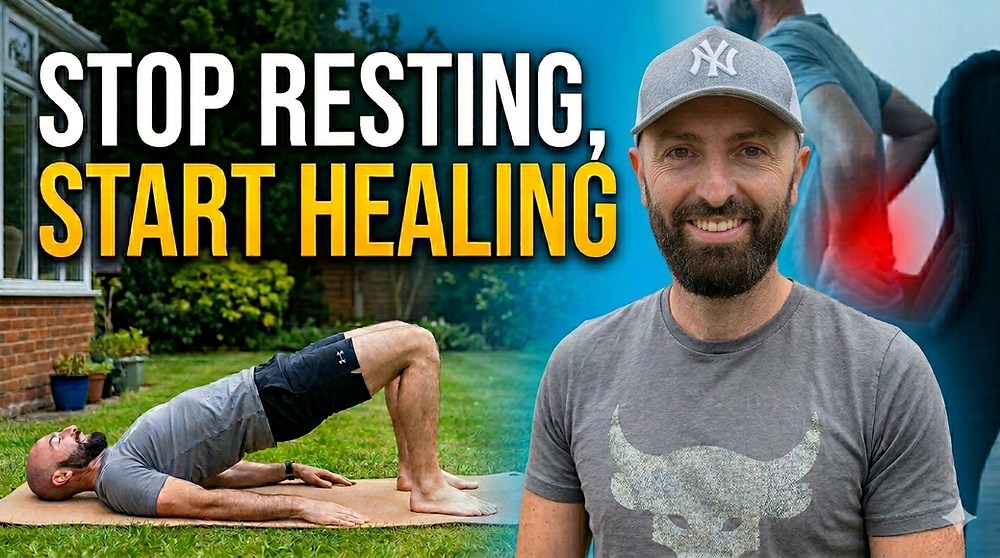
The Fix: Gentle Hip Thrusts (lying on your back, knees bent, lifting the hips slowly) can re-engage these powerhouse muscles without taxing the spine.
-
-
The Hip Flexor Connection: We spend so much time sitting that the front of our bodies (hip flexors) becomes tight and “short,” pulling the pelvis forward and pinching the lower back.
-
The Fix: Opening the front of the body is essential. A gentle Cobra stretch (lying face down, propping yourself up slightly on your elbows) can help counteract this tightness, provided it feels comfortable for your specific disc level.
-
Safety First: Please consult your GP, physiotherapist, or a medical professional before starting a new exercise routine, especially if you have a history of nerve impingement.
The Chef’s Recovery Kitchen: Fighting Fire with Food

As a former professional chef, I view nutrition as the “internal” side of personal training. Inflammation is the primary driver of DDD pain. While we strengthen the outside, we must cool the “fire” on the inside.
-
Anti-Inflammatory Superstars: Focus on Ginger and Turmeric (which contains curcumin); these are nature’s ibuprofen.
-
Green Vegetables: Leafy greens like spinach and kale are packed with magnesium, which helps muscles relax and reduces spasms.
-
Omega-3 Fatty Acids: Found in oily fish, walnuts, or high-quality algae supplements, these “healthy fats” are crucial for joint lubrication and reducing systemic inflammation.
-
The Golden Rule: Hydration. Your spinal discs are largely composed of water. Even slight dehydration can cause them to lose height and cushioning. Aim for consistent water intake throughout the day.
-
Supplements to Consider: Beyond a good Omega-3, you might look into Vitamin D3 and K2 for bone health, or Glucosamine, though always check with your pharmacist regarding interactions with existing medications.
The Mental Bridge: Connectivity and Longevity
The hardest part of DDD isn’t always the physical pain; it’s the emotional toll. There is a real fear that “doing more” will cause a flare-up, leading many to withdraw from social circles.
However, we know from health data (and my years working with the elderly in Kent) that social connectivity is a primary indicator of longevity. When you stop going to the local coffee shop or visiting friends because of your back, your mental health takes a hit. This creates a “low mood” which actually lowers your pain threshold.
Staying active isn’t just about your vertebrae; it’s about your brain. Seeing people, engaging in conversation, and having a “mission” for the day keeps your nervous system occupied with something other than pain signals.

Your Small Step for Today
You don’t need to run a marathon to reclaim your life from DDD. Today, I want you to try one thing: The 20-Minute Reset. Every 20 minutes spent sitting, stand up and take 10 intentional steps. It’s a small victory for your spine and a reminder to your body that you are still in charge.
How has your back been feeling lately when you try to stay active? Comment below
