

Published April 23, 2026 07:49AM
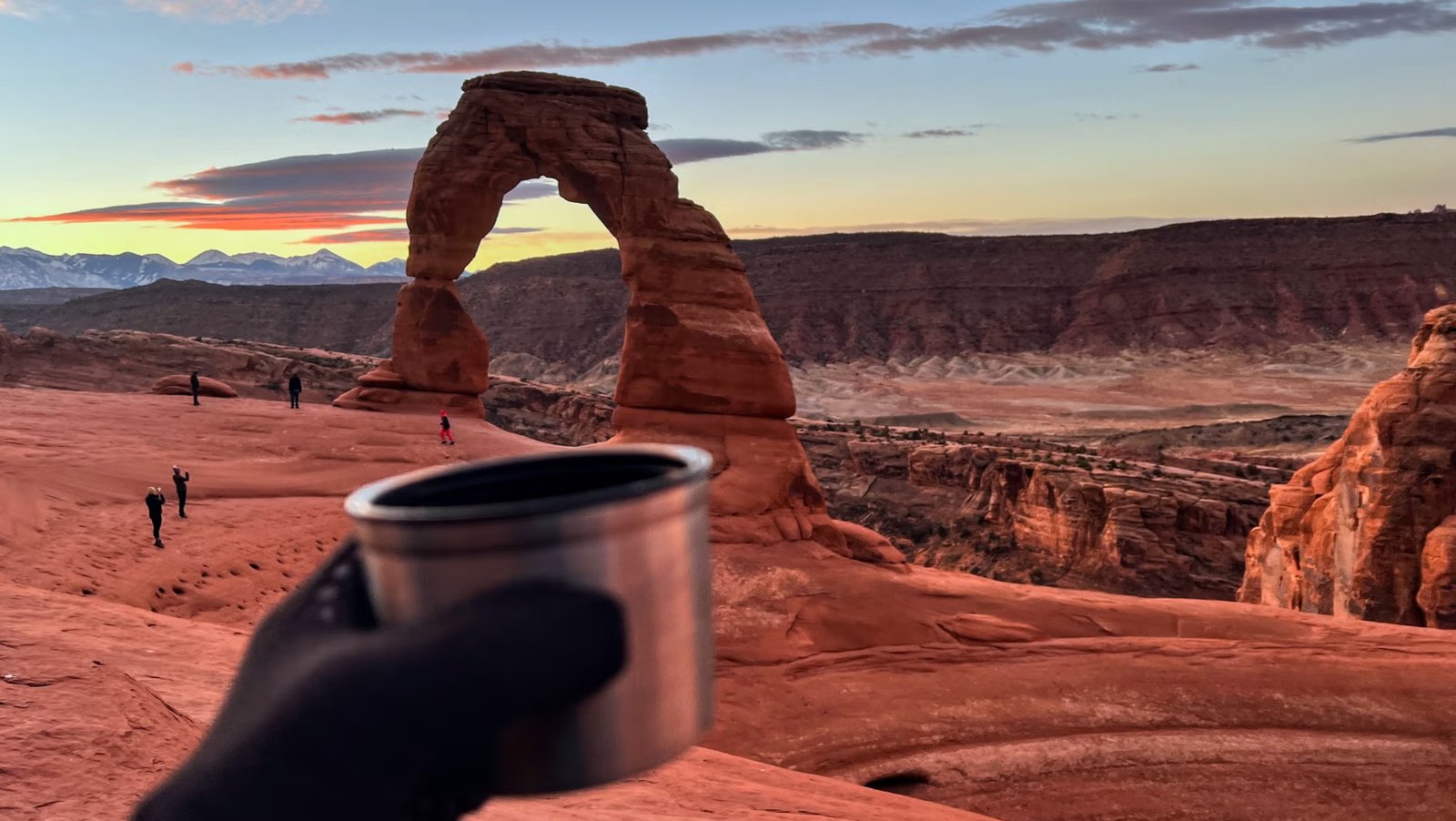
For the past few years, visitors have had to plan ahead if they wanted to behold Delicate Arch or one of the estimated 2,000 other curvatores of stone found at Arches National Park during peak season. But a couple months ago, on February 18, Arches announced the end of its requirement to purchase an advanced timed entry ticket. The timed entry requirement first came into effect in spring 2022, so it’s been four years since you’ve been able to roll up to Arches and enter on demand.
Previously, the requirement went into effect during peak seasons and hours, from around 7 a.m. to 4 p.m. from April through July, and late-August through October. This pilot timed entry program, which other national parks also tested, was intended to control crowds at one of the nation’s more popular parks.
While this change in the land of sandstone arches benefits the planning-averse, it will also likely result in longer lines to enter the park, slower traffic, and more people vying to catch the park’s highlights during peak visiting times.This means strategies to skirt the seas of tourists will become all the more important for the Arches visitor who isn’t exactly into a national park experience evocative of Disneyland.
As a Utahn of nearly a decade who’s been visiting Arches since I was an adolescent, I’ve long been honing my skills for avoiding crowds at this singular park. Here are some of my best tips for archmaxxing without letting lines, traffic jams, and throngs of tourists bog down what should be a spectacular experience.
1. Camp at Devils Garden Inside the Park
Camping inside Arches strategically positions you for less crowded dawn, dusk, or even nighttime views and hikes. This does require advance planning, since reservations fill up fast. One of my favorite places to sleep (in a national park—or anywhere) is Devils Garden Campground, where scenic campsites back up to slickrock and you can hike to a nearby arch right from your tent. Book up to six months in advance on www.recreation.gov ($25 per night) or roll up to a first-come, first-served site in the off-season (November through February).
While camping at Devils Garden, I’ve had the chance to hike the quiet trail to Broken Arch at sunset, scramble over slickrock beneath a full moon, and wake up early enough to hike to Delicate Arch for the sunrise in the company of only a dozen or so other humans.
2. Pick a Less Popular Trail
Think twice before taking the easily accessible walks around the Windows section of the park, or Balanced Rock at peak hours. You also may want to reconsider a quick out-and-back from the Devils Garden trailhead to spy nearby Landscape Arch—most Arches visitors will be doing the same.
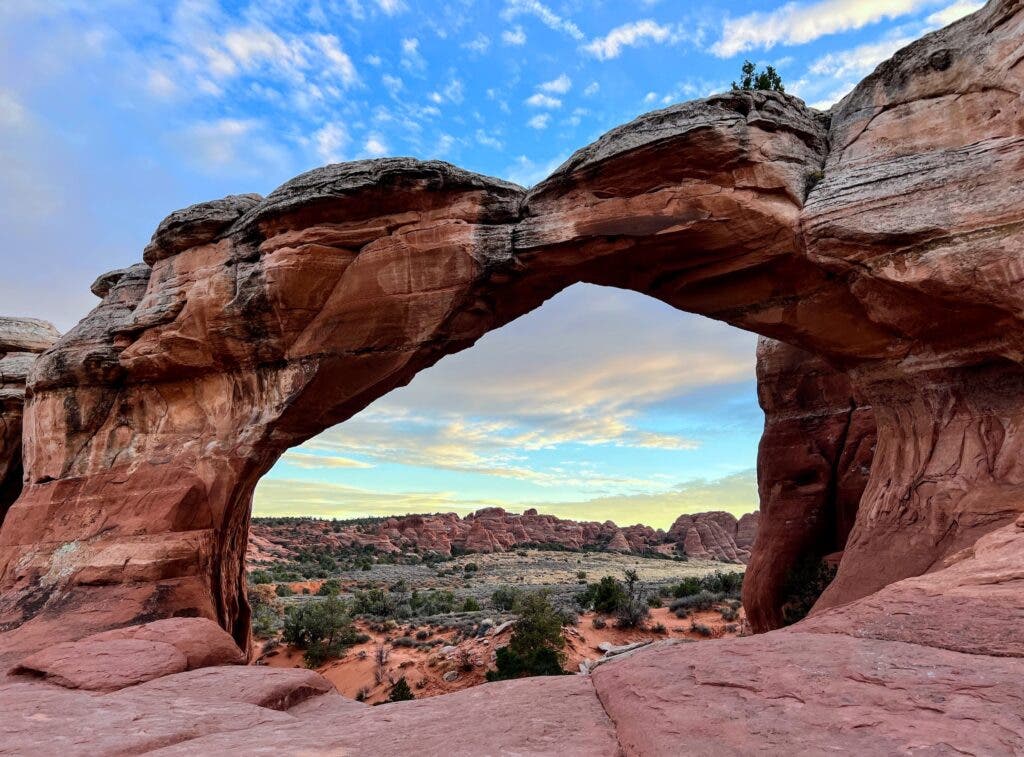
Instead, starting from the Devils Garden Campground, try the trek to Broken Arch Trail (2.3-mile roundtrip). Despite the name, the arch isn’t quite broken yet and makes for great sunset views. On the way to Broken Arch, you can also take a short out-and-back 0.4-mile spur trail to see Sand Dune Arch.
3. Step Away From the Vehicle
Decades ago, when Arches was just a national monument on the radar of few, famed environmental essayist Edward Abbey spent time there as a seasonal ranger. Back in the 1950s, crowds filling the rugged landscape of Arches were hardly a concern. Yet in Desert Solitaire, the classic read that in part documents Abbey’s experience there, he seemed to know that they would eventually be, writing, “No more cars in national parks. Let the people walk.”
While a car-less Arches is difficult to imagine, try to plan a visit that doesn’t revolve around driving from one scenic pullover to the next. What would Abbey advocate or recommend? Start walking.
To me, archmaxxing—maximizing your experience amid the arches—is about quality, not quantity. After all, would you rather spend three hours in a car to rapidly check 20 arches off your list, or spend one hour in a car, enjoying quality time in the presence of four or five arches? Plan a mission around a few formations that speak to you, and take a longer hike to avoid a car-intensive (and traffic-intensive) Arches experience.
Another option is cycling into the park, but unfortunately, Arches isn’t the most bike-friendly of Utah’s national parks, with a steep switchback climb right out of the gate, and heavy traffic on the scenic drive.
4. Trek Out to Tower Arch
Perhaps the park’s loneliest arch lies near a tower (hence the name) in a remote area. It’s also far from the scenic drive, naturally weeding out the masses. To reach the trailhead to this arch, however, you will need a vehicle with 4WD and dry conditions.
To reach the trailhead, at around 16.7 miles up the main scenic drive, turn left on Salt Valley Road. If you reach the Devils Garden turnoff on the scenic drive, you’ve gone too far. After turning off the scenic drive, you’ll be following rough dirt roads that can be impassable when wet—only take this drive in dry conditions. Take Salt Valley Road for 7.2 miles, then turn left at the first juncture and continue for one more mile until you reach the Tower Arch trailhead. Get a park map when you enter Arches to help you navigate.
To reach the arch, follow the Tower Arch Trail (2.6 miles roundtrip). The hike is somewhat strenuous and steep, crossing over slickrock and sand dunes, yet the quiet experience with this unique arch is well worth the journey.
There’s also another way to reach Tower Arch—and it doubles as a back entrance into the park. But it’s a 17-mile-plus adventure that should only be undertaken with dry conditions in a 4WD high-clearance vehicle piloted by someone with strong navigation skills and plenty of time. As you’re heading into Moab on Highway 191, take Klondike Bluffs Road through the Willow Flats area. This Road leads to the Copper Ridge Safari Route and the Klondike Road Trail, which eventually leads to Tower Arch. You’ll also pass Eye of the Whale Arch en route.
5. Get a Little Lost in the Fiery Furnace
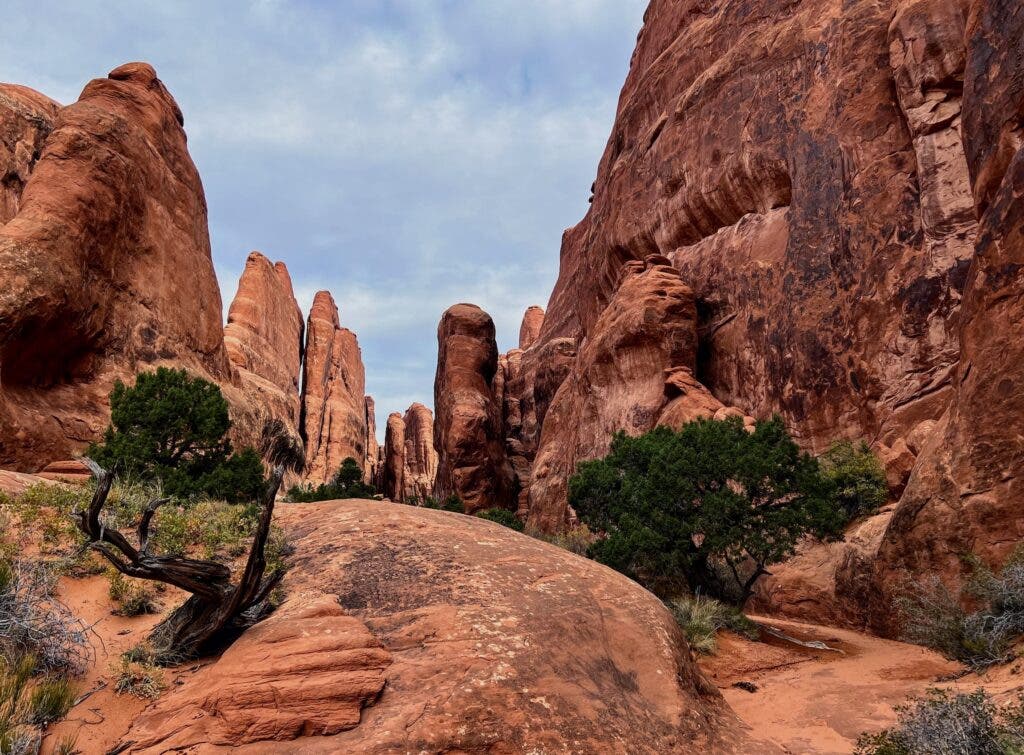
The Fiery Furnace is a labyrinthine backcountry section of Arches. Entrance is by permit only, so you must plan ahead—though permits aren’t as difficult to obtain as they are for, say, the Angels Landing hike in Zion. Hikers find their way through the Furnace with little arrows painted onto the rock. Prepare to find yourself quite alone in this awe-inducing landscape.
Snag a self-guided hiking permit for the Fiery Furnace ($10 per person). If you get lost easily like me, join a ranger-led tour ($16 per person) through this maze of sandstone instead. No children under the age of 5 are permitted in the Fiery Furnace. Permits and tour tickets are available online at www.recreation.gov, or by calling 877-444-6777. Permits/tickets are available up to seven days in advance, and must be picked up in person at the Arches Visitor Center, where you’ll also be required to watch a brief orientation to this backcountry area.
6. Go Stargazing Amid Arches
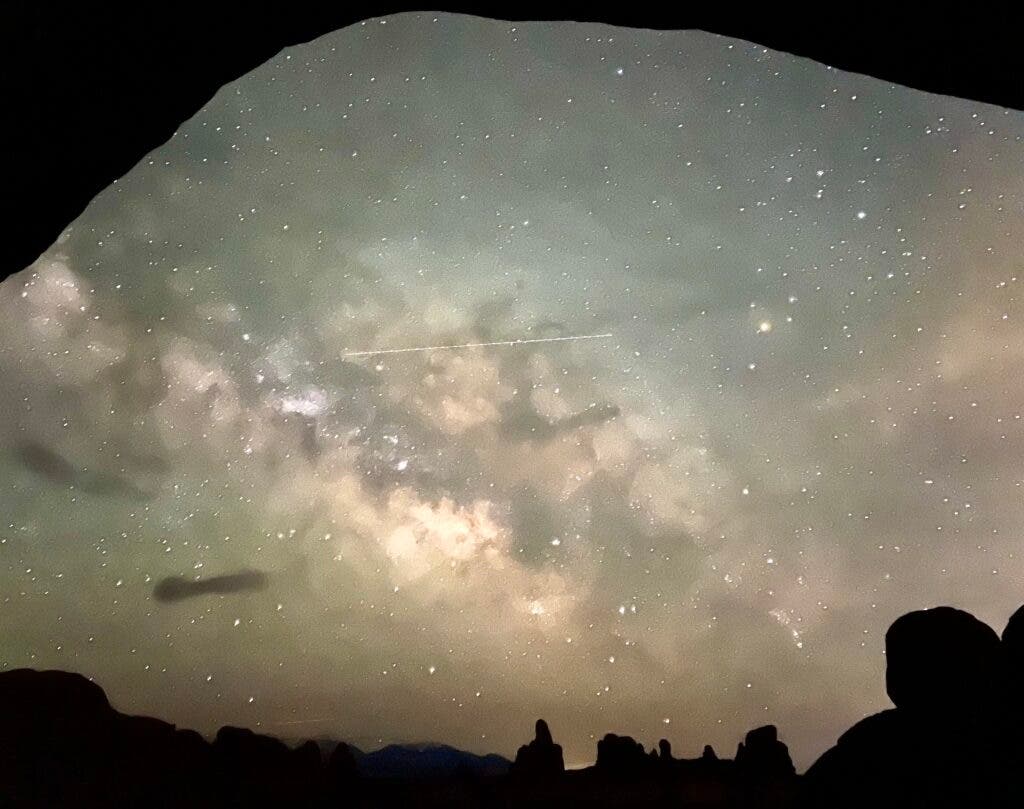
Repeat after me: I do not need to visit Arches on a weekend in July between the hours of 8am and 5pm. This is, as you might expect, the absolute worst time to go. Especially considering that Arches is open 24 hours a day, 365 days a year.
So get yourself a good headlamp and venture into the park well before the sun rises, after it sets, or in the dead of night. The best national park experience I’ve ever had was stargazing in Arches at 1am. I swapped thousands of tourists for thousands of stars and snapped some stunning photos of arches against the backdrop of the Milky Way. If you’re not comfortable hiking at night, you can simply drive up to a viewpoint, set out some chairs, and stargaze or catch a meteor shower (like the Perseids, which peak mid-August annually).
You can also book a midnight photography tour at Arches through Moab Dark Sky Tours (starting at $99 per person for a group of two with discounts for larger groups).
7. Adopt a Flexible Schedule
Aside from visiting at dawn, dusk, or nighttime, do what you can to avoid the peak hours that Arches no longer requires a timed entry ticket for. Avoid holiday weekends. Try to go on weekdays, bringing along your Starlink if necessary to join that work call with the most scenic background ever.
If you’re staying in Moab, consider checking the Arches entrance web cam before you go to see what the lines are looking like. The more you can avoid visits during the most conventionally convenient days and hours, the better your crowd outlook.
8. Wait to Visit Arches Until Winter
While spring and fall hold the most comfortable temperatures in Utah’s desert landscapes, they also draw large crowds. Somewhat shockingly, many tourists also flock to Arches in summer, when temps are hot and traffic is bad. Instead, behold the serene sight of snow contrasting with red rock—without dozens of other humans photobombing your glory shot. Check the forecast, prepare for snow if needed, and completely dodge the dreaded crowds with a winter visit.
9. Visit the Unofficial Arches Dupe Destination
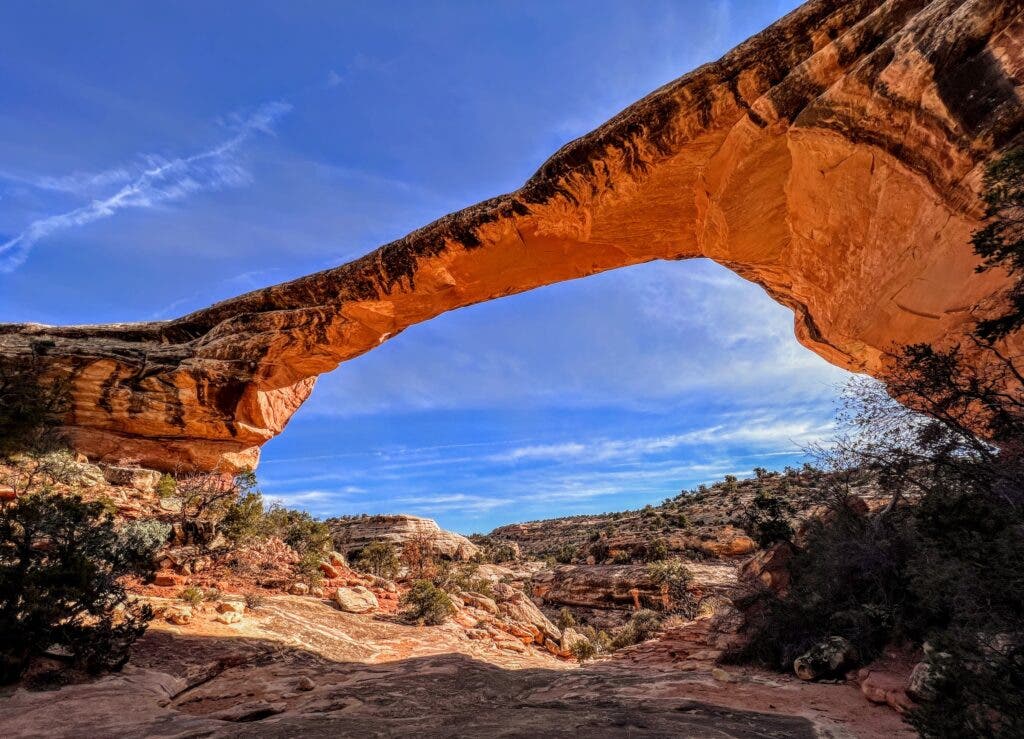
All the rock arches, none of the hype. Technically, the curvatures of stone found at National Bridges National Monument are natural bridges, not arches. While arches are formed by melt-freeze cycles that erode rock over time, the flow of water forges natural bridges. But the layperson is unlikely to spot the difference. To most, natural bridges more than scratch that arch itch, with gorgeous sweeping bows of sandstone decorated in black varnish and steeped in time.
If your goal is to see an arch and you must go between 8am and 5pm on Labor Day weekend, continue south past the park for two hours to this small national monument that actually sits within another national monument (Bears Ears). It’s easy to take quick treks to view various bridges without a soul in sight, or you can try the 12-mile loop connecting all of them. The camping here is also lovely, or stay in nearby Bluff, an hour away.
Some more places to spy an arch around Utah? Capitol Reef National Park (Cassidy Arch, named for the famed outlaw who hid out here), Grand Staircase-Escalante National Monument (over 2,650 arches and counting), or the less-crowded Kolob Canyons section of Zion, where an alcove with twin arches rewards a 2.6-mile trek.
Climbing’s Editor-in-Chief Maya Silver has lived in Utah for a decade. She’s been exploring its national parks since she first waded through Zion’s Narrows at age 10. Since then, Utah’s national parks have become a lot more popular, which is why she’s focused her four Moon travel guides on how to avoid the crowds. This summer, she’ll be climbing around the San Rafael Swell and Idaho’s City of Rocks with her family.
