

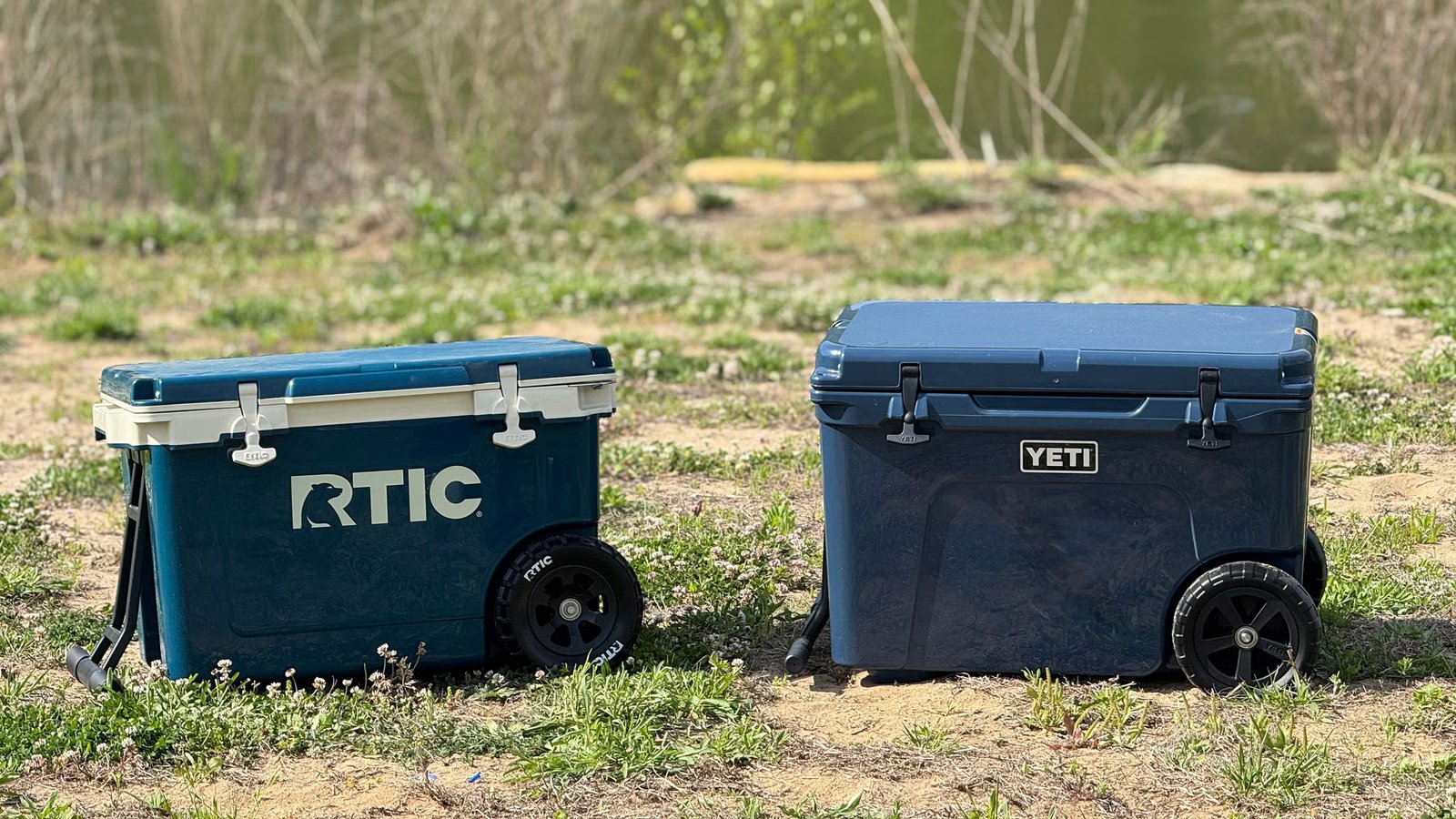
After six weeks of testing, here’s how Yeti’s Tundra Haul stacks up against RTIC’s 52-quart Ultra Light. (Photo: Graham Averill)
Published April 23, 2026 09:23AM
Some of you reading this are too young to remember life before Yeti coolers, so let me tell you what it was like. It was a world full of melted ice and warm beer. Coolers sucked. Then Yeti redefined the hard-sided cooler category in 2006 with the burly (and expensive), rotomolded Tundra. Fast forward 20 years and Yeti is the king of keeping beer cold. Many of us happily fork over $500 for one of their hard coolers—and risk a hernia every time we try to pick it up. Still, life is better now.
But Yeti isn’t the only player in the cooler game anymore. Several competitors have flooded the space in recent years; one of them, RTIC, has been making some of my favorite products—from their Essential Tumbler to their well-designed backpack coolers. The brand’s 22-quart Ultra Light lives on my back porch, ready for post-work mountain bike rides and family day trips. RTIC has built its reputation on high-performing coolers that cost significantly less than Yeti’s.
So I decided it was time to pit the budget-friendly RTIC against the industry standard Yeti in a head-to-head showdown. I spent six weeks testing Yeti’s Tundra Haul and RTIC’s 52-quart Wheeled Ultra Light—two large, wheeled coolers designed to do the same thing: keep a lot of beverages cold for as long as possible.
Yeti Tundra Haul vs. RTIC 52 Wheeled Ultra Light Cooler
Which Cooler Has Better Features?
Winner: RTIC for smarter, more user-friendly features
At a glance, these coolers look and function similarly—especially the wheels. And let me just say: if you’re buying a big cooler, get one with wheels. It’s not new tech, but it’s transformative. No more enlisting a platoon to haul the cooler across camp—you can just wheel it over. It’s awesome.
Both coolers have tough, impact-resistant wheels and stout handle systems. I dragged them across gravel, down steps, and along short trails, and both performed admirably. Call it a draw—they both performed admirably with no discernible winner.
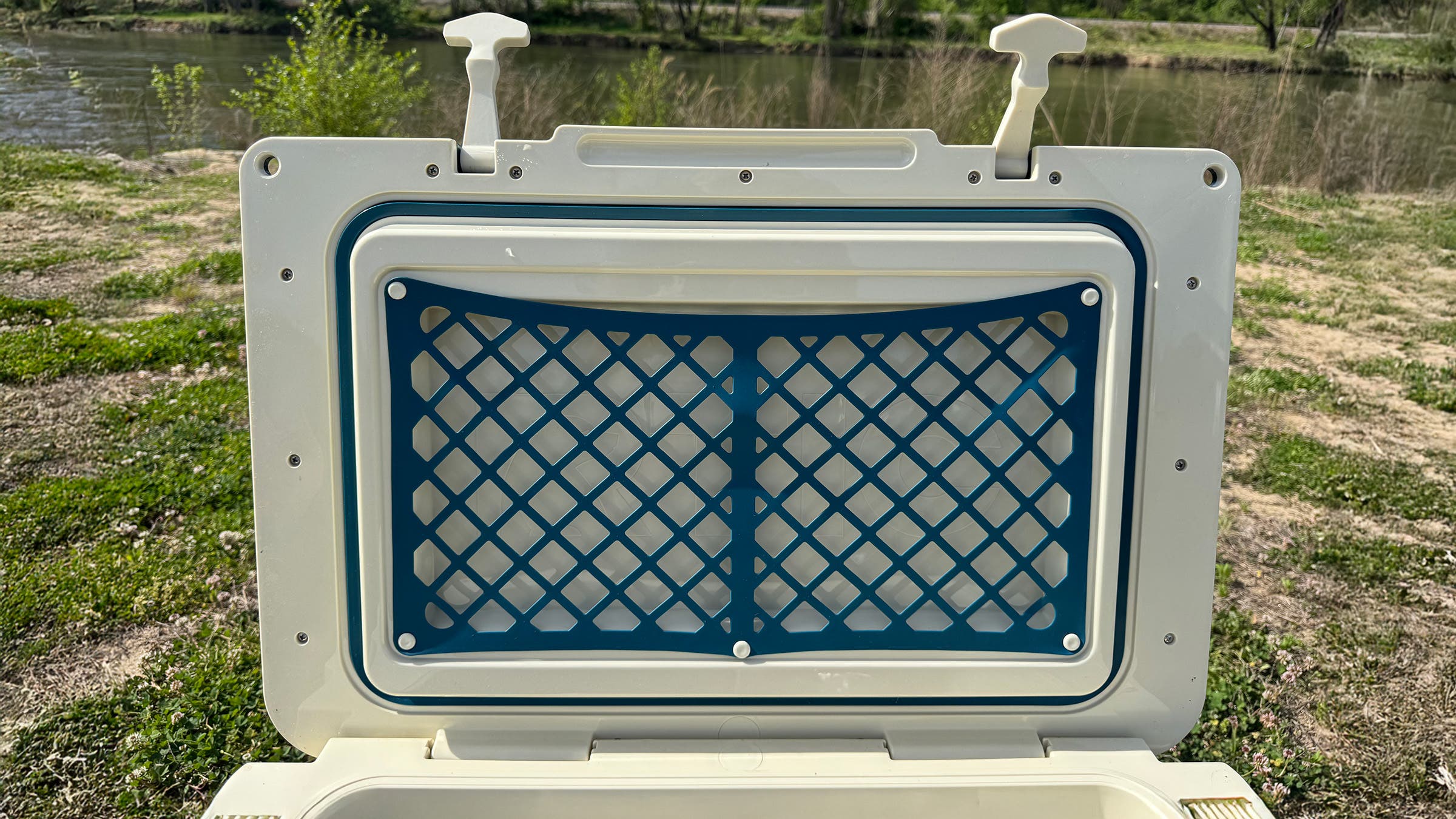
Latch systems and drainage ports are similarly functional, but RTIC sneaks ahead with a few thoughtful extras. There’s a built-in bottle opener (clutch when you forget yours and are actually packing bottles), and the drain plug is tethered to the cooler—a small detail that matters a lot when you accidentally leave a drainage port in a campsite and then have an expensive cooler with a permanent hole in the bottom. But the best feature is the silicone cargo net on the inside of the lid, which allows you to keep a couple of small items, like a sandwich or two, inside the cooler but out of the ice. It sounds minor until you realize how gross soggy sandwiches are.
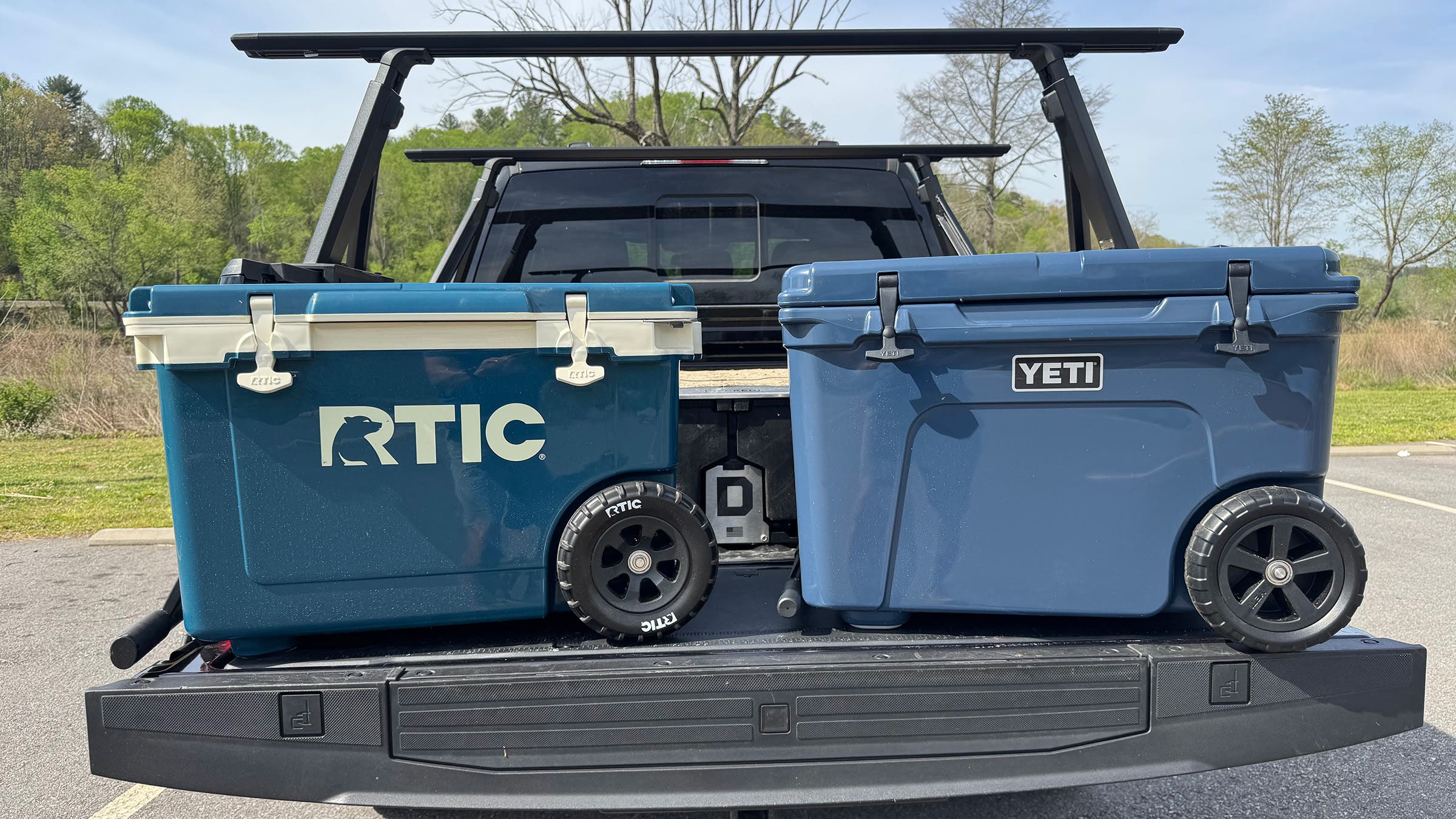
The RTIC is also 7.5 pounds lighter than the Yeti, despite nearly identical dimensions. That difference doesn’t sound huge until you’re lifting it into a truck bed—then it absolutely is.
Both coolers feature no-slip feet, which are designed to keep the cooler in one place in the back of your truck or boat. I found that the Yeti stayed put better while driving curvy mountain roads, while the RTIC slid around a bit despite the grippy feet.
Which Cooler Has Better Ice Retention?
Winner: Yeti for superior ice retention
The construction of these coolers is very similar: both use rotomolded walls with two to three inches of foam insulation. And both companies claim their coolers keep ice for up to five to seven days if you follow their suggested cooler-packing “best practices” (see the accompanying video for a play by play of how to properly pack a cooler).
I ignored those “ideal conditions” and ran a simple backyard test instead, placing 20 pounds of ice in each cooler and leaving them out in my backyard side by side over the course of three consecutive warm spring days. Temperatures peaked in the low 80s and dropped to the mid 40s at night over the course of the experiment. I opened them only to check progress and weigh the bags of ice. After 72 hours, the RTIC’s ice was fully melted, while the Yeti still had a small stash of cubes.
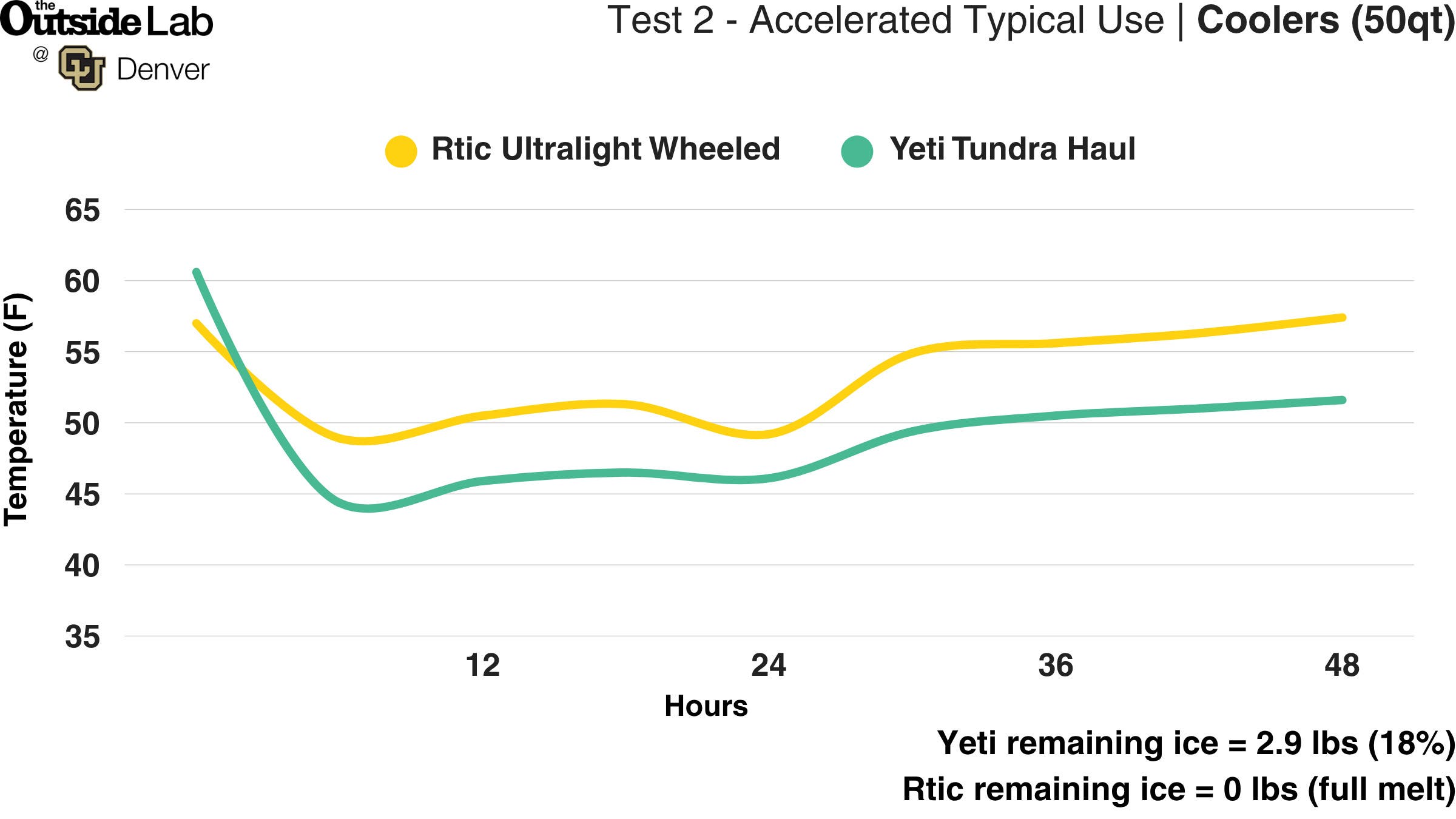
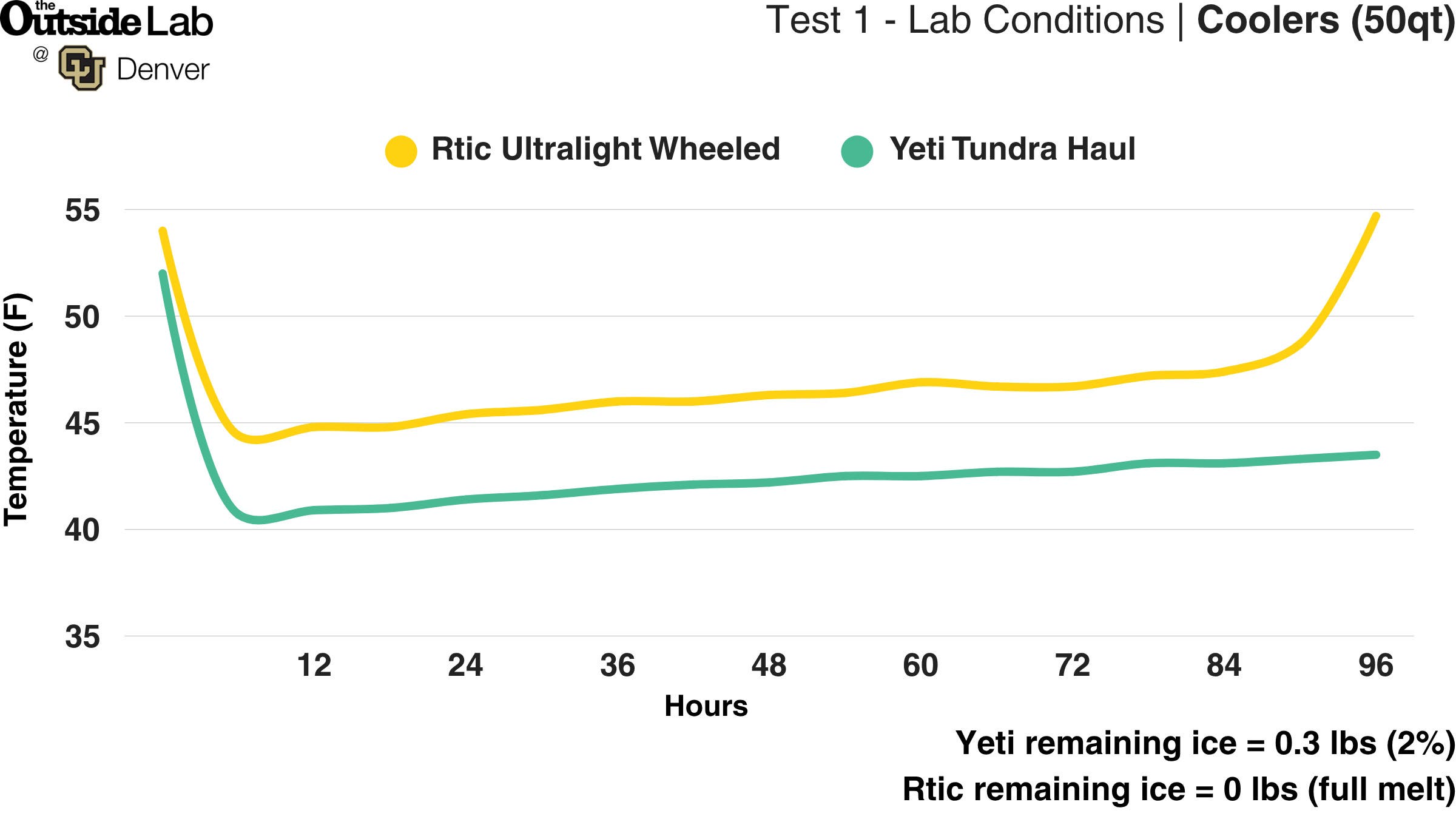
For a more scientific approach to testing, I sent both coolers to the Outside Lab. There, lab test editor Adam Trenkamp set up two controlled experiments—one to test ice retention under lab conditions, and one to replicate my “just throw in the ice and see what happens” test—to measure which cooler retained ice more effectively. Both tests back my findings: Under the same conditions, the Yeti Tundra Haul retained ice even after the RTIC’s stash had fully melted. (Read more about the Outside Lab testing below).
Which Cooler Is Better?
Yeti wins when it comes to doing the one thing coolers are designed to do: retain ice and keep your beer (and food, I guess) cold for as long as possible. But the RTIC has a few characteristics that make it really enticing: it’s lighter, much cheaper, and has some handy well-designed features (I really like that cargo net).
So which should you buy? If budget matters—or you just appreciate smart design—go with the RTIC 52-Quart Ultra Light. It’s a great cooler at a very reasonable price. If cost isn’t a concern and you want a cooler that gives you the best chance of having cold beer on day five of a backcountry trip, the Yeti Tundra Haul is the safer bet.
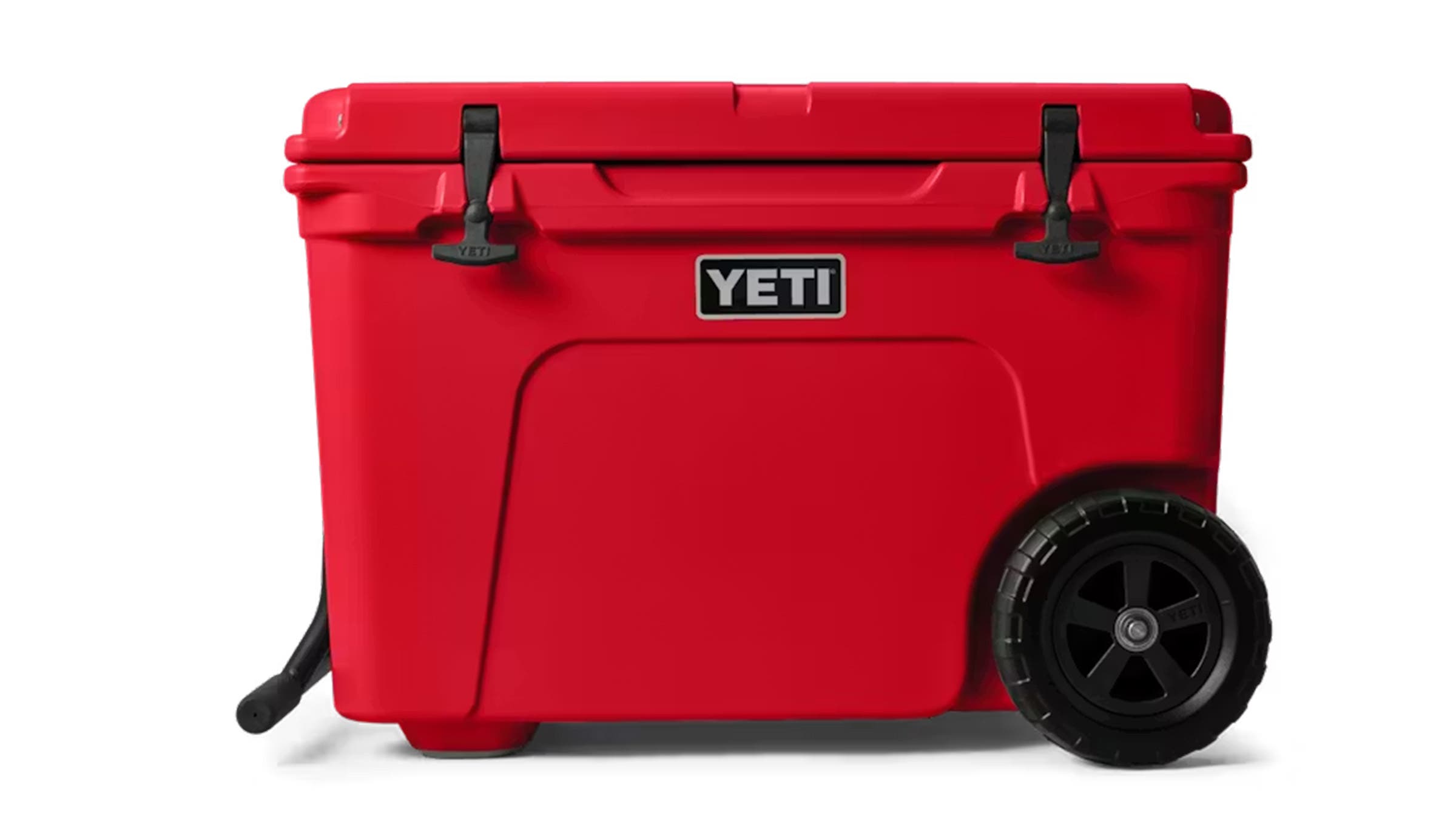
Yeti Tundra Haul Wheeled Cooler
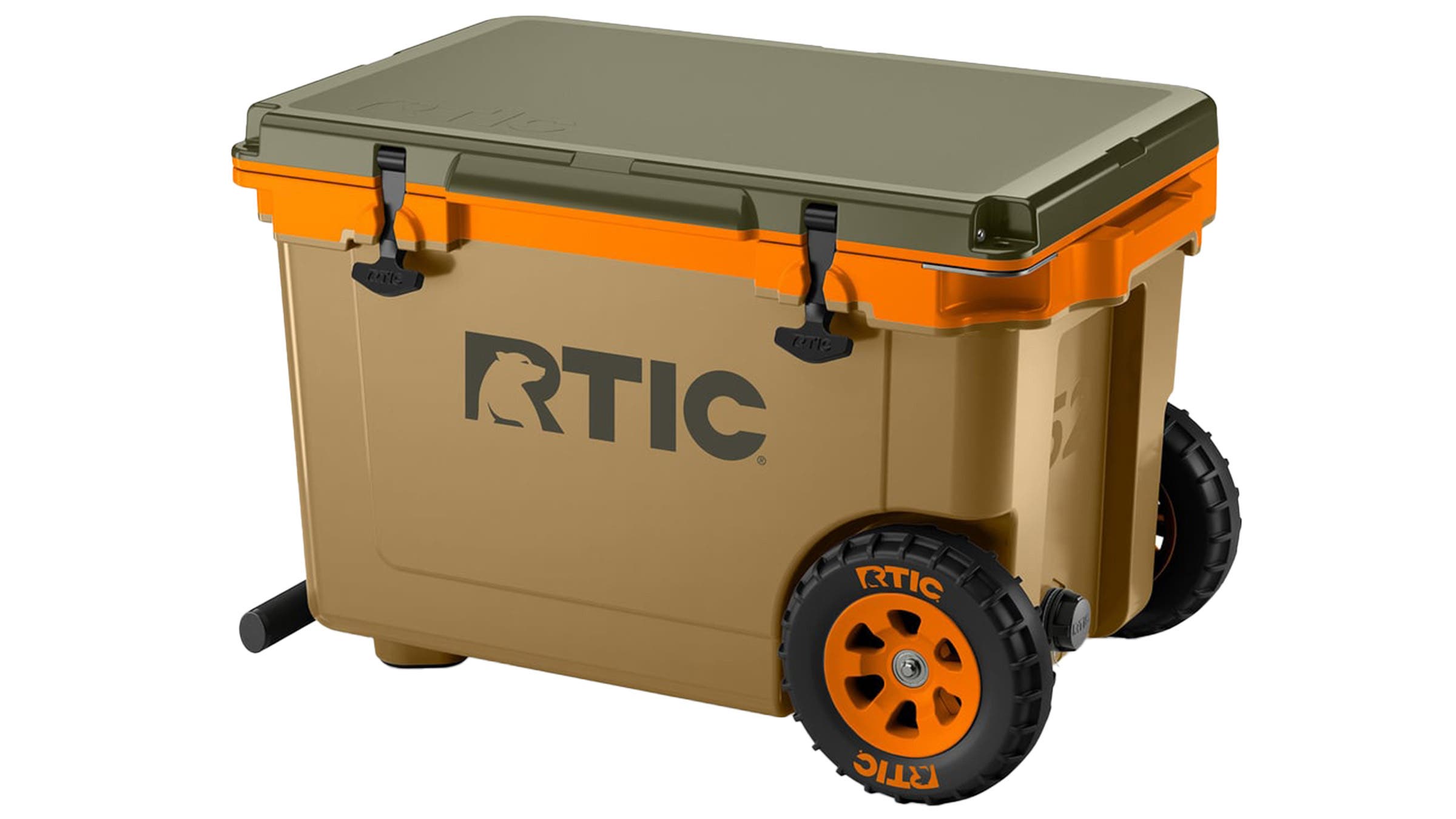
RTIC 52QT Wheeled Ultra Light Cooler
How We Tested Coolers in the Outside Lab
We tested both coolers head-to-head under two scenarios: controlled “lab conditions” and accelerated “real-world use.” Our goal was to understand performance in a best-case setup and under the kind of conditions most of us put coolers through—loading them with ice and leaving them in the sun. We filled each cooler with a 16-pound bag of ice for every test. At the end of each run, we collected and weighed any remaining ice to measure retention in addition to temperature data.
Test 1: Ideal lab conditions
We followed manufacturer best practices and pre-chilled each cooler for 24 hours using a large block of ice. After pre-chilling, we added fresh ice, sealed the lids, and stored the coolers in a controlled room held between 68–72 Fahrenheit. We kept them in darkness with no sun or external heat exposure and did not open them for 96 hours (four days).
Test 2: Accelerated real-world use
We flipped the script and ignored all “rules” for optimal temperature retention. We added ice to room-temperature coolers, sealed them, and exposed them to continuous heat. Heat lamps overhead and a space heater beside the units simulated full-day sun exposure without nighttime cooling. We maintained a constant external surface temperature of 85–95 F, verified with a thermometer, for the duration of the test.
We tracked internal air temperature in each cooler using wire thermometers connected to a data logger. Sensors were placed halfway between the ice and the lid to measure air temperature inside the cooler—arguably the most meaningful indicator of performance, since it reflects how well the cooler insulates against warming rather than just the temperature of the ice or meltwater below.
