

Published April 25, 2026 03:05AM
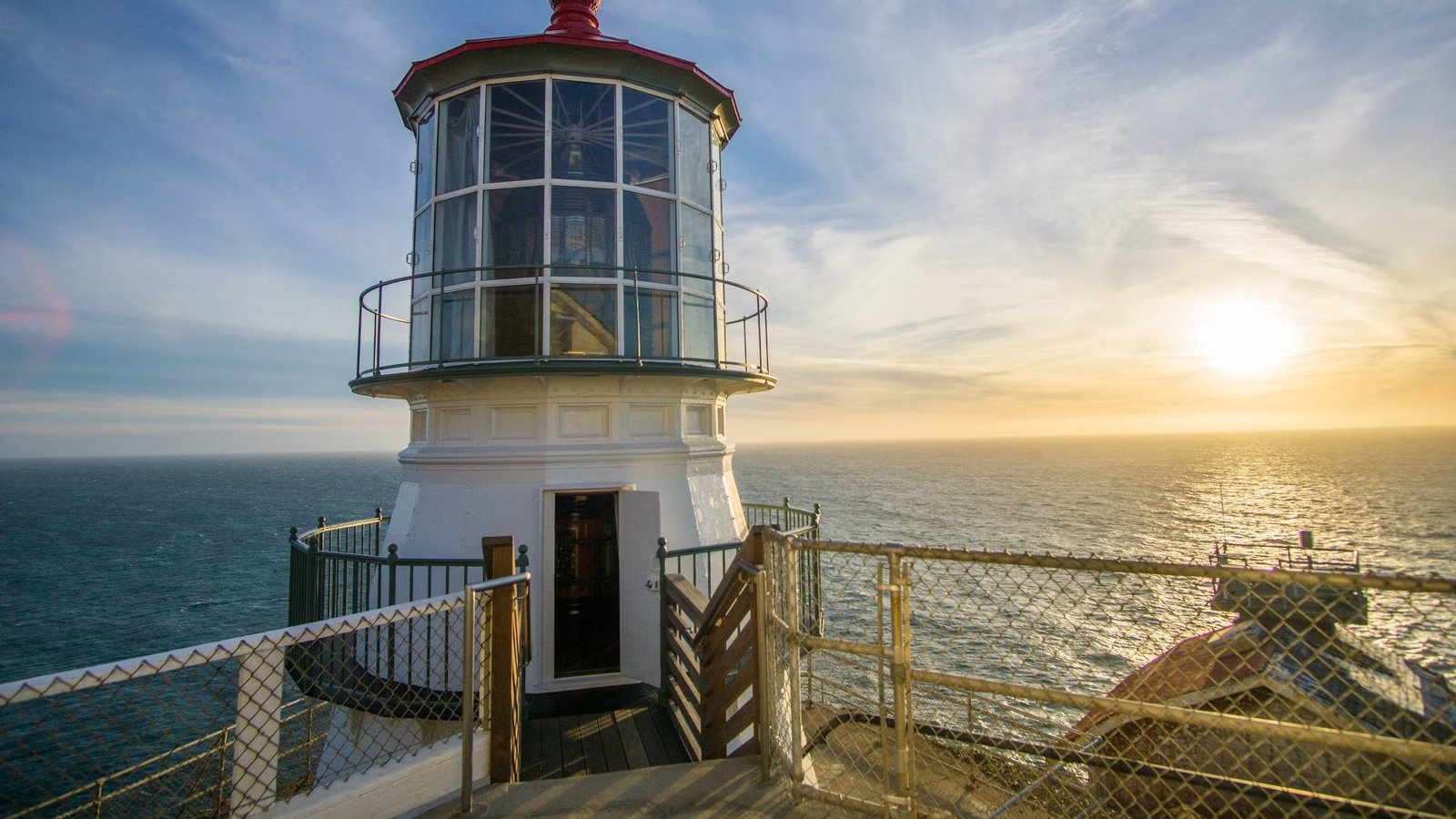
Long before GPS, radar, or reliable weather forecasting, ships approaching land faced a maze of dangers: sandbars, high waves, and treacherous currents. The risks were so great that the young American nation invested heavily in navigation aids to protect maritime commerce and save lives at sea. Today, that legacy continues in one of the National Park Service’s (NPS) most unusual volunteer opportunities: immersive coastal stays that don’t come with a hotel key, but a set of responsibilities.
Each year, the NPS recruits volunteers to serve as modern-day “keepers” at a handful of historic lighthouses, living and working inside—or just beside—these monuments to another age. It’s a role cast in the long shadow of obsolescence. The lighthouse keeper—once an essential human beacon guiding ships safely to shore, a job marine historians trace back to around 280 B.C.—has all but gone dark. In 2023, at age 72, Sally Snowman stepped down as America’s final official lighthouse keeper, closing the book on an age-old enterprise.
And yet, for those drawn to the romance of that life, the door hasn’t shut entirely. NPS volunteer postings—from wind-battered towers on Lake Superior to the fog-laced beacons on the California coast—still offer a chance to try out the role.
Snowman is quick to temper the fantasy, however. Even in its most pared-down, modern form, the work isn’t something to wander into on a whim—you’ll want a clear-eyed sense of the reality before raising your hand.
America’s Last (Official) Lighthouse Keeper
Snowman’s lighthouse love affair began at age ten. Her father—a Coast Guard Auxiliary member—planned a picnic for uniformed civilian volunteer corps on Massachusetts’ Little Brewster Island, home to Boston Light. The station, which dates back to the Revolutionary War, is both the oldest continuously operating lighthouse in the country and the last staffed lighthouse.
“We went by boat, anchored in the dinghy, and when I looked up at the tower,” Snowman tells Outside. “I told my dad, ‘When I grow up, I want to be here.’”
But she didn’t land the post overnight. After college, eager for more time on the water, she asked her father about taking a boating course with the Coast Guard Auxiliary. While helping out, she pursued a career as a college professor. But the sea always seemed to keep calling her back. The Coast Guard volunteering led to greater and greater responsibilities. In 1994, an opening arose to serve as an assistant keeper on Little Brewster Island. Snowman—and her husband, Jay Thomson, also an Auxiliary member—jumped at the chance.
“They had three keepers who rotated—two weeks on the island, one week off,” Snowman says. But even then, the role was already edging toward irrelevance. As The New Yorker noted in a 2023 profile, Boston Light was the Coast Guard’s last staffed station. When the agency transitioned the role to a civilian lightkeeper, Snowman beat out hundreds of applicants—becoming the 17th keeper in the lighthouse’s history, and its first woman.
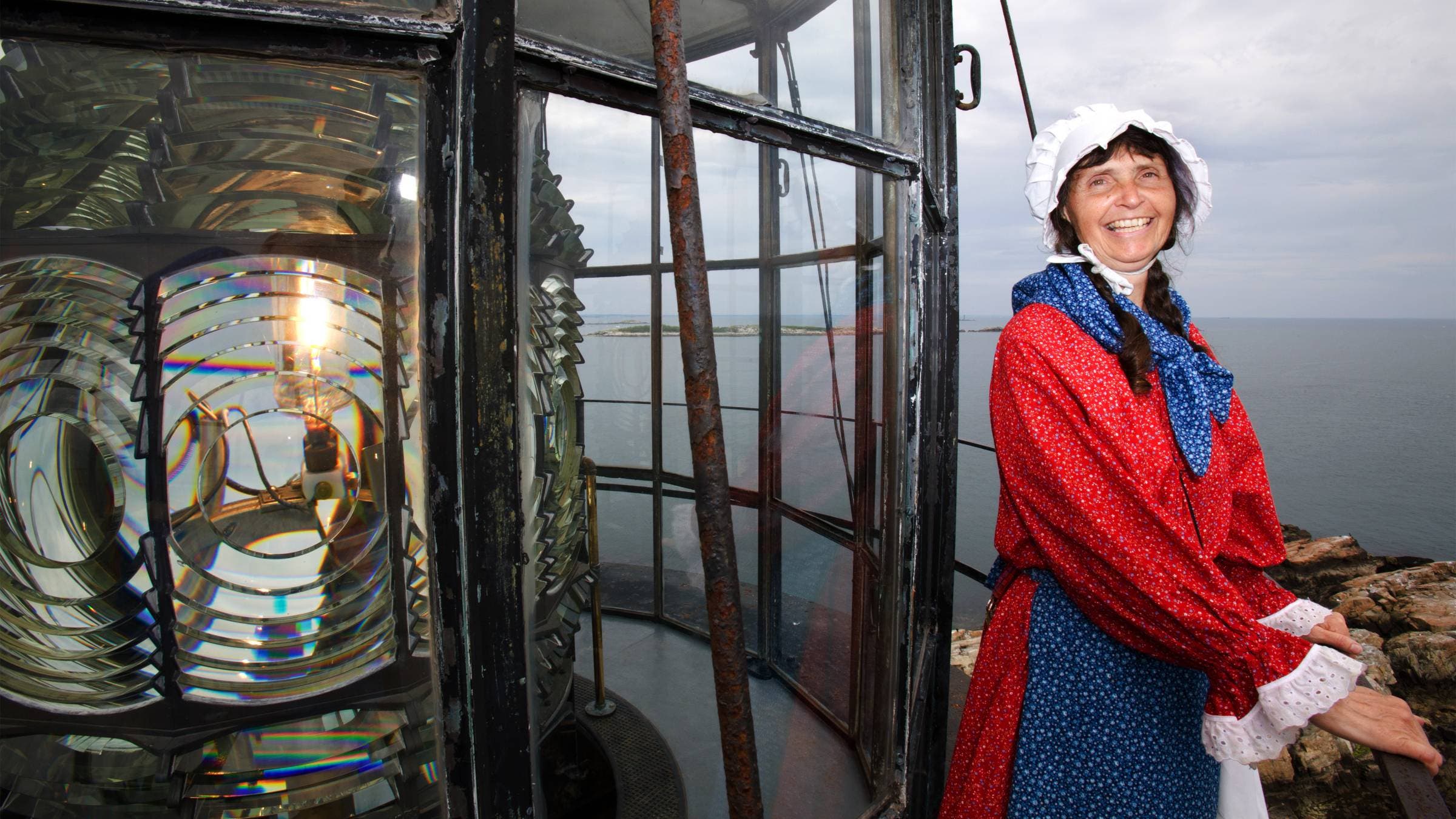
On Little Brewster Island, she welcomed visitors in period dress, guiding tours in a bonnet and long skirt—a reminder that public engagement has long been part of the job. Many sites under the National Park Service still expect as much from volunteers today.
Off-hours were anything but idle. Snowman managed the entire property—not just the lighthouse itself, but six outbuildings as well. And, like the postal service, that meant in all weather, rain, snow, bomb cyclones. Yes, in 2013, Snowman battened down the hatches, dismissed evacuation calls, and stood steadfast at her post. And sure, in some cases, there’s an air of “come hell or high water” that remains.
But for the most part, it’s about being a steward of a piece of history.
“The job,” she says, “is not what historical records might suggest.” Automation now keeps the light burning, leaving modern keepers to act less as operators and more as caretakers and interpreters.
Lighthouse Keepers Wanted: Volunteer Programs
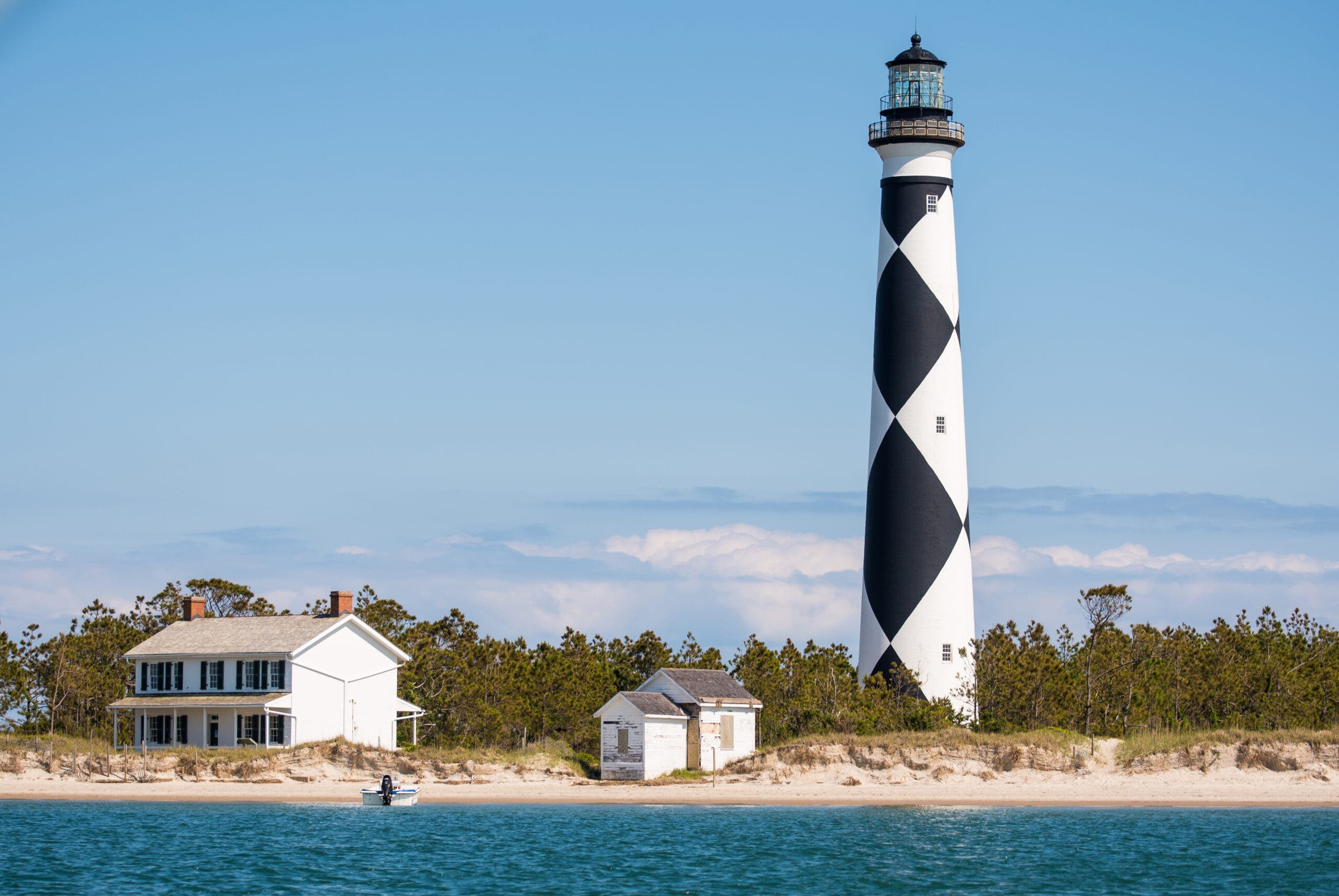
That’s the role the Park Service sought to fill this winter at Cape Lookout National Seashore, a remote, ferry-access-only stretch of barrier islands off North Carolina. Each year, volunteers step in as modern-day “keepers,” living in the 1873 Keeper’s Quarters.
“Volunteers need to be responsible self-starters who can open the Keeper’s Quarters Museum by 9 A.M. each day and close it at 5 P.M.,” says BG Horvat, the park’s chief of interpretation. “That means keeping the space clean and visitor-ready, while also sharing the stories of the lighthouse, the keepers who lived and worked here, and the broader resources of the park.” Prior historical knowledge isn’t required—just a willingness to learn the material ahead of a one- or two-week stay. The demand is fierce: the December posting was fully filled by mid-February.
It’s not the only opportunity, however. At the northern tip of Wisconsin, within the island-studded expanse of Apostle Islands National Lakeshore, the decommissioned Sand Island Lighthouse is looking for volunteers. Built in 1881 in a Norman Gothic style, the Park Service calls it the “jewel of the Apostles.” This is a partner position, meaning interested parties need to apply with a close friend or significant other, as housing generally requires a shared room. It’s also no vacation. For the August three-week term, Jeanette Gary, the site’s volunteer coordinator, is currently hiring for a position that comes with a long list of duties.
“They’ll be cleaning the campsite privies, mowing lawns, talking to campers, handling trail maintenance,” Gary says. “The other person on the island will be providing tours and taking visitors up into the lighthouse.”
The NPS handles transportation to and from Sand Island for volunteers, but, short of an emergency, there’s no exiting the premises during rotation. “So they need to bring in all their food and supplies,” Gary adds.
In most of these lighthouse keeper jobs, housing comes with the gig, but don’t expect luxury accommodations. At Point Reyes National Seashore, the 30-hour-a-week volunteer position provides the lighthouse volunteer with a shared, co-ed apartment located five minutes from the visitor center, but a pest-free environment is not guaranteed. The listing states that accommodations are “not rodent-proof.”
Tenacious applicants will likely be undeterred. But for those who want a taste of the lighthouse experience without the live-in commitment, there’s a park rover position at Cabrillo National Monument on the Point Loma peninsula in San Diego, California.
The Human Urge to Still Stand Watch
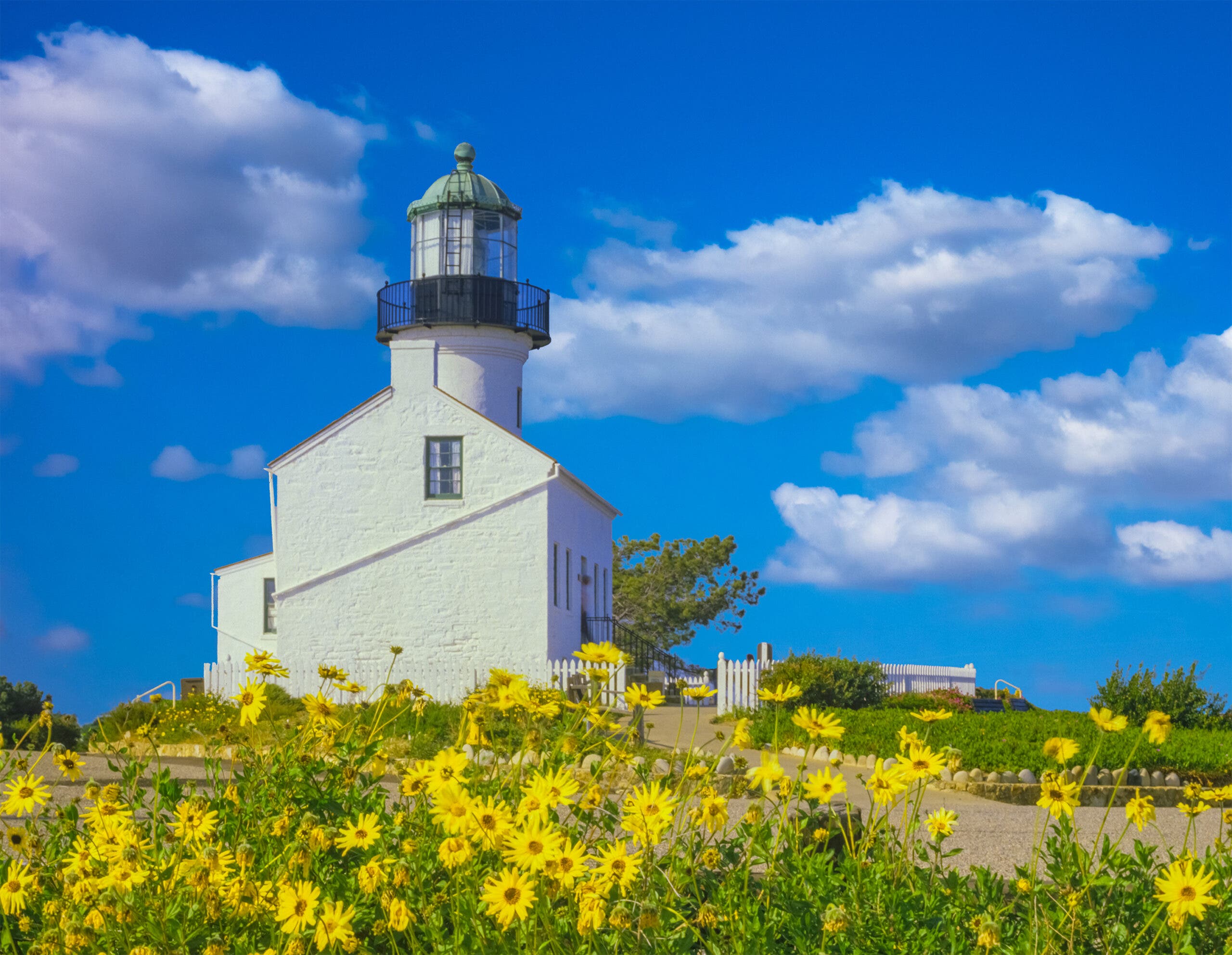
“The lighthouse at Point Loma was one of the first six lighthouses built on the West Coast,” says Amanda Gossard, the site’s program manager. “At the time, it was also the highest elevation lighthouse in the United States.” That was a big claim to fame, but also the beacon’s downfall. Turns out it was built above the fog line. “Ninety days out of the year, San Diego is completely fogged in, so it became useless,” Gossard adds.
Sharing that quirky detail with visitors is part of the volunteer role. The lighthouse is open daily from 9 A.M. to 5 P.M., but only three days each year allow access to the top. Then, it’s volunteers who sweep the tower, check bags, and usher visitors upward—no special training, just a readiness to pitch in.
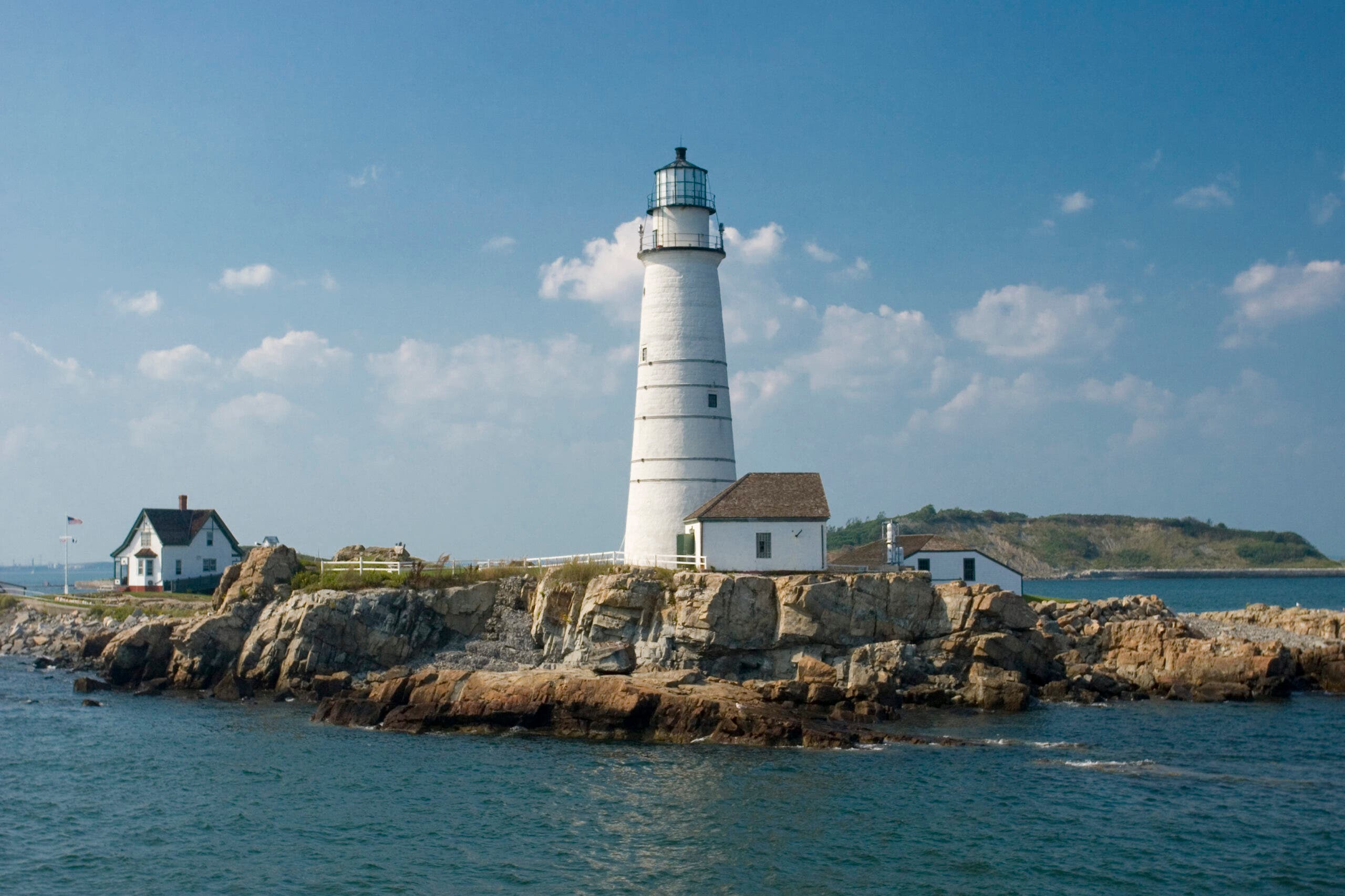
Or you could trace Snowman’s old route by volunteering on Boston Harbor Islands National Recreation Area cruises. Access to her lighthouse is currently closed due to maintenance following recent storms. Instead, boats glide past Long Island Head Light, Graves Light, and Boston Light as volunteers answer the public’s questions. This year’s semiquincentennial programming is the focus, casting the harbor in its Revolutionary past, a story Snowman loved to tell the public. “I’m so homesick,” she tells me.
By Snowman’s telling, the pull to this vanishing job is elemental: the poetry of the wind, the thrill of the distance, the rush of the long horizon—and the knowledge that someone is depending on you. Technology may keep the lights burning now, but the human urge to stand watch still flickers.
To learn more about NPS lighthouse positions as well as other volunteer roles with the Parks, visit volunteer.gov.
