

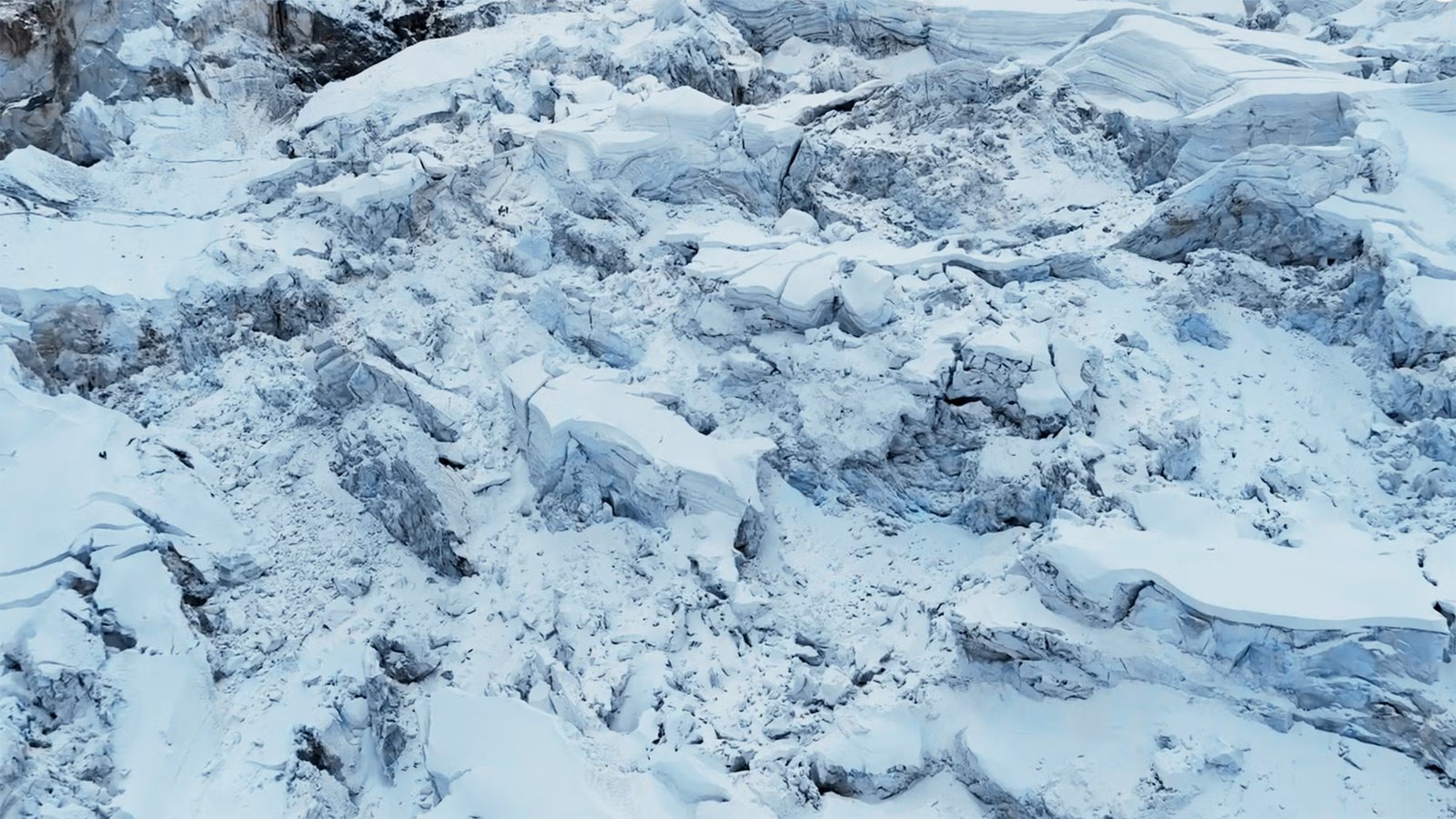
Rope fixers completed a path through the Khumbu Icefall. But the new route passes dangerously close to a looming serac.
Route fixers have solved the Khumbu Icefall. For now. (Photo: Airlift Technologies)
Published April 28, 2026 09:38AM
The nightmarish delay on Mount Everest is officially over. On Tuesday, April 28, rope fixing teams finally completed a route through the Khumbu Icefall, allowing expedition operators to ascend from Base Camp at 17,500 feet up to Camp I at 19,900 feet and on to Camp II at 21,300 feet.
The news means that climbing season on Mount Everest has officially begun—about two-and-a-half weeks behind schedule.
“Yes, the season is slightly delayed, but in the mountains, nature leads and we follow with respect,” Lakpa Sherpa, director of guiding company 8K Expeditions, and the field coordinator of the Expedition Operators Association (EOA), wrote on Instagram. “We remain fully committed to supporting the EOA team with additional manpower to ensure rope fixing on Everest and Lhotse reaches the summit as soon as possible.”
Seven Summits Treks, a Nepali guiding company, said the opening of the icefall means that climbers will soon begin their acclimatization hikes onto Everest. Before pushing for the summit, climbers will ascend to points on the mountain and camp overnight to allow their bodies to adjust to the thin air.
“With this critical section now secured, rotations to Camp I will begin shortly for more than 400 climbers this season who are currently waiting at Everest Base Camp for Everest, Lhotse, and Nuptse, along with a large number of Sherpa support teams preparing for summit pushes,” the company wrote on Instagram.
Is the Icefall Route Safe?
But there are lingering questions about the safety of the icefall route. According to a press release from the Sagarmatha Pollution Control Committee (SPCC), the group that oversees the rope-fixing team in the icefall, the pathway passes below a crumbling ice tower.
This massive block of ice, called a serac, is what prompted route fixers to abandon their efforts in early April. Icefall Doctors, the specialized workers who build the route, waited for more than two weeks for the serac to crumble. While some of the ice tower fell down, part of it remains.
The tower, the SPCC said, is 180 feet wide and 90 feet tall.
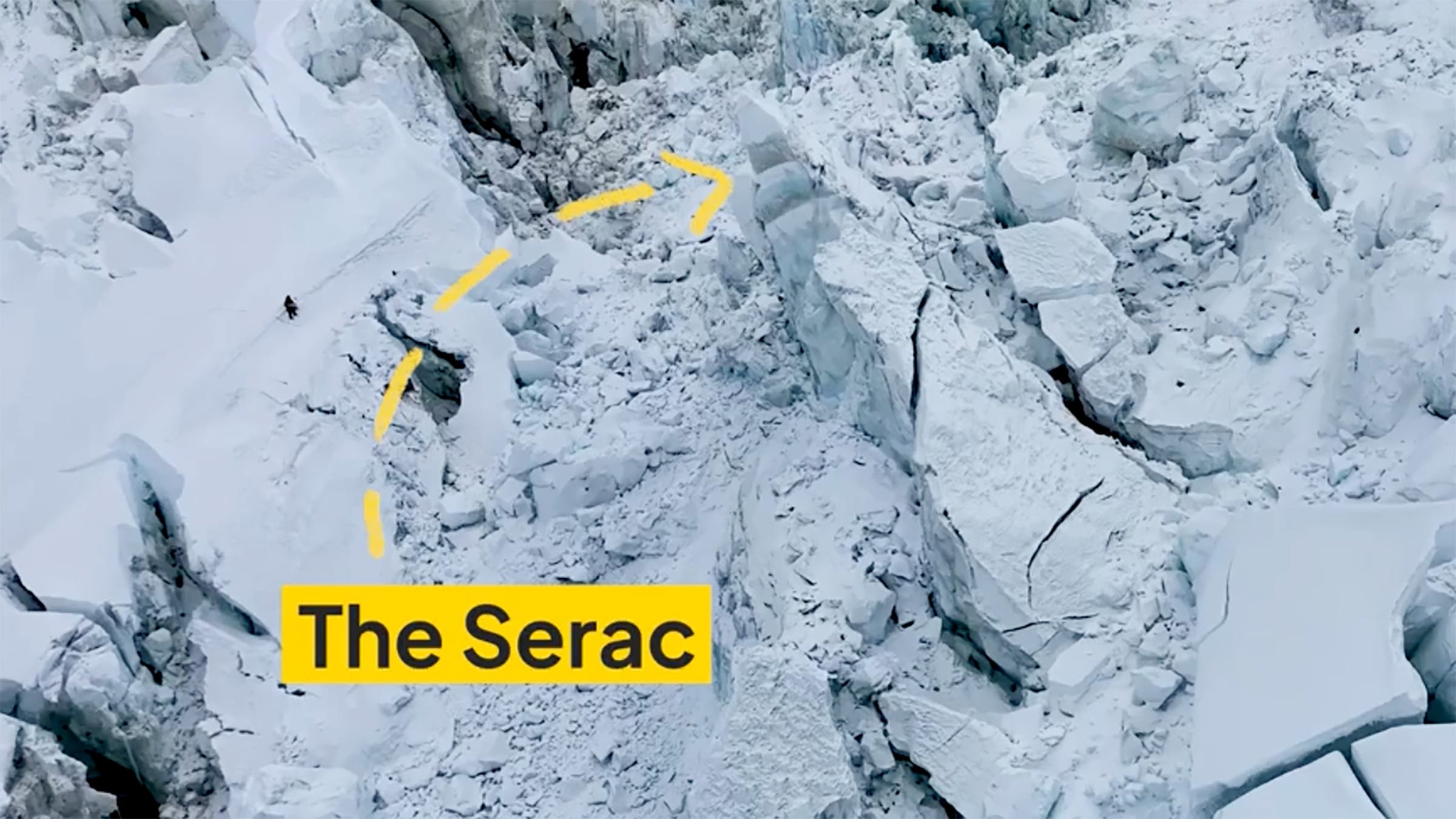
“The serac has multiple cracks and may collapse at any time,” the SPCC wrote in its release.
The SPCC said it pursued two alternative passages through the icefall. One of the proposed alternative routes would have required the Icefall Doctors to erect ten vertical ladders and route climbers close to a rockfall, the SPCC said. But after several days of scouting, rope fixers determined that the one beneath the serac is the safest.
“Our Icefall Doctors explored an alternative path through the center of the section, but no safer option could be found,” the SPCC said in a release. “Given the circumstances and the limited time remaining before the climbing season, the team had no alternative but to open the route passing below the serac.”
In its release, the SPCC published a series of mandatory safety measures that climbers must follow when passing under the serac.
“Move quickly through this section to minimize exposure time. Limit loads carried by high-altitude guides. Only one person on a ladder at a time. Safety harnesses must be clipped on both sides of the rope when crossing ladders,” it wrote.
Ben Ayers contributed to this report.
