

Published May 14, 2026 04:00AM
In May 1944, the Allies were getting ready to invade Europe from England. Their forces numbered 150,000 troops, from the United States, the UK, Canada, Norway, and Free France, with 6,000 ships and 11,000 planes, according to the National WWII Museum, in New Orleans. Years of resistance to Nazi Germany had led to this point, yet one vital question remained: Where on the French coastline should the Allies invade?
The answer hinged on the advice of one man—not General Dwight D. Eisenhower, not Prime Minister Winston Churchill, but a British meteorologist named James Stagg. Yes, in the run-up to the attacks that would bring World War II to an end in about a year, the Allies’ secret weapon was a mustachioed weatherman.
Or so the new movie Pressure would have us believe. Based on a well-regarded 2014 stage play (and well-documented history), and starring Andrew Scott as Stagg and Brendan Fraser as Eisenhower, the film follows Stagg’s attempts to convince military leaders that, first of all, weather is important—“The wrath of nature is real!” he declares in the trailer—and, more dramatically, that his own meteorological predictions are the most accurate. Eighty years ago, this was a challenge: the satellite technology we now rely on had yet to be invented, and meteorologists did not really even know about the high-altitude winds of the jetstream. The struggle of Pressure seemingly belongs to an era long past.
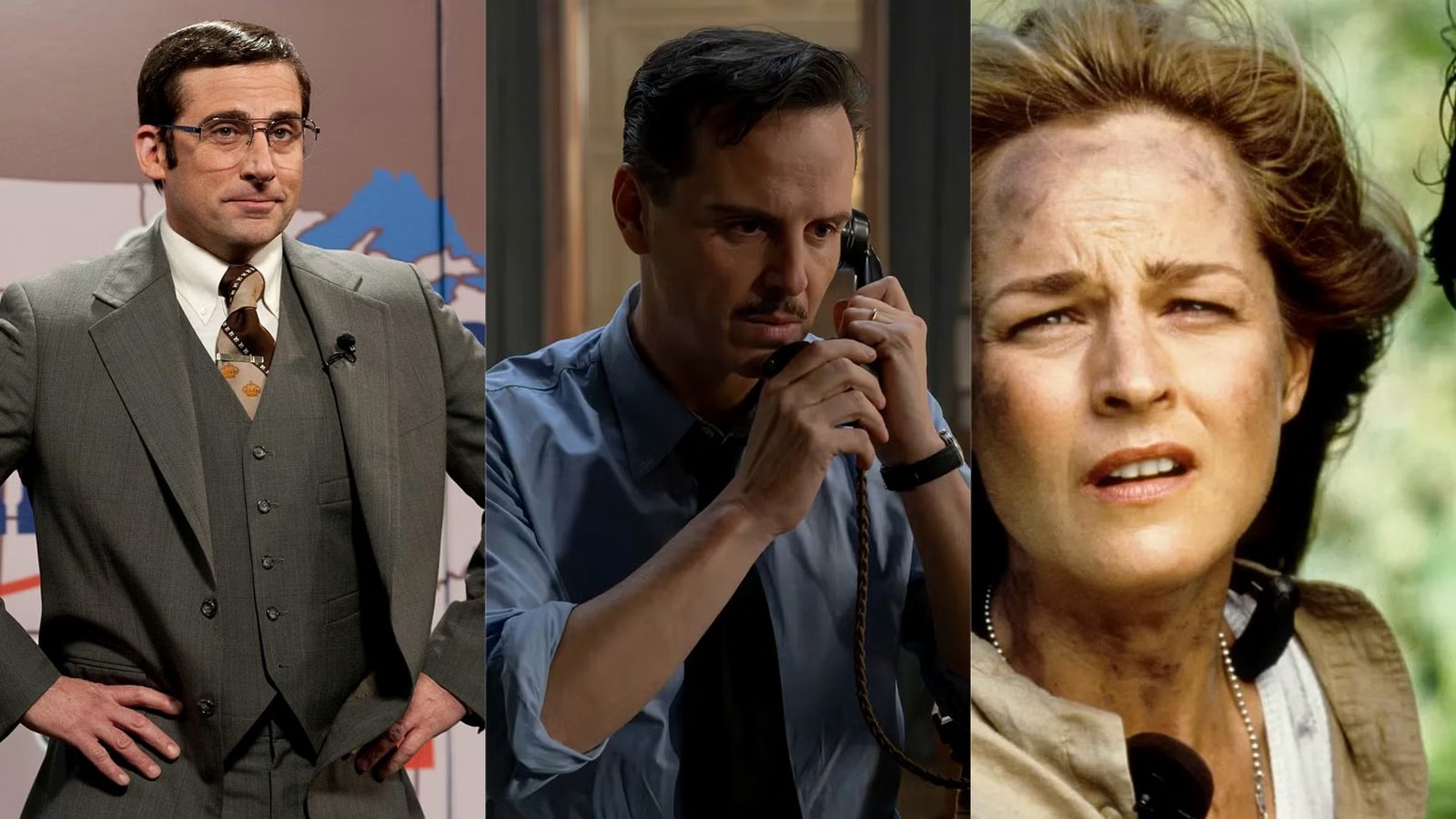
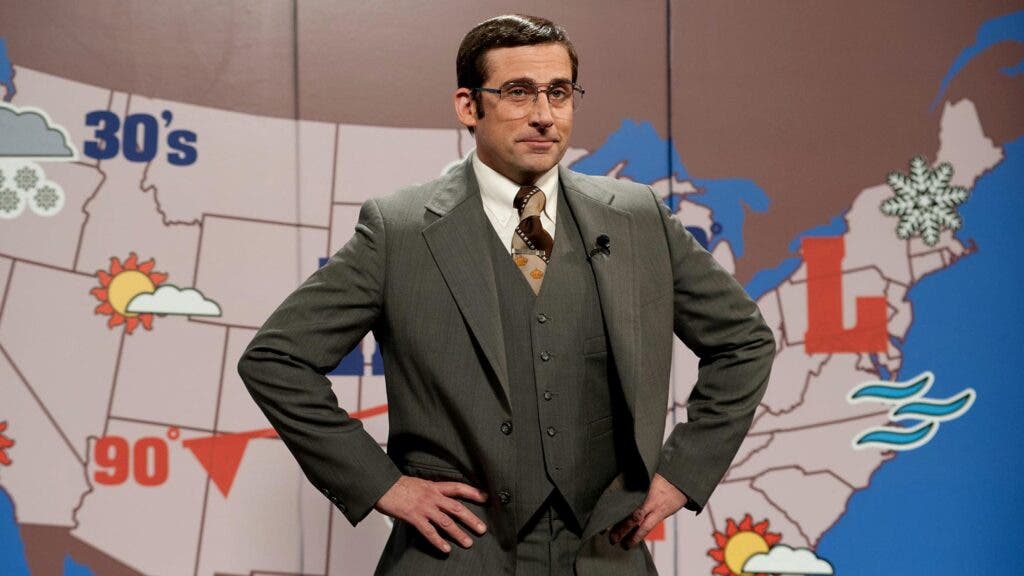
Except that it doesn’t. For more than a century, Hollywood has relied on the implacable, terrifying power of the weather. Think of the tornado that carried Dorothy Gale from Kansas in The Wizard of Oz, the hurricane that trapped Humphrey Bogart and Lauren Bacall in a hotel in Key Largo, the blizzard that engulfed the Overlook Hotel in The Shining, the perfect storm of The Perfect Storm. And for almost as long, the movies have treated weathermen as unserious at best, clowns at worst: Nicole Kidman’s murderous, fame-hungry weatherwoman in To Die For, Steve Carell’s brain-dead Brick Tamland in Anchorman, Amanda Seyfried’s Karen with her breast-based “fifth sense” for precipitation in Mean Girls. When Bob Dylan in 1965 sang, “You don’t need a weatherman to know which way the wind blows,” he was, perhaps unintentionally, ushering in an era of disrespect.
To be fair, the rules of drama were never going to be kind to meteorologists. A movie meteorologist has only two options:
- Confidently predict good weather—and be catastrophically wrong.
- Urgently predict disaster—and be ignored.
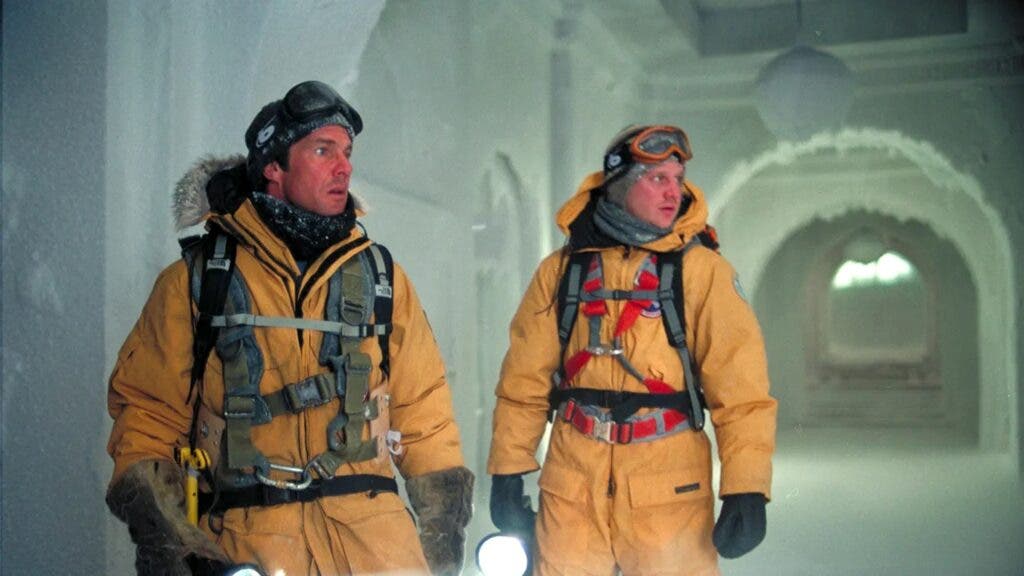
That’s it! The other possibilities—being right about good weather, being heeded about bad—would not make for exciting storytelling. The Day After Tomorrow, the 2004 climate-disaster movie, more or less begins with Dennis Quaid’s paleoclimatologist, Jack, telling the United Nations that a new ice age may be on the way, thanks to the disruption of the North Atlantic current. He is, of course, ignored, because how would the movie go if he weren’t? A coalition of powerful world governments taking climate change seriously, and preparing their populations for the inevitable consequences? That’s even more fantastical than the superstorms that quickly ring the northern hemisphere. Our suspension of disbelief does not extend to rational deliberation.
In this way, Hollywood’s Weather vs. Weathermen paradigm actually reflects—for once—reality. From Hurricane Katrina, which hit New Orleans only a year after The Day After Tomorrow, to the Los Angeles fires of 2025, we have had ample reminders of just how indifferently destructive Mother Nature can be—and of how often we’ve ignored her warning signs. Climate change, caused by man’s burning of fossil fuels, is real, and while we’ve known this for decades, we’ve done relatively little to stop it, and not much more to prepare for its consequences. Do we blame the faceless legions of oil-company executives, and their craven minions in government? Nah, it’s easier to point a collective finger at Al Roker and shrug at the defunding of the National Oceanic and Atmospheric Administration (NOAA). When did those guys ever get it right, right?
But that’s on the macro level, where meme-thinking subsumes all nuance. On the individual plane, those of us who live our lives outdoors are obsessed with the weather and its heralds. Every evening, I check the forecast to determine what to wear for the next morning’s run—tights if it’s below 38 degrees fahrenheit, short sleeves only if the UV index is 1 or below—and then I check it again come 6:30 A.M. Every May, I make plans with my bouldering crew to visit the Gunks in upstate New York; this is the one month of the year when it’s neither too hot nor too wet to climb. In ski season, I read snow reports on the web; when I hike, in summer, I check UGC trail reports on the apps. We all need to know whether it might pour next week, or in the next 12 minutes, and we’ll heed the predictions because we know they’re mostly accurate. Also, we’re not stupid. That new rain shell might keep us dry on a long hike through the Cascades, but it’s not plot armor.
There are very few exceptions to Hollywood’s sour take on meteorologists, the most notable being 1996’s Twister. That movie, you’ll surely remember, follows the exploits of storm chasers (played by Helen Hunt and Bill Paxton) in Oklahoma’s Tornado Alley as they try to deploy a swarm of atmosphere-sensing probes into a monster F5. Yes, these aren’t just glory hounds—they’re actual scientists, whose dedication to a better understanding of natural phenomena has them risking their lives pretty much constantly for 113 minutes. They are heroes, not only from close call to close call but in their quest for data that could potentially save the lives of everyday people like you and me.
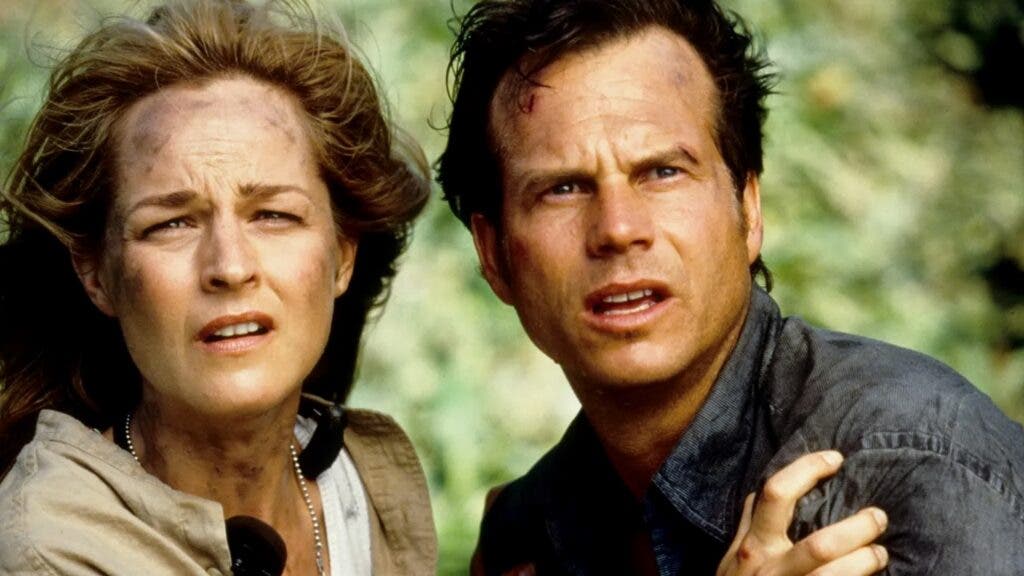
Still, Twister can’t fully embrace the idea of scientists doing science for science’s sake. And so there are actually two teams of meteorologists, one led by Hunt and Paxton, the other by Cary Elwes, each competing to get its sensors in a tornado. It’s Weather vs. Weathermen vs. Weathermen! Elwes’s group has more money, more people, and more sophisticated technology, which they rely on almost religiously. Meanwhile, Hunt and Paxton have, well, heart. The plot tends to hinge on which team will reach a tornado first, and while Elwes’s team has copious analytics, Hunt and Paxton have experience. They know where a twister will form, where it will go, when it will dissipate, not because of what their instruments tell them but because they feel it in their bones. They know where Mother Nature ends and human nature picks up. Spoiler alert: they are right, and they win, and Jonas meets his fate.
(You could say something similar about Groundhog Day: Bill Murray’s cynical weatherman Phil Connors only manages to escape his February 2 time loop once he gives up on trying to understand and control his situation and instead embraces his human connection to the people of Punxsutawney, Pennsylvania.)
As satisfying as this may be on the big screen, it’s terrifying in reality. Vibes are no replacement for data, for well-honed climate models, for evidence-based analyses and predictions. Would you put your faith in Al Roker’s gut (much reduced since his gastric bypass surgery in 2002) or in his adherence to scientific principles?
Which is, I’m guessing, the conflict that Pressure revolves around: Should Eisenhower learn the technical details of Stagg’s scientifically superior plan? Or should he learn to trust the man (and his mustache)? Given how Hollywood has handled this in the past, I’d put my money—with a big, disappointed sigh—on hearts over brains. Feelings don’t care about your facts.
Still, there may be a lesson for those of us, meteorologists or otherwise, who will leave Pressure, emerge from the movie theater into what could well be a record-settingly hot day, and wonder whether humanity will ever respect weathermen as much as we do the weather: When you want to watch which way the wind blows, science alone is never enough—you need an A-list story. A big budget doesn’t hurt, either.
