

Published May 20, 2026 06:45AM
As a lifelong rafter and experienced raft guide, I’ve relied on the best coolers to keep my food safe hundreds of times over the past 25 years. I’ve eaten perfectly preserved pork chops after they’ve been sitting in coolers for 14 days on a Grand Canyon trip, and I’ve been able to extend family camping trips by days having the right cooler with us.
While a solid cooler can be a serious investment, it’s one we think is worth making. The best camping cooler isn’t just a piece of gear, it’s a tool that will make your outdoor adventures more convenient and safer for years to come. When you spread out that initial investment over years of heavy use (and honestly, worthy coolers should last at least that long), it doesn’t sting as bad.
I often joke that I got known as “that cooler guy” before I was known as anything else at Outside, and this year, I called upon my hard-earned cooler-guy credentials to test this batch. In past testing cycles, I’ve evaluated coolers by nerding out deeply in my local college’s science labs and even dropping a fifty-foot tree on our cooler contenders. This year, I spent three months working with testers who took them rafting on the Klamath River, camping all around Northern California and Oregon, and picnicking in picturesque places. We took notes on how they retained ice in varying temps over weekend trips and noted the finer details like how it felt to close and open them. These are the best of the best hard coolers that will support your summer adventures.
Best Coolers: At a Glance
Best Cooler Overall
Yeti Tundra 65
External Dimensions: 30.5” x 17.5” x 16”
Capacity: 65 qt
Weight: ~29 lbs
Ice Retention: 9.5/10
Pros and Cons
+ Excellent ice retention even with frequent opening
+ Extremely durable rotomolded construction
+ Simple, long-lasting latch system
– Heavy for solo carry
– Expensive
Yeti Tundras have been my go-to cooler for the fifteen years I’ve been testing coolers. While some might look at a lack of an overhaul as boring, I see it as a flag stuck in the ground. The 65 is the largest Tundra I’ve ever tested, and it’s my default for river days, car camping, and the shoulder-season trips where you don’t want to worry about your food spoiling. It’s the Tundra 65’s steadfast performance that made it our pick for the best cooler of summer 2026.
The rotomolded polyethylene body is thick and rigid, and it remained as indifferent to abuse as its predecessors. After weeks of sliding around truck beds and getting strapped into raft frames, it picked up a few superficial scratches that only added to its rugged patina. The pressure-injected polyurethane insulation kept ice at about an 80% retention rate during a three-day trip on the Klamath river with highs in the 80s, even with frequent opening (read: constant La Croix retrieval). The rubber T-latches are simple, effective, and look brand new after three months of use.
At nearly 30 pounds empty, it’s not something you want to carry solo for long distances, but the molded handles and rope side grips helped testers’ hands from getting too fatigued during longer lifts. The footprint is classic, boxy enough to maximize usable space without weird dead zones, and its straight walls make packing food and drinks wonderfully straightforward. The Tundra 65 cooler is expensive, sure, but it’s the best cooler from the family I’ve trusted for a decade and a half—and the cooler I’d trust to still be doing its job a decade from now.
Best Budget Cooler
Igloo Trailmate 50 Qt
External Dimensions: ~26” x 18” x 20”
Capacity: 50 qt
Weight: ~34 lbs
Ice Retention: 4/10
Pros and Cons
+ Affordable compared to rest of test
+ All-terrain wheels and useful built-in features
+ Durable enough for casual use
– Sub-optimal ice retention in heat
– Latches are difficult to operate
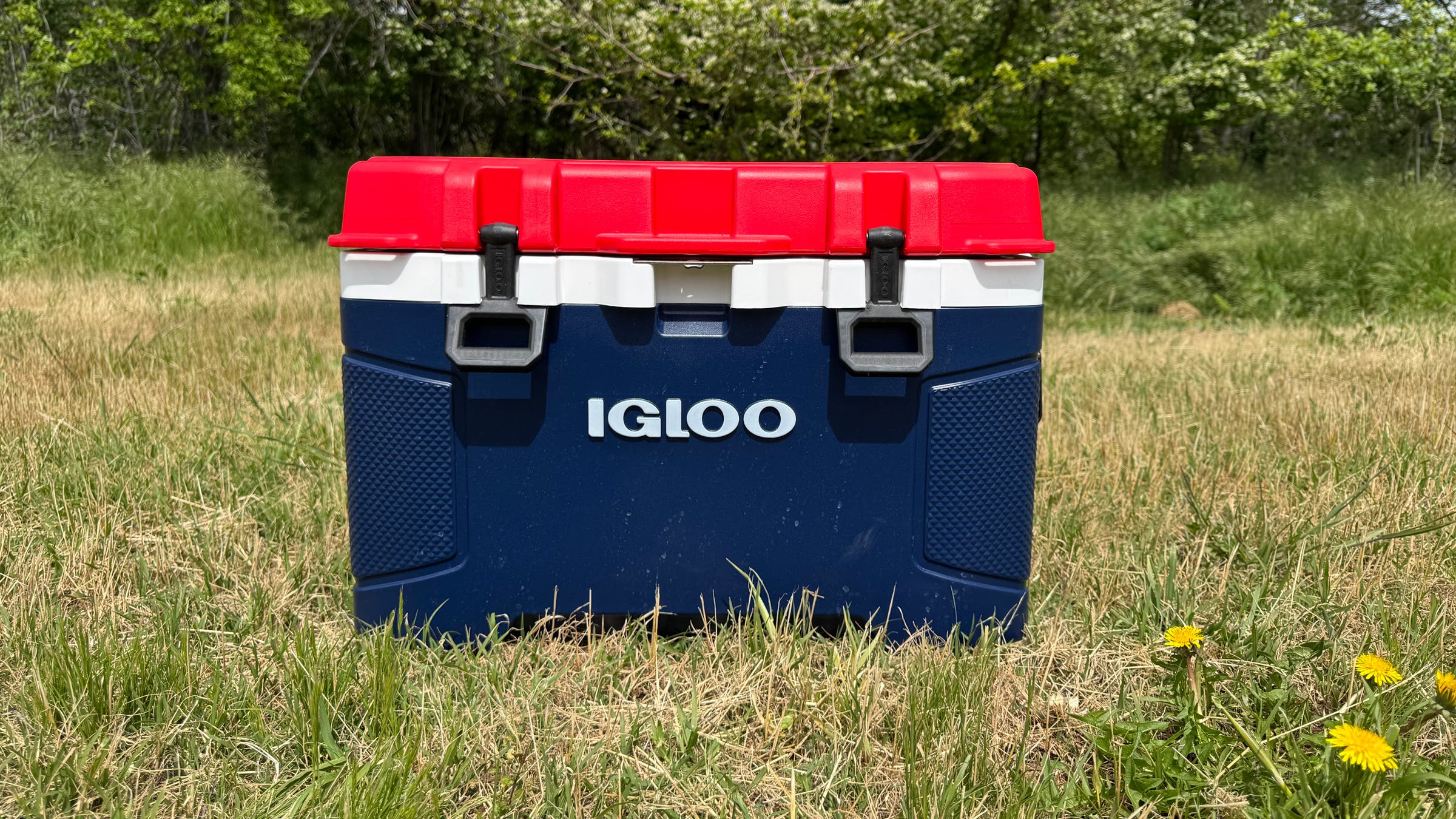
The Trailmate definitely does not have the ice retention chops or fine details of the other coolers in this test. But for savvy shoppers, that tradeoff may be worth it—because it also happens to be half or a third of the price of all of the other coolers I tested this round.
The injection-molded body did prove plenty hearty for three family camping trips in which it was heavily abused, but it simply isn’t in the same insulation class as the premium rotomolded coolers. A weekend trip with highs in the 80s decimated 75% of a block of ice on a camping trip in the Marble Mountains, but everything stayed food-safe. While I wouldn’t trust it on a four-day-plus rafting trip, it definitely proved adequate for a couple of days out— which is, realistically, what most people need from a cooler. The Trailmate definitely does not have the ice retention chops or fine details of the other coolers we tested, but the math is hard to ignore: it offers 80 percent of the performance for 30 percent of the cost. At just $120, you could buy three of these for the price of a single high-end cooler and still have cash left for fireside beers.
The latches were cumbersome, with five different testers noting how hard they were to get locked down in a variety of testing scenarios. The oversized wheels and telescoping handle were solid enough to haul the Trailmate across deep sand and rocky ground while trudging over a quarter of a mile to a campsite in the Marbles. While it likely wouldn’t sustain the impact of the rotomolded coolers in this test, the lid was sturdy enough for a 220-pound big boy tester to sit on, and the integrated accessory features (like a dry storage tray, cup holders, and even a cutting board) were everything we needed to complement a day trip to to a mountain lake.
Best Electric Cooler
Dometic CFX5 3
External Dimensions: ~27” x 16” x 16”
Capacity: 36 L
Weight: ~37 lbs
Ice Retention: N/A
Pros and Cons
+ True fridge/freezer performance without ice
+ Durable, well-built exterior
+ Intuitive controls and removable basket
– Requires reliable power source
– Heavy and expensive
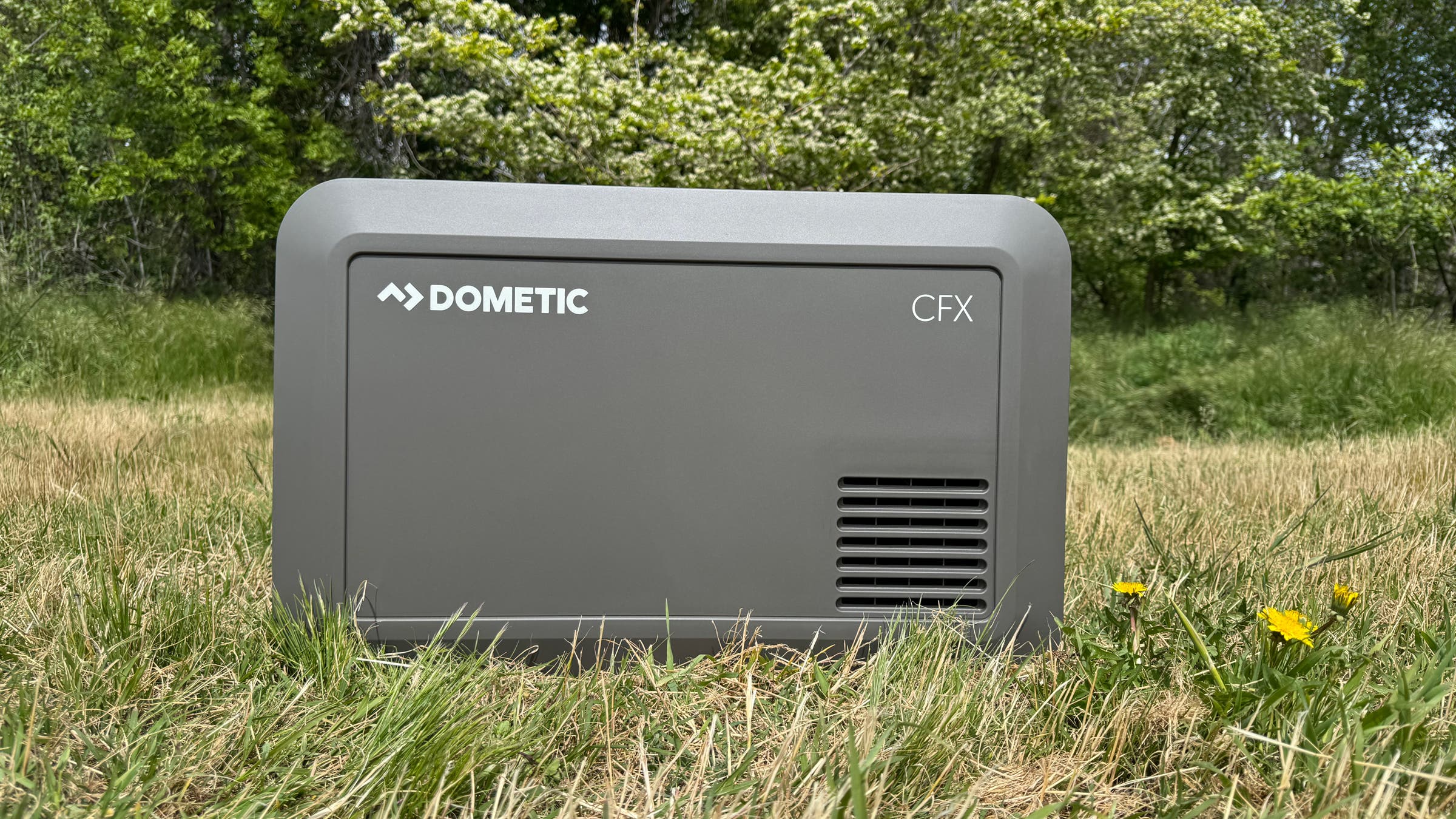
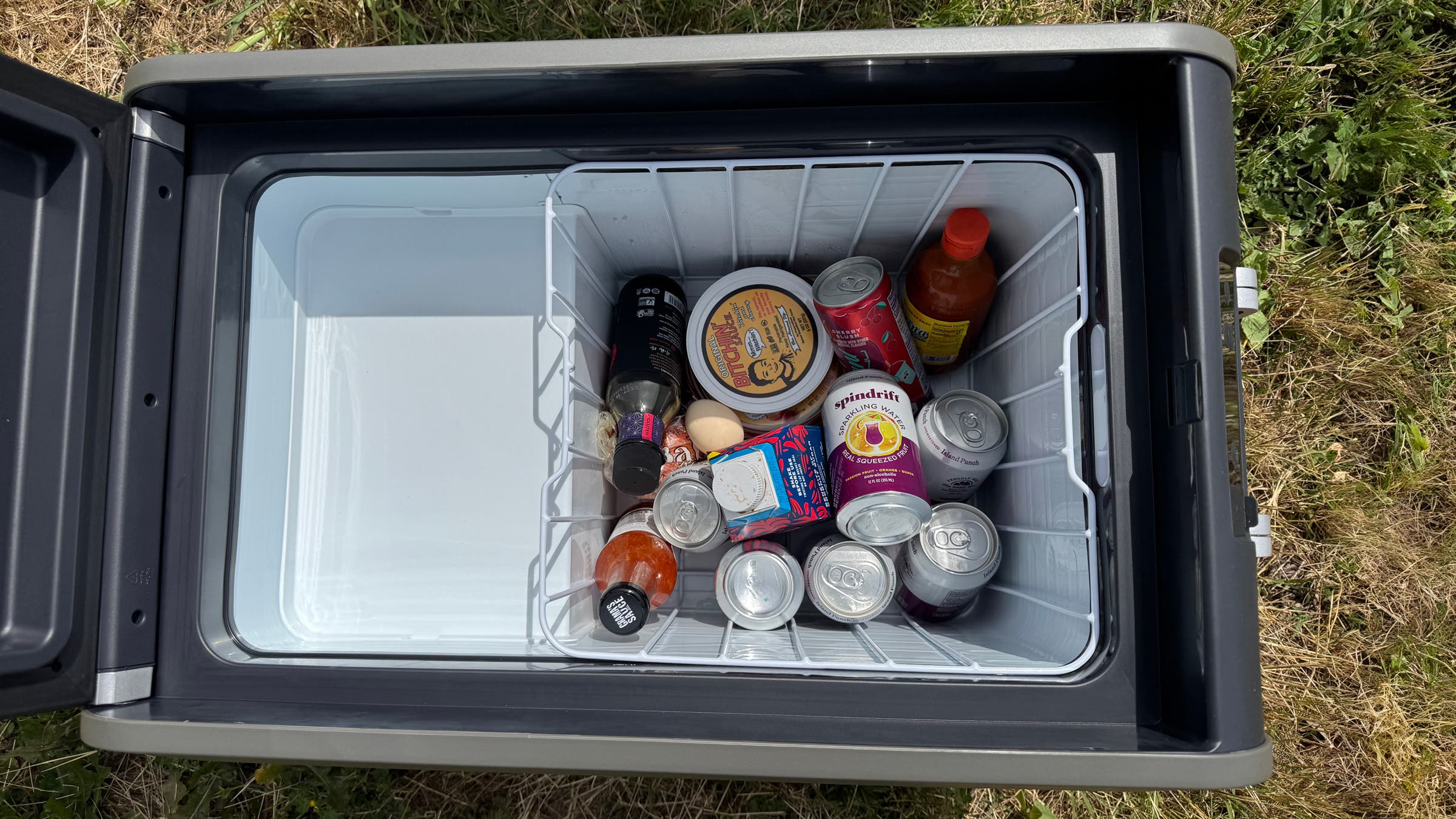
Dometic continues to blur the line between cooler and appliance, and the CFX5 35 is less “ice chest” and more “mobile fridge that doesn’t care where you take it.” I ran it in the back of a truck for road trips and at camp with a portable power station, and not having to think about ice felt luxurious. When not being tested on the road, this cooler moonlit as a mini-fridge in my office for a month. I found myself perpetually delighted by how user-friendly its controls were, as well as its removable basket that I could pull out and pack or unpack with ease.
The compressor-based cooling system holds precise temps (down to freezing if you want), and the insulation is strong enough that it doesn’t constantly cycle power. The exterior is built with reinforced corners, aluminum handles, and a thick lid that doubles as a step when you inevitably stand on it. At just shy of 40 pounds, it’s heavy, but not outrageous considering it is basically a highly mobile refrigerator.
In one heart-stopping moment, I dropped the fully loaded Dometic cooler while leaning it against the bed of my Toyota Tacoma. My stomach dropped, and I immediately assumed my klutziness had ruined my excursion—but to my shock, it was totally fine and whirred right back up when I plugged it in. What felt like an expensive mistake was no big deal thanks to its durability.
The interior layout is straightforward, but the lid opens from both sides of the top—so digging around at the bottom takes some effort if you are in a crowded van and don’t have the space to remove the internal basket. If you have access to a really solid battery and want to eliminate ice from the equation entirely, this electric cooler is a game changer. If you don’t have a reliable power source, it’s a very expensive box.
Most Innovative Cooler
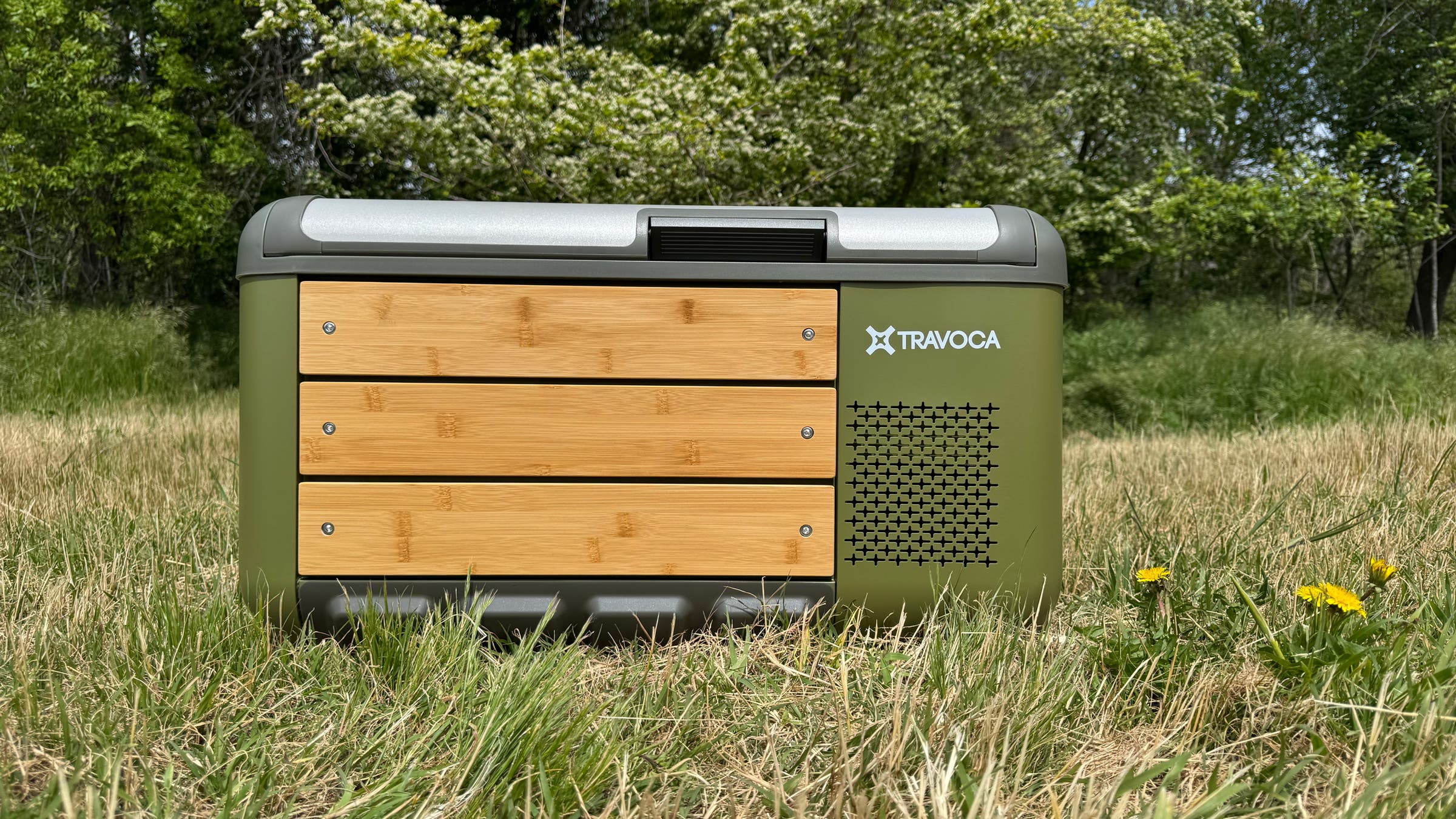
Travoca Rigel 45 Dual Zone eCooler
Dimensions: 29.8″ L × 19.3″ W × 16.3″ H
Capacity: 45 L
Weight: 58 lbs
Pros and Cons
+ Dual-zone fridge/freezer versatility
+ Highly efficient insulation and cooling
+ Premium build and modular system design
– Extremely heavy
– Overkill for short trips
What separates the Rigel 45-L from other electric coolers is the dual-zone setup. With a removable divider and independent controls, we were able to run one side as a freezer and the other as a fridge. On top of experiencing the luxury of ice cream while camping, it was amazing to make ice and divvy it out to our plebian acoustic-cooler users during a camping trip at the Oregon Coast. It offered the kind of flexibility that actually changed my long-held beliefs on the right way to pack and eat on longer trips. The Rigel 45-L temps can drop as low as -4°F, and fast, going from warm to freezing in about 20 minutes.
This huge step in electric coolers isn’t all about the electricity, though; the insulation deserves also a lot of credit. Instead of relying solely on foam, the Rigel uses vacuum-insulated panels wrapped around the interior, which dramatically reduce heat transfer and help it hold temps longer with less power draw. That efficiency meant quieter operation, longer battery runtime, and less cycling overall.
The powder-coated steel body with bamboo accents looks better than it needs to and feels overbuilt in a reassuring way. At 58 pounds, it’s the heaviest cooler we’ve ever tested, but that weight comes with a sturdiness that we tested to the limits when stepping on it in the back of a loaded Ford Transit. App-based controls let you monitor and adjust temps without opening the lid, and the modular design makes it a system you can build out over time. Testers also loved that taking the entire lid off was an option for beginning of trip packs and end of trip unpacks.
Is it overkill for a quick overnight? Absolutely. But, if you look at camping as an extension of your home the Rigel 45 can turn a campsite into a real kitchen.
Most Durable Cooler
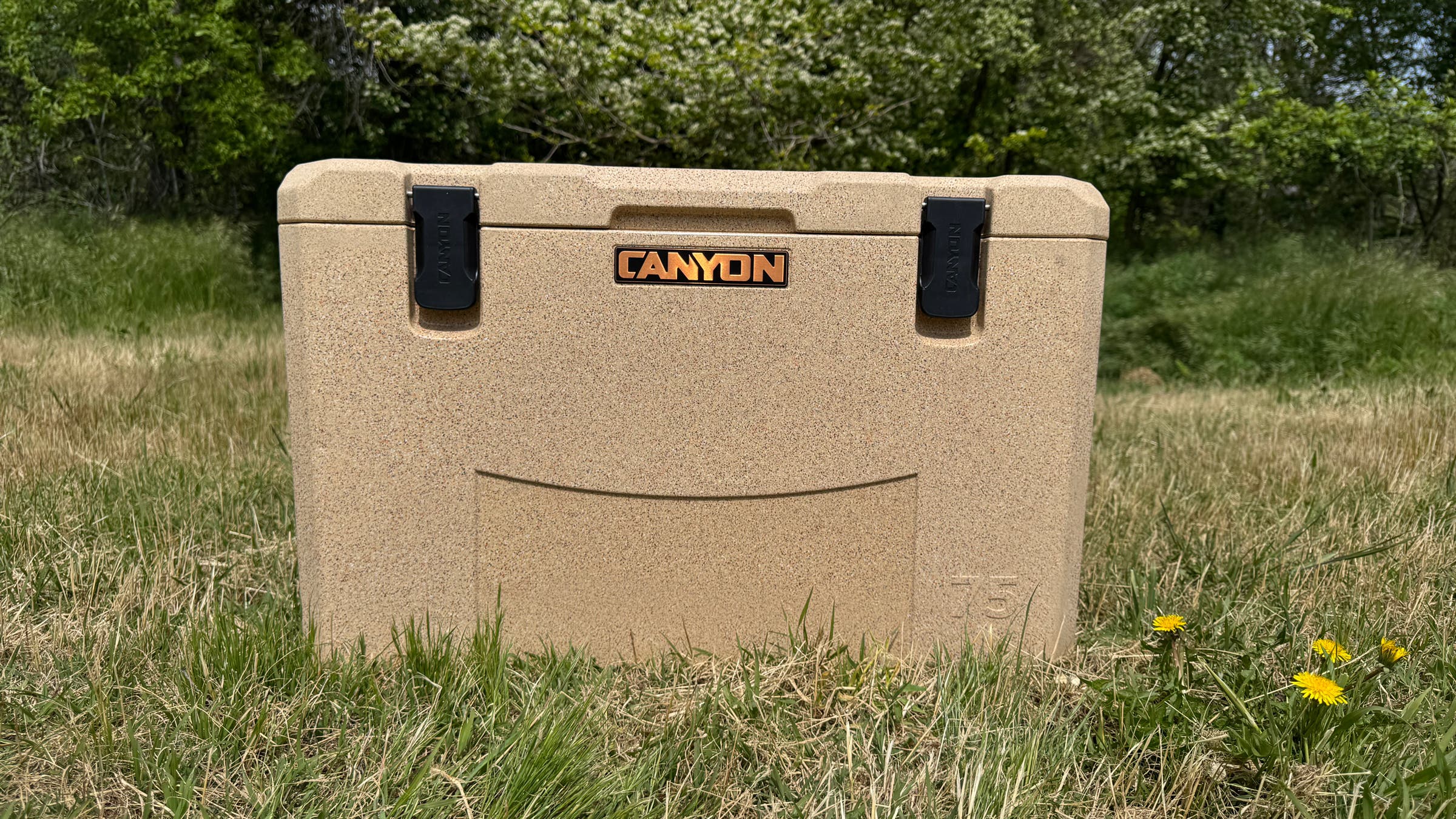
Canyon Coolers Outfitter 75
External Dimensions: ~36” x 18” x 17”
Capacity: 75 qt
Weight: ~40 lbs
Ice Retention: 10/10
Pros and Cons
+ Exceptional durability for harsh conditions
+ Outstanding ice retention
+ Secure, high-leverage latch system
– Heavy
– Bulky to store
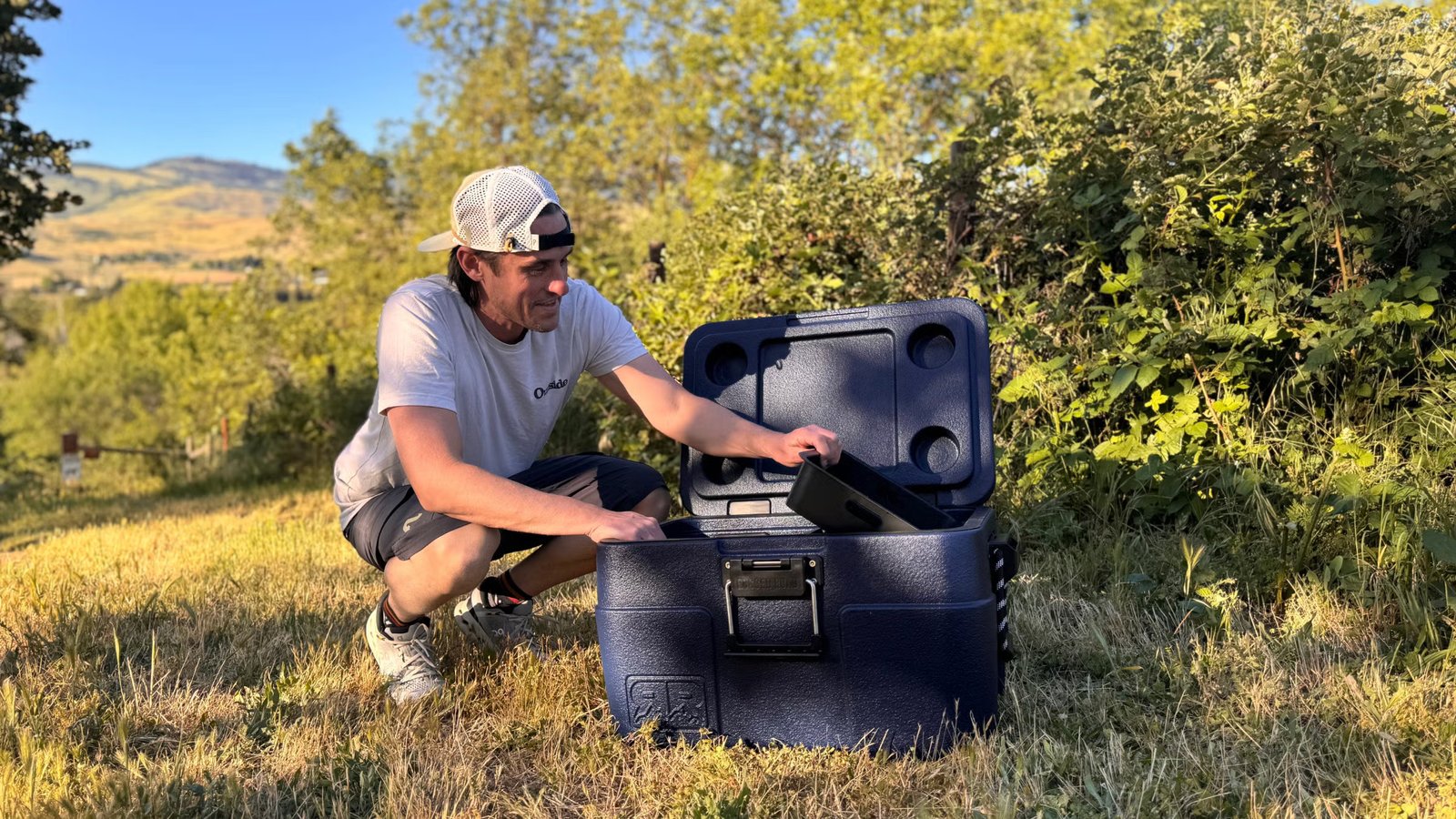
The Canyon Outfitter 75 is an absolute hoss. After months of testing, it’s the hard cooler I’d trust in the worst conditions—multi-day river trips, desert heat, or anything involving questionable loading decisions. The rotomolded shell is thick and rigid, and testers delighted in trying to scratch the no-nonsense matte finish while throwing it in and out of truck beds and rafts. The textured exterior hid any scratches like camo hides a hunter in the woods.
The hardy plastic latches start at the body of the cooler and come up to latch onto the lid, unlike most latches that latch down from the lid onto the body of the cooler. The result is some extra leverage that allowed testers to close the lid incredibly hard, creating a tight seal that kept ice 90% frozen (or more) over a three-day weekend. We did not test it to its alleged eight-day limit, but I would absolutely trust the Outfitter for that long. It’s heavy—no way around that—but the rope handles are comfortable and the rectangular footprint packs cleanly into rafts and truck beds. Testers noted that this cooler felt more like a professional tool than a lifestyle piece because of all of the above-mentioned bomb-proof details.
Best Cooler Design
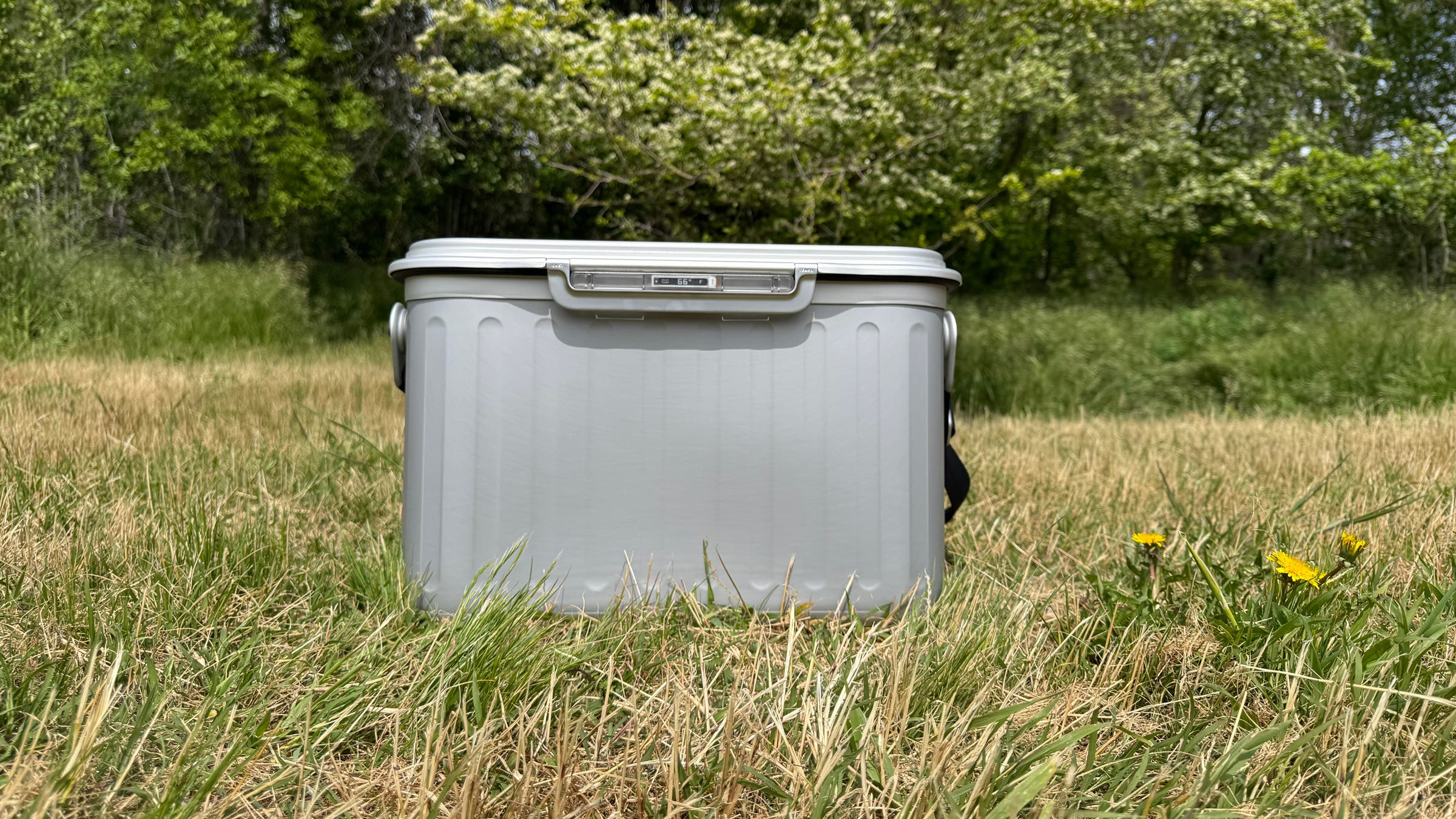
Oyster Tempo Pro
External Dimensions: 19.4″ × 12.6″ × 11.6″
Capacity: ~35 L
Weight: ~20 lbs
Ice Retention: 8/10
Pros and Cons
+ Innovative vacuum-insulated design
+ Lightweight and space-efficient
+ Built-in thermometer improves usability
– Less durable than rotomolded competitors
– Premium price
The Tempo Pro hard cooler stands out immediately because of its gorgeously clean, stainless-steel design. My mother, who knows fancy, said that it looked more like I was hauling designer luggage than a cooler when I slung it over my shoulder for a family picnic at Emigrant Lake. I don’t say that as a pejorative; it really does look more like a fashion than utility piece.
The Tempo Pro isn’t all looks though; instead of a hinged lid, the top splits open to make accessing contents faster and less disruptive to cold retention. The walls are built from aluminum panels with a vacuum-sealed core, which dramatically reduces heat transfer compared to foam insulation. That, coupled with silica and engineered air barriers, minimize thermal conductivity and air movement inside the wall. The result is a cooler that is insanely efficient despite having minimal insulation, keeping weight down and adding to its low-profile looks.
I never thought of using ice with this cooler for day trips; the two purpose-built cooling packs were plenty to get and keep drinks painfully cold in under an hour. It also has a built-in thermometer for both internal temperature and ambient temperature, which cut out all of my anxiety around how food safe our mayonnaise was at the end of a full day in the sun. The Tempo Pro isn’t as burly as the Canyon or Yeti, but it feels thoughtfully built and intentionally different.
Easiest Cooler to Carry
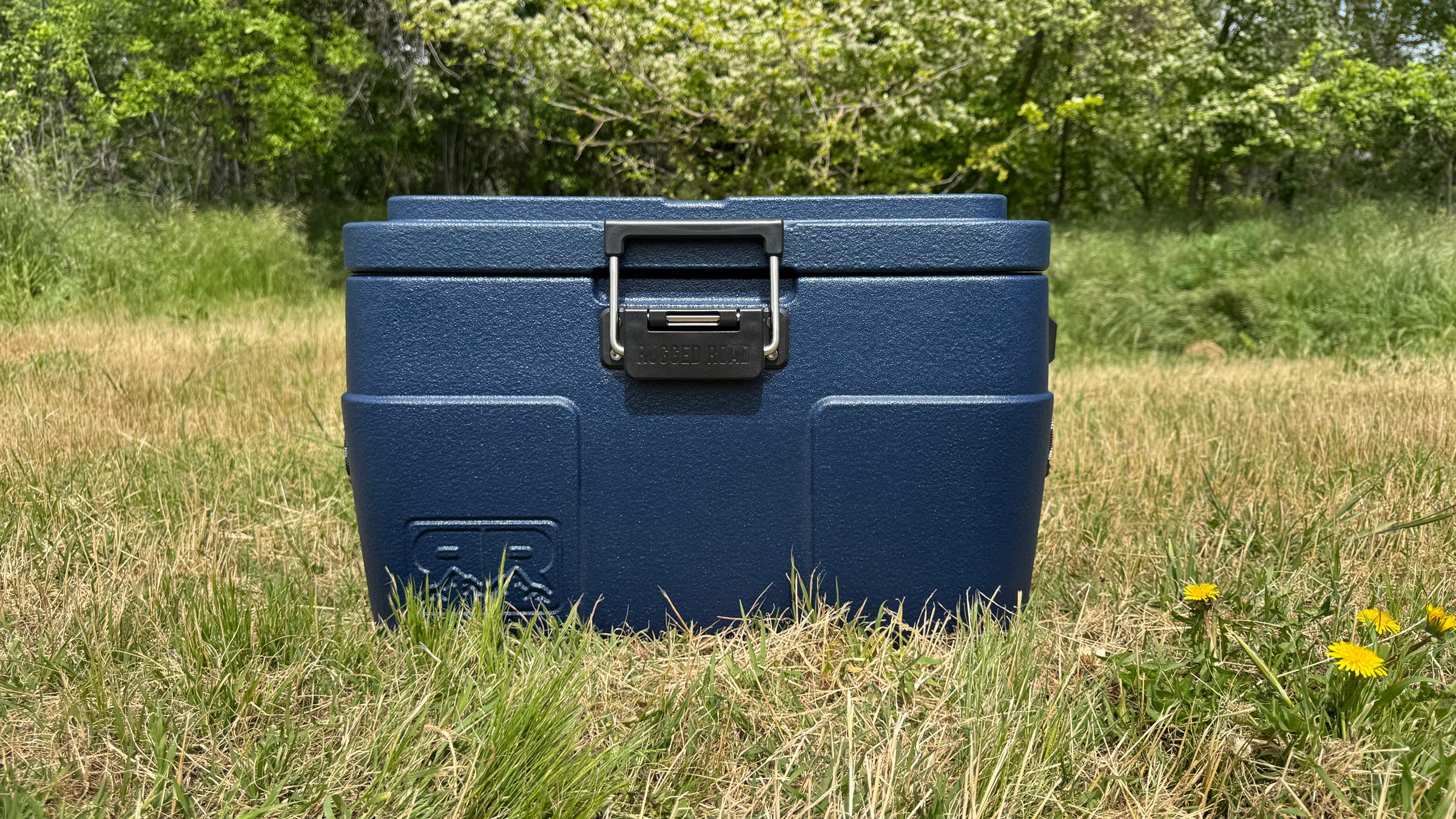
Rugged Road 65 V2
External Dimensions: 27″ × 18″ × 15.5″
Capacity: 65 qt
Weight: ~13 lbs
Ice Retention: 7/10
Pros and Cons
+ Extremely lightweight for its size
+ Durable exterior despite low weight
+ Solid weekend ice retention
– Less rigid than traditional coolers
– Not top-tier for long-term ice retention
For a laugh, I had testers pick up the Rugged Road 65 V2 empty to see their reactions. To a person, everyone was surprised. This cooler feels like a magic trick. It looks like a full-on heavy-duty cooler but weighs about as much as a loaded daypack. At 13 pounds, it’s less than half the weight of most camping coolers this size. It wasn’t flimsy, though—just the opposite. We found the textured exterior to be a champ at absorbing hits from other coolers in a truck bed and when getting rigged into a raft.
The secret is the Rigorite-coated foam construction, which trades some rigidity for massive weight savings. It won’t hold ice as long as the thick-walled rotomolded models, but it’s definitely in the same league, holding ice admirably for a full weekend trip. This is amazing performance at half the weight of its rotomolded counterparts. With proper ice management (i.e. don’t open it every five minutes), pre-cooling, and smart packing, this cooler would work on a multi-day river trip. Even better, you won’t throw out your back as you load it into your raft.
Best Rolling Cooler
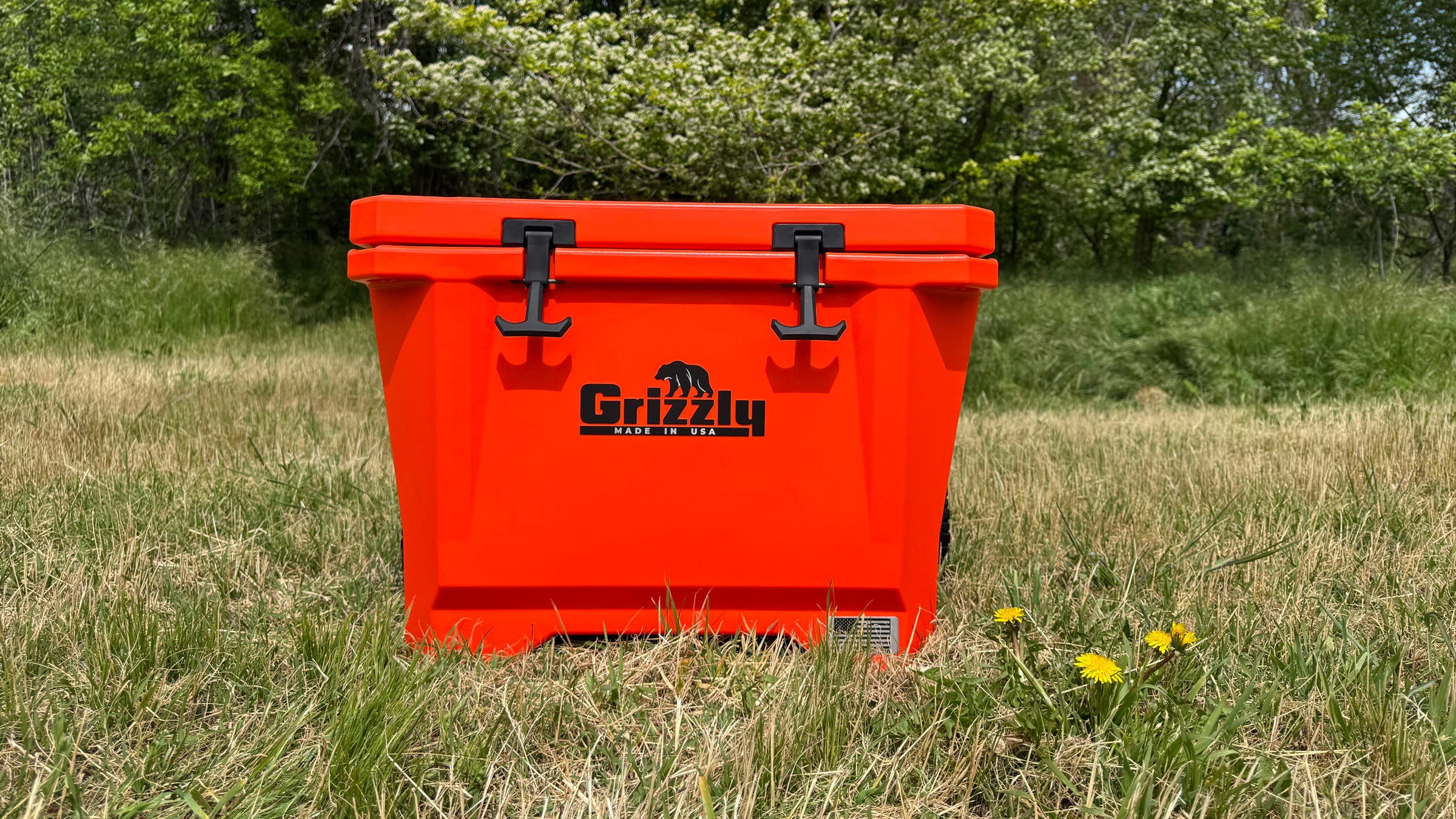
Grizzly Scout 40
External Dimensions: 26.25″ × 23″ × 21.5″
Capacity: 40 qt
Weight: ~30+ lbs
Ice Retention: 9.5/10
Pros and Cons
+ Excellent wheels and durable handle system
+ Strong ice retention for size
+ Extremely secure latch design
– Heavy for its capacity
– Smaller internal volume than larger models
I am obsessed with this American-made, supremely durable, and incredibly user-friendly hard cooler. The Scout 40 takes Grizzly’s famous durability and adds wheels, which sounds simple but makes a huge difference in real use. The puncture-proof wheels cruised off-road like my Tacoma when I wheeled it over uneven rocky and sandy mixed trails down to a creek for a family picnic. This cooler is a tank, weighing over 30 pounds for a 40-qt capacity, but the wheels really mitigated any complaints testers had about the heft.
The durability of a rolling cooler is only as good as its handle, and the Scout 40’s telescoping handle is all smooth, fluid metal. It opened and closed with a series of satisfying clicks, reassuring testers of its reliability with each deployment. A foam grip made the utilitarian handle comfortable to lug for over a quarter of a mile to a campsite on the Scott River in California. The absolutely premium components of the rolling capabilities of this cooler made the entire trip a smoother, more comfortable camping experience.
The rotomolded body is thick and confidence-inspiring, and the Scout’s ample insulation got this 40-qt cooler some of the highest marks in ice retention—barely losing any from a frozen block on a weekend trip with highs in the 80s. Its thermoregulating chops were helped by the absolutely bomber lock-down latches that are enforced with a small metal bar. This design doesn’t just close the lid; it actually squeezes down the gaskets for an airtight seal that locks in cold more efficiently.
Best Coolers Comparison Chart
How to Choose a Cooler
What Size Cooler Is Best?
Pick a cooler that’s big enough for your average trip length. If you get a cooler that is too small, you will go hungry, but a cooler that is too big will create coolness-wasting dead space. Each trip is different and group size can change things, but as a very general rule of thumb, I like to bring a 20- to 45-liter cooler on day- to weekend trips for my family of three, and a 55- to 70-liter cooler on trips lasting three days to a week.
Do You Really Need an Expensive Cooler?
This is a really tough question to answer as an individual who is obsessed with fancy coolers but spent most of his life using the cheapest coolers available. The short answer? If you are a reasonable drive from a place with ice and are camping for a weekend, you don’t need a cooler that can hold a single block of ice for a fortnight. Is it a good investment to buy a durable cooler (usually an accompanying factor in a pricey cooler) even if you don’t need it to retain ice forever? Yes, I think spending some extra dough is worth it.
What’s the Best Way to Pack a Cooler?
A cooler is only as good at retaining ice as the person using it. If you have a $400 cooler built to keep ice solid through the entirety of a Grand Canyon trip, but you leave it wide open in the sun for an hour on a super hot day, you just robbed that cooler of its ability to keep its contents cold.
I could write another 2,000 words on cooler maintenance, but there are three main rules you should follow: One: Try to reduce the cooler’s temperature before your trip, and keep it in the shade. The heat of the cooler itself drastically changes performance. Two: Keep the lid shut as much as possible. That means grabbing food with purpose rather than rummaging around. It also means grabbing multiple things at a time, such as all your sandwich fixings, and then immediately closing the lid rather than opening it once for ham, once for mayo, and once for cheese. Three: If your cooler has latches, keep them tight after every opening.
How We Test Hard Coolers
- Number of coolers tested: 14
- Number of testers: 8
- Days camped: 18+
- Meals eaten: 65+
- Days rafted: 7
- Trips to the beach: 4
- Number of toes stubbed while testing rolling coolers in sandals: 6
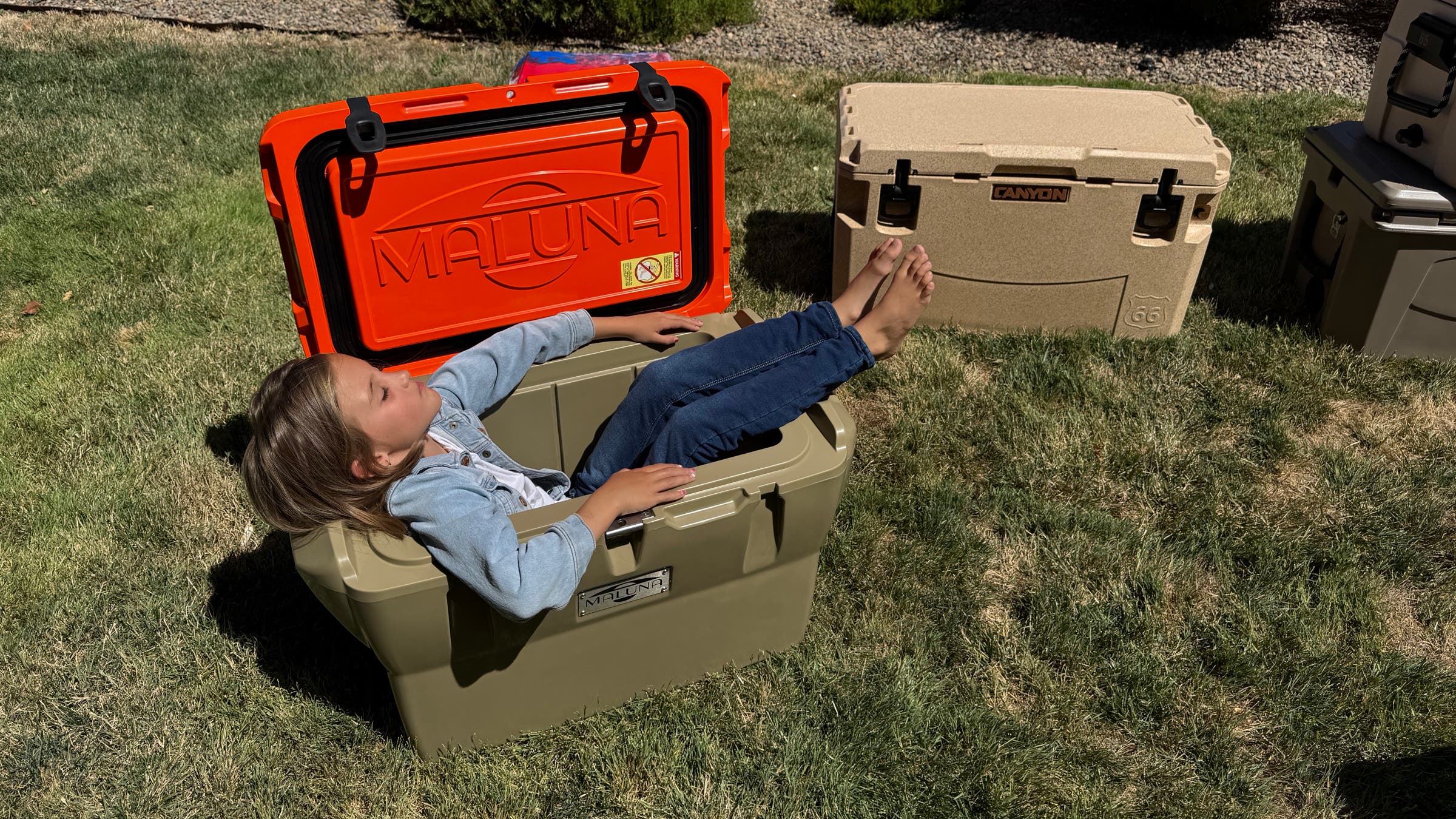
I tested these hard coolers the same way most people actually use them: by loading them up with food and drinks and taking them outside. Over the course of several months, testers took camping coolers on river trips down the Klamath, camping excursions in the Marble Mountains, family picnics, and long days sitting in the back of a truck on the hottest days of spring.
Each cooler was evaluated on ice retention, durability, portability, and overall usability. We tracked how much ice remained after multi-day trips, paying attention to how often testers opened lids (a huge factor in real-world performance), and noting how each camping cooler handled being dragged across sand, bounced around in truck beds, or strapped into rafts.
We also looked closely at the details that make or break a cooler over time like latches, handles, wheels, and interior organization—things that you may not notice when browsing online, but that become major issues during everyday use. In many cases, those small usability features ended up mattering just as much as raw insulation performance.
Meet Our Testers
Joe Jackson made a name for himself testing coolers during his first year working at Outside over a decade ago. Ever since he has been obsessed with the intricacies of closed cell foam, durable rotomolding, and keeping every goddamn lid closed to not let out all of the insulated air. His love of cooler testing and maintenance started during the ten years he worked as a raft guide and was solidified the year he managed a rafting company that cooked all of its meals out of food stored in coolers.
Sarah Jackson absolutely and utterly doesn’t fuck around when it comes to cooler packing and maintenance. She is the person everyone asks where the cheese is packed (even if it isn’t in her cooler) and has been known to move a cooler half a dozen times to keep it in the deepest shade on a hot campsite. She has tested, loved, and even destroyed coolers with her husband, Joe, for over a decade.
Zach “Red” Williams uses his 2020 Ford Transit and teacher’s schedule to maximize adventure for his family of four. He tested coolers for us on multi-week road trips, weekend camping trips, tailgating in ski resort parking lots, and rafting trips.
More Gear Reviews
The 8 Best Instant Coffees for Backcountry Adventurers
Yeti’s New Hondo Beach Chair, Tested and Reviewed
The Best Portable Camping Chairs for Fireside Lounging
