

Published May 21, 2026 03:04AM
“The fishpond’s fine,” Hi‘ilei Kawelo says, just two days after back-to-back Kona low storms hit Hawai‘i in March, causing devastating flooding on the North Shore of O‘ahu and destruction throughout the islands. Kawelo is the executive director for Paepae o He‘eia, a nonprofit dedicated to restoring a more than 600-year-old Native Hawaiian fishpond on the windward side of O‘ahu.
“The most recent flood event and our ability to be resilient and say, ‘Oh, the fishpond is fine,’ speaks to everybody’s work in the ahupua‘a,” which is a traditional Hawaiian land division stretching from the mountains to the sea, she says. “We always like to say that the health of the fishpond is a direct reflection of the health of the entire system.”
It has taken 26 years to get to this current level of health. And many of the organizations working to restore Native Hawaiian ecosystems and foodways will say there’s still a long way to go, in islands where food security feels precarious: 90 percent of the food supply is imported.
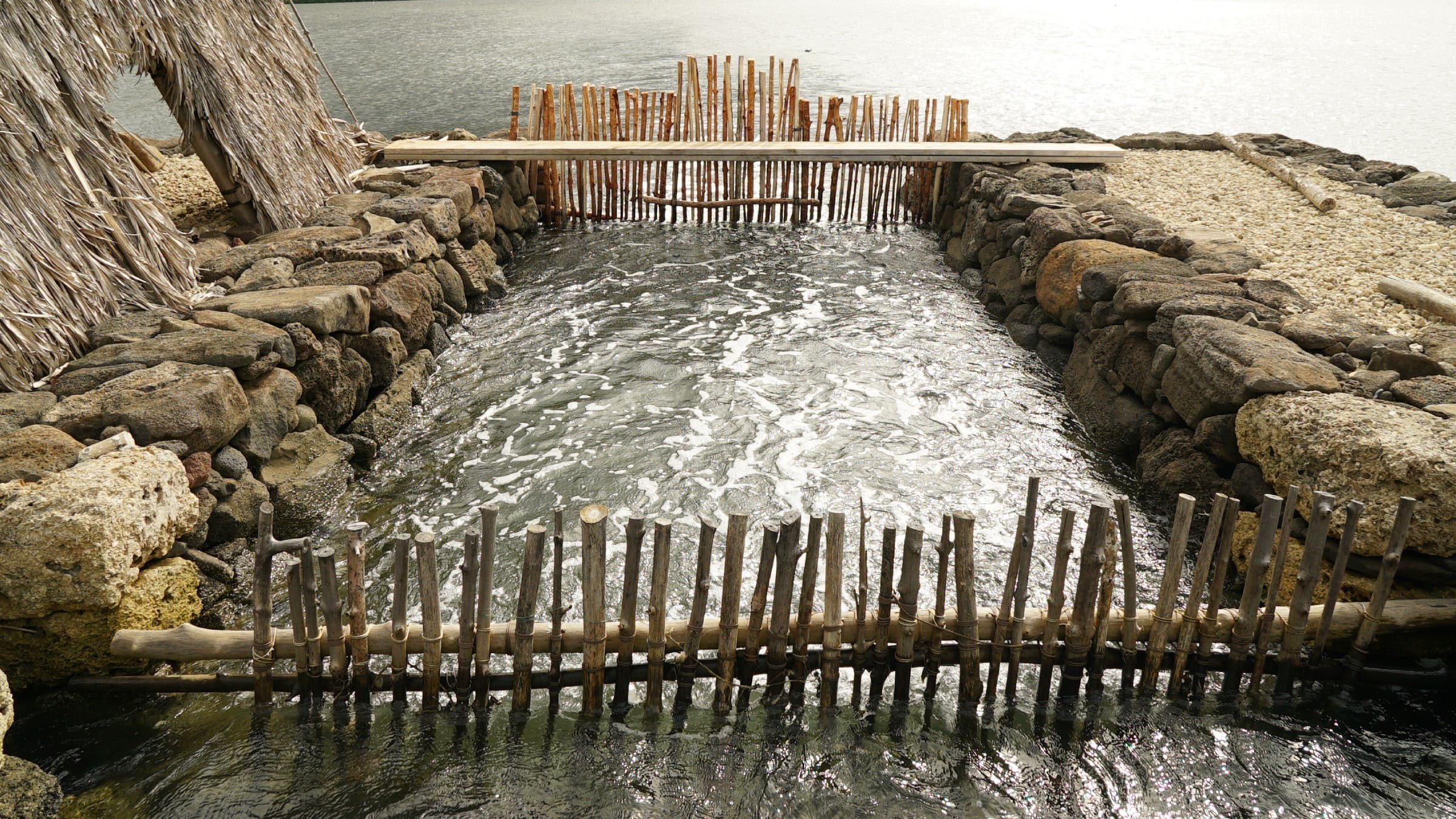
Though Kawelo grew up in the neighborhood, she had no idea He‘eia fishpond was just down the road. She first heard about it in 1998, as a student in Hawaiian studies at the University of Hawai‘i Manoa. At one time, almost every ahupua‘a had a coastal fishpond, relying on the tides and meeting of fresh water with ocean water to cultivate fish, a food source when ocean conditions precluded fishing. By one estimate, there were more than 480 fishponds prior to western contact, producing more than two million pounds of fish annually—He‘eia’s 88-acre fishpond was once capable of raising hundreds of thousands of pounds of fish. But by the time Kawelo first saw it, its walls had been destroyed by invasive mangrove, past storms, and neglect.
She and a small group formed Paepae o He‘eia in 2001, and in the years since, the organization has mobilized thousands of volunteers to completely remove the mangrove. Just last December, they finished restoring the 1.3-mile enclosure using a method of Hawaiian rock wall–building that eschews mortar.
In the two decades since Paepae o He‘eia started, where there was once invasive tilapia and seaweed, Kawelo sees more ‘ama‘ama (Hawaiian mullet) and awa (milkfish), which slip in through the makaha (sluice gates) when they’re young. In addition, “a lot of species will spend a little bit of time in the pond when they’re small—like going to preschool—and then the rest of their life in the larger Kane‘ohe Bay area,” Kawelo says. “And because there’s no mangrove and no sediment accumulation, you’ve got a cleaner reef outside.”
In other words, the benefits lie on both sides of the wall. “I come from a fishing family, and fishing is pretty extractive—it’s kind of hard to give back to the ocean. It’s not like if you’re a terrestrial person, you can plant trees,” Kawelo says. “So the idea that we can restore a place of traditional Hawaiian aquaculture and actually feed the community is really appealing to me.”
Unlike the He‘eia fishpond, which had been overgrown and hidden from the community, coconut palms help define the islands’ landscape. Except something has been missing from the picture. For four decades, Hawaiian educator Manulani Aluli Meyer would look at the palms and wonder why they had no coconuts.
“Niu [Hawaiian for coconuts] are one of the most important food resources throughout the Pacific Ocean,” she says. When the first Polynesians voyaged in their double-hulled canoes to the Hawaiian Islands about a thousand years ago, they brought with them a toolkit and pantry of plants that would supply the medicine, building material, and food that they would need in the isolated archipelago. Among the 23 canoe plants was niu. “We will not starve if we have coconuts in our coconut trees,” Meyer says. But in the modern era, the palms are trimmed before they can bear fruit for fear of falling coconuts. Niu went from a “tree of life to ornamental liability,” Meyer says.
Then, eight years ago, Meyer met Indrajit Gunasekara, who came to O‘ahu from southern Sri Lanka. In Sri Lanka, coconuts were part of his daily life—he dreamed of coconuts, he ate them daily. He taught her everything about them: that when planting on the arid leeward side of O‘ahu, you could use their husks as mulch, for they could hold water for months; that the particular variety of palm one Hawaiian wanted to cut down—because it didn’t produce coconuts with meat and water—could be used as fiber to make coconut rope, thanks to its elongated husks.
“We are all niunates!” Meyer cries out, a pun on neonates. Gunasekara helped open her eyes to all the varieties of Hawaiian niu, including niu hiwa, with a black shell used in ceremonies; and umeke poi niu, its flat-bottomed shells ideal for holding single servings of poi (pounded taro thinned with water). Together, Gunasekara and Meyer started Niu Now! for coconut and cultural revitalization and have since planted nearly 30 groves throughout the islands.
“We just want to have food security back in our hands again,” Meyer says. “And then to enjoy coconuts and have a relationship with them.”
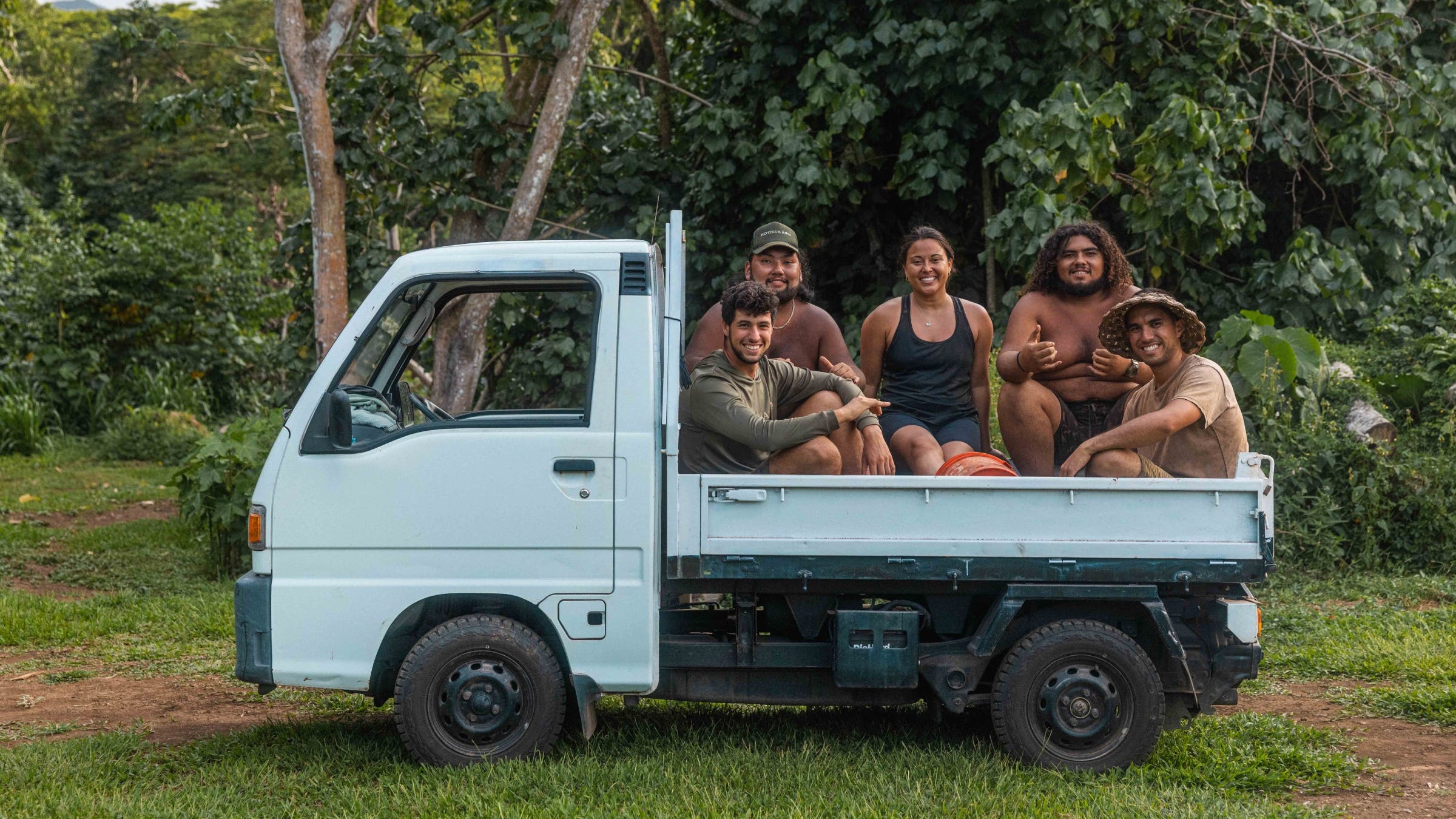
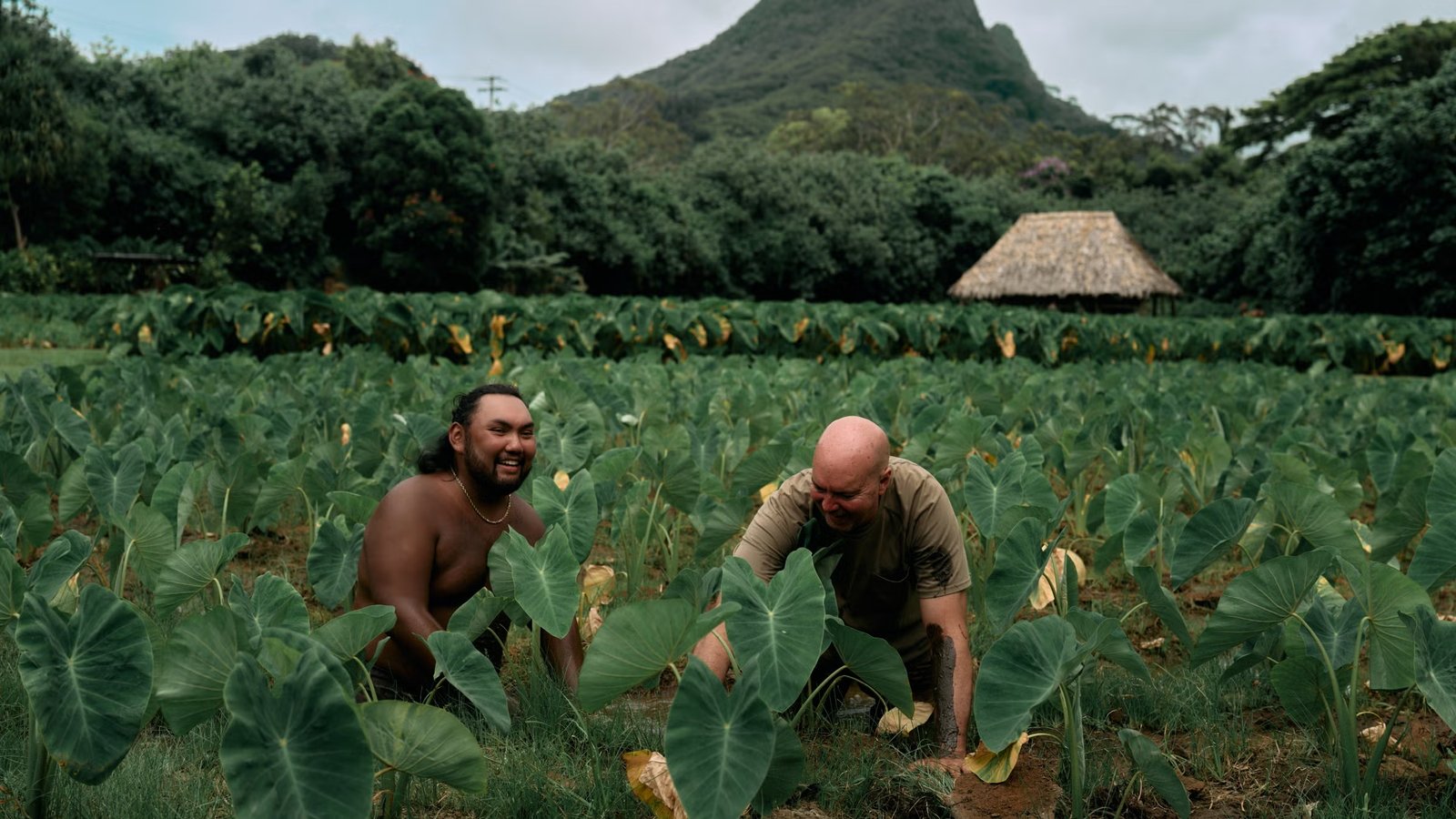
Restoring a relationship to food and land is central to Ho‘okua‘aina, a nonprofit started by Dean and Michele Wilhelm with a kalo (taro) farm on the windward side of O‘ahu. They began with a mission statement of “cultivating a culture of individual well-being and community waiwai [abundance and wealth] through aloha ‘aina [love of the land],” Dean says. “I like to say in short: through the growing of kalo, we grow people and community.”
Dean has witnessed this firsthand. In 2002, he was working as an English teacher at the Hawai‘i Youth Correctional Facility and struggling to connect with his students, 75 percent of whom were Hawaiian. He decided to plant kalo outside the classroom, and together they tended the kalo, harvested its leaves, and made laulau (pork wrapped in kalo leaves and steamed).
“We saw that there was a magic in that—in building their self-esteem and pride,” Michele says. They sold their house and spent the next few years looking for a place to test what Michele calls “our big theory of change: What if we created a safe place to connect the kids with their culture, to connect them with food, to do something with their hands?”
Growing kalo was a natural fit: not only was it one of the canoe crops, but according to mo‘olelo (story), kalo was the first, stillborn child of Wakea, the Sky Father, and Ho‘ohokukalani. From his buried body grew the first kalo plant. A second son, named Haloa, was born soon after, from whom all Hawaiians descend—making kalo the older sibling of the Hawaiian people.
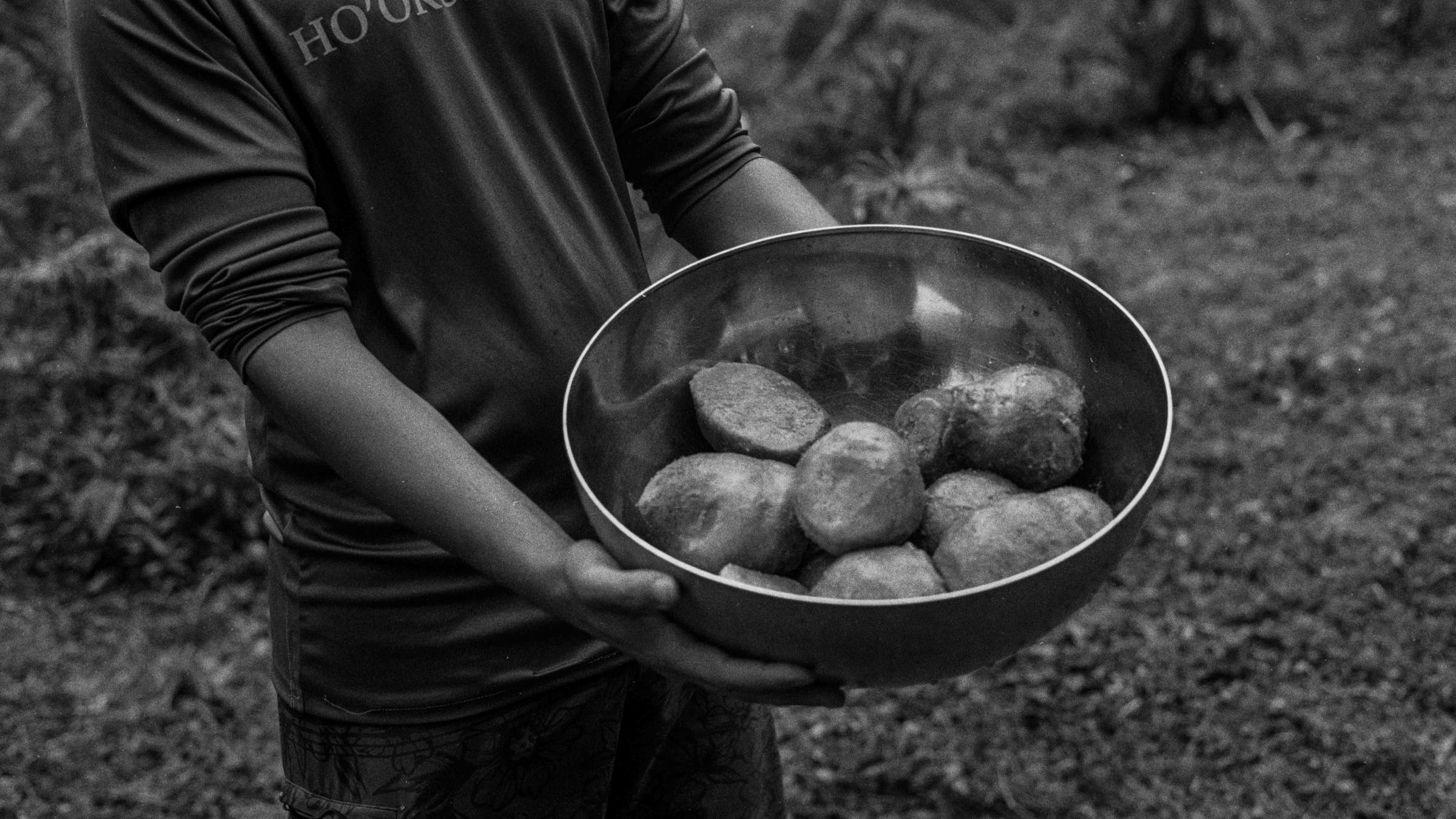
“Kalo is essential to our culture,” Dean says. “Poi is the soul food of Hawai‘i as well as the lau [made into] laulau or lu‘au [stew of the leaves]. The kids just naturally understood it and gravitated to the centrality of what it is.”
The Wilhelms eventually found three acres in Maunawili, tucked into a lush valley. They built lo‘i kalo (wetland taro fields) that now produce 30,000 pounds of kalo annually and have cultivated hundreds of interns on the farm and offered more than 100 tuition scholarships to apprentices. Ho‘okua‘aina is poised to grow even larger, having recently become the steward of 116 acres rescued from development.
The vision is to be a “food hub and resiliency center,” Michele says. “For gray sky events like the recent storms, we would be a place for supplies and connectivity and power, but also [for the] everyday, a place to get produce and lunch.” Their plans include an agroforestry system with orchards of ‘ulu (breadfruit, also a canoe crop) as well as other introduced plants including mangoes, avocados, and figs, plus livestock. And of course, more kalo.
“Lo‘i in this area was once the norm,” Dean says. “Now, unfortunately, it’s the exception. I would argue that Hawaiians once grew so much kalo that they created an abundance. And when you have a place that’s abundant—along with the ocean and the fishponds and the whole system they created—it really enables you to be able to be a people who give unconditionally. And that’s where aloha comes from: I believe that kalo underpins the aloha that we are so proud of that represents us here.”
This article is from the Summer 2026 issue of Outside magazine. To receive the print magazine, become an Outside+ member here.
