

Update, Sunday June 14: This article has been updated with details of Apple Intelligence and Siri AI’s performance on the iPhone 18 Pro.
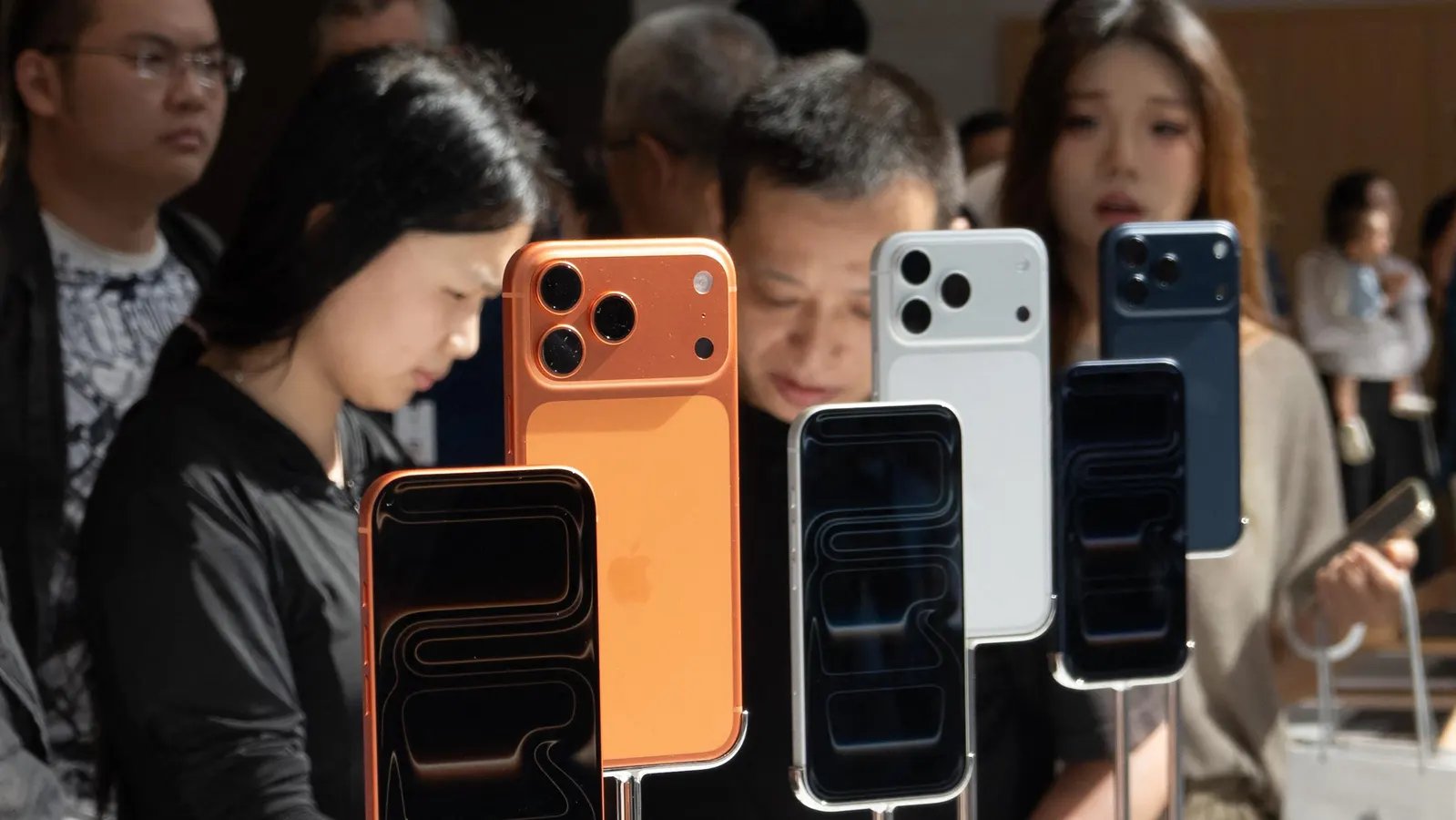
People check the new iPhone 17 lineup at an Apple store in Shanghai on September 19, 2025. (Photo by AFP) / China OUT (Photo by STR/AFP via Getty Images)
AFP via Getty Images
As the premium smartphone market approaches saturation levels and typical upgrade cycles stretch out to three years and beyond, Apple is looking beyond simple price rises across the portfolio. Instead, Tim Cook and his team are overhauling its pricing strategy to increase revenue from its more affluent users with the luxury iPhone Ultra foldable while protecting the core iPhone 18 Pro audience.
How The iPhone Ultra Changes Apple’s Portfolio
Apple will establish a premium $1,999 iPhone Ultra price point to test the limit of luxury pricing and absorb escalating next-generation component costs.
Consumers are increasingly disillusioned with the marginal hardware updates smartphone manufacturers offer annually. Apple’s approach with the iPhone’s Class of ’26 is to push much of the cutting-edge engineering into a single $1,999 flagship. The iPhone Ultra is a high-margin smartphone that can serve as a lightning rod to attract the highest and most affluent consumers.
Rather than attempting to drive more adoption across the entire iPhone 18 family, the iPhone Ultra can target the top five percent of Apple’s global user base with an exclusive handset using luxury materials and cutting-edge components. By isolating the iPhone Ultra at the top of the portfolio with its higher margins, Apple can keep the iPhone 18 Pro and iPhone 18 Pro Max at their traditional price points of $1,099 and $1,299.
Keeping The iPhone 18 Pro Price Steady
Apple will maintain the entry-level iPhone 18 Pro at $1,049 to insulate its core ecosystem volume from premium-hardware fatigue.
With the iPhone 17 Pro, Apple raised the base price to $1,049 from the iPhone 16 Pro’s $999, but also increased the base storage from 128GB to 256GB. This adjustment cannot be repeated; $1,049 with 256GB is set in stone. In the face of aggressive pricing by Android flagships, Apple intends to absorb the higher component cost.
The iPhone 18 Pro and 18 Pro Max will not see any significant changes to the hardware beyond the Moore’s Law-esque improvements to the Apple Silicon. A focus on manufacturing efficiencies and on offering a predictable upgrade to carriers and enterprise customers will keep gross margins and sales as close as possible to previous years.
The expensive physical variations will be handed over to the iPhone Ultra. With no historical price precedent, it can be priced to maintain Apple’s revenue across this iPhone generation.
Android Strategy Reverses Apple’s iPhone 18 Pro Decision
Competing Android manufacturers, including Samsung and Google, are removing entry-level storage configurations to accommodate price increases across flagship smartphone portfolios.
Every smartphone manufacturer is dealing with supply chain issues that have pushed up the cost of memory and storage, and the rising price of chipsets such as Qualcomm’s Snapdragon 8 Elite Gen 5. The higher prices are being masked by a mix of increased base storage and a nod towards the higher specifications needed to run on-device artificial intelligence software.
Samsung removed the 128GB option from the Galaxy S26 range when it launched in February this year, pushing up the prices of the entry-level models while keeping the Galaxy S26 Ultra prices as close as possible to the Galaxy S25 Ultra. While the competition risks lower sales by raising the baseline, Apple is going in the opposite direction by preserving the baseline and creating a new desirable premium model that can carry the increased burden.
Apple One Offers An iPhone Ecosystem Advantage
Apple will leverage bundled Apple One services tiers to generate recurring digital revenue and offset hardware margin compression.
iPhones are no longer sold as a simple one-off hardware transaction. Apple has a significant recurring subscription model, including Apple Music, Apple TV and online backups. The mature ecosystem is one of the strongest defences against consumers leaving Cupertino’s ecosystem.
Apple is set to introduce more artificial intelligence tools, including Siri AI, to the iPhone 18 family. After a short promotional period, Apple should begin charging for these services as part of the Apple One package to cover recurring infrastructure costs. An early estimate of $15/month would increase the total cost of ownership without altering the iPhone 18 Pro or 18 Pro Max price, shifting growth away from replacement hardware to ongoing subscription services.
An attendee inspects a new Apple iPhone Air displayed during an Apple special event at Apple headquarters on September 9, 2025 (Photo by Justin Sullivan/Getty Images)
Getty Images
The iPhone 18 Pro Will Need A Competent Siri AI
Update, Sunday June 14, with details on Siri AI’s new capabilities and how they compare to other artificial intelligence options in the market.
Key to Apple’s ability to increase its ongoing average revenue per user will be the new features of Apple Intelligence in general, and Siri AI in particular. Demonstrated at this month’s Worldwide Developer Conference, Siri AI focuses on processing local information as an assistant.
Writing for Bloomberg’s Power On newsletter, Mark Gurman points out that Siri AI is behind the cutting edge, but that may not matter:
“There’s nothing revolutionary or innovative about it but Apple deserves credit for finally entering the modern AI market. Based on my usage of several AI tools over the past three years, the new Siri is roughly competitive with where the leading chatbots were about six months ago. But after years of falling behind, even that represents a significant improvement.”
Siri AI is part of iOS 27. While developer betas are available, the first full public release will be part of the iPhone 18 Pro, 18 Pro Max, and Ultra handsets, which will be announced in early September. Following that, existing iPhones will be offered an over the air update, typically by the end of September.
Apple CEO Tim Cook gestures the peace sign during his final Apple Worldwide Developers Conference 2026. (Photo by Josh Edelson / AFP via Getty Images)
AFP via Getty Images
Apple’s Portfolio Emphasises Luxury iPhone Margins
Apple’s portfolio strategy emphasises mass market retention with a steady price, while extracting the maximum value from the luxury consumer segment.
By splitting the iPhone portfolio into two, the $1,999 iPhone Ultra can position itself as the luxury model and be priced accordingly. That cushions the margins of the iPhone 18 Pro and iPhone 18 Pro Max, allowing them to retain last year’s pricing and storage specifications. All three models will take advantage of the integration of agentic artificial intelligence into the Apple One subscription package.
While the Android-powered competition risks raising the price of entry-level models and maintaining top-tier pricing, Apple’s iPhone strategy allows it to extract as much value as possible from the cutting-edge foldable without risking its mass-market appeal.
