

Published July 31, 2026 11:50AM
Gas prices have been trending upward, increasing the cost of every car trip. While even the best commuter e-bike won’t replace a car for everyone or every trip, it can handle more daily transportation than many people realize.
Before investing in an e-bike, take stock of how you’ll use it and how it fits into your daily routine. A rider carrying a bike to a third-floor apartment has different needs than a parent hoping to replace the family’s second car.
For this guide, I tested five e-bikes, each built around a different commuter priority: light weight, portability, ease of storage, cargo capacity, and, most importantly, a confident, fun ride. After testing, these are the best commuter e-bikes of 2026.
Best Commuter E-Bikes: At a Glance
Best Commuter E-Bike Overall
Aventon Abound SR
Weight: 80 lbs
Maximum Assisted Speed: 28 mph with pedal assist; 20 mph with throttle
E-Bike Class: 2 / 3
Pros and Cons
+ Excellent bang for the buck
+ Compact and easy to handle (for a cargo bike)
+ Wide range of accessories for personalization
+ Useful built-in security features
– Too heavy to carry up stairs
– Connected security features require a subscription after the first year
The Abound SR packs the carrying capacity of a much larger cargo bike into a frame that’s only slightly longer than a conventional commuter bike. Its welded-on rear rack is rated for 143 pounds, while the total weight limit is 440 pounds, including the rider. That leaves enough carrying capacity for groceries, work equipment, or one small passenger without pushing the bike to its limit. Plus, the step-through frame makes it easy to mount even when weighed down, while the suspension fork and seatpost take the edge off rough roads.
The 20-inch wheels keep the rear rack and its contents close to the ground, making the bike feel more stable under weight than a conventional bike with, say, a child seat mounted high above the rear wheel. Wide tires add another measure of stability without making the steering feel sluggish.
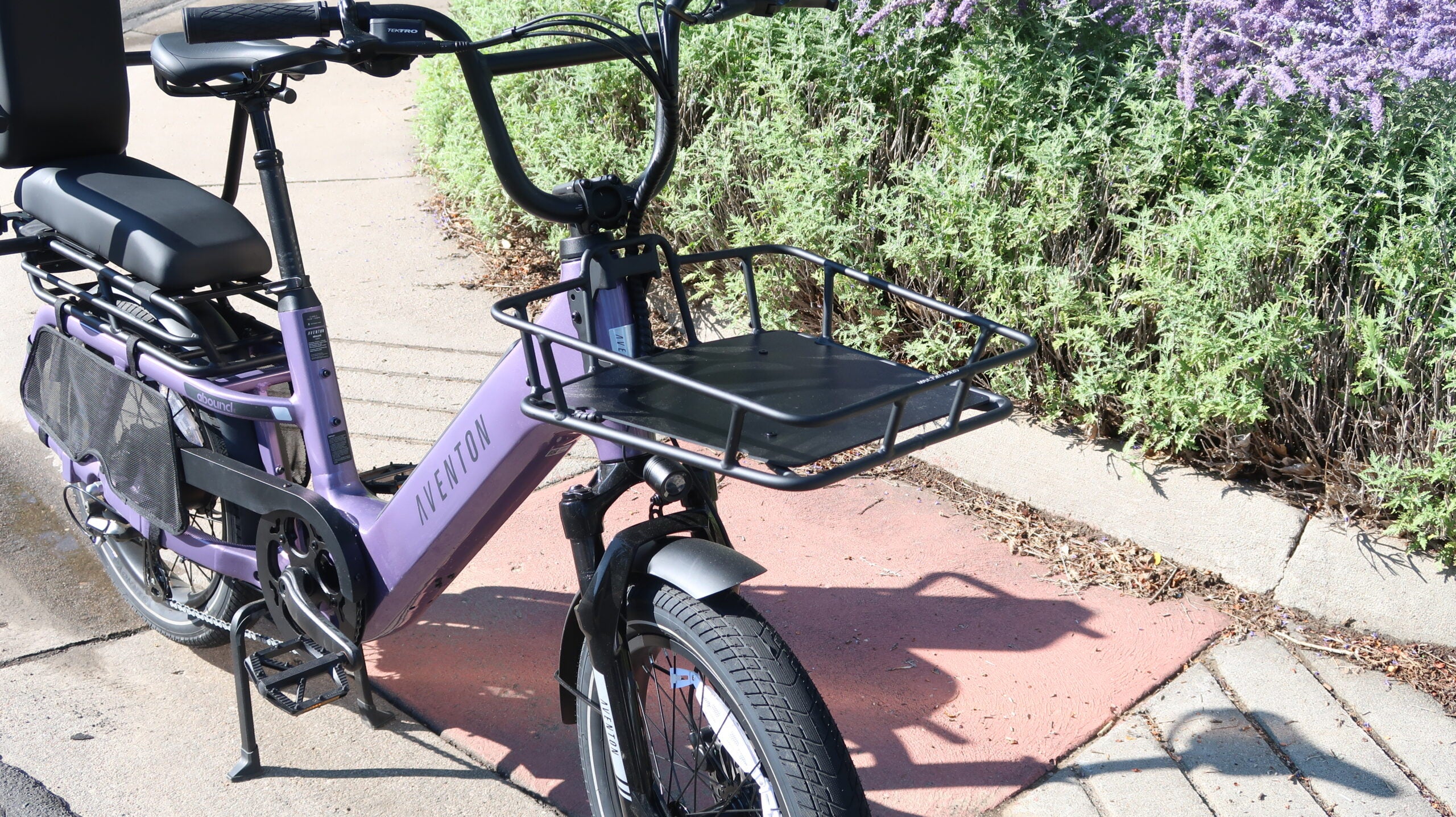
With lots of cargo carry options, the Aventon Abound SR is ideal for riders who want one reasonably priced bike for commuting, errands, and transporting a child.Josh Patterson
The 750-watt rear motor has enough power to get the 80-pound bike moving without much drama. More important, its torque sensor responds to how hard you pedal. Power comes on smoothly instead of arriving all at once, which is exactly what you want when starting with a passenger aboard or threading your way through a crowded bike path. The throttle is also very useful to help get the rider up to speed—a feature I personally love to see on cargo bikes.
The GPS tracking, motion alarm, and remote motor lock add some peace of mind when the bike is parked, although they do not replace a quality lock. The larger concern is storing it when it’s not in use. At 80 pounds, the Abound SR belongs in a garage or other ground-level space. It is not something most people will carry upstairs every day—or ever.
But for riders who want one reasonably priced bike for commuting, errands, and transporting a child, the Abound SR covers an impressive amount of ground.
Best Lightweight Commuter E-Bike
Ride1Up Roadster V3
Weight: 40 lbs
Maximum Assisted Speed: 28 mph with pedal assist; 20 mph with throttle
E-Bike Class: 2 / 3
Pros and Cons
+ Much easier to carry and store than most commuter e-bikes
+ Feels more like a conventional bike
+ Belt-drive and nine-speed versions available
+ Comes with fenders, lights, and hydraulic brakes
– Smaller battery limits range at higher speeds and for heavier riders
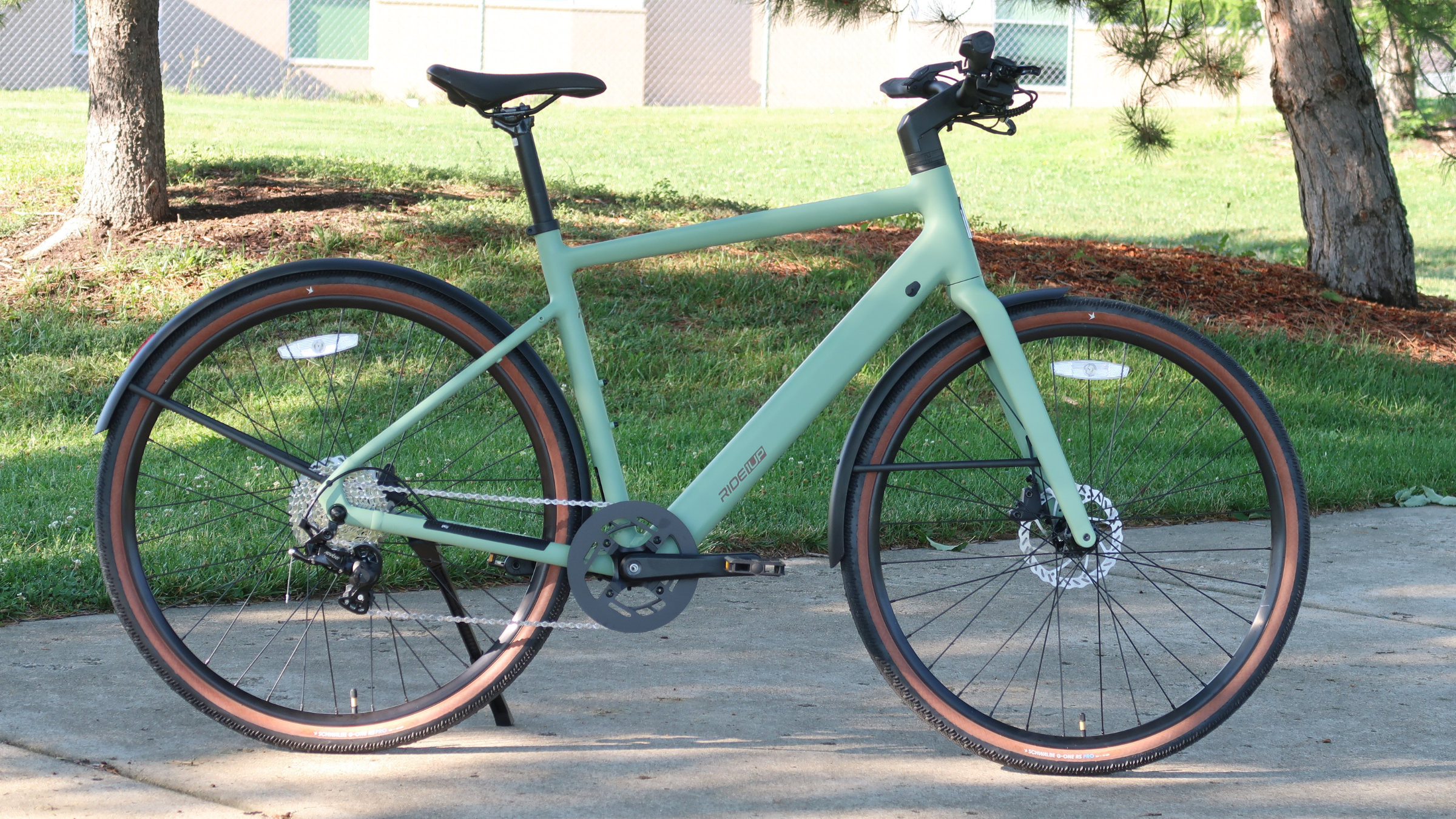
The Roadster V3 doesn’t look or handle like a typical commuter e-bike. At roughly 40 pounds, it’s light enough to carry up a staircase, hang from a variety of bike-storage systems, or lift onto a vehicle rack without turning the task into a two-person job.
That lower weight also makes it much more enjoyable to ride. The Roadster changes direction quickly and does not feel cumbersome when the motor is turned off. Riders accustomed to riding a road, fitness, or gravel bike will find it more familiar than the heavier utility bikes that dominate the e-bike market.
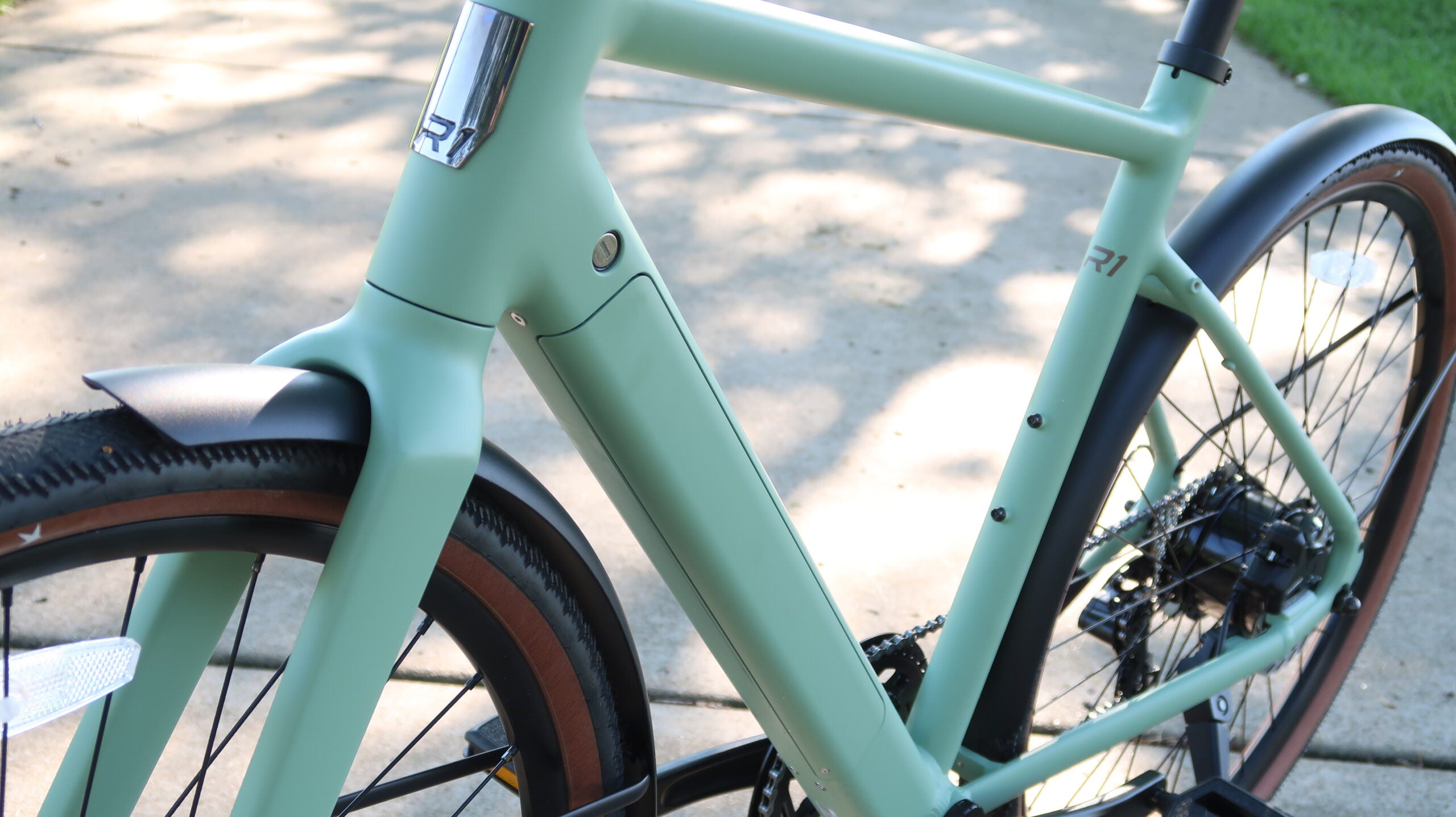
The Roadster V3 hides its battery inside the frame’s seat tube, keeping the silhouette clean and bike-shaped rather than bulky and obviously electric.
Its 500-watt rear hub motor provides useful help against headwinds and hills without taking over the ride. A torque sensor adjusts assistance based on how hard you press the pedals, so the bike responds naturally when you accelerate or ease off. You still feel like you’re riding a bicycle, just one that makes holding speed much easier. It’s also stylish and very un-e-bike in appearance, which I came to appreciate.
Ride1Up offers the Roadster with either a carbon belt drive or a nine-speed drivetrain. The belt version is quiet, clean, and requires very little maintenance. It makes the most sense for flatter commutes. The geared version is the better choice for varied terrain and can be configured to provide assistance up to 28 miles per hour.
Compared to the narrow rubber tires on many lightweight city bikes, the 45-millimeter-wide tires provide more comfort and are capable enough for crushed-gravel paths and rough pavement. Full fenders and a bright integrated headlight also mean the Roadster is ready for more than fair-weather rides.
Weight savings come with one notable compromise: battery capacity. The Roadster’s 360-watt-hour battery keeps the bike light, but riders commuting at Class 3 speeds will need to charge more often than they would with a heavier, larger-battery bike. Cargo capacity is also limited unless you add the optional rear rack.
For someone looking for a fast and light ride, the Roadster V3 makes the most sense. It offers enough assistance to shorten a commute while remaining easy to lift, store, and ride like a regular bike.
Best Commuter E-Bike for Beginners
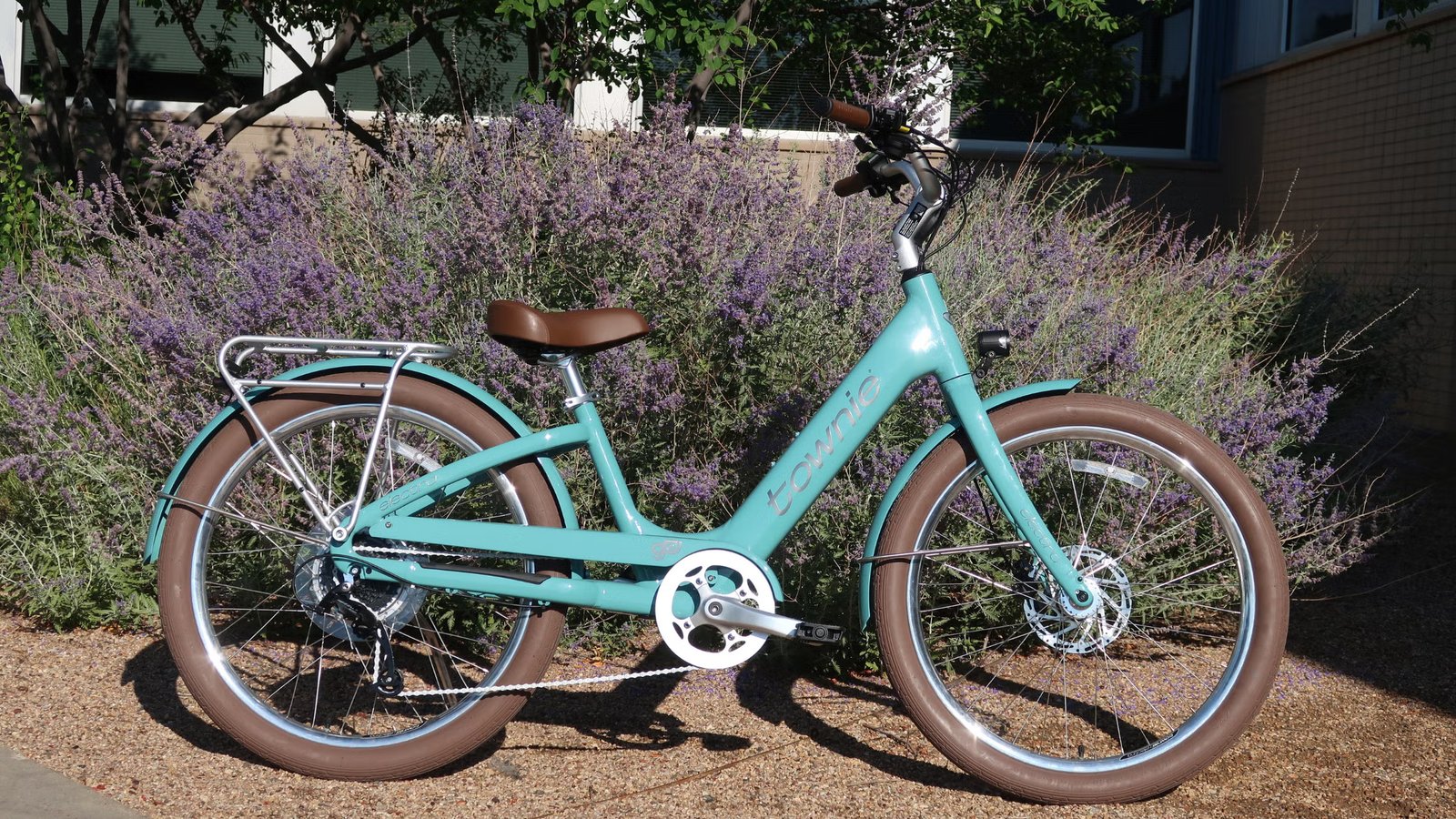
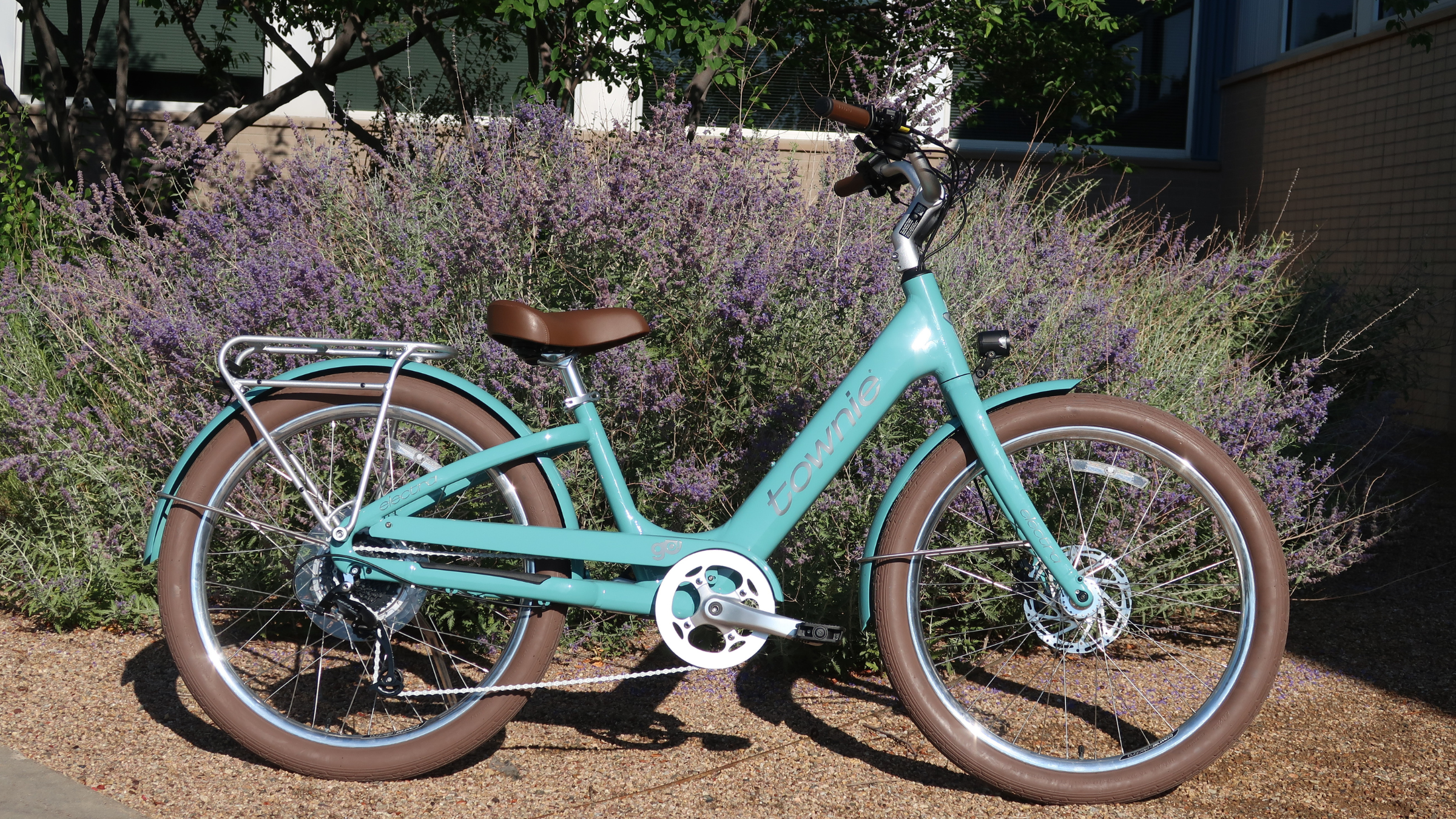
Electra Townie Go!
Weight: 57 lbs
Maximum Assisted Speed: 28 mph with pedal assist; 20 mph with throttle
E-Bike Class: 2 / 3
Pros and Cons
+ Flat Foot geometry makes starting and stopping easier
+ Throttle provides useful help from a standstill
+ Includes lights, fenders, turn signals, and a rear rack
+ Trek and Electra dealers provide local support
– Integrated battery cannot be removed for charging
– Heavy despite its conventional-bike appearance
Experienced cyclists forget how much happens during a routine stop. You have to squeeze the brakes, downshift, steady the bike, and put a foot down before it begins to lean. Those steps become automatic with practice. To someone returning to cycling after years away, they can make a busy intersection feel needlessly stressful.
Electra’s Flat Foot geometry addresses that barrier by moving the pedals forward relative to the saddle. Riders can achieve proper leg extension while pedaling, then place a foot flat on the ground without sliding off the seat. The low-step frame also reduces the balance and flexibility required to get aboard. Neither feature replaces practice, but both make this bike much less intimidating to beginners, folks returning to cycling after a long hiatus, and those with limited mobility.
Power comes from a 500-watt rear hub motor with a 520-watt-hour integrated battery. Pedal assistance continues to 28 miles per hour, while the thumb throttle cuts out at 20. A throttle can help a new rider get rolling before balancing, pedaling, and steering all at once. It’s also useful when restarting on a hill. But just like learning to drive a car, beginners should learn its response in an empty parking lot before using it in traffic.
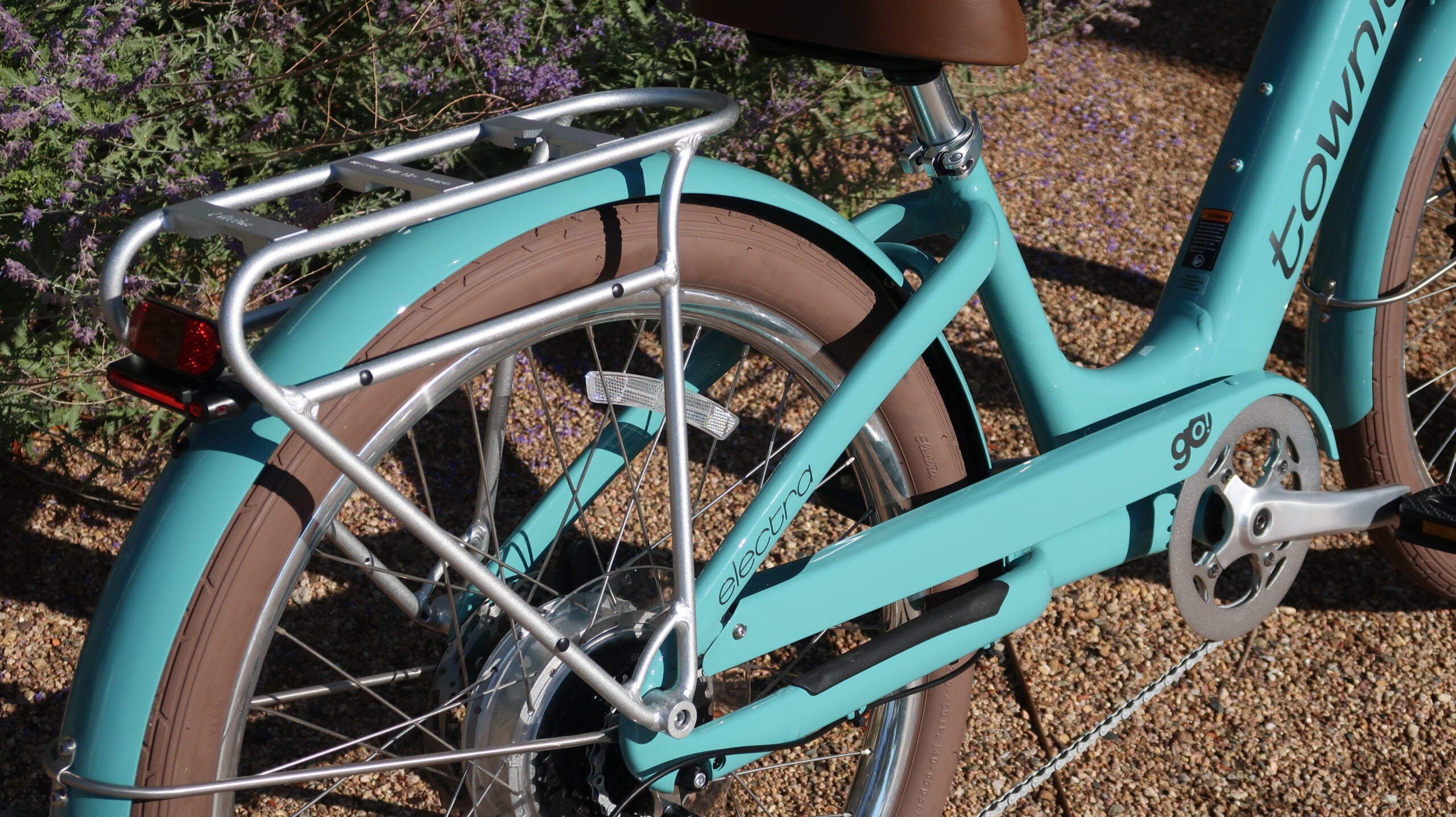
The Townie Go!’s rear rack comes standard, ready for a basket, panniers, or bungee-corded groceries straight off the showroom floor.Josh Patterson
Electra includes most of the equipment a commuter would otherwise have to choose and install separately, such as full fenders, a kickstand, front and rear lights, turn signals, and a brake light. The rear rack is rated for 60 pounds and accepts panniers, baskets and compatible child seats.
The Townie Go! comes in two sizes, rather than relying on one frame to fit everyone. The smaller model uses 26-inch wheels, while the larger size rolls on 27.5-inch wheels. Both are fitted with 2.35-inch balloon tires, which provide some cushioning without adding the weight and maintenance of a suspension fork.
There are a couple of practical drawbacks to the Townie Go! S that are worth considering. The battery cannot be removed for charging, so you must park the bike near an outlet. And at roughly 57 pounds, it’s heavier than its conventional styling suggests.
One of the best selling points for this bike is that Trek and Electra’s massive dealer network provides assembly, fit assistance, software updates and warranty service. For new cyclists, having a local shop to rely on can make owning an e-bike feel far less intimidating.
Best Folding Commuter E-Bike
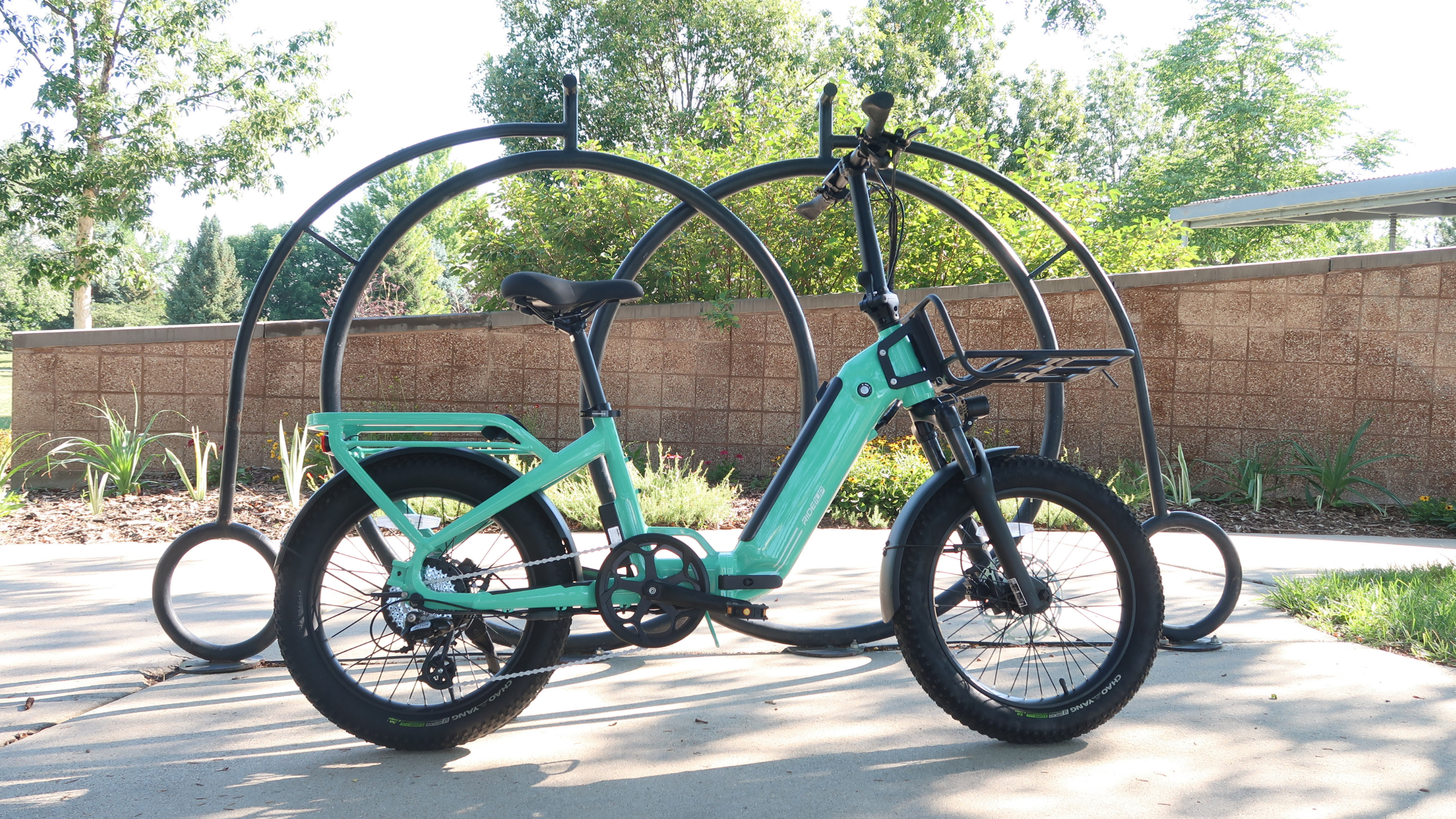
Ride1Up Portola
Weight: 59 lbs
Maximum Assisted Speed: 28 mph with pedal assist; 20 mph with throttle
E-Bike Class: 2 / 3
Pros and Cons
+ Folds small enough for a trunk or compact storage space
+ High-capacity integrated rear rack
+ Two battery sizes available
+ Lights, fenders, and hydraulic brakes included
– Cadence sensor feels less natural than a torque sensor
– We would have preferred a dual-sided kickstand
The Portola is built for riders who need a capable e-bike to fit somewhere a full-size model will not. Breakdown is easy: Fold the frame and handlebar, secure the two halves with the built-in strap, and it measures roughly 19 by 29.5 by 33 inches. That’s compact enough for many closets, office corners, RV compartments, and vehicle cargo areas.
It still weighs 59 pounds. Anyone expecting to carry it up several flights of stairs will be disappointed. Folding makes the Portola smaller, not lighter.
That’s because Ride1Up gave it the motor and carrying capacity of a much larger utility bike. The 750-watt rear hub motor produces a claimed 65 Newton-meters of torque. Pedal assistance can be configured to reach 28 miles per hour, while the throttle is limited to 20. Small 20-inch wheels accelerate quickly, which works well in stop-and-go traffic but takes a little acclimation at the highest support settings.
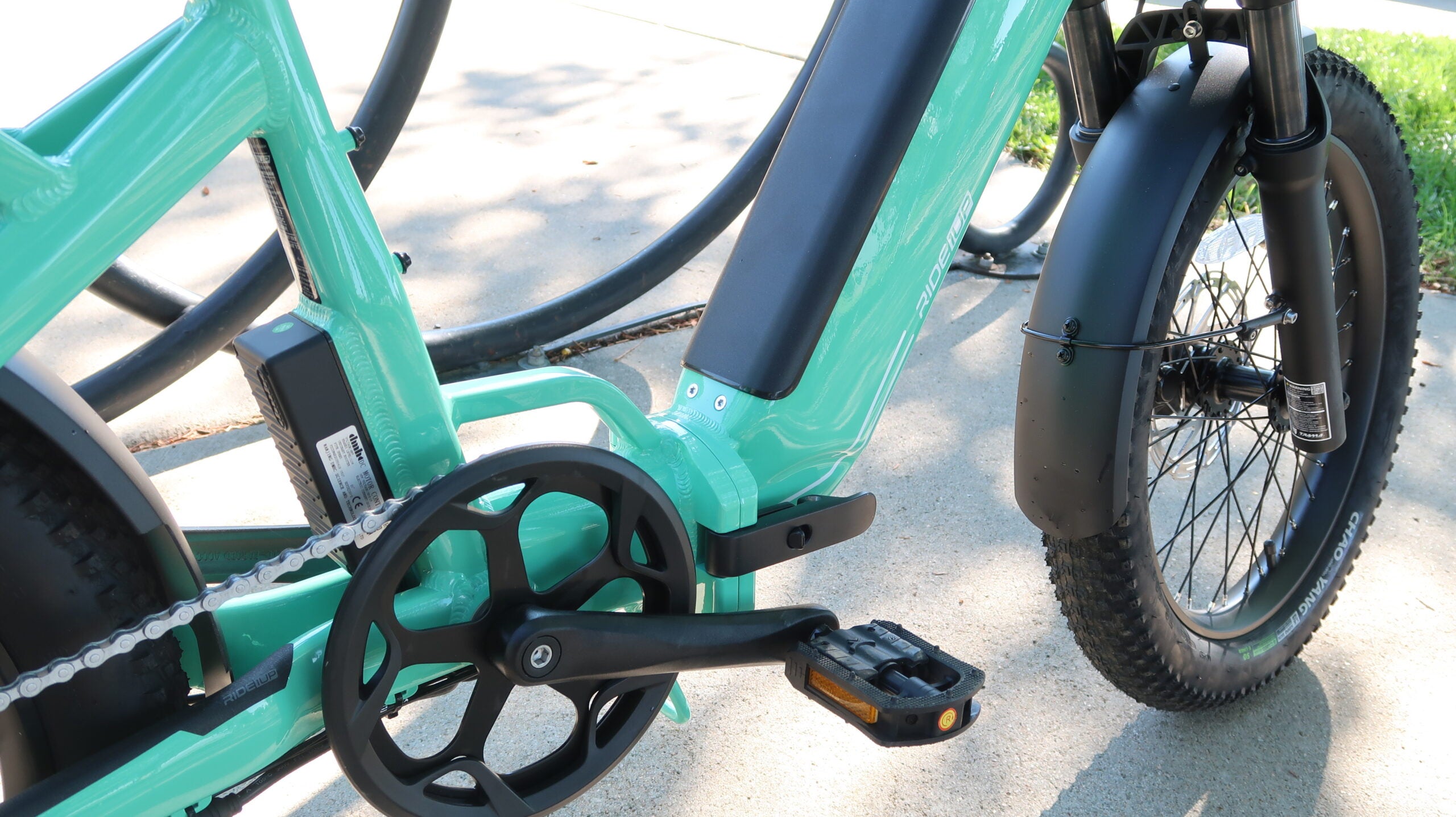
The Portola’s downtube battery and mid-drive motor sit low for a stable center of gravity—useful when the rear rack is loaded down.Josh Patterson
The Portola uses a cadence sensor rather than a torque sensor. Its current-based programming lets riders adjust how much power each assistance level provides, but the motor still responds to crank movement instead of pedaling pressure. Starts can feel more abrupt than they do on the Roadster V3. Pro tip: The throttle is useful for getting the bike moving before the sensor recognizes the first pedal stroke.
Buyers can choose from two removable battery options. The base model uses a 500-watt-hour pack, while the upgraded version increases capacity to 643 watt-hours. The larger battery makes sense for longer routes, hilly terrain, or riders who plan to spend most of their time in higher assistance levels.
A welded rear rack is rated for 150 pounds and accepts panniers or Ride1Up’s passenger accessories. Three-inch tires, an 80-millimeter suspension fork, hydraulic disc brakes, metal fenders, and a 100-lux headlight make it more practical than many minimalist folding bikes.
Riders who need something light enough to carry across train platforms should keep looking. But for fitting a powerful commuter e-bike inside a car or small living space, the Portola offers an unusual amount of speed, range, and utility for less than $1,000.
Best Car Replacement E-Bike
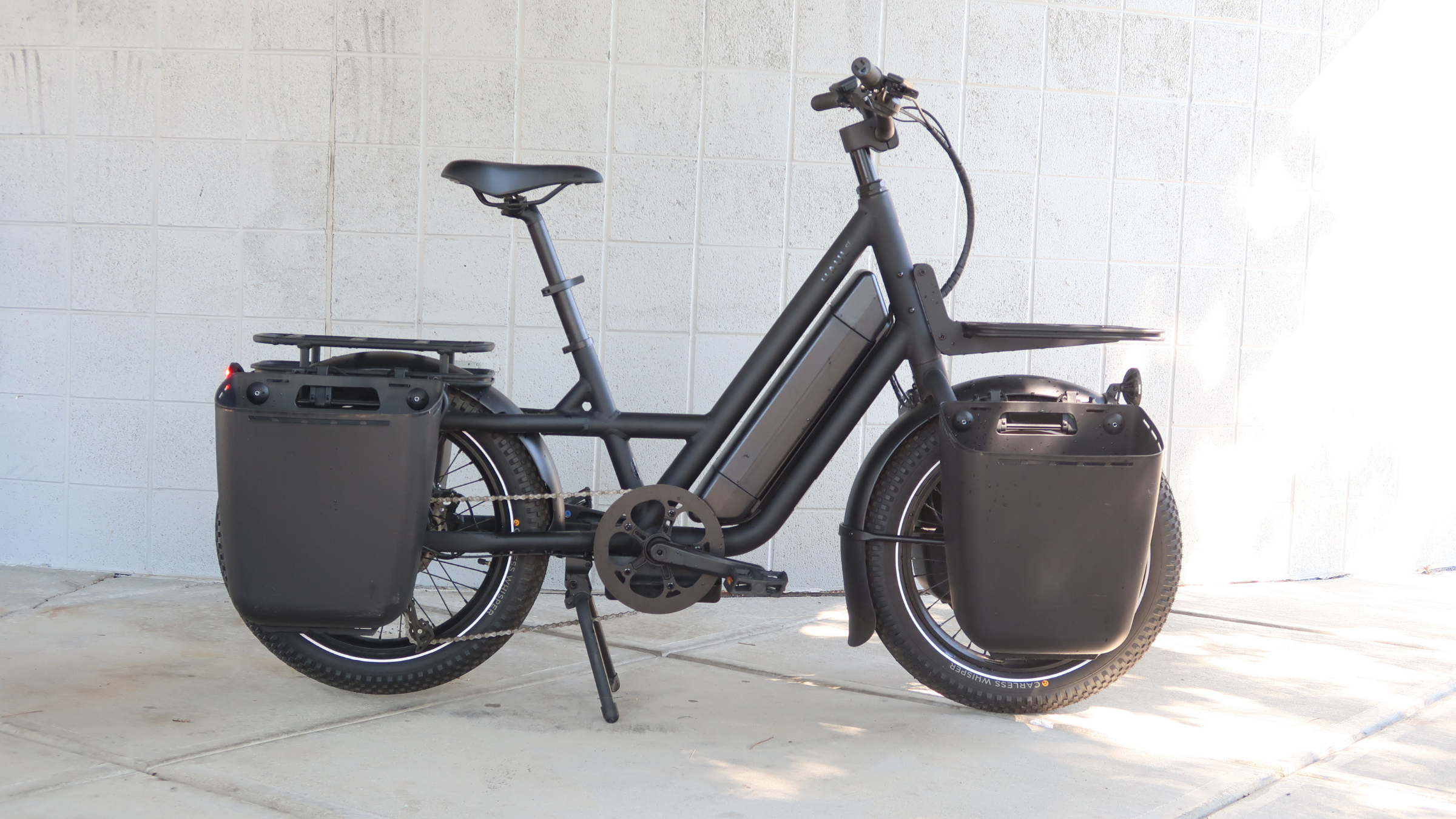
Specialized Globe Haul ST
Weight: 77 lbs
Maximum Assisted Speed: 28 mph with pedal assist; 20 mph with throttle
E-Bike Class: 2 / 3
Pros and Cons
+ Carries up to 419 pounds, including the rider
+ Compact and easy to maneuver for a cargo bike
+ Powerful brakes and stable handling under load
+ Extensive accessory and dealer support
– More expensive than similar cargo bikes
– Accessories increase the final price quickly
The best measure of a car-replacement e-bike is when it makes driving feel like the less convenient option. I’ve used the Globe Haul ST for grocery runs and neighborhood errands. Those aren’t particularly exciting test scenarios, but they’re exactly why this bike earns its keep—it turns everyday trips into easy rides without requiring the length or storage space of a full-size cargo bike.
The rear rack can support 132 pounds, while the bike’s total carrying capacity is 419 pounds, including the rider. Small 20-inch wheels keep that weight low, which helps the Haul remain predictable when both panniers are full. It doesn’t feel top-heavy, and the short wheelbase makes it easier to steer around parked cars, crowded bike racks, and other tight spaces.
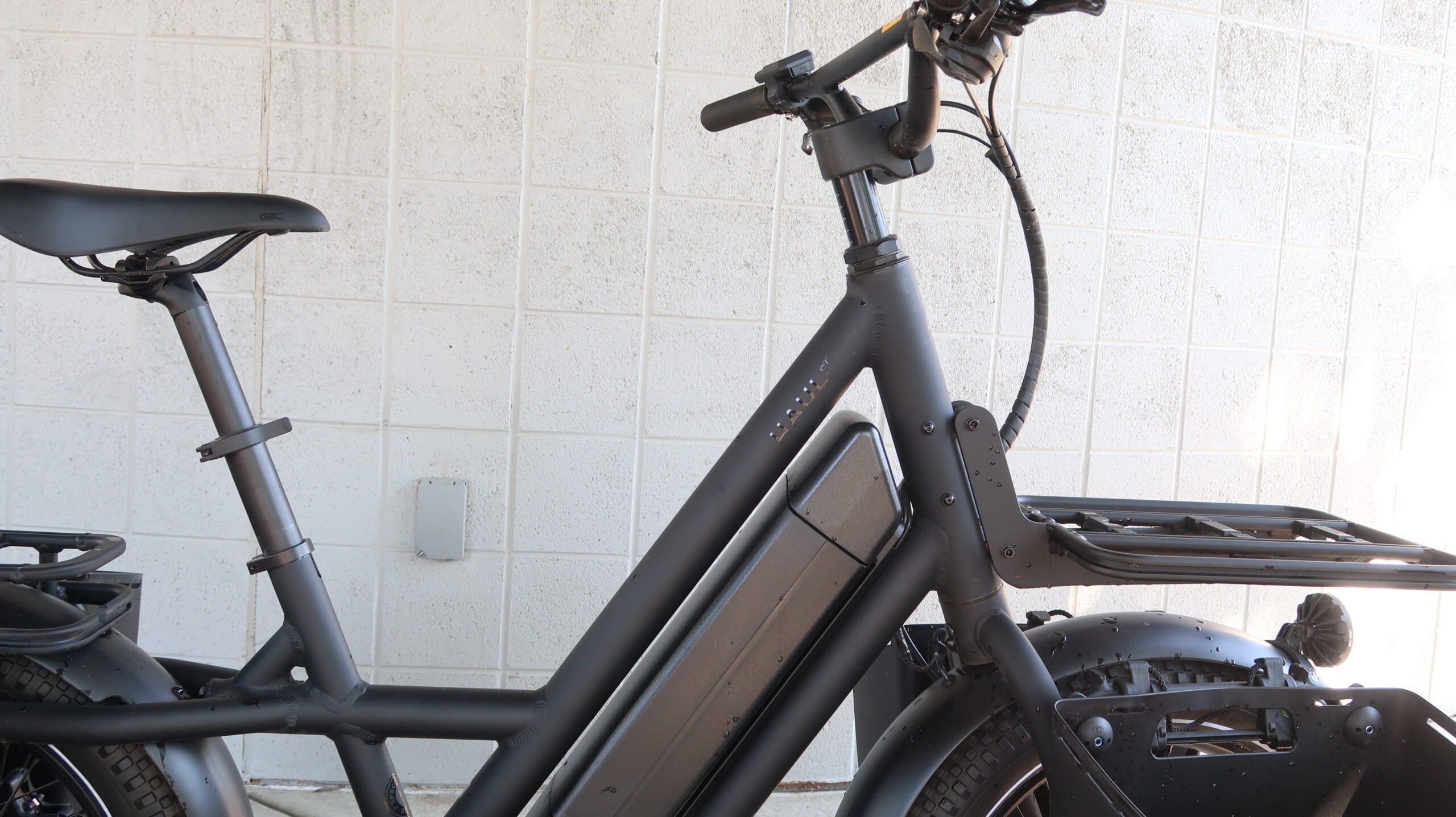
The Haul ST doesn’t try to hide that it’s a workhorse—everything from the frame to the rack is oversized for a reason.
The 700-watt rear motor provides assistance up to 28 miles per hour. That higher top speed is useful on longer commutes and roads where keeping closer pace with traffic matters. The four-piston hydraulic brakes are another standout. They provide plenty of control without requiring a hard pull at the levers, and the bike remains composed when slowing with a heavy load.
Wide 3.5-inch tires add enough cushioning that the rigid fork doesn’t feel overly harsh on most paved routes. Their reinforced three-ply casing also reduces the likelihood of a flat. That matters more on a 77-pound hub-drive bike, where removing the rear wheel is considerably more involved than it is on a standard commuter e-bike.
Specialized’s hard-sided plastic panniers are particularly useful for groceries. They hold their shape, keep bags away from the rear wheel, and easily wipe clean when something leaks. The sturdy center stand also keeps the bike upright while both sides are being loaded. A 1,500-lumen integrated headlight is bright enough for unlit paths and draws power from the main battery, so there’s no separate light to remember to charge.
The Haul ST is considerably more expensive than the Aventon Abound SR, especially once you factor in panniers, baskets, or other not-included accessories. The Abound carries nearly as much, includes suspension and built-in security features, and remains the better value for most commuters. But the Haul counters with a higher assisted speed, stronger brakes, polished accessories, and Specialized’s dealer network.
For riders who expect to carry substantial loads regularly and want a compact cargo bike with strong dealer support, the Haul ST is a capable car-replacement option.
How to Choose a Commuter E-Bike
What Type of Commuter E-Bike Do I Need?
Begin with the trips you already make, not the ones you imagine taking after buying a new bike.
A standard commuter e-bike is usually enough for one rider, a laptop, and a pair of panniers. These bikes are lighter, less expensive, and easier to store than cargo models.
Cargo e-bikes feature racks, reinforced frames to carry additional weight, and higher weight limits to transport children, groceries, and other large loads. Short-tail models retain a relatively compact wheelbase, while longtails provide more passenger and cargo space but require additional storage and are more cumbersome to handle.
Folding e-bikes address storage and transportation. Check both their folded dimensions and weight. Some are light enough for public transit. Others simply fold to fit inside a vehicle, office, or apartment.
How Much Should I Spend on a Commuter e-Bike?
Around $1,000 is a realistic starting point for a commuter e-bike from an established direct-to-consumer brand. Hydraulic brakes, lights, fenders, and a usable drivetrain are now available near this price, although the owner may need to perform some assembly and troubleshooting.
While there are some less expensive options available, expect to pay between $1,500 and $3,000 once all your accessories are factored in (including a quality bike lock and helmet.)
How Much Range Do I Need?
Double the length of your round-trip commute, then leave a margin for detours, cold weather, battery aging, and days when you use more assistance than expected.
Manufacturer range estimates are usually measured under favorable conditions. Hills, high speeds, heavy cargo, headwinds, and cold temperatures reduce range. A rider traveling five miles each way does not need a claimed 100-mile battery, but a larger battery is useful for commutes longer than 10 miles each way or for riders who cannot charge at work.
Battery capacity (measured in watt-hours) offers a more useful comparison than claimed mileage. A 700-watt-hour battery stores almost twice the energy of a 360-watt-hour unit, although motor efficiency and total bike weight also matter.
What Do Class 1, Class 2, and Class 3 Mean?
Class 1 bikes provide pedal assistance up to 20 miles per hour and do not have a throttle.
Class 2 bikes can use both pedal assistance and a throttle, with assistance limited to 20 miles per hour.
Class 3 bikes provide pedal assistance up to 28 miles per hour. Some also have a throttle that cuts out at 20 miles per hour.
Class 3 assistance can shorten longer road commutes, but 28 miles per hour is fast on a bicycle. It uses more battery, increases stopping distance, and demands more attention from the rider. Access rules vary by state, city, and trail system, so check local regulations before buying.
Is a Hub Motor or Mid-Drive Motor Better?
A hub motor sits inside the front or rear wheel and drives that wheel directly. Hub motors are relatively simple and allow manufacturers to build powerful e-bikes at lower prices. The added wheel weight makes tire service more involved, and some hub systems feel less natural than a well-tuned mid-drive.
A mid-drive motor sits near the crank and sends power through the bicycle’s chain and gears. This lets the motor use lower gears while climbing and typically produces a more bicycle-like response. Mid-drives cost more and place additional wear on the chain, cassette, and chainring.
Neither type is automatically better. A well-programmed hub motor with a torque sensor can feel better than a poorly tuned mid-drive.
What Is the Difference Between a Torque Sensor and a Cadence Sensor?
A cadence sensor recognizes that the cranks are turning and tells the motor to provide a preset amount of power. These systems are affordable and can deliver plenty of assistance, but there may be a delay before the motor engages. Some continue pushing briefly after the rider stops pedaling.
A torque sensor measures how hard the rider presses on the pedals. Push harder and the motor adds more assistance. Ease off and the output drops. This generally feels more natural and gives the rider better low-speed control.Torque sensors are preferable for riders who care about natural pedal feel or expect to navigate crowded paths and tight turns.
Despite these drawbacks, cadence-based systems remain perfectly usable, especially on bikes equipped with throttles and adjustable assistance levels.
Do I Need a Cargo E-Bike?
A backpack or pair of panniers does not require a cargo bike. A conventional commuter e-bike will be lighter, easier to park, and more enjoyable to ride unloaded.
A cargo bike makes sense when carrying additional bulky items (or additional humans) is part of your daily routine. Child seats, large grocery trips, and bulky packages benefit from a stronger rack and more stable chassis.
When shopping for a cargo bike, check the rack limit separately from the bike’s total capacity. A 400-pound overall rating does not mean the rear rack can hold 400 pounds. Passenger-carrying claims should also be backed by appropriate seats, rails, foot supports, and wheel guards.
How Important Is E-Bike Weight?
You notice e-bike weight when the motor is not helping.
Walking through a doorway, loading a vehicle rack, recovering from a low-speed lean, and carrying a bike upstairs can be difficult with a 70- or 80-pound machine. Cargo bikes may exceed that before accessories are added.
Decide where the bike will be stored before ordering. Folding frames reduce size, not weight. Vehicle racks also have limits for each tray, and many are not rated for cargo e-bikes.
How Do I Choose the Right Size E-Bike?
Manufacturer height charts are useful starting points, but they cannot account for differences in leg, torso, and arm length.
You should be able to reach the handlebar without locking your elbows or placing excessive pressure on your hands. At the bottom of the pedal stroke, the knee should retain a slight bend. The rider must also be able to start, stop and step off the bike confidently.
Step-through frames make mounting easier, particularly when the bike is loaded. Electra’s Flat Foot geometry allows the rider to touch the ground while seated, although its forward pedal position feels different from conventional bike geometry.
A test ride remains the best way to assess fit, especially with one-size models.
Which Commuter Features Are Worth Paying For?
Full-coverage fenders keep road spray off your clothing. Integrated lights are powered from the main battery so you don’t need to remember to charge them separately. A rear rack carries weight more comfortably than a backpack, and a sturdy kickstand makes that rack easier to load.
Most, but not all, e-bikes come standard with hydraulic disc brakes, and they should be considered a necessary feature. Compared with cable-actuated disc brakes, hydraulic disc brakes require less hand pressure and provide more consistent stopping power in wet and snowy conditions than rim brakes.
Wider tires improve comfort and traction. A removable battery is useful when the bike is stored away from an electrical outlet.
Buy a quality lock even when the bike includes GPS tracking or an electronic motor lock. Electronic security helps recover or disable a bike. It does not prevent someone from loading it into a vehicle.
How Can I Reduce the Risk of an E-Bike Battery Fire?
Look for a complete electrical system certified to UL 2849 and a battery certified to UL 2271. Use only the battery and charger approved by the bicycle manufacturer.
Don’t charge a battery that has been damaged, or appears swollen or cracked. Avoid inexpensive replacement batteries and chargers from unknown sellers. A bargain battery is not worth risking a house fire.
Where Should I Buy a Commuter E-Bike?
Direct-to-consumer brands are generally more affordable. In part, this is because the brands pass some of the cost onto the consumer—owners may need to complete final assembly, diagnose problems remotely, and find a local shop willing to service unfamiliar electronics.
Buying through a bike shop has a higher upfront cost, but the bike will be professionally assembled and inspected before sale. The shop can help with fit, explain the controls, handle warranty work, and replace motor-system components.
Some direct-to-consumer brands now work with dealer and mobile-service networks, narrowing the gap between the two approaches. Consider your own skillset for assembly and DIY repairs, and if you don’t consider yourself handy, check what support is available in your area before ordering, not after the first problem appears.
How We Tested Commuter E-Bikes
I tested these bikes on neighborhood streets, paved bike paths, and rolling roads around my home in northern Colorado, using them for the kinds of trips most commuters actually make, including errands, short rides across town, and carrying everyday cargo—including my two-year-old daughter. I paid close attention to motor response, braking, comfort, handling when loaded and unloaded, and ease of storage.
I also asked friends and family members to ride the bikes, including several people who are not dedicated cyclists. Experienced riders tend to adapt quickly to abrupt motor engagement, awkward controls, or unusual geometry, sometimes without realizing it.
Casual riders are often better at identifying the details that make a bike feel approachable or intimidating. Their feedback helped reveal whether the controls made sense without explanation, how easy the bike was to start and stop, and whether its weight or handling would discourage regular use.
My goal was not to find the fastest or most powerful bike, but the ones that make everyday transportation easier enough that riders will actually use them.
