

Key Takeaways
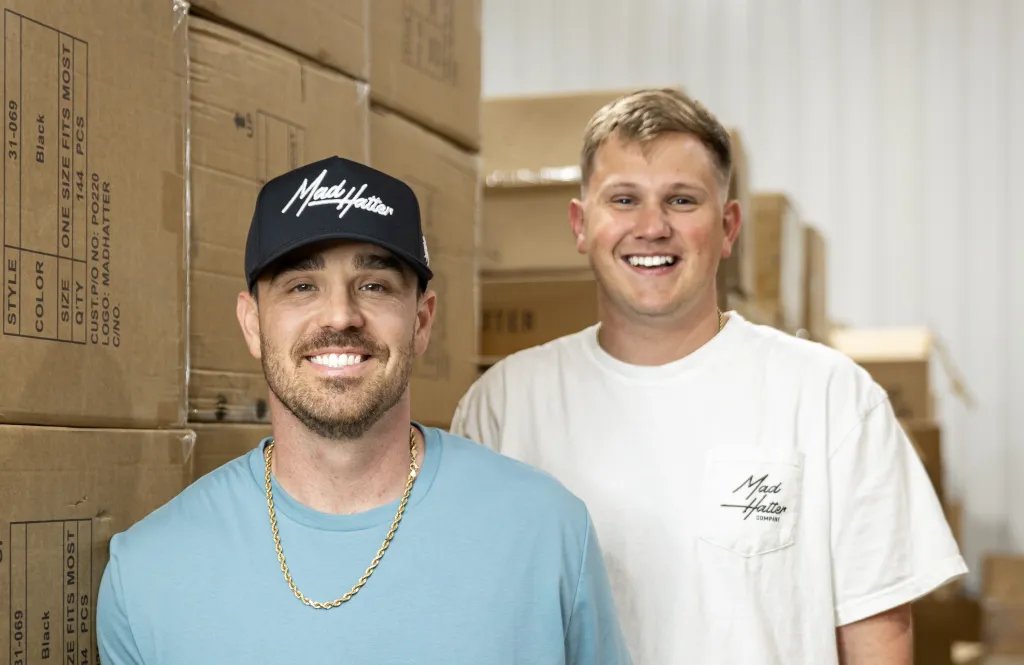
- Zach Dunn and Chason Rabitaille started Mad Hatter, a hat and apparel company, with $15,000 in 2020.
- Now the eight-figure business consistently goes viral on TikTok, leaning into funny, culturally relevant products.
- Dunn estimates that TikTok Shop comprises 65% of Mad Hatter’s revenue.
Zach Dunn never set out to sell hats. He grew up in a one-stoplight town in rural Georgia, in a family of farmers and entrepreneurs who were never afraid to take a leap of faith and try different ventures.
In his early 20s, about a decade ago, he and his father walked into a bank with a business plan and walked out with a $250,000 loan to start a farm.
“That was my experience with starting from the concept of an idea and then bringing it to reality,” Dunn tells Entrepreneur in a new interview.
They farmed cotton and tobacco and did well for a year or two, until one bad year wiped them out and left Dunn in “a heap of debt” that he still had to repay. “I learned not to grow too fast, to take my time and really think through my decisions,” Dunn says.
He had dropped out of college to start the farm. After the farm collapsed, Dunn went back to school as a business major and sold cars on the side. He worked his way up in car sales, eventually becoming a general manager and then a finance manager at a dealership. He and his future cofounder and college roommate, Chason Rabitaille, were both selling cars and studying when they started seeing Facebook ads for hat companies. “We realized that we could also do that,” Dunn recalls.
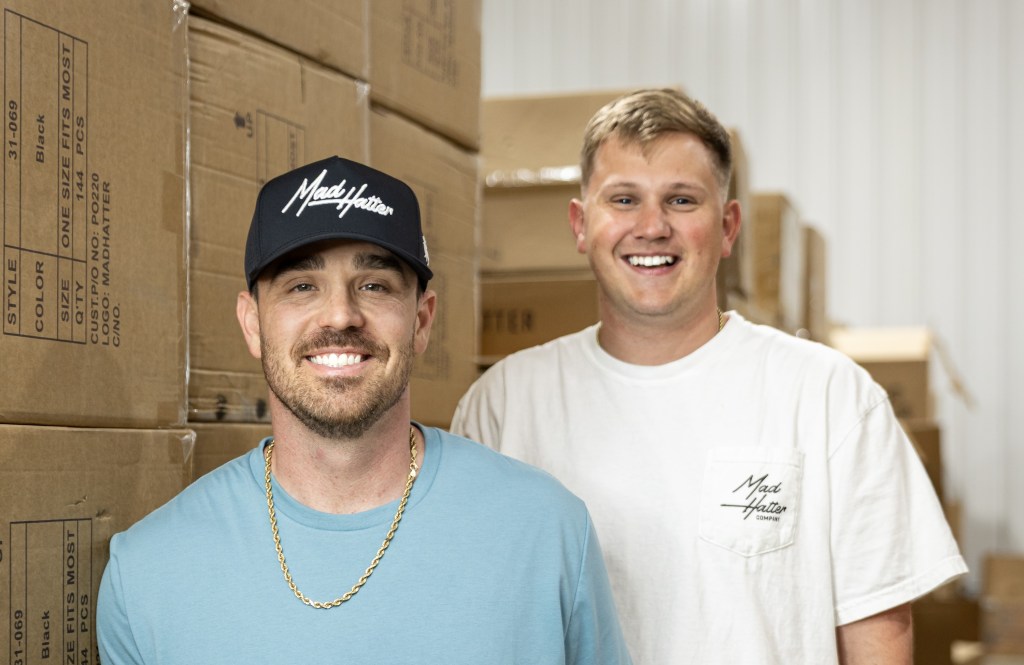
The two started Mad Hatter in April 2020 in a spare bedroom, with Dunn putting his entire life savings on the line: $15,000. “We bought 15 different hat colors, 40 patches and an industrial sewing machine, and that’s how we started,” he says. In the beginning, it was just the two of them, with Rabitaille actually sewing and finishing hats in-house, a made-to-order model the company still uses.
Learning to go viral on purpose
Mad Hatter’s early growth came from Facebook and Instagram ads, especially for vintage-style patch hats. Then Apple’s iOS 14 privacy changes hit, and ads became “a lot less profitable,” Dunn explains. The brand was in “a weird position” as it was still figuring out its identity and how to attract customers.
Dunn responded by shifting away from paid advertising and doubling down on organic content. He bet that if the company could consistently go viral, customers would flood its Shopify site.
They focused first on Instagram, learning through painful trial and error. Over time, Dunn says, “we learned how to become viral.” The company later realized that attention and cultural conversation were moving to TikTok, so they launched a TikTok page.
The Mad Hatter formula for going viral
For Dunn, virality starts with the product, not the algorithm. “It has to be something people really want or something that people connect with or resonate with,” he says.
From there, his team layers in TikTok-optimized essentials: the right audio and sharp captions. They are constantly experimenting with short-form video. “It’s a whole puzzle,” he says. “We can’t just say, ‘Hey, I want to go viral tonight,’ but over time, we definitely will go viral. It’s just a matter of time.”
Dunn says all of these skills are self-taught. He credits years of posting, making mistakes and adapting to platform changes with Mad Hatter’s virality.
The company’s real turning point came when Dunn stopped chasing what everyone else was doing. Early on, he wanted to look like other outdoorsy brands, but realized that the market was saturated with deer, bass and athletic logos. Dunn decided to take a different approach with humorous “word track” hats — simple, culturally-tuned phrases like “Mama Tried” or “Put It On My Husband’s Tab.”
“Nobody was doing what we were doing with the funny hats,” Dunn recalls, noting that humorous hats have always existed, but “nobody was on social media pushing them.”
“We went from following trends to setting them,” he says.
TikTok Shop as a growth engine
By the time TikTok Shop launched in 2023, Mad Hatter had already built an affiliate network and a habit of repetitive short-form posting. When TikTok rolled out its commerce tools, those efforts “amplified everything to another level.” Today, Dunn estimates that TikTok Shop is “probably 65% of our revenue.”
The company leans into affiliates, live selling and ads, embracing almost anything the platform prioritizes in order to stay aligned with its goals. “If you do a lot of the little things TikTok wants, these little moments create these major moments,” Dunn says. Mad Hatter is up more than 100% year over year on TikTok, and the growth has triggered real operational growing pains, from production to shipping to customer service.
Mad Hatter now operates out of a 10,000-square-foot warehouse where every hat is finished to order within 24 to 72 hours. “We’re built for TikTok; we’re built for virality,” Dunn says. Unlike brands that go out of stock during a viral moment and wait 90 days for factory restocks, Mad Hatter holds blank stock and decorates in-house, allowing the team to “make to demand” and fully monetize spikes in attention.
The company has also expanded into clothing, which now represents about half of the business, and Dunn does not see a ceiling on where the brand can go. In five years, he hopes to be in a much larger, more efficient facility, with a community that is “10 times bigger.”
Advice for other founders
Despite rapid growth and projected eight-figure revenue this year, Dunn has no interest in scaling at any cost. He advises other founders to chase profitability, not the biggest revenue number possible.
“Profitability is super important,” he says, adding that chasing top-line vanity metrics can become a trap where “you’re almost not making money because you want that top line to be so big. Don’t chase that rabbit down the hole.”
Dunn knows firsthand how easy it is to fall into that trap. When he looked at the books last year, he realized that the company was “barely breaking even.” In response, Mad Hatter stopped discounting its hats on TikTok, raised discipline around pricing and returned to health this year. Dunn also emphasizes that buying a Mad Hatter hat supports a growing team of roughly 40 to 45 employees across Georgia and Mississippi, many of whom rely on the company for their livelihood.
“We’re a small business; we’re the underdog, and I think our hats represent the underdog in a way,” he says.
Key Takeaways
- Zach Dunn and Chason Rabitaille started Mad Hatter, a hat and apparel company, with $15,000 in 2020.
- Now the eight-figure business consistently goes viral on TikTok, leaning into funny, culturally relevant products.
- Dunn estimates that TikTok Shop comprises 65% of Mad Hatter’s revenue.
Zach Dunn never set out to sell hats. He grew up in a one-stoplight town in rural Georgia, in a family of farmers and entrepreneurs who were never afraid to take a leap of faith and try different ventures.
In his early 20s, about a decade ago, he and his father walked into a bank with a business plan and walked out with a $250,000 loan to start a farm.
“That was my experience with starting from the concept of an idea and then bringing it to reality,” Dunn tells Entrepreneur in a new interview.
