

Published August 7, 2026 06:00AM
Overview: There’s no single “best” mountain bike tire—the right choice depends on trail and riding style. Front tires need taller, aggressive tread for cornering and braking grip; rear tires favor faster-rolling tread for pedaling efficiency. Our top pick is Schwalbe’s Radial pairing: Magic Mary Radial up front, Albert Radial in back, both with Gravity casings for a glued-to-the-trail feel and confident wet-weather grip.
Choosing the best mountain bike tires really comes down to one question: what are you riding? Buttery-smooth singletrack calls for something very different than a root-and-rock-strewn descent. On mellow, hardpacked trails, a fast-rolling, low-profile tire with tightly packed lugs and a harder, more durable rubber compound is all you need. The more technical the terrain, the more you’ll appreciate the traction and puncture resistance of a heavier, more aggressively lugged tire with a grippier compound.
Tire choice depends on front versus rear wheel, too. Since the rear wheel carries most of the rider’s weight, running a faster-rolling rear tire dramatically improves pedaling efficiency. Meanwhile, the front tire requires a taller, toothier tread to handle the majority of your braking power and maintain vital cornering traction.
Use the right tool for the job: you can drive a tack with a carpenter’s hammer, but a tack hammer does it better. You can swing a tack hammer at a ten-penny nail, but you’ll be there all day. The trick isn’t finding one perfect mountain bike tire—it’s picking the right tire for the trail in front of you.
Best MTB Tires: At a Glance
The Reviews: The Best MTB Tires of 2026
Best Overall
Schwalbe Radial
Front: Magic Mary Radial | Gravity Casing | Addix Ultra Soft (29×2.5″, ~1,406 g)
Rear: Albert Radial | Gravity Casing | Addix Soft (29×2.5″, ~1,330 g)
Pros and Cons
+ Glued to the trail feel
+ Ultra soft compound handles roots/slick deep loam
+ Confidence in the wet
– Heavy casing
– Premium price tag
– May need to run slightly higher PSI
Schwalbe’s radial casing changes how the tire deforms over rough terrain, and it’s not an incremental update. On the trail, the supple construction mutes high-frequency chatter so well it feels like swapping an air shock for a coil—small bumps just disappear into a glued-to-the-ground sensation.
In Bellingham’s deep, wet loam, running the Ultra Soft Magic Mary up front felt like a cheat code. It clawed into slick, off-camber roots and wet rock without a hint of a slide. Out back, the Albert Radial matched that confidence with predictable braking grip on steep, rowdy descents. Because the radial casing is so flexible, running a few extra PSI protects your rims and stabilizes the sidewalls without sacrificing the tire’s glued-to-the-trail traction.
The catch comes when the trail points up. At roughly 1,400 grams per tire in the Gravity casing, pedaling these tires up a 2,000-foot climb feels like dragging an anchor, especially once the dirt dries out. Add the $108-per-tire price, and these are a terrain-specific weapon for aggressive riders who put downhill traction above all else.
Best for Trail Riding
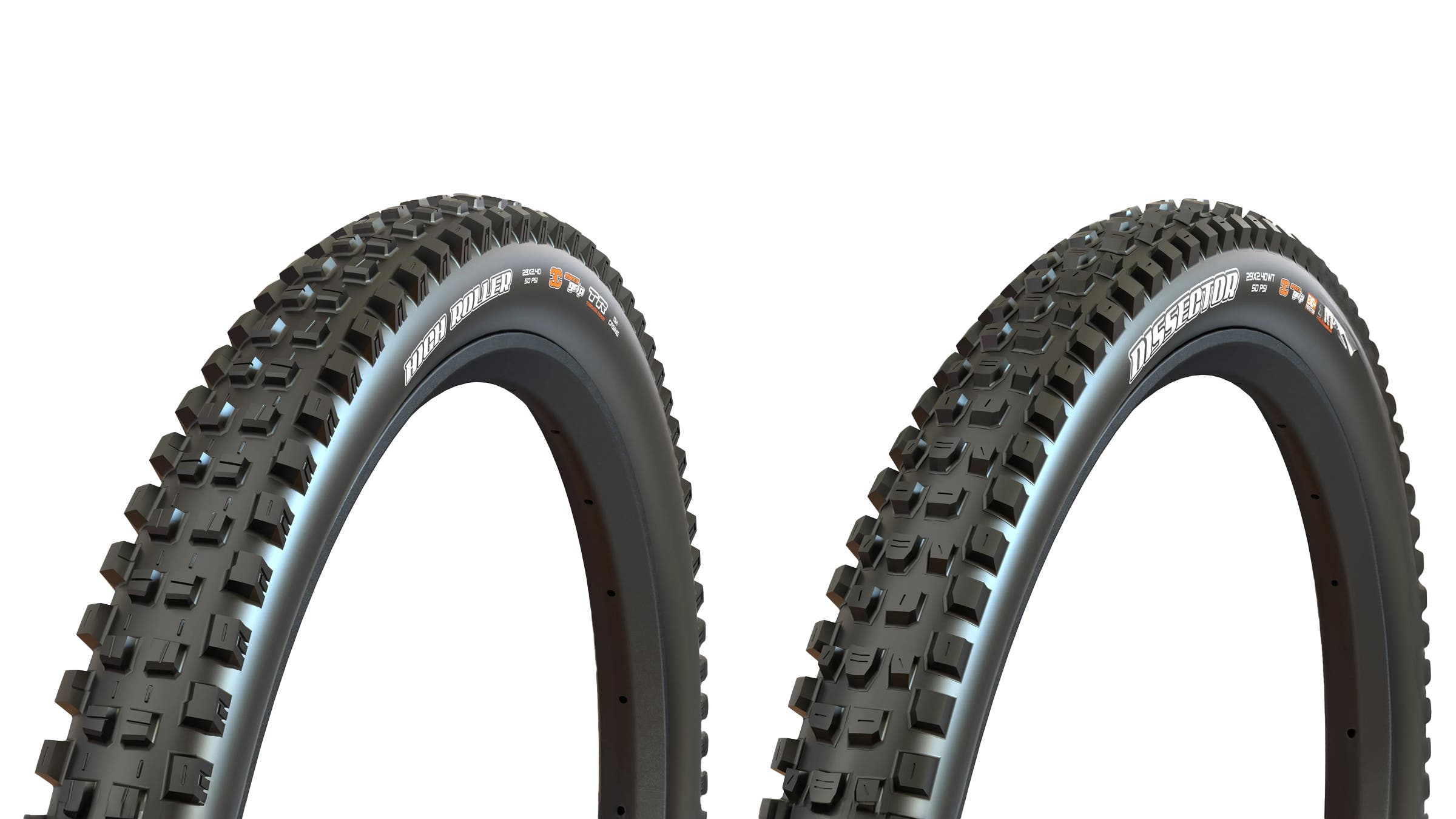
Maxxis High Roller 3 & Dissector
Front: High Roller 3 | EXO+ | 3C MaxxGrip (29×2.4″, ~1,100 g)
Rear: Dissector | DoubleDown (DD) & EXO+ | 3C MaxxTerra (29×2.4″, 1,030 g-1,200 g)
Pros and Cons
+ Excellent for aggressive trail/enduro riding
+ Good traction on slick, steep exposed rock
+ Braking confidence
– Expensive
– A lot of options to evaluate
The High Roller 3 sits right between the Assegai and the Shorty, and it’s a beast. The 3C MaxxGrip compound glued testers to the red rock in Sedona, giving them total confidence on exposed, high-penalty lines. Out back, the 3C MaxxTerra Dissector rolls noticeably faster than the radial options and saved our legs on long desert climbs. The one thing to get right is casing: at 1,030 grams, the EXO+ Dissector is a fine middle ground for general trail riding, but on test rides in La Ventana, the sharp, square-edged rock chewed through that margin fast. For the desert, we recommend the 1,200-gram DoubleDown out back—it adds weight and pushes the price toward $116, but that buys peace of mind.
Paid Advertisement by Backcountry.com
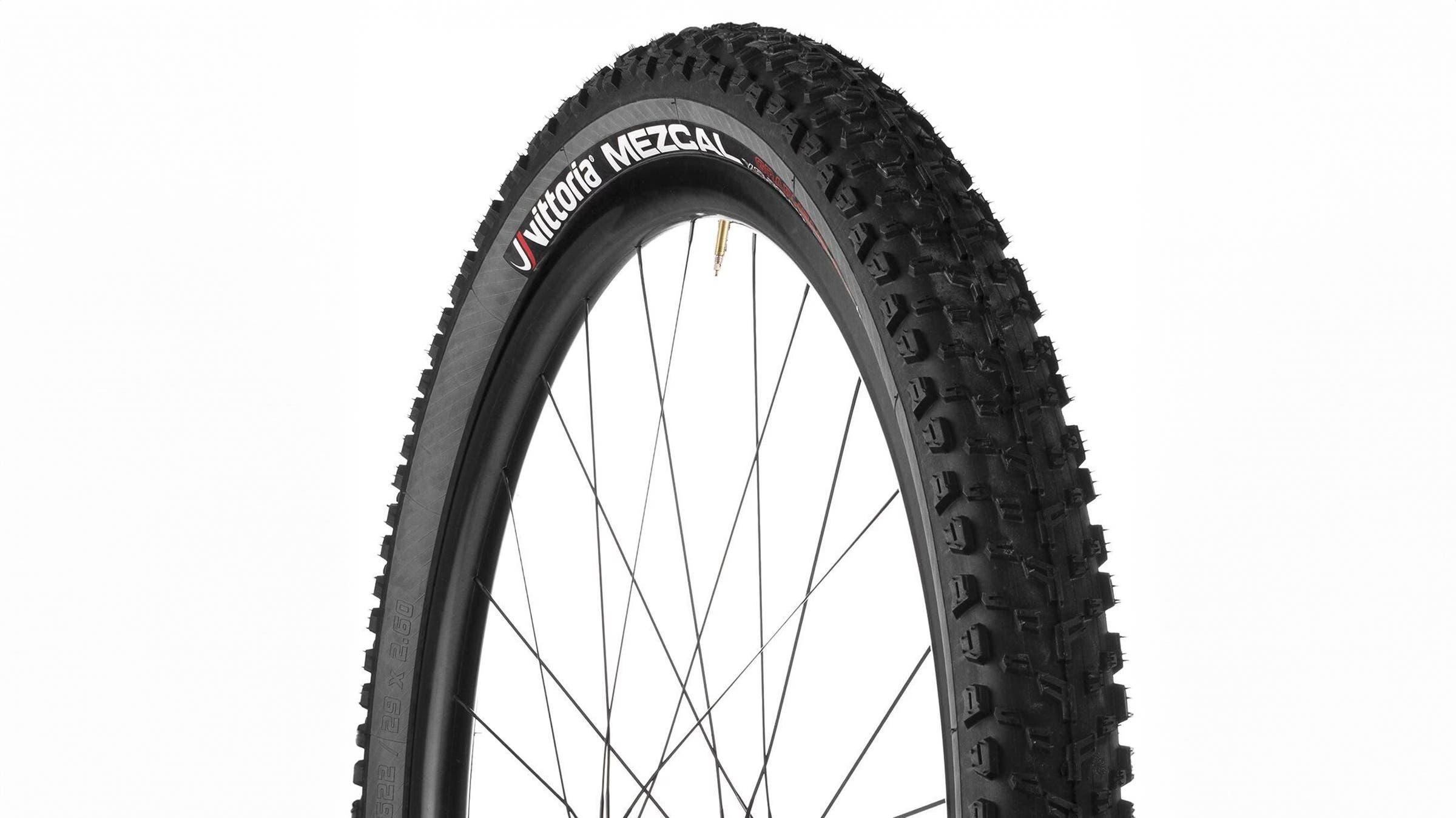
Vittoria Mezcal G2.0 4C XC Trail 29in Tire
Built to cover more trail with less effort, these tires boast speed and rolling resistance for the most technical and difficult cross-country racing. Made from Graphene 2.0 they’re equipped with reinforced sidewalls to stand up against sharp rocks and debris and the 60TPI nylon casing provides even more durability and protection in a lightweight design. Its effective edges improve cornering, breaking, and climbing traction so you can feel confident while pushing ahead on the trail.
Best Budget Setup
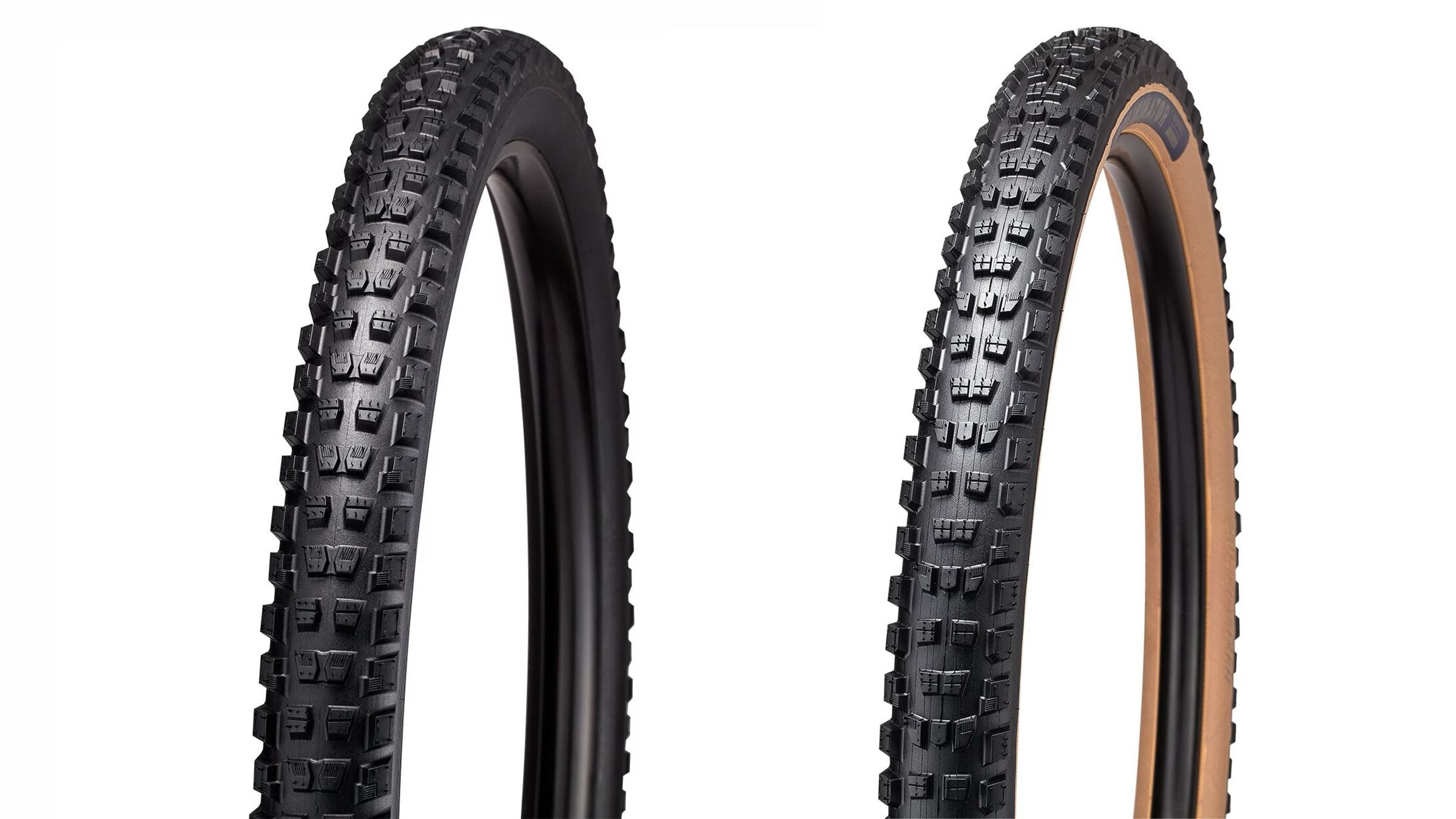
Specialized Butcher & Eliminator
Front: Butcher | Grid Trail | T9 (29×2.4″, ~1,000 g)
Rear: Eliminator | Grid Trail | T7 (29×2.4″, ~1,000 g)
Pros and Cons
+ Solid traction on mixed surfaces
+ Aggressive tread pattern
+ Moderate weight
– Slower rolling with big knobs
You don’t need to drop a Benjamin to get high-performance rubber. Specialized’s standard Grid Trail pairing proved to be the workhorse of this test. The Butcher T9 up front punches above its $70 class with sticky, slow-rebound damping that keeps the front wheel planted instead of pinging off chunk at high speed. Out back, the Eliminator in the firmer T7 is the unsung hero, balancing fast center speed, cornering support, and durability. It survived Baja’s abrasive dirt without rounding off its braking edges. Testers put 200 miles on the combo and it barely looked broken in while still offering predictable cornering grip. The Eliminator’s braking and climbing traction is a touch behind a Maxxis DHR II, but it rolled noticeably faster. At around 1,000 grams a tire, there’s no real weight tradeoff. Unless you’re charging pure DH tracks, this $140 pairing is tough to beat for weight, sidewall support, and trail-hugging grip.
Best for XC Riding
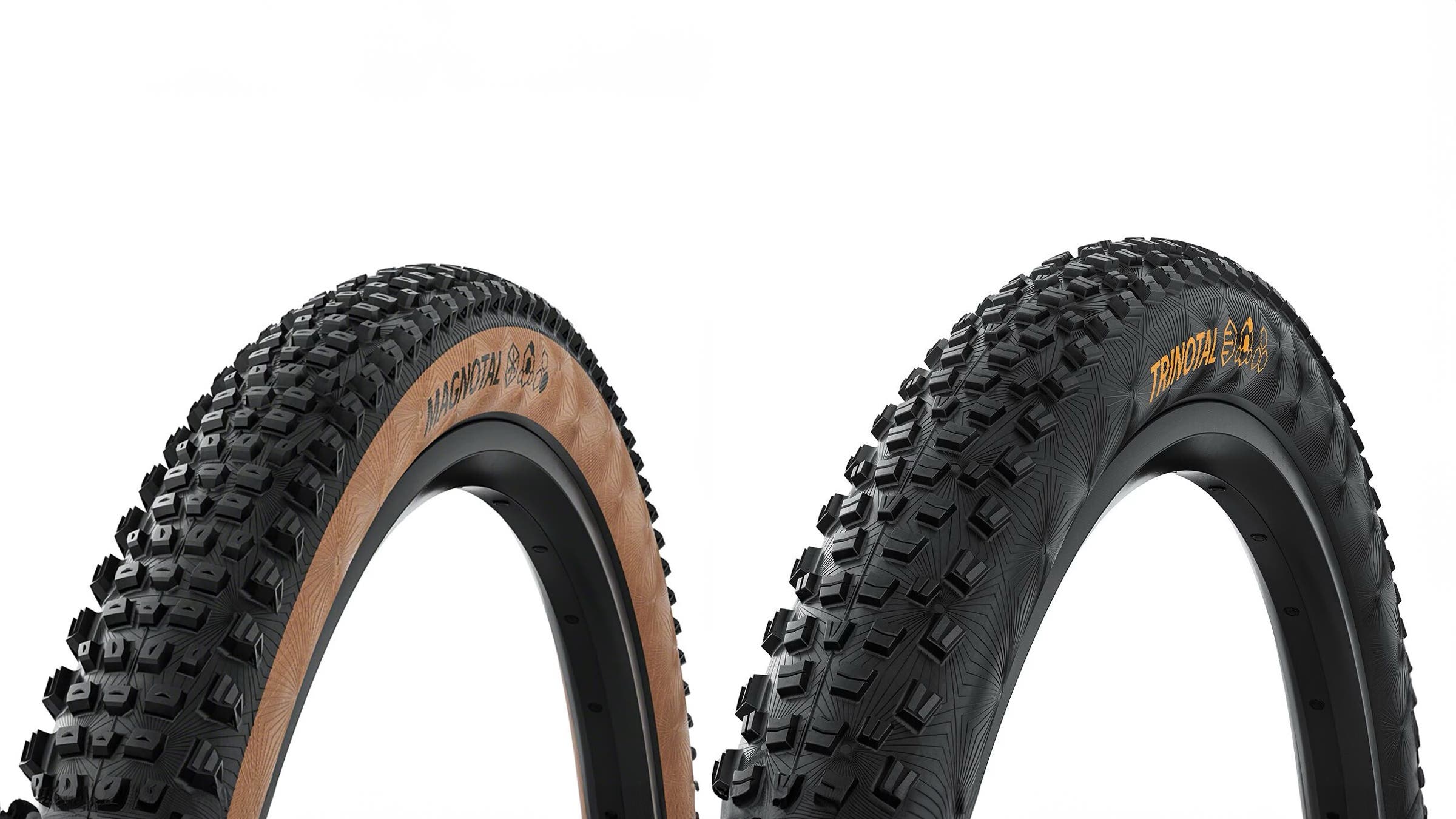
Continental Magnotal & Trinotal
Front: Magnotal | Trail Casing | Soft Compound (29×2.4″, ~1,000 g)
Rear: Trinotal | Trail Casing | Rapid Compound (29×2.4″, ~715 g)
Pros and Cons
+ Fast rolling
+ Lightweight
– Braking power is underwhelming
– Need to run slightly higher PSI
Pairing the toothier Continental Magnotal up front with the fast-spinning Trinotal out back is the setup for XC riders who want trail-bike control without giving up efficiency. It bridges aggressive XC and light trail. The front Magnotal runs a 3-4-3 knob layout with tall shoulder lugs that give solid braking support, cornering bite, and a planted feel in loose or wet dirt. Out back, the Trinotal (~717g) is the speed engine — its chevron tread fans out with enough negative space to clear debris and dig into soft surfaces while staying rounded and fast. Because it uses a lower-profile, less aggressive knob pattern, rear braking power is slightly compromised compared to a full-knob tire, but the rolling efficiency is worth the trade-off. On a short-travel, aggressive XC rig, the combo hits a solid middle ground: efficient power transfer on climbs, and more composure than you’d expect when the trail tips down into rock gardens and loose turns. Just note that the lighter casing has thinner sidewalls, so bumping up your PSI a couple of pounds is essential to hold tire shape and prevent rim strikes and flat tires.
Choosing the Right Mountain Bike Tires
How do I choose the right type of mountain bike tire?
Match your tire’s weight and tread to how hard you push your bike. Lighter, smoother tires favor speed and distance; heavier, toothier tires prioritize grip and impact protection. It comes down to balancing easy climbing against confident descending.
What’s the best mountain bike tire?
- Best for Wet & Steep Riding: Go Schwalbe Radial Gravity if you have the fitness for the weight and the cash for the price.
- Best for Mixed Conditions: Maxxis HR3/Dissector is the standard, just be smart and run a DD casing in the rear for desert rocks.
- Best Value & Reliability: Specialized Butcher/Eliminator punches way above its price tag.
- Best XC Setup: Continental Magnotal and Trinotal are the light grippy setup to use when pinning a race plate on your XC bike.
What’s the difference between XC, trail, all-mountain, and downhill tires?
XC tires are ultralight and fast-rolling for maximum climbing efficiency. Trail tires add bigger shoulder knobs and tougher sidewalls for all-around versatility. All-mountain (enduro) and downhill tires trade extra weight for maximum grip and bombproof casings that survive heavy impacts at high speed.
What size tire do I need?
Check the sidewall of your current tire or rim for wheel diameter (usually 29″ or 27.5″) and width (typically 2.2″ to 2.5″). Confirm your frame and fork have enough clearance before sizing up.
Which tread pattern fits my trails?
Low, tightly spaced knobs roll fast and work best on hardpack, dry trails. Taller, widely spaced lugs dig into loose dirt, loam, and mud. Riding mixed conditions? Look for an all-rounder tread with a smooth center and more aggressive cornering edges.
Should I run tubeless or tubes?
Go tubeless if your rims allow it. Sealant lets you run lower pressures for better traction and seals small thorn or glass punctures automatically. Tubes are fine for pavement or light paths, but tubeless is the standard for serious mountain biking.
When should I replace my mountain bike tires?
Replace your tires when the center knobs wear flat, the side lugs start tearing at the base, or you notice traction loss where you used to have grip. Exposed casing threads or hard, dried-out rubber are also clear signs it’s time for a new set.
How We Test Mountain Bike Tires
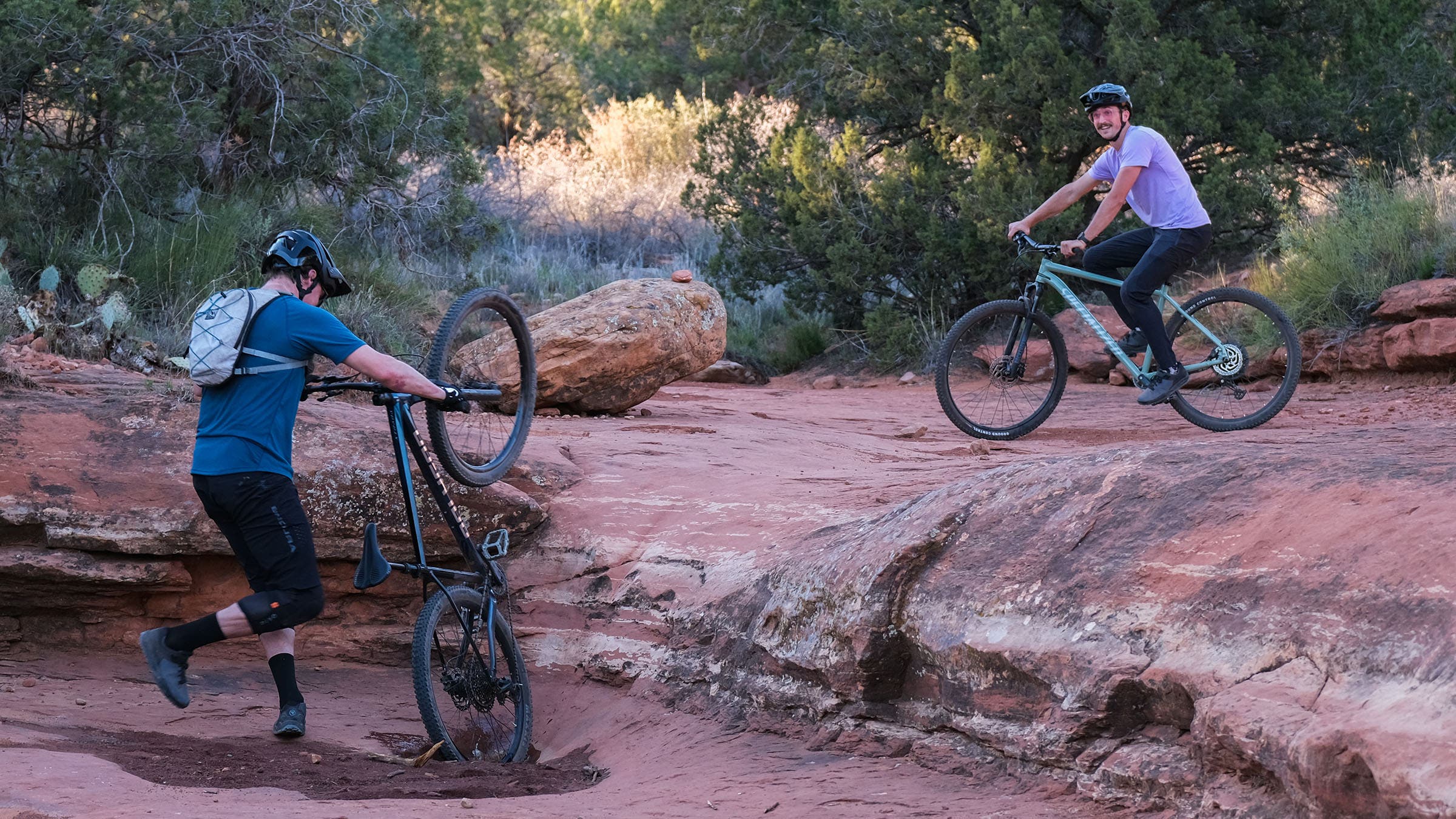
To find the best mountain bike rubber on the market, we selected a diverse range of tires and put them through rigorous field testing over eight months. Our lineup was curated using input from industry colleagues and Pinkbike editorial staff, focusing on major new product releases alongside proven performers across key categories. Testing ran from late fall 2025 through summer 2026 across four distinct terrain zones: the abrasive desert trails of Sedona, Arizona, and La Ventana, Baja; the fast, exposed dirt of Hood River, Oregon; and the steep, wet loamy forests of Bellingham, Washington.
We averaged around 2,000 vertical feet of climbing per ride across a mix of jumps, drops, berms, rocks, and cactus. Conditions spanned the entire weather spectrum, from freezing, muddy winter mornings to uncomfortably hot, sun-drenched afternoons.
After thousands of miles of trail time, these four tire setups earned our stamp of approval as the standout performers in their respective categories.
Meet Our Lead Testers
Nikki Rohan has been mountain biking for over 20 years and testing mountain biking gear for Outside Interactive, Inc. affiliate Pinkbike for over a decade. She resides in Hood River, Oregon, with her three kids, two dogs, and a grumpy cat. She spent a chunk of time competing in enduro races in the PNW, as well as events like Trans BC, Trans Provence, Downieville Classic, Grinduro, and the occasional CX or gravel race. When she is not working or traveling, you will find her on the river, the local trails or exploring the endless forest roads.
Matt Patterson is a New Zealand native who got hooked on mountain bicycling in 2002 and has been DH and enduro racing, trail building and exploring the PNW on two wheels ever since. He currently splits his time in his home on wheels in Hood River Oregon, Bellingham Washington and La Ventana BCS. He has two grown kids and a Baja rescue dog named Nutmeg. Matt is happiest when his tires are touching loam, or in the air.
