

Published August 7, 2026 11:27AM
Nawang Thendu Sherpa’s lifeless body lay trapped at around 19,000 feet on the lower flanks of Broad Peak, where an avalanche had deposited him days earlier. A few hundred meters below, his friends Pem Dorje Sherpa and “Speed” Dawa Sherpa kicked steps into the steep snow of the broad couloir, fixing a rope behind them that they hoped would eventually help them lower his body back to Base Camp, and from there, on home to his family.
This was their second attempt to reach him on Pakistan’s 26,414-foot peak, the 12th-highest in the world. Earlier in the day, on August 2, the 1,000 feet of rope they had carried between them had run out well short of the body. They descended to borrow another 350 feet of rope from fellow rescuers before retracing their steps back into the steep snow.
“We carried as much rope as we could manage,” Pem Dorje told Outside. “This rescue really needed eight people, but it was only the two of us.”
They ran out of rope a second time at the edge of a yawning crevasse where the slope curved into a steep overhang. There, they built an anchor and rested, trying to decide what to do next. They were still hundreds of feet below their friend’s body.
As they rested, they heard the unmistakable rumble of another powerful avalanche ripping down the couloir above them. They were directly in its path.
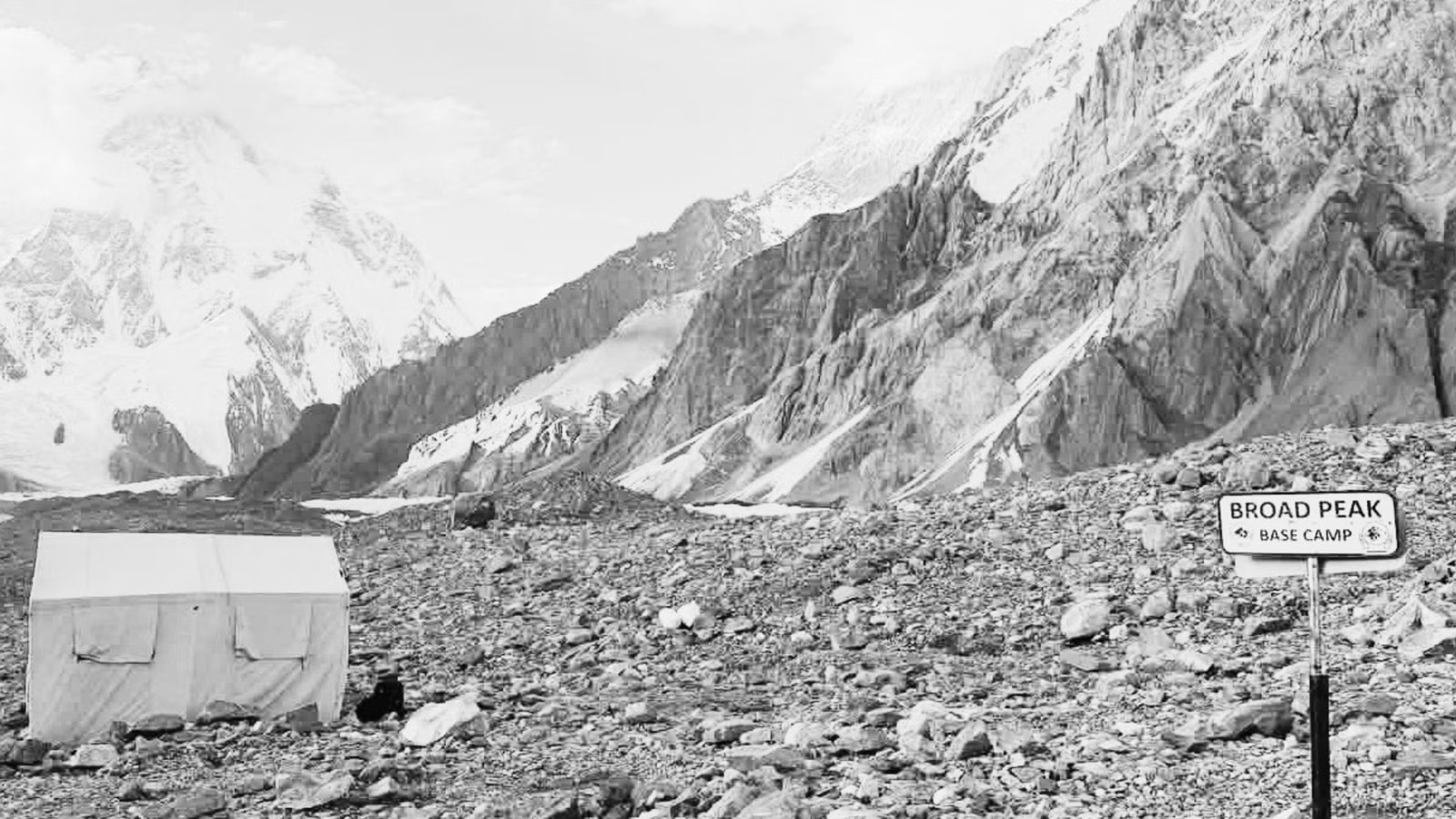
Five days earlier, on the morning of July 28, 2026, a group of ten climbers had left Broad Peak Base Camp, at approximately 16,000 feet, and followed fixed ropes up the steep slopes towards Camp I at 18,500 feet.
The ten climbers, who were eventually caught in what would become the deadliest high-alpine mountaineering tragedy in more than a decade, represented the second wave of summit hopefuls on Broad Peak for the 2026 season. They came from four independent expeditions but traveled on similar timelines. As they climbed, fresh snow obscured all traces of an earlier group of climbers who bid for the summit ten days before.
The group of ten had set out on one of the first clear days after a week-long storm blanketed the Karakoram mountain range along the Pakistan-China border with heavy snowfall. Jenjen Lama, a climbing guide and Base Camp manager for the Nepali outfitter Seven Summit Treks, described the conditions as he experienced them on the slopes of 28,251-foot K2, just across the Godwin-Austen glacier from Broad Peak.
“It snowed heavily from the 22nd to the 26th. In the Karakoram, you’re supposed to wait five days for the snow to settle before you climb,” he told Outside. “But the weather windows here are too small. If you wait, it just starts to snow again.”
“If you want to reach the summit,” Lama continued, “you just have to take the risk. It’s do or die. Fifty-fifty. There is no other way to do it.”
Among the climbers on Broad Peak was legendary mountain guide and former 800er speed record-holder Nirmal “Nims” Purja, 43, who was chasing one of the most ambitious objectives of his career: becoming the first person to climb all 14 peaks that rise above 8,000 meters (26,000 feet) without supplemental oxygen—twice. After he summited Broad Peak, only 26,864-foot Cho Oyu in China would stand between him and the accolade.
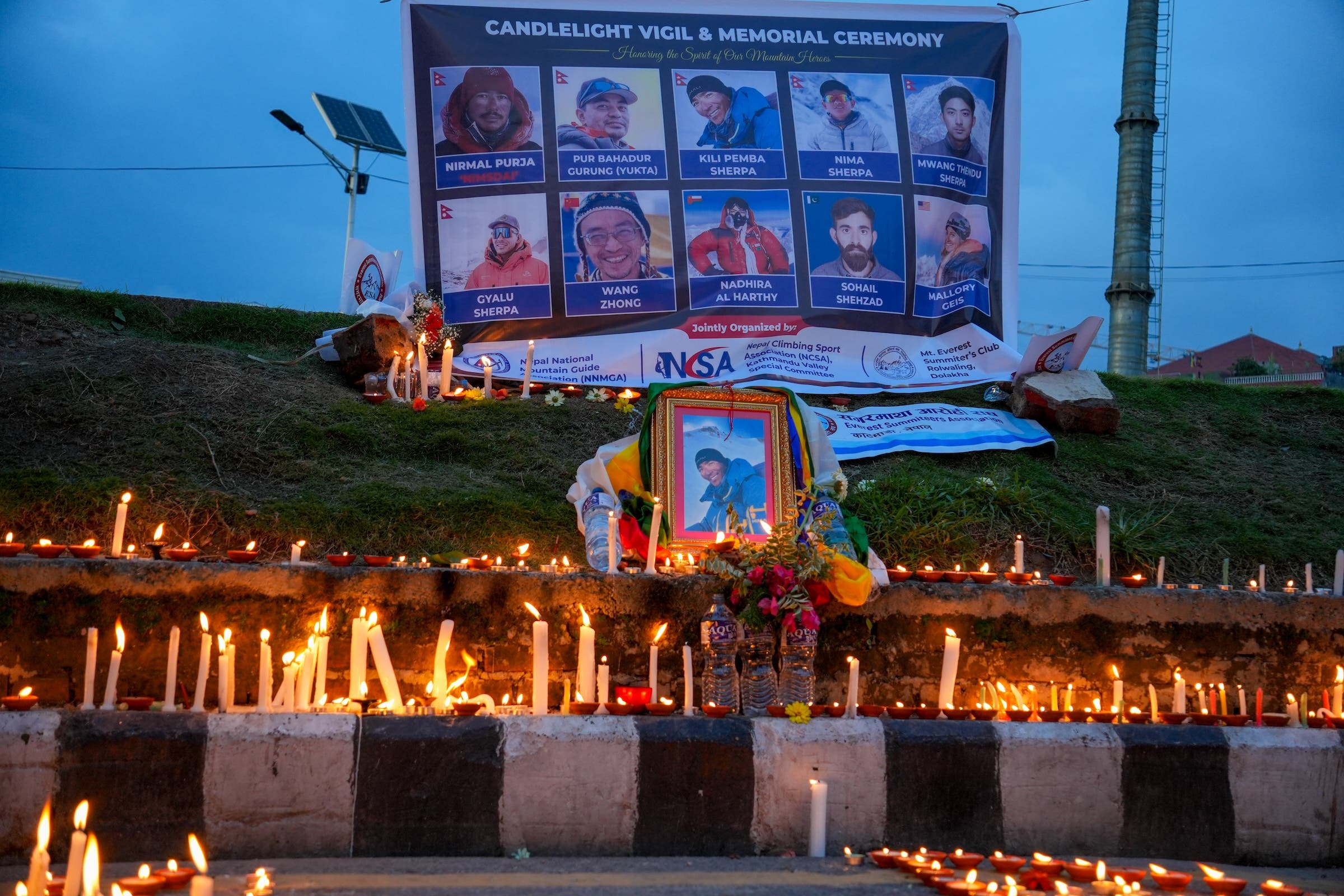
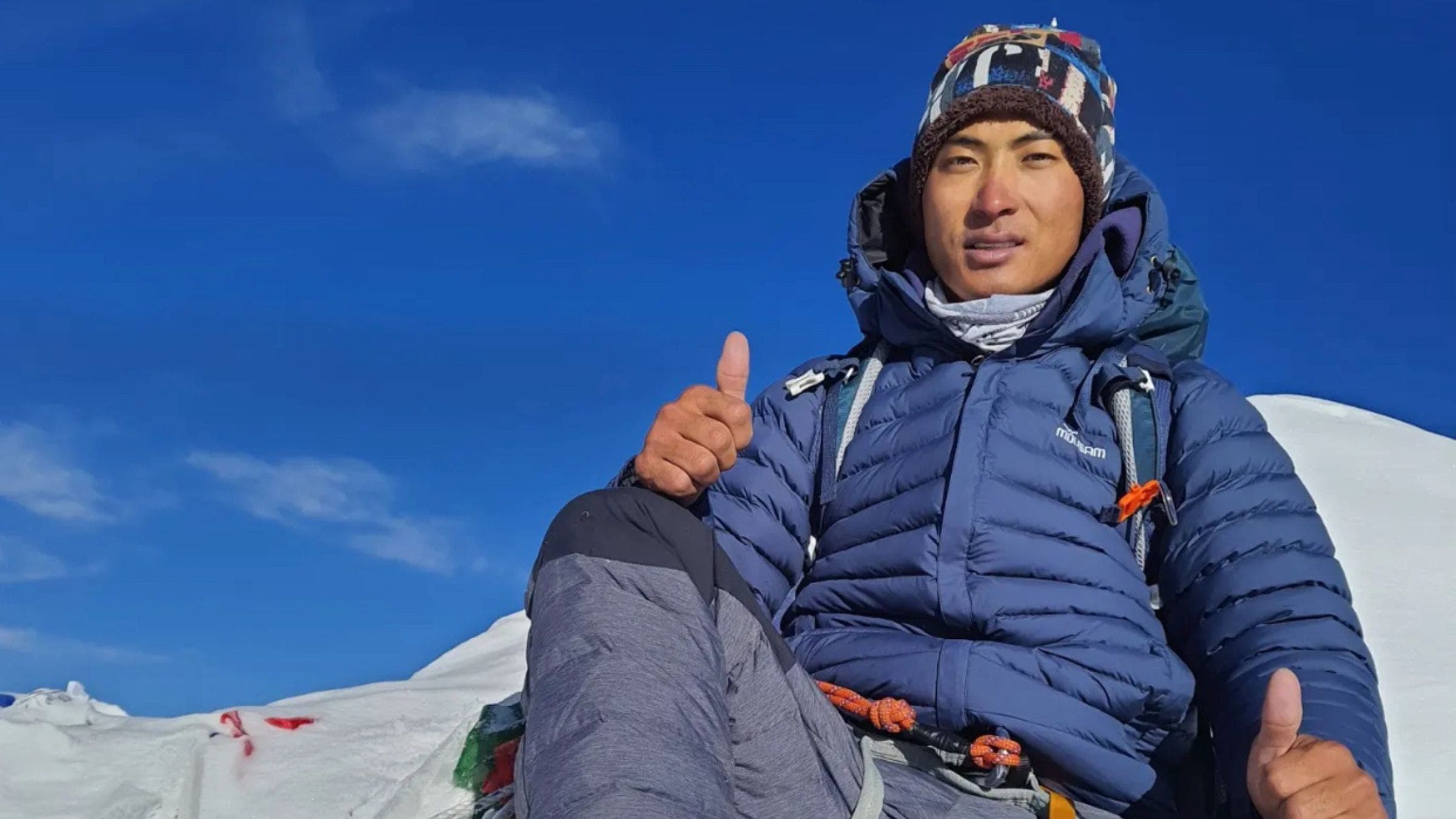
Purja’s team was outfitted by his expedition company, Elite Exped, one of the largest operators in the industry. Accompanying him were his longtime climbing partner and friend Pur Bahadur Gurung, 37, known by friends as “Yukta,” and another experienced high-altitude worker, Nima Sherpa, 36.
Yukta Gurung was a seasoned mountaineering veteran who had recently completed his IFMGA certification (often described as the “PhD of mountain guiding”) and was looking forward to receiving his official recognition during the globally celebrated International Mountain Day in December. He was a veteran of numerous high-profile expeditions, including a recent documentary film project on Mount Everest for National Geographic, Everest: The Other Side.
Also climbing was a team from Nepali guiding company Seven Summit Treks (SST) in support of 48-year-old Nadhira Al Harthy from Oman. Al Harthy became the first Omani woman to summit Mount Everest in 2019, and continued to knock off 8,000-meter peaks in pursuit of her own 14-peaks record. Fresh off an unsuccessful attempt on nearby 26,362-foot Gasherbrum II, Al Harthy was determined to salvage the season with at least one 8,000-meter summit. Supporting her were experienced guides Gyaljen “Gyalu” Sherpa, 47, and Nawang Thindu Sherpa, 28.
Ngima Thendu, 28, was the youngest climber on the mountain. He had five 8,000-meter ascents to his credit. Gyalu, 46, by contrast, was a seasoned veteran with bold winter ascents of Everest and 27,838-foot Makalu under his belt. He was best known for securing an official Guinness World Record for becoming the first person to climb 28,169-foot Kangchenjunga, the third-highest mountain in the world, three times in a single season. The climb on July 28 was to be Gyalu’s second ascent of Broad Peak in the 2026 season, having already led an American client to just a few hundred feet below the summit ten days earlier.
The third climbing team was from Imagine Nepal, another leading Nepali outfitter run by famed climber and IFMGA guide Mingma Gyalge Sherpa, widely known as “Mingma G,” who monitored the expedition by radio from nearby K2, where he was guiding a different team. The Imagine Nepal team on Broad Peak was small and light, with 45-year-old veteran guide Kili Pemba Sherpa, known as “Kilu,” supporting Chinese climber Wang Zhong. Kilu was one of the strongest climbing sherpas working in the Himalaya, who had just completed his own 14-peak record with an ascent of 26,660-foot Nanga Parbat earlier in July. Kilu was a 20-time Everest summiteer and a member of the Nepali team that claimed the first-ever winter ascent of K2 in 2021. Wang Zhong was a longstanding client of Imagine Nepal and was also nearing the completion of his own 14-peak quest.
The fourth team on Broad Peak was a two-person squad led by Pakistani guide Sohail Sakhi, 33, and his client, 39-year-old American climber Sarah Mallory Geis. Sakhi was among Pakistan’s most accomplished young mountaineers, with successful ascents of K2, Nanga Parbat, Gasherbrum I, Gasherbrum II, Manaslu, and Kangchenjunga. He was known as a strong rope-fixer, and many of his 8,000-meter ascents were accomplished without supplemental oxygen. Geis’ expedition was organized through his company, Moving Mountains.
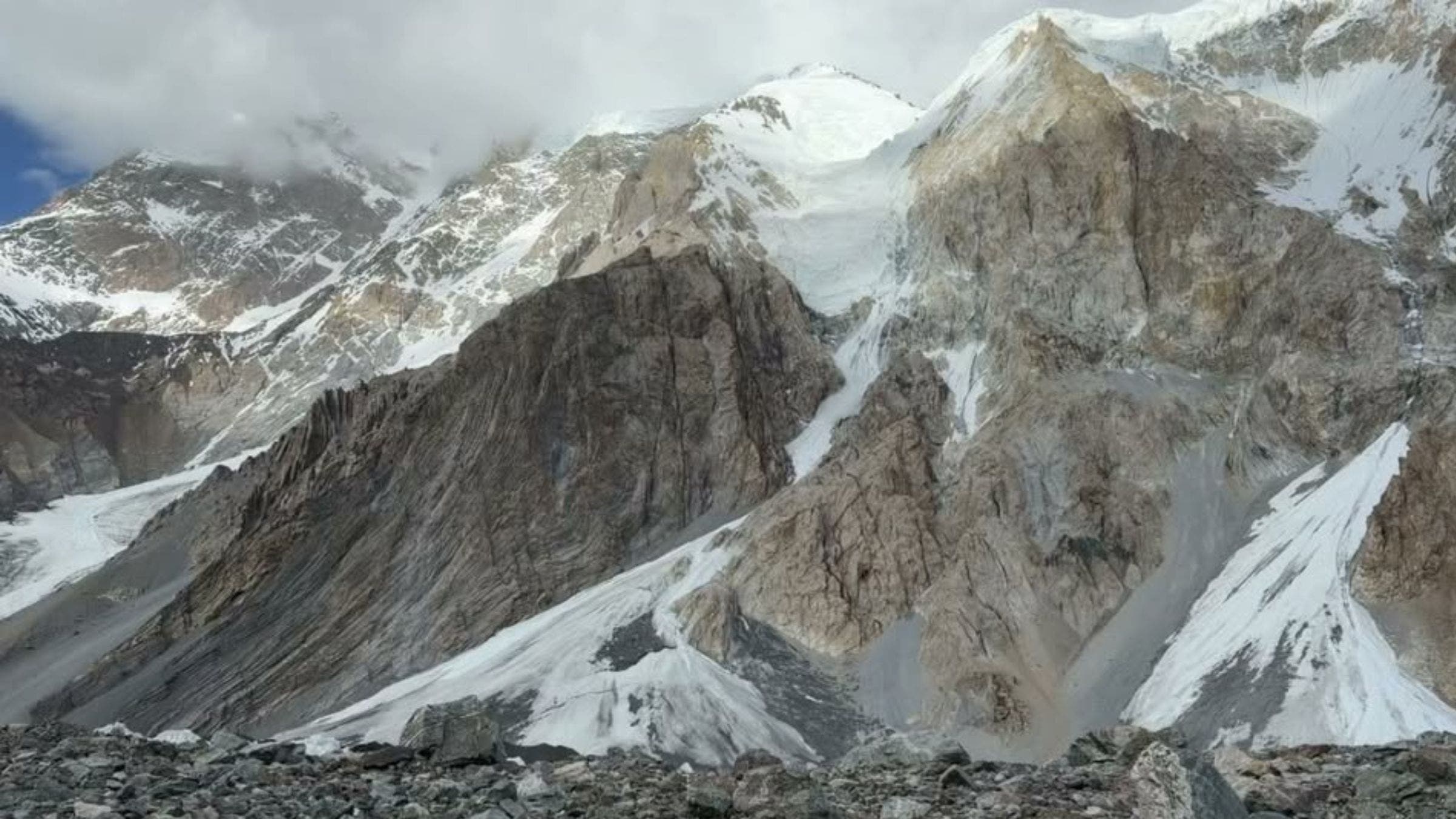
The ten climbers spent the night of July 28 in separate camps in Camp I before moving up the ridge to Camp II the following day. Broad Peak’s standard route is long, steep, and sustained and follows a relatively safe ridge up to Camp II at 20,500 feet before it crosses an exposed avalanche slope on the way to Camp III at 23,000 feet and the summit.
Broad Peak is the 12th-tallest mountain on the planet, reaching 26,414 feet above sea level. While one of the shortest 8,000-meter peaks, the route is known for extreme danger, and avalanches are a constant hazard of the climb.
Napier Fuller, an American climber, was a member of the first wave of summit attempts on July 18 and 19, 2026. He described the climbing as some of the most difficult he’s experienced in his life. “From the very get-go of crampon point, it was firecrackers,” he told Outside. “It was tough going, dangerous rock fall, very technical climbing.”
Fuller climbed with SST guide Gyalu Sherpa, and the team turned away just a few hundred meters below the summit, where the fixed ropes ended. Fuller described numerous close calls during their ascent. “I got hit [by rockfall] a bunch of times,” he said. “One hit me in the head so hard. I mean, it stunned me. My helmet has one little hole in it.”
According to Fuller, Broad Peak makes “Everest look like child’s play comparatively. It was some really tough stuff.”
The massive avalanche that killed the ten climbers roared down Broad Peak on the morning of July 30. But prior to the slide, the day appears to have started off normally for the climbing teams. According to GPS data, all four teams were located at Camp II at 5:33 A.M. By 7:30 A.M., they were making steady progress up the route. Just before 9 A.M., Purja’s GPS tracker checked in at 21,847 feet, the highest point any member of the group would reach.
At around 9 A.M., Jenjen Lama of Seven Summit Treks was climbing towards Camp II on K2 with a group of clients. He looked across the glacial valley and saw a massive avalanche thunder down Broad Peak. Although avalanches on that section of the route are common, this slide was bigger and more destructive than ones Lama had seen before.
Lama switched on his radio and tried to contact Gyalu and Ngima Thendu. There was no response.
“I thought they probably just had their radios switched off to save battery,” Lama said. “So I called down to Base Camp and told them to keep checking in with the team.”
By the time Lama reached Camp II at 16,500 feet that afternoon, the fallout from the avalanche he’d witnessed appeared much more dire. He spoke with Mingma G, who was in the same camp, and realized his Broad Peak climbers were also out of contact. He then called Seven Summit Treks headquarters in Kathmandu and asked them to check the GPS trackers for Nadhira and the rest of the team on Broad Peak. They reported back that the trackers showed a sudden, dramatic descent, with Nadhira having dropped more than 5,000 vertical feet to the foot of the peak far below the climbing route. As the team made more phone calls, they realized that the trackers of other climbers on the mountain showed the same ominous pattern. Something was very wrong.
As night fell, Mingma G, Lama, and other expedition leaders worked in cramped tents at Camp II on K2 trying to coordinate a rescue plan. Throughout the day, each team had assumed its climbers had simply switched off their radios. It quickly became apparent, though, that all four expeditions on Broad Peak had suffered the same fate.
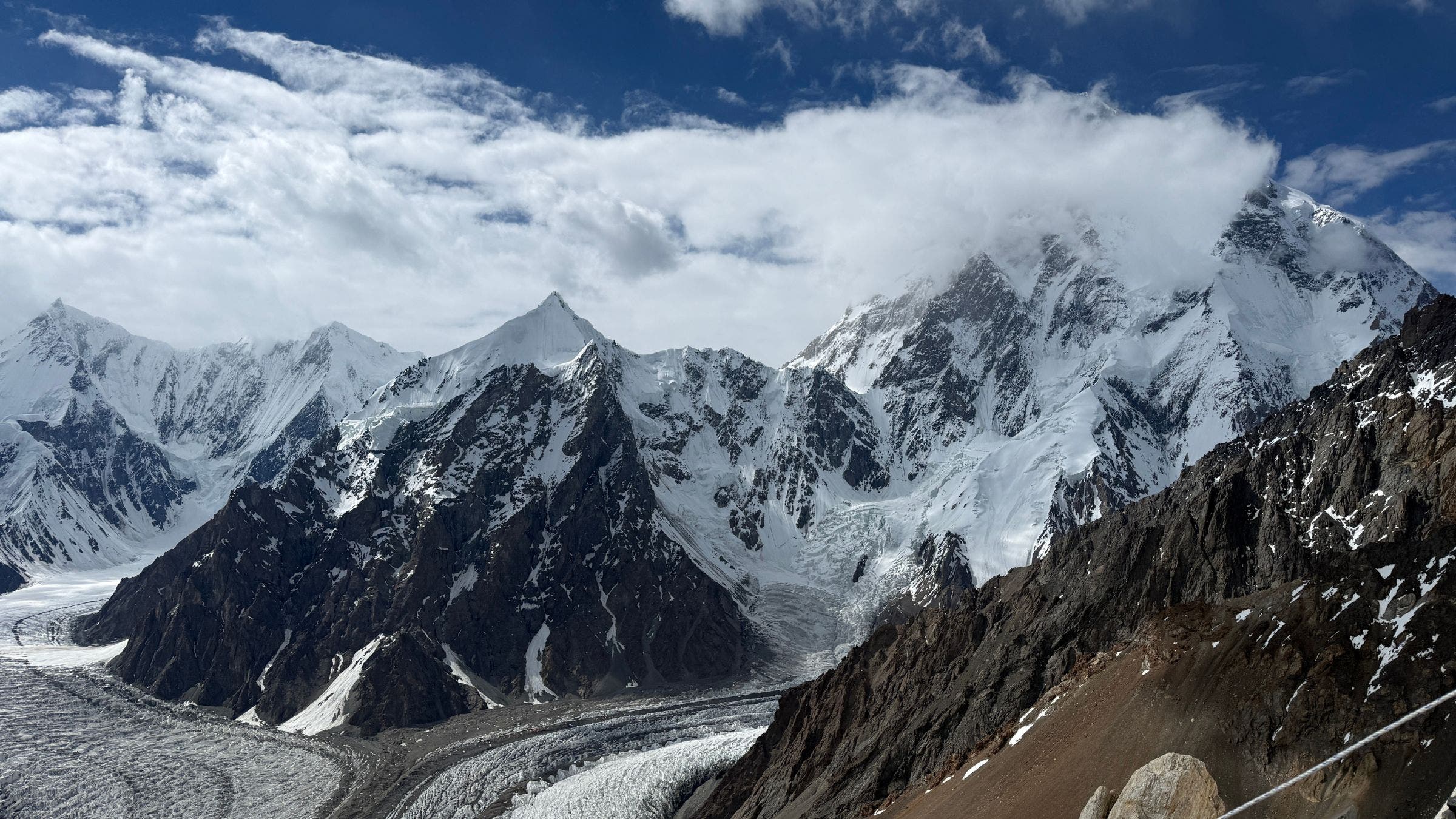
Climbing expeditions in Pakistan’s Karakoram Range are much different than the ultra-connected luxury expeditions common on Mount Everest and other peaks in Nepal. The remoteness of the Karakoram region and lack of private helicopter service limit the staff size of each expedition, and also the communications and transportation. Most importantly, the area lacks reliable cell service or internet. Any telecommunications relies on expensive satellite technology, as the Starlink sets popular on Everest won’t work on Broad Peak and its surrounding mountains. While many climbers transmit their position live from GPS trackers, Base Camp teams can’t access the data without reliable internet. Instead, they rely solely on radio communication to keep in touch with their teams on the mountain.
It didn’t take long for the expedition leaders on K2 to abandon their climbs. They were now unsettled by the avalanche conditions ahead of them, and knew full well that additional manpower would be needed for a major rescue effort on Broad Peak.
The following morning, July 31, Lama descended to K2 Base Camp, where he established a command center focused primarily on rescuing his SST colleagues Gelu and Nawang Dorje and their client, Al Harthy.
That same morning, two Pakistan Army helicopters flew over Broad Peak in search of survivors, while a joint team of Pakistani and Nepali rescuers combed through the avalanche debris. The team recovered the bodies of Al Harthy and Gurung, along with a detached leg that was later identified as belonging to Geis.
As the helicopters searched the avalanche path without success, news of the disaster spread rapidly across social media, fueling widespread speculation and rumor. Screenshots of Purja’s GPS tracker, which showed slight movement from its final location, led some to believe he and others might still be alive. But hope faded when the helicopters returned to the Pakistani town of Skardu without finding any additional survivors, carrying only the three recovered remains.
While the Army searched from the air, Mingma G and other Nepali rescuers carried out a more detailed search using commercial drones borrowed from climbers on K2. That afternoon, they spotted a cluster of five bodies at around 19,350 feet. One figure, wearing a distinctive teal down suit, stood out immediately on the drone controller’s tiny screen; it was unmistakably Purja. High above, another body lay stranded alone on a difficult-to-reach cliff band above 19,600 feet.
The next morning, August 1, Mingma G and senior Pakistani guide Shirbaz Khan assembled a recovery team of nine climbers from several expedition companies. They established a temporary Advanced Base Camp at the foot of the mountain, just below the point where climbers affix crampons and begin ascending the peak on snow and ice.
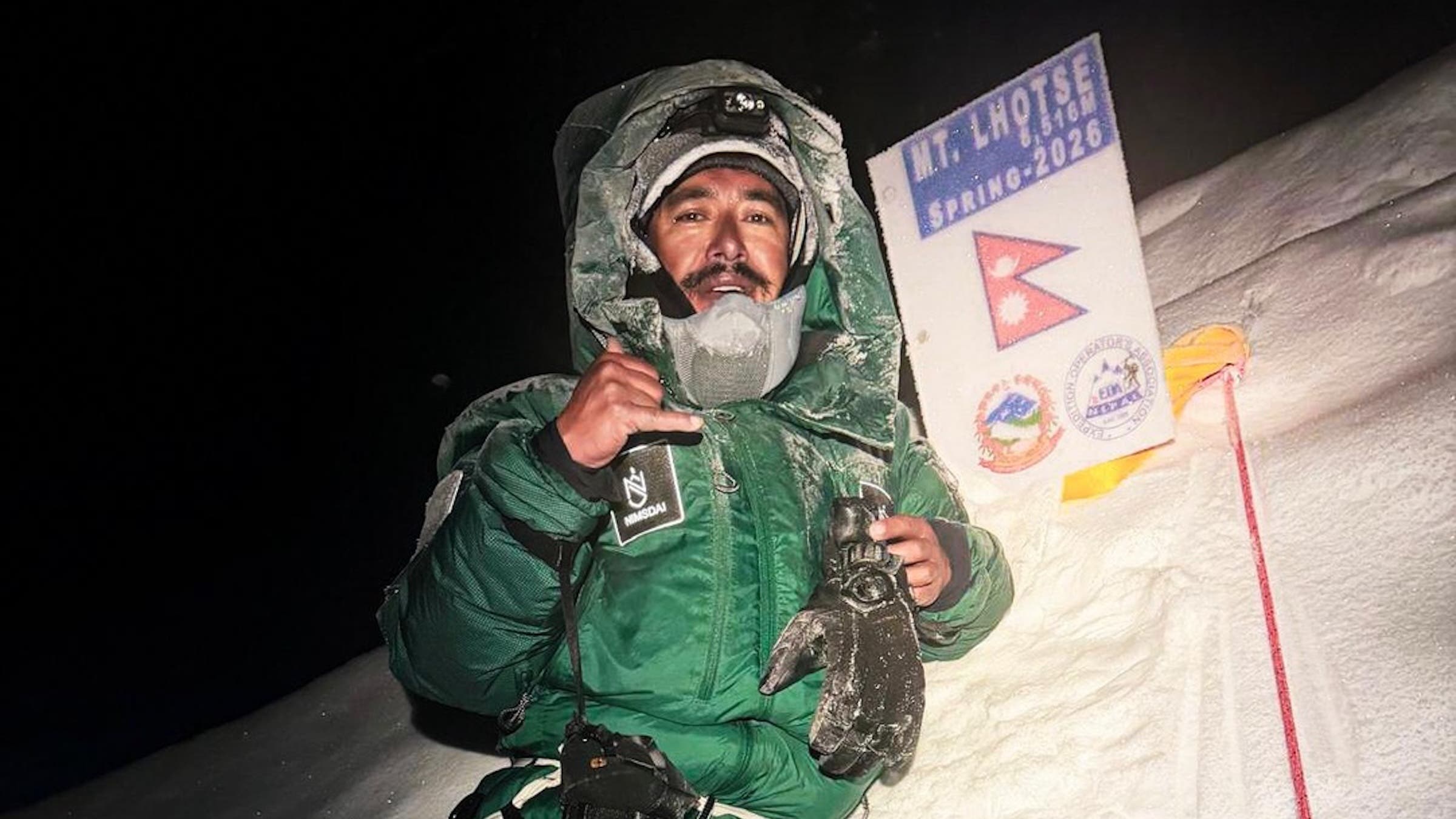
The rescue teams began climbing the peak that evening, when conditions on the mountain were more stable. By morning, the team had reached the cluster of bodies identified by the drone. They confirmed them as Nims Purja and his Elite Exped teammate Nima Sherpa, Chinese climber Wang Zhong and his guide Kilu Sherpa from Imagine Nepal, and Gyalu Sherpa from SST. The rescuers worked steadily throughout the day to package and recover the bodies from the deep snow.
With five more climbers accounted for, only Pakistani guide Sakhi and SST guide Nawang Thindu Sherpa remained missing. On the first day of searching, rescue teams located Sakhi’s backpack and his GPS tracker at the base of the mountain. This fact, combined with what the teams could see from Mingma G’s drone, meant that the lone body high on the cliff band could only be Nawang Thindu.
As the rest of the recovery team continued their work, two experienced SST climbers, “Speed” Dawa Sherpa and Pem Dorje Sherpa, packed 1,000 feet of climbing rope into their backpacks and headed into the steep couloir to recover their colleague.
The pair knew they couldn’t reach Nawang Thindu via the standard route, so they climbed directly up the avalanche path instead. Small spindrift slides swept around them as they climbed.
“That area is so dangerous because avalanches can be triggered from all sides,” Speed Dawa told Outside. “They came at us from every direction. We were right in the middle of it all.”
At one point, they ran out of rope and had to descend to the main group to retrieve another coil.
After climbing for hours, they reached a heavily crevassed section of the couloir that curved sharply upward into a steep overhang. Speed Dawa placed several ice screws for protection and climbed onto the ice before realizing that, yet again, they were out of rope. As he waited, a second avalanche swept over him and Pem Dorje.
“We were completely covered, but we survived,” Speed Dawa told Outside. “We were still at least 450 feet from Nawang Thindu, and we started thinking about our families and our children. ‘We’re out of rope. The dead are gone,’ we thought. ‘We don’t have any option but to turn around.’”
“We didn’t want there to be another two bodies on the mountain,” Pem Dorje added.
Speed Dawa called the SST office by satellite phone to report that they could not continue. Even if they had reached Nawang Thindu, they realized it would have been impossible to lower his body through such steep and overhanging terrain.
The two Sherpas descended to rejoin Mingma G and the rest of the recovery team, helping package the five recovered bodies for the descent. Knowing they wouldn’t make it to camp before nightfall, they secured the bodies at around 18,700 feet before descending to Advanced Base Camp to rest.
At around 5:30 P.M., another massive avalanche barreled down the climbing route, carrying a heavy mass of snow and debris all the way to the base of the peak and blowing a cloud of spindrift across the rescuers’ camp. According to Speed Dawa, they found the remains of Kilu among the debris—which meant that the other four bodies of their fellow climbers were once again lost somewhere on the dangerous face of Broad Peak.
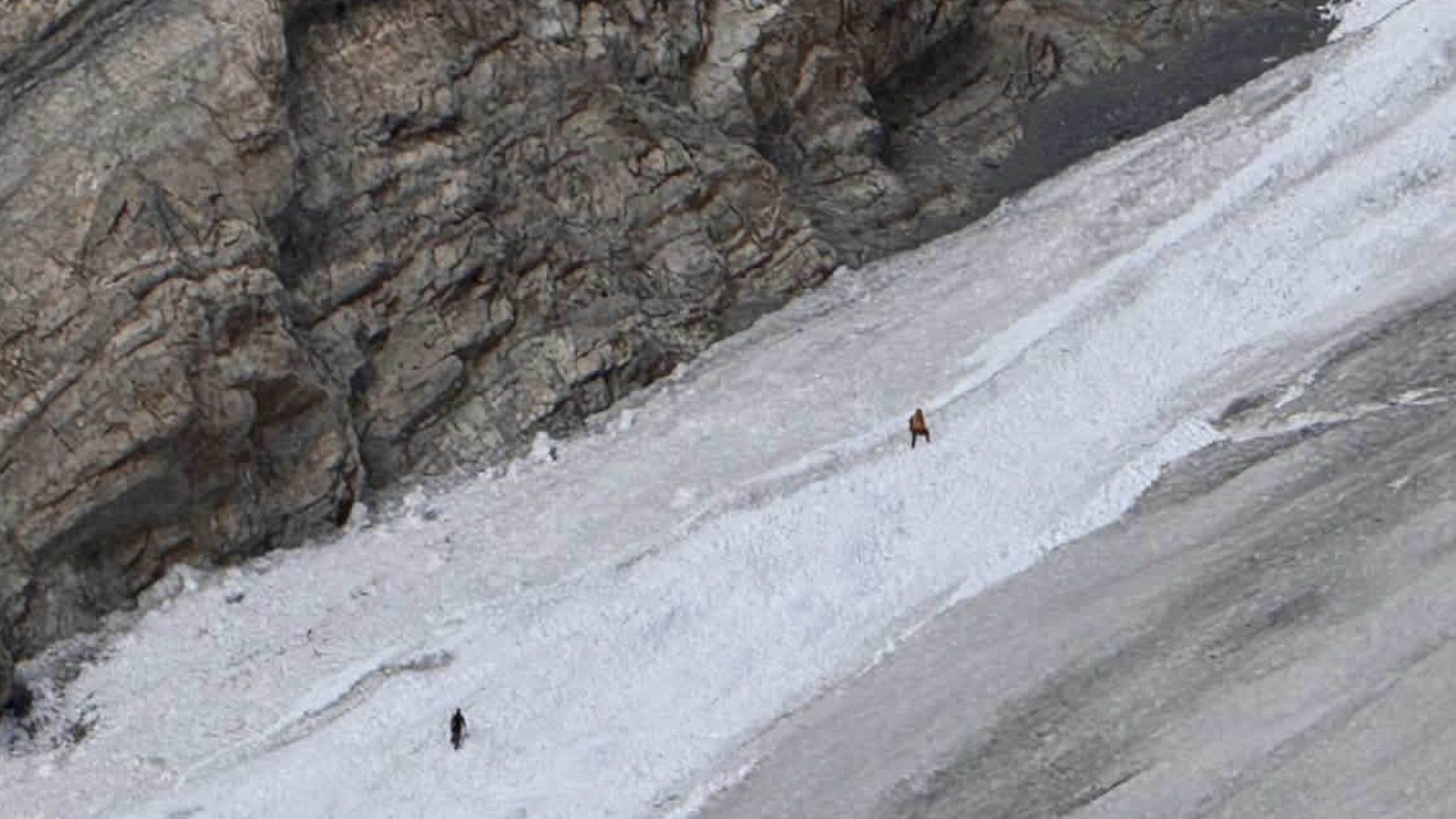
A trekker, identified as @chocolatemilkman27, at Broad Peak Base Camp watched the second avalanche from a distance. “We were the only people camped at Broad Peak Base Camp the evening of August 2,” he wrote to Outside via Instagram message. “We witnessed two sherpa on the valley floor at the base of the avalanche probing. One with a shovel and [the] other with what appeared to be a pole. At this moment, a small avalanche from the same glacier occurred at 4:30 P.M., and the wet slide brought a body in an orange suit to the valley floor. The two sherpa retrieved the body.”
Only then did Speed Dawa fully appreciate how narrowly the rescue team had escaped death.
“If we’d had enough rope to continue climbing, we would have died for certain,” he told Outside. “Mingma G had promised to send more people up to help us package and lower the body once we reached it. There’s no question we would all have died up there together.”
In an Instagram post dated August 1, Mingma G wrote: “My loving brothers Kilu, Wang, and Nims, we will take you back home to see [your] families.” Despite all the danger and the setbacks, this was one promise he intended to keep.
As many members of the recovery team left Base Camp for home the next morning, Mingma G remained behind with a skeleton crew of four: himself, Dipan Gurung, Pemba Chhewang Sherpa, and Pakistani climber Sirbaz Khan. After another brutal 12-hour effort, they recovered the bodies once again and brought them to Base Camp on August 5, where they were finally evacuated by helicopter to Skardu.
With the 2026 Karakoram climbing season drawing to a close and resources now limited, the bodies of Sakhi and Nawang Thindu, as well as any final remains of Mallory Geis, will likely remain on Broad Peak for the foreseeable future.
Despite this, Speed Dawa emphasized that the heroics of the recovery team, and especially Mingma G’s leadership, cannot be overstated.
“People only write about the dead,” he told Outside. “But I want to salute Mingma G and his team. For three or four days, in incredibly difficult terrain—through rocks, crevasses, and steep faces—they found the bodies and brought them home. What could be more important than that?”
“People are going to remember Broad Peak because that’s where Nims died,” he continued. “But they also need to remember the men who brought him down.”
