

Published August 10, 2026 05:13PM
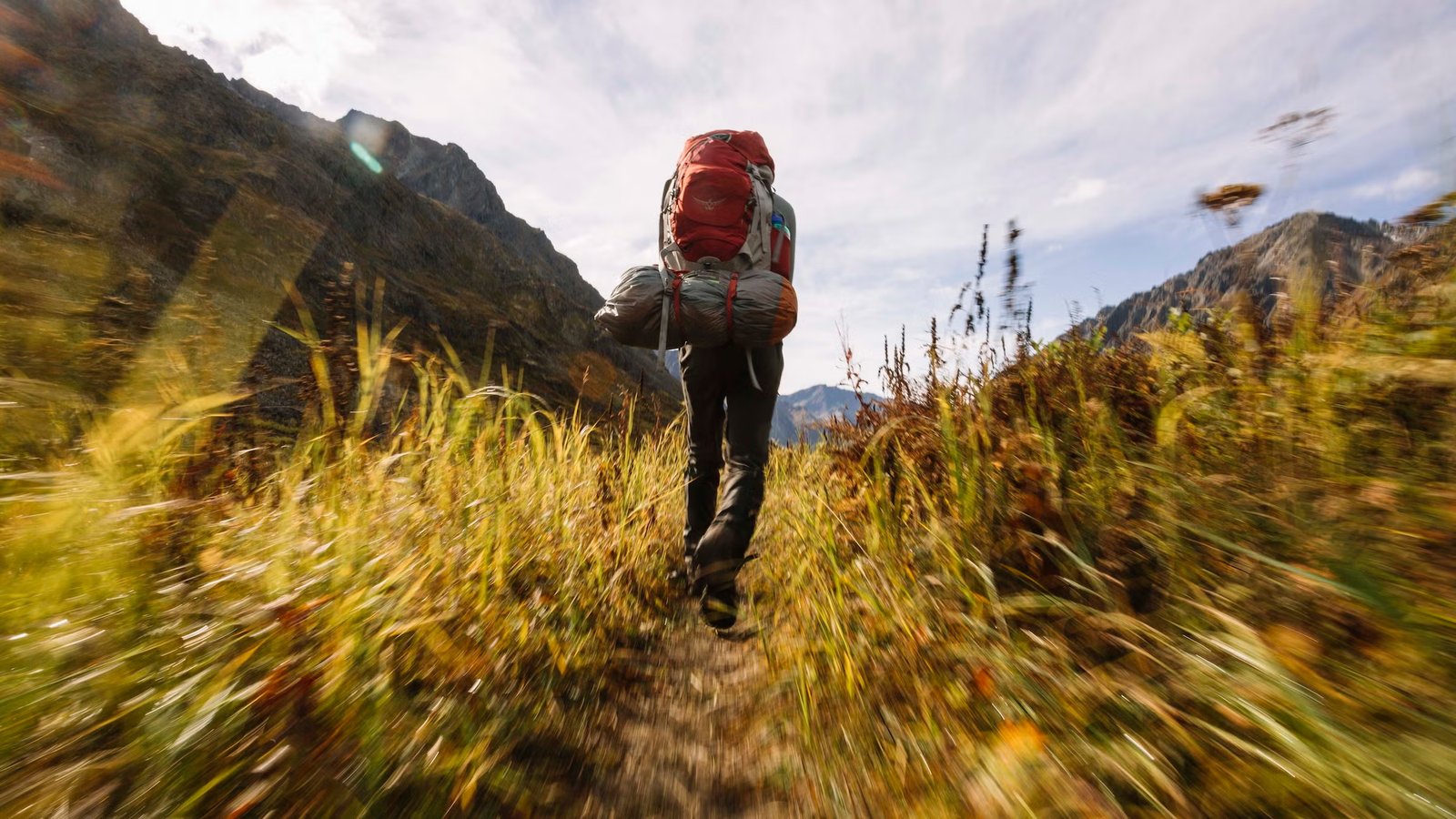
When Bradford Bartels, trail name “Rafiki,” reached the northern terminus of the Alaska Long Trail (ALT), there was no monument waiting for him. No drama, no fanfare and certainly no finish line.
The northern terminus of the roughly 500-mile trail sits in Pioneer Park, an unassuming stretch of green space in Fairbanks, Alaska. And after two months of hiking north across the state, he snapped a few photos and headed toward a warm meal.
“It feels like your hike ends when you should be resupplying,” Bartels told Outside. “I was left confused, why did the adventure end but also when am I going to eat? I felt like a dog back from a walk.”
Still, however unceremonious his finish, it represents a major milestone for the ALT: proof that it’s doable. On August 8, 2026, after 47 days, Bartels just became its first thru-hiker.
“We’ve been saying it, and people have been saying it, but he just showed that it is possible,” Jane Boer, ALT program coordinator, told Outside. “He just did it with his feet.”
The ALT is a proposed 500-mile route from Seward to Fairbanks that has been sold, depending on who you ask, as Alaska’s answer to the Appalachian Trail, a recreation-economy moonshot, or another wilderness fantasy drawn by people who do not actually live there.
Bartels, who was born in Soldotna, Alaska, roughly 94 road miles from the trail’s southern terminus in Seward, views that uncertainty as part of the appeal. “Thru-hiking needs Alaska,” he said, “and Alaska needs thru-hiking.”
The ALT is still very much a work in progress. Alaska Trails, a nonprofit organization supporting trail work in the state, is collaborating with local communities and land managers to close significant gaps in the route, particularly north of Hatcher Pass in the Talkeetna Mountains, and create safer connections between existing trail systems.
Before Bartels set out, he called Mariyam Medovaya, former ALT program officer, with a simple question of reassurance: Could somebody actually hike the whole thing?
Her answer, as Bartels remembers it, was “it’s technically doable.”
That was apparently enough.
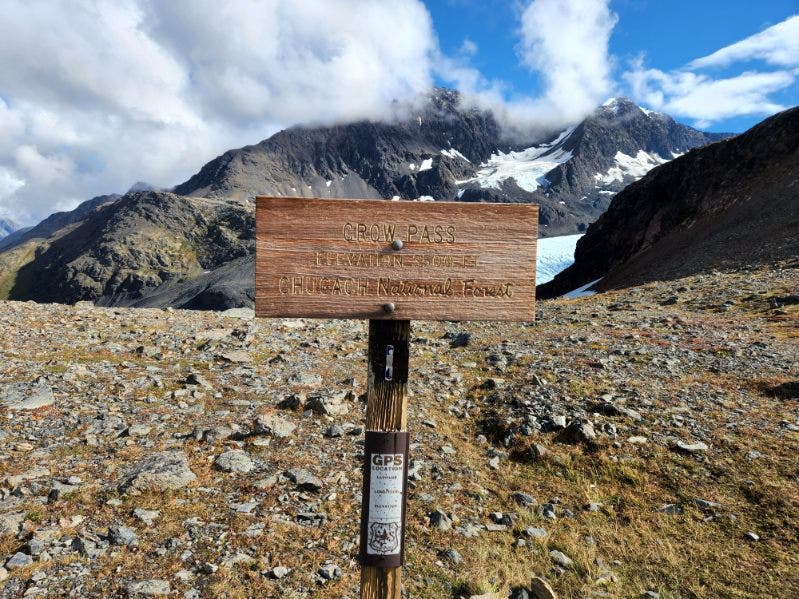
For Bartels, “technically doable” meant connecting a patchwork of established trail, road walks and ridgelines, with ATV tracks, game trails and scrambles. Sometimes he texted Boer for intel. There wasn’t much to share. Still, he was surprised how much of the ALT was just hiking. “
“The Pacific Crest Trail doesn’t magically exist in Alaska now,” he said. “ALT is still super janky. But it’s a baby, and just needs some time.”
Making the trail less janky, however, is expensive.
According to Alaska Trails, ALT connection projects have received $6.7 million through Alaska’s capital budget since 2023, while another $20.7 million in federal appropriations has gone toward projects along the route since 2022.
In the Chugach National Forest, federal funds include $1.5 million for the Grant Creek Bridge and an extension of the Iditarod National Historic and Moose Pass trails, plus another $1 million for improvements to the Iditarod trail. Farther north, millions have been appropriated for pedestrian bridges and trails near Denali National Park and a separated pathway from Healy toward Antler Ridge. Another $660,000 is slated for separated pathways leading from Palmer toward Hatcher Pass.
This patchwork funding approach is the point. Despite its name, the ALT is not simply 500 miles of new singletrack being carved from Seward to Fairbanks. Much of the route already exists. The project now is an effort to connect existing trails, and the communities around them, into something much larger.
“Will it ever look like any of the big three? Definitely not, and I hope it never does,” Bartels said.
In Moose Pass, for example, Boer said a separated pathway could simultaneously close a gap in the long trail and give residents a safer way to walk or bike without traveling along the highway.
“It might add access for them to get up into the mountains,” Boer said. “It might give people the opportunity to walk into that community and see what it’s like.”
The project’s ambitions have drawn scrutiny over what a long-distance trail through Alaska should look like, who it should serve, and how it should be managed. Those questions have reached a head as the ALT moves through consideration for federal recognition.
In 2022, Congress directed the Bureau of Land Management (BLM) to study whether the ALT would be suitable, feasible, and desirable as a National Scenic Trail, like the PCT, Appalachian Trail (AT), and Continental Divide Trail (CDT). A National Scenic Trail Designation brings federal funding for trail maintenance, communication, and outreach. BLM released a draft feasibility study in March 2025 and found that substantial portions of the proposed trail meet the criteria. Currently, the entire Seward-to-Fairbanks route does not qualify as one continuous suitable National Scenic Trail, and Congress is responsible for deciding whether the ALT receives designation.
The study itself does not authorize new trail construction or change how the lands crossed by the proposed route are managed. The trail passes through a complicated mix of federal, state, municipal and other lands, and Boer said one misconception about National Scenic Trail designation is that it would hand control of the route to the federal government.
Supporters of federal designation say it could bring something much less philosophical: reliable funding. Boer points specifically to trail maintenance, a perpetual challenge for Alaska Trails.
The lack of infrastructure didn’t mean Bartels left disappointed in the trail. He came away thinking its ambitions aren’t big enough.
“When thru hikers find out what’s going on in Alaska, they’re going to demand it cross the entire state at its longest,” he said. “It’s inevitable.”
For now, hiking to the Arctic and camping in polar bear country remains Rafiki’s vision, not that of the Alaska Long Trail Association. Organizers still have plenty of work to do connecting Seward to Fairbanks, and Bartels thinks thru-hikers can help.
Early adopters, he said, can route-find, report conditions, crowdsource information and become ambassadors for an emerging trail. “There’s a certain hiker trash chemistry that takes place and accelerates trail progression,” Bartels said. “Everything about this trail is an enigma.”
Boer, herself a thru-hiker of the CDT and PCT, understands the impulse. But her hope for the next person attempting Bartels’ route is more practical: that they won’t have to work quite as hard to figure out where the trail goes.
“You always have to have somebody be the first,” Boer said. “And the first person is always going to have the biggest challenge.”
For all his jokes about the trail’s unfinished state, Bartels doesn’t think hikers necessarily need to wait for the route to grow up.
“You can hike it,” he said. “And you should.”
