Published August 19, 2026 11:37AM
I’ve run in dozens of hydration vests for dozens of years. As the category manager for Outside’s running hydration vests gear guide, I’m constantly slinging on a multipocketed vest and heading out on the trails. I love hydration vests because they carry everything I need—fluids, fuel, layers, phone, lip balm, etc.—in pockets that are both easy to access and distribute the weight evenly on my front and backsides. The best hydration vests move minimally while I’m charging mountainous terrain, and they also allow my back to breathe.
So when I started noticing a new slew of waistpacks built for trail running hitting the market, I was skeptical. I doubted they’d be as comfortable or carry as much as a hydration vest. I thought back to the early days of waist-mounted hydration carriers that were unsophisticated hipbelts with simple webbing and bulky buckles across the frontside, and awkward pockets or clips that held plastic water bottles on the back. They never (ever) sat comfortably against my body. They were almost fine while running uphill, but they bounced way too much on flats and especially while running downhill. I’d pull them down around my hipbones to try to minimize their bounce, but that only worked for a few strides before I’d be futzing to reposition the belt. It was always a less-than-smooth running experience, to say the least.
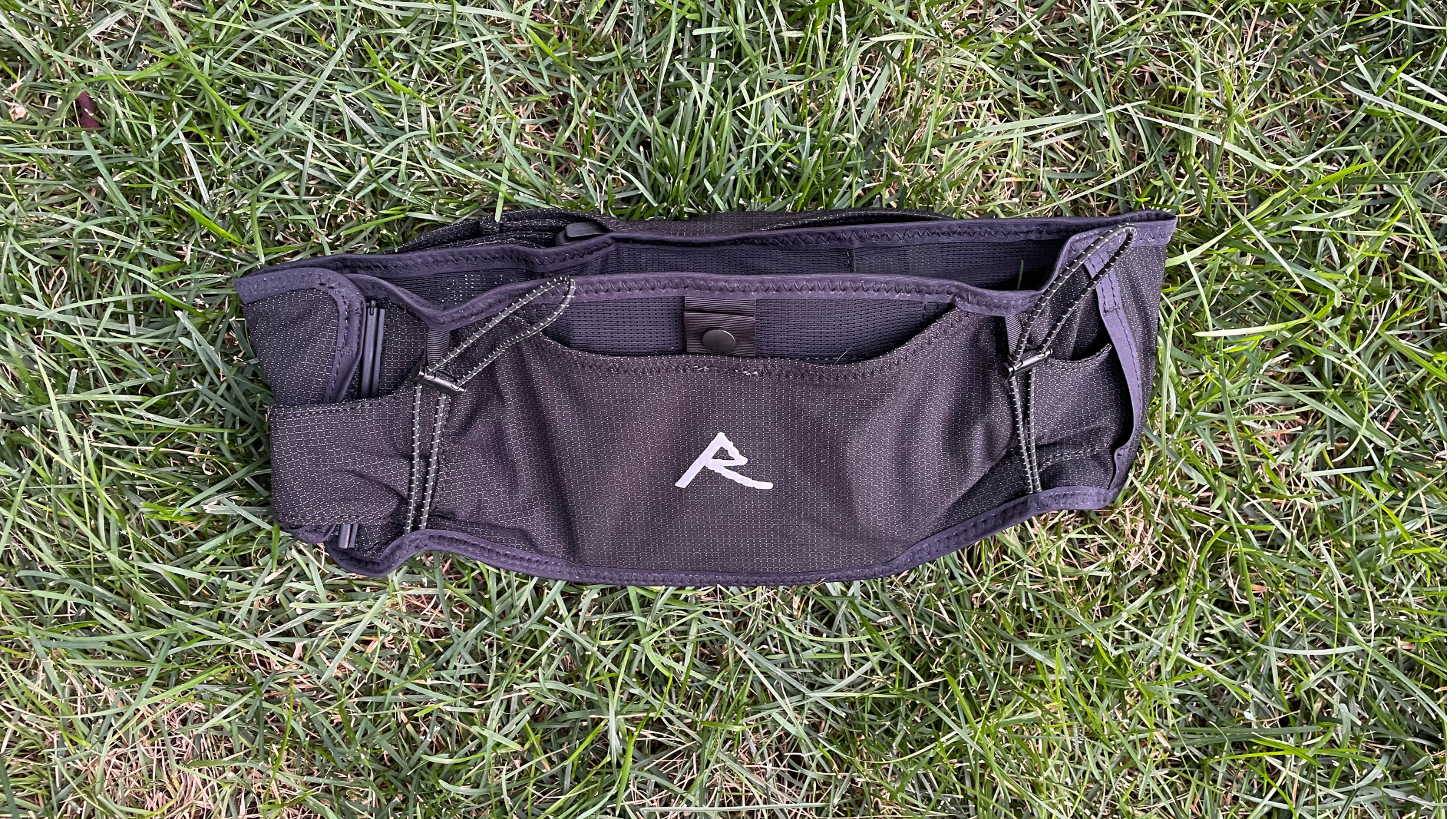
It appears that the new era of waistbelts built for trail running is different. They look different, for one thing, with wide paneling and multiple pockets that can be worn in any position around the waist (read: no dedicated front side or backside). And they hold soft flasks as opposed to hard-sided bottles, so they morph with the waistpack against the body.
Still, I love a good hydration vest. So recently, I tested two new waistpacks (the Osprey Duro Dyna Pro Belt and the Raide LF 2L) on trail runs where I’d usually wear a hydration vest. On one of those runs, I even wore a waistpack and a hydration vest to compare and contrast simultaneously. Here’s how they compare across a few key categories:
Hands-free Hydrating
The best hydration vests carry fluids in a way that allows easy access without breaking stride. Whether I’m using a pack with a hydration bladder and hose, or a pack with soft flasks on the shoulder straps, I’m able to access my fluids hands-free. Being able to sip from a hose that’s clipped high on a shoulder strap or bend my neck to take a drink from a soft flask that’s near my mouth allows me to drink while using poles or scramble on rocks with my hands.
While waist belts carry soft flasks comfortably, and it’s not that big a deal to grab them out of a pocket mid-run, it is an extra step to hydrate. It’s also difficult to grab a soft flask from a waistbelt while using trekking poles.
Winner: Hydration vests
Gear Capacity
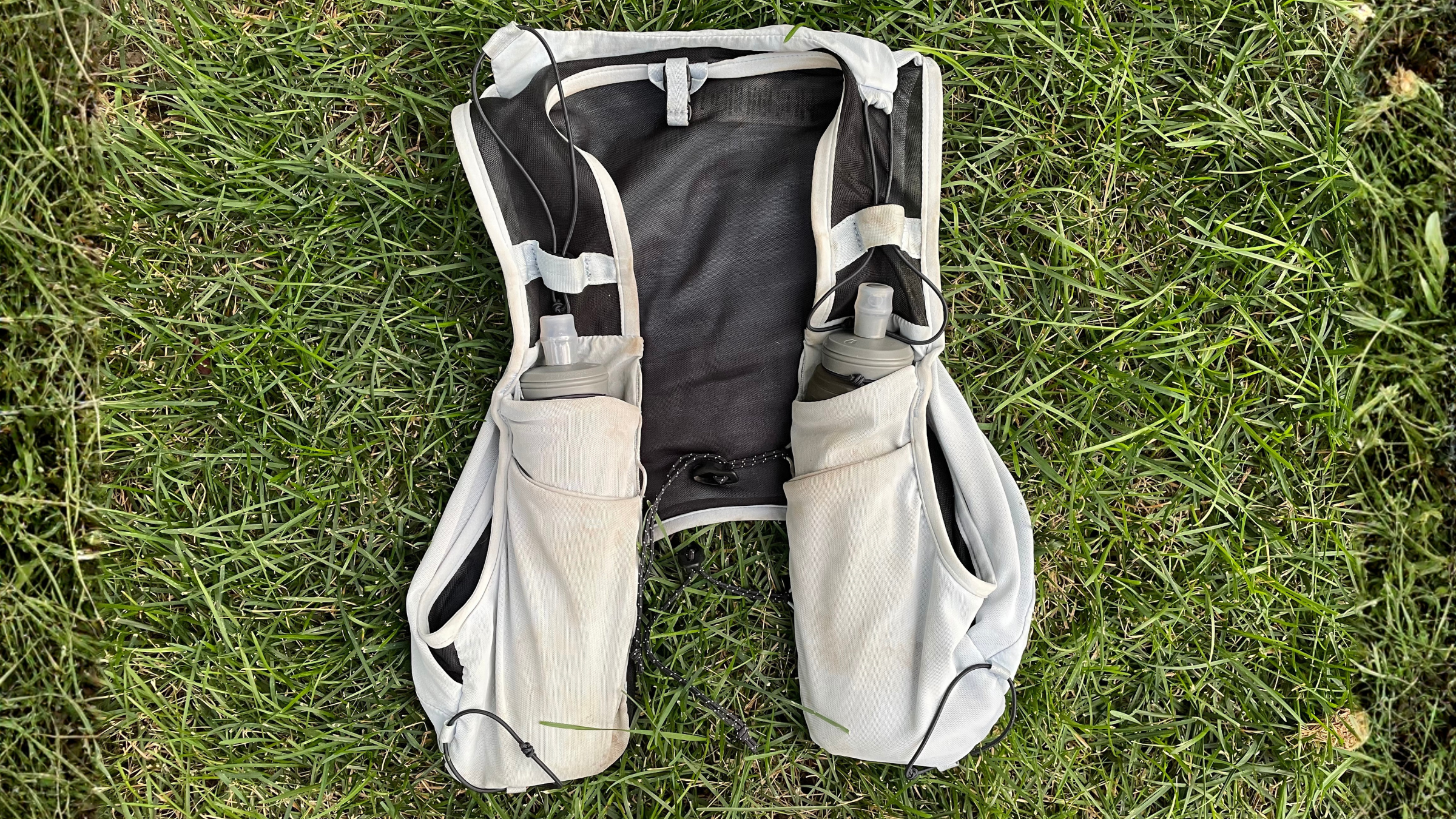
My preconception was that hydration vests would crush waistbelts in this category. I was wrong. I compared a hydration vest I use often, the Patagonia Slope Runner Vest, to the Osprey Duro Dyna Pro Belt.
The Patagonia Slope Runner Vest carries two 500mL soft flasks—one in each shoulder strap. It carries fuel and items like lip balm and my phone in the shoulder pockets. On the backside is a small zippered pocket that usually holds my first aid kit, gloves, and a beanie. And then there’s a slide-through pocket that’s great for jackets.
Before I pulled on the Osprey Duro Dyna Pro Belt for a 7-mile mountain run in the rain, I thought I’d be sacrificing capacity. Instead, I shoved one 500mL soft flask in the largest, open sleeve that sits closest to the body. (It can carry two.) I stashed my phone in a smaller, stretchy and secure pocket. I then stored away fuel, then my lip balm and dog poop bags in various pockets, a mix of drop-in, zippered, and pass-through. I rolled up a layer and shoved it into the bungee system and cinched it down tight. And you know what? The little waistpack carried all of that comfortably.
Winner: Tie
Gear Accessibility
Aside from accessibility to fluids, accessing gear from the waistpack and from the hydration vest is almost equal. It took me some futzing to get things out of the waistpack, but I think that will improve with time—I’ll get used to it. However, since you can generally get a visual on what you’re trying to access out of the front shoulder straps of a hydration vest, it’s easier to grab what you need while moving.
Also, I occasionally have a running partner access something out of the top zippered pocket on the backside of my hydration vest. I’m not having them access anything on my waistbelt (awkward!). But then again, maybe I don’t need them to.
Both the Patagonia Slope Runner Vest and the Osprey Duro Dyna Pro Belt have pass-through pockets that make grabbing a jacket (or other layer) simple while running. And both have cording that comfortably carries collapsed trekking poles, and accessing them mid-run is almost as easy with both—though slightly easier on the vest as they’re carried on the frontside of the body.
Winner: Almost a tie…but, hydration vests
Comfort
The outcome of this metric surprised me. I ran uphill and down, on smooth trails and rocky, technical singletrack with river crossings and whatnot, to test the bounce of the waistpacks. None of the hydration packs I run with move much. But neither did the waistpacks.
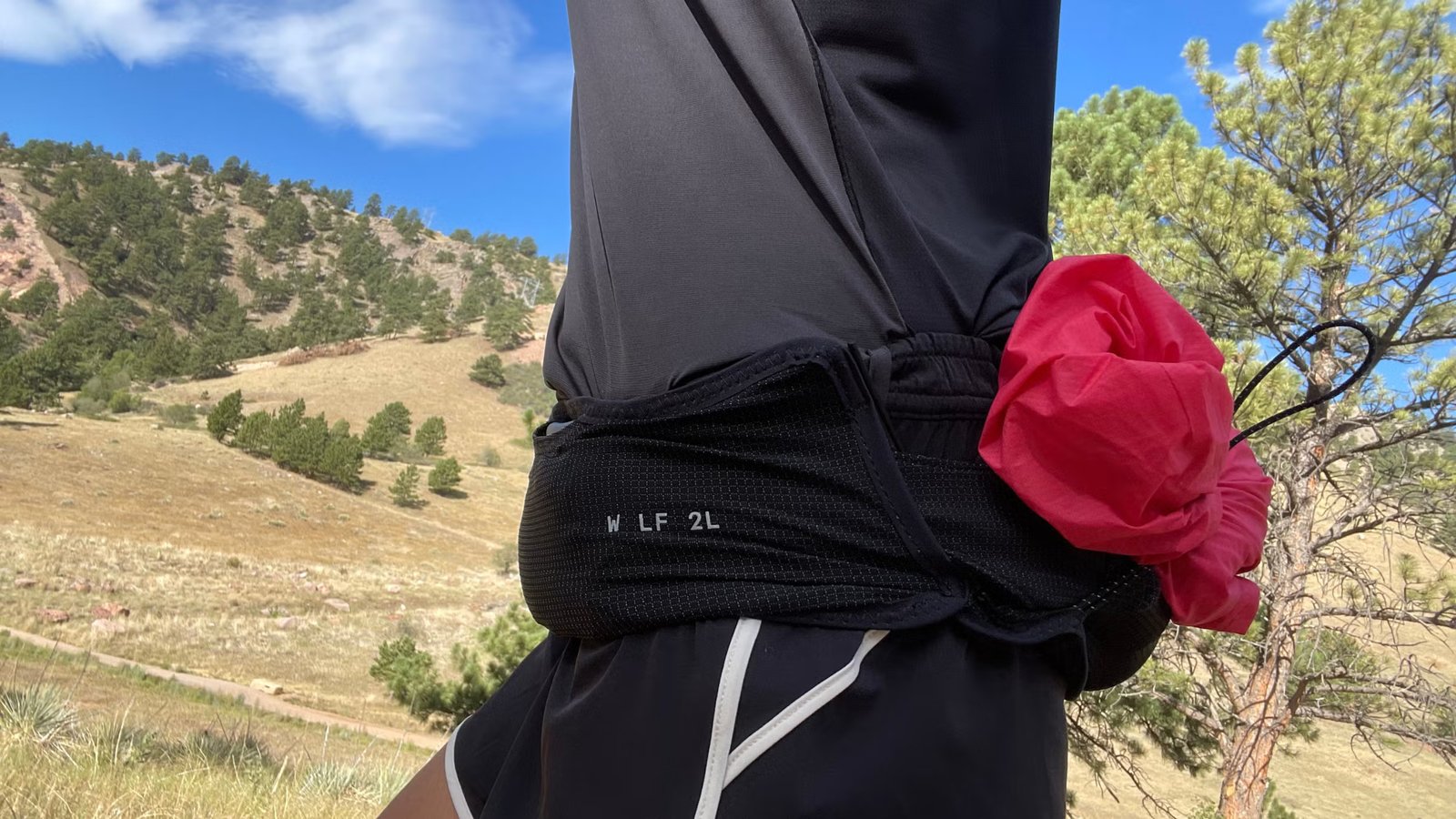
Both the Osprey Dyna Pro Belt and the Raide LF 2L sat securely—and comfortably—around my midsection. I wear them covering my hipbones and waist, and found them both extremely comfortable, their soft, breathable airmesh sitting smoothly against my skin. (The corded closure of the Osprey allows added breathability, easy in-and-out, and comfort.) Even when fully loaded with gear and fluids, they didn’t bounce. Not one bit. And I loved not having anything over my tank or tee while running. I breathed easier without a vest on, and stayed cooler.
Winner: Waistbelts
Freedom
Being able to pull on and take off layers is a lot easier when wearing a waistbelt than it is when wearing a hydration vest. With a vest, I have to undo the front straps, take off the vest, put on or take off a layer, etc. With a waistbelt, it’s easy on-off, and on again. I greatly appreciated the freedom to layer and unlayer while on a run where it rained off and on.
Not wearing a vest also freed up my shoulders and back. It felt downright liberating to not wear a pack, but still have fluids and gear.
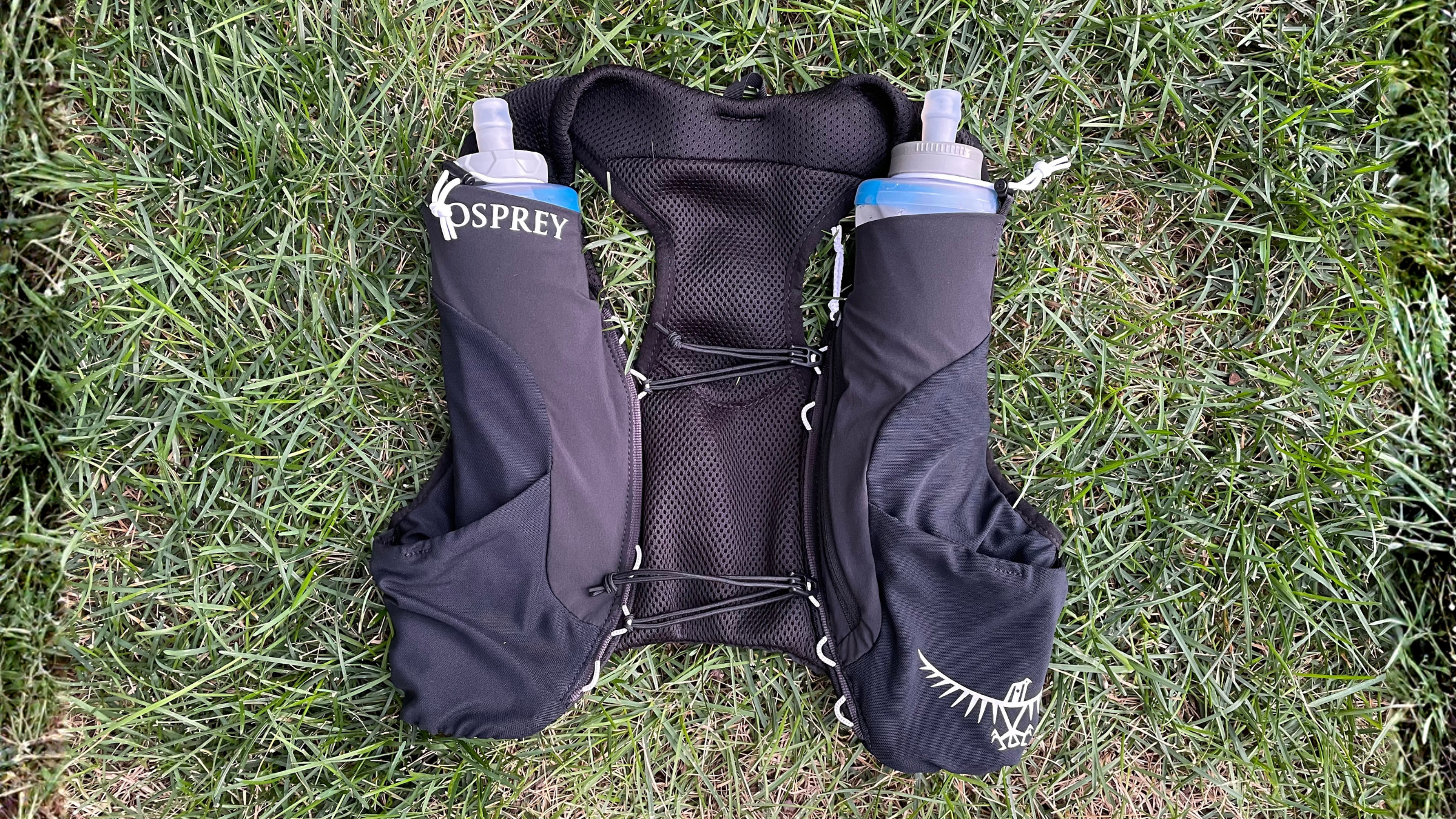
On one test run, I wore both the Osprey Dyna LT pack and the Raide LF 2L waistbelt. While both were perfectly comfortable, bouncing minimally while carrying my essentials, I ended up taking off the pack and shoving it inside the waistbelt for the second half of the run. I just felt more free without the pack on my shoulders, and still had what I needed—and more—around my waist.
Winner: Waistbelts
What We Tested for This Article