

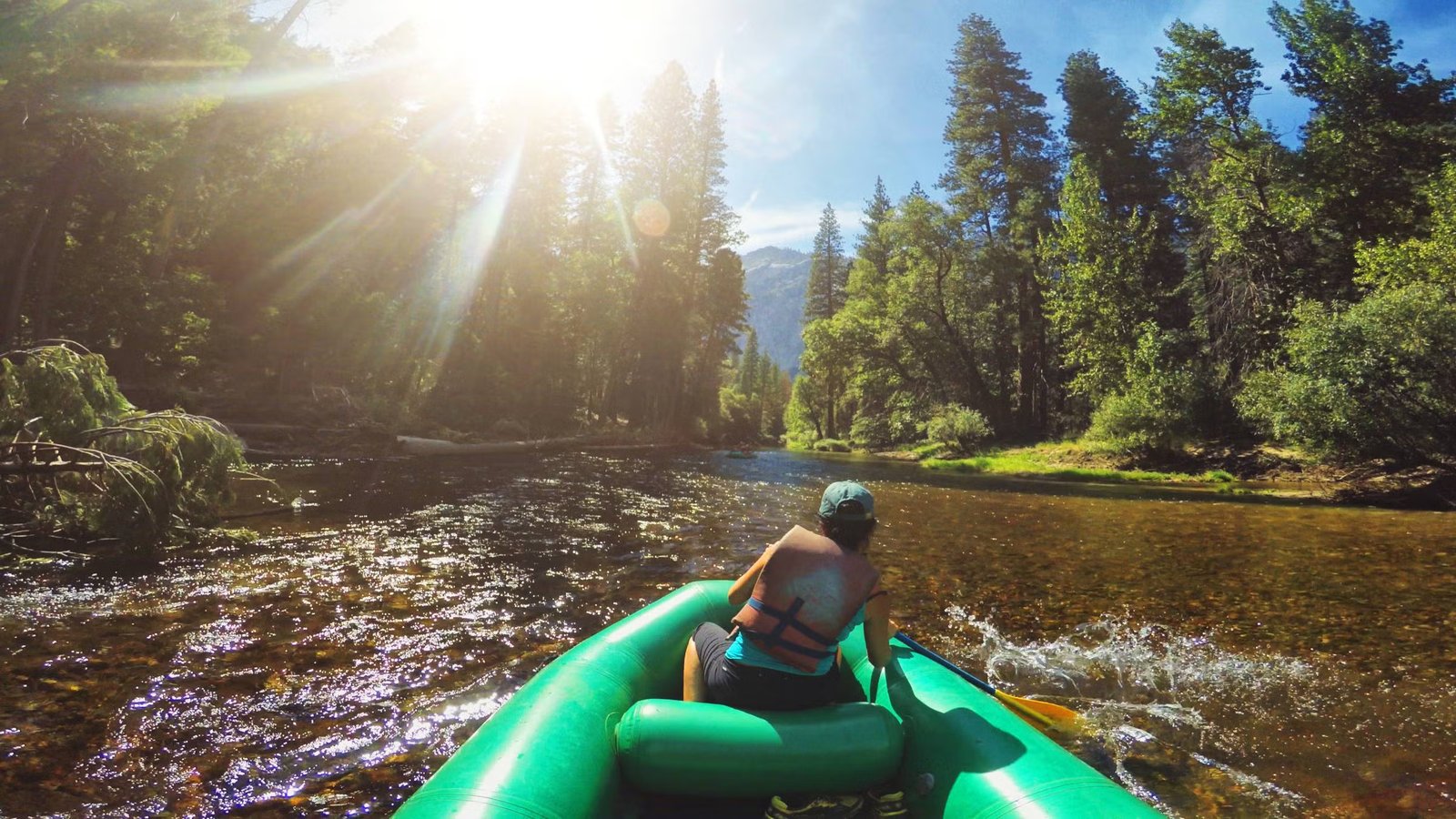
Published August 23, 2026 11:15AM
August is more than halfway over, which means fall is rapidly approaching. I love autumn, but I’m not ready to give up on summer just yet. There’s still time for more warm-weather adventures, so I’ve gathered a list of water-based activities inside our national parks that would make for the perfect punctuation point for your summer. There’s something for every type of traveler in this article, from mellow rafting to swimming holes to backcountry lakes. The key ingredient is water—and getting into it before summer ends.
Read on and enjoy summer’s last gasp before we pull the flannels out of the closet.
Assateague Island National Seashore, Virginia and Maryland
There are plenty of beaches to choose from on both coasts, but Assateague Island National Seashore gives you the chance to spread out. This 37-mile barrier island spreads across the border of Maryland and Virginia and is famous for its wild horses that roam the beach, dunes and interior grassland. But you’re here for the 12 miles of pristine beaches that you can explore in your 4WD vehicle on the Maryland side of the park. You need an OSV permit ($110 for an annual permit), and the Park Service only allows 145 vehicles in the OSV zone per day. That means you need to plan ahead, but it also means you’ll be able to find a stretch of beach all to yourself. Bring a longboard. The waves aren’t huge on Assateague, but there are consistent beach breaks to be found throughout the OSV zone, and you won’t have to worry about sharing your wave with others. And watching wild horses roam the dunes while you sit on your board just beyond the break might be the highlight of your summer.
Side Adventure: Paddle the Bay
The Atlantic Ocean is just one side of this barrier island. For a completely different perspective, launch a boat at Old Ferry Landing and you can cruise through narrow channels that have formed through the marshy grasslands before branching out in the open waters of the Sinepuxent Bay. Naturally, you’re watching for horses in the dunes and grasslands, but don’t sleep on what’s happening beneath your boat. The water in the bay can be clear and you can see stingrays gliding just below the surface. Assateague Outfitters has kayak and SUP rentals (starting at $30) and offers guided tours.
Lake Crescent, Olympic National Park, Washington
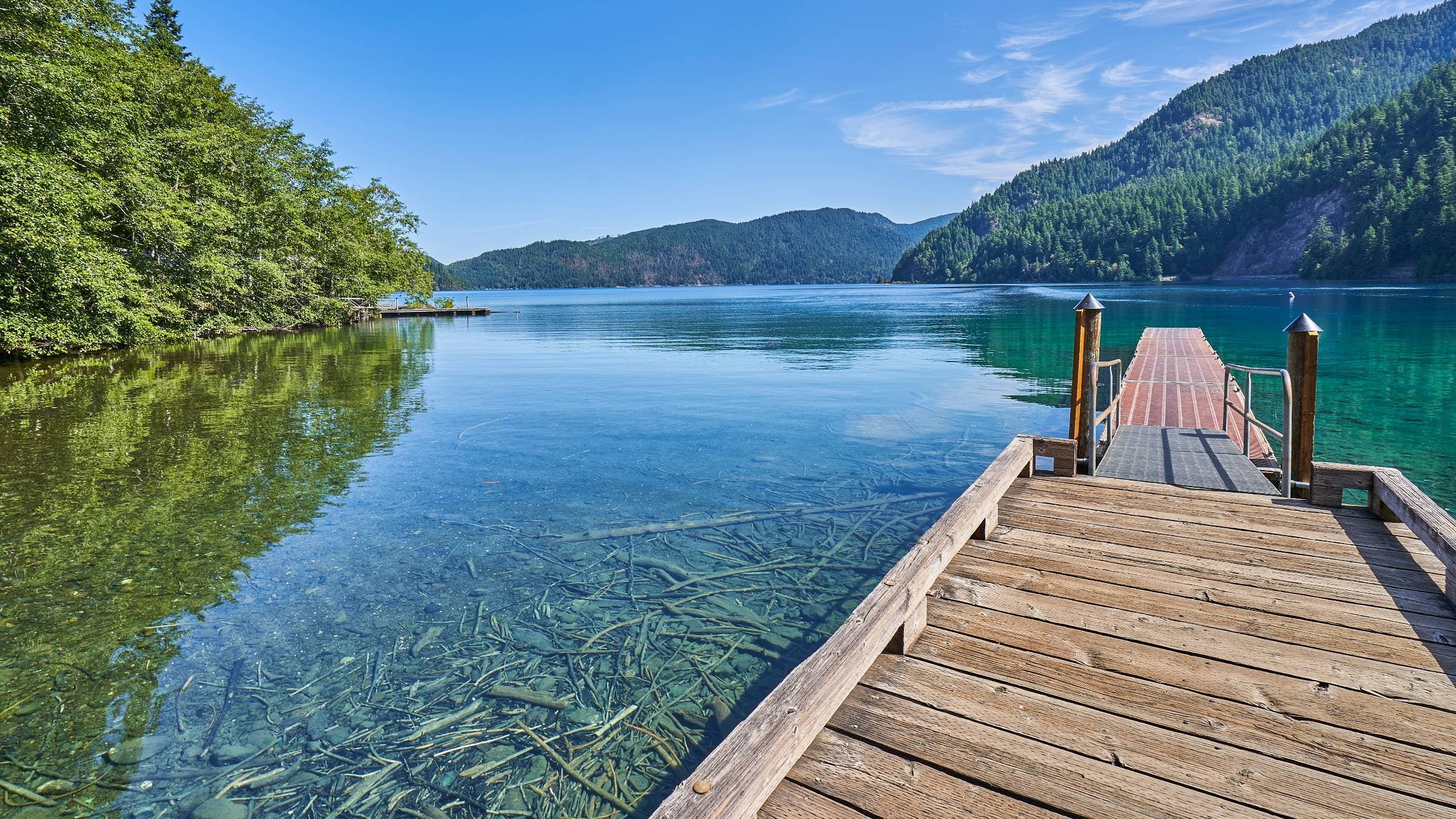
At 12 miles long, and more than 600 feet deep, Lake Crescent is the biggest lake in Olympic National Park. It’s a frontcountry lake, so access is straightforward with boat launches on the east and west side of the lake and a handful of beaches and picnic areas scattered around the shore. The lake was formed over thousands of years as the ice from a glacier retreated, leaving a deep valley in its wake, which was filled by rainwater over the centuries. Today, mountains rise from the edge of the water, which is incredibly clear thanks to the lack of nitrogen, which limits the growth of algae. In some spots, you can see 60 feet down. Exploring the lake by boat is the move here. Motorized boats are allowed, but they have a speed limit of 5 mph, so you don’t have to worry too much about the traffic or wakes. Show up early in the morning before the wind kicks up and you’ll have a peaceful paddle. Rent a kayak (from $25) from Log Cabin Resort and it’s a short paddle to the Devil’s Punchbowl, a rocky alcove where an iron bridge crosses a deep, aqua-blue pool enticing visitors to take a plunge from the railing of the bridge.
Side Adventure: Ride the Spruce Railroad Trail
Bring a bike and pedal the eight-mile out and back Spruce Railroad Trail, a paved path that follows the northern edge of the lake. You’ll pass through two tunnels and cross the wooden bridge at the Devil’s Punchbowl along the way.
Enderts Beach, Redwoods National Park, California
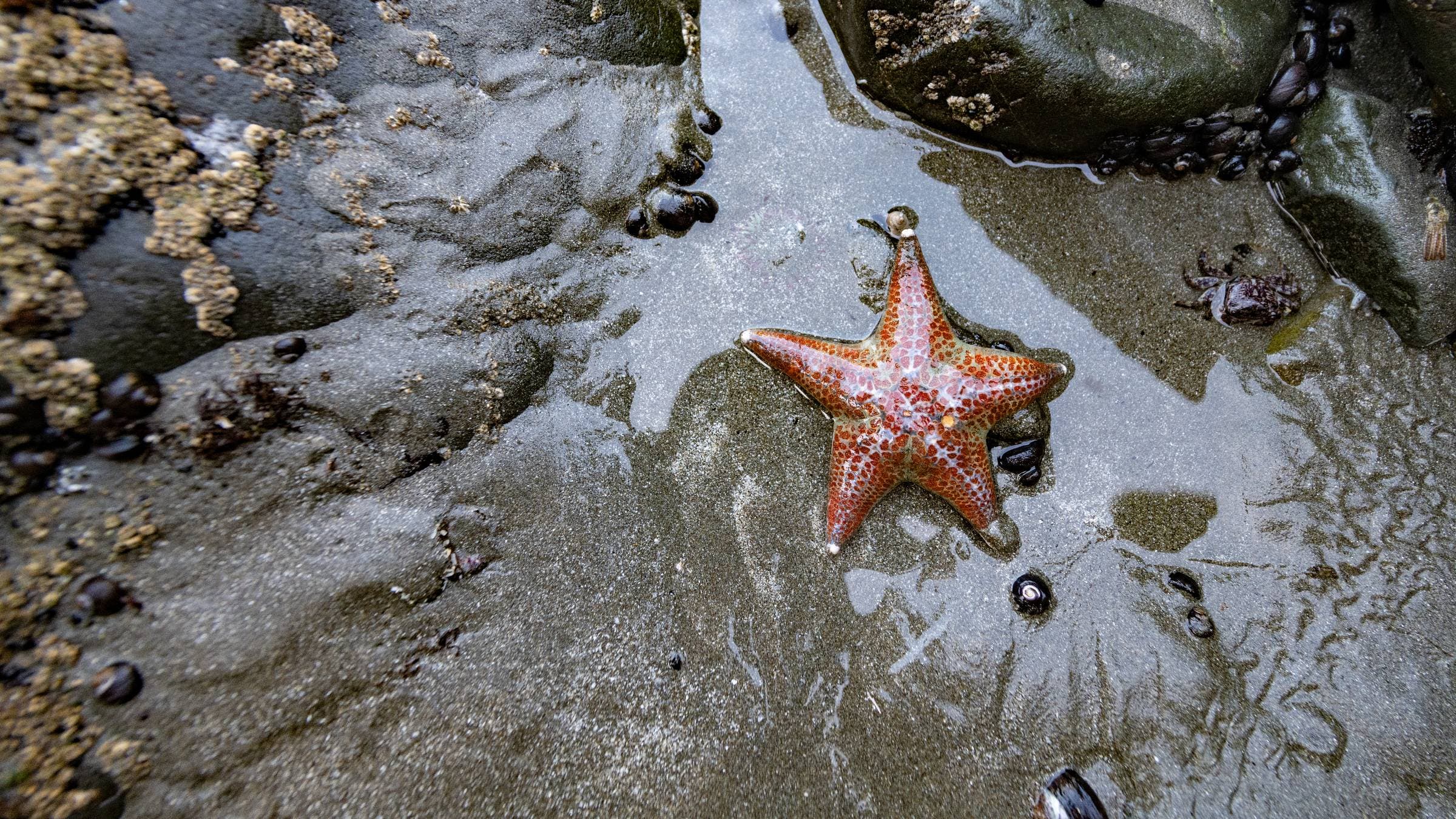
Redwoods National Park is actually a collection of state and national park units along the coast of Northern California that preserve some of the finest forests, rivers and beaches in the state. One of the most picturesque beaches is Enderts, a remote and rugged crescent of sand that’s tucked into a cliffside and only accessible by a half-mile hike. You’ll get views of the coast below at the beginning of the hike before entering the forest and dropping elevation to the beach. Rocks, big and little, punctuate the entire expanse of sand at Enderts, which is famous for its tidepools. The current can be aggressive, so it’s not necessarily a swimming beach, but if you time your visit for low tide, you can spend your time perusing the various pools that collect sea urchins and starfish. Or, if you’re a highly experienced surfer, show up at mid-tide for a consistent break over a reef and sand bottom. It’s adventurous surfing full of riptides and boulder obstacles, so no beginners, please.
Side Adventure: Paddle the Smith River
The Wild and Scenic Smith River is the largest free-flowing river system in California (no dams) and a particularly beautiful stretch carves through the northern section of Redwood National Park. It’s mild water, with the occasional Class I-II rapid, making it perfect “ducky” territory. Redwood Rides offers rentals and guided trips.
Deep Creek, Great Smoky Mountains National Park
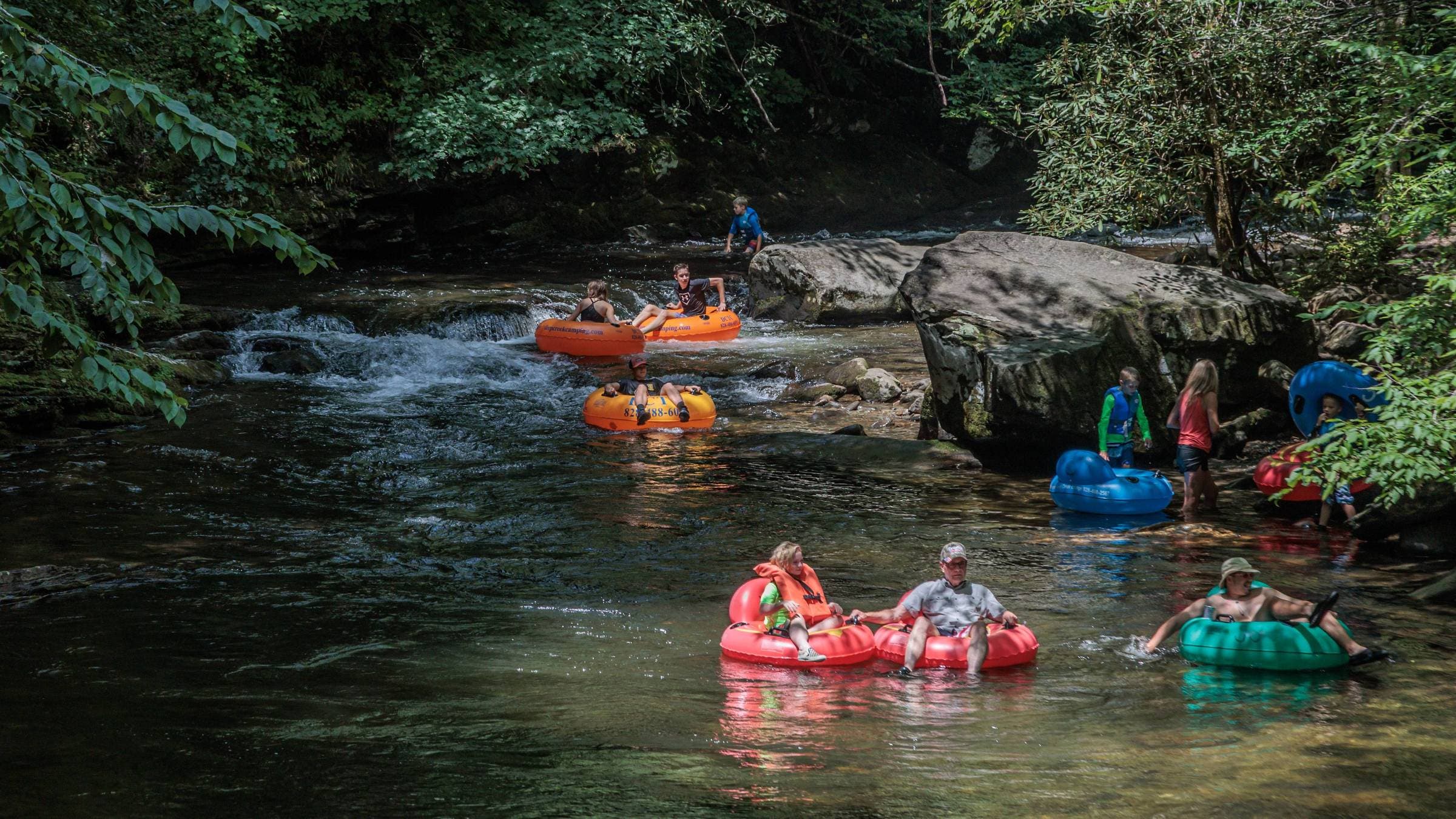
When I mention the word “tubing” you probably think of a relaxing float through a meandering river. Maybe while sipping on a cold beverage. Deep Creek, which sits on the southern boundary of Great Smoky Mountains National Park is not that kind of experience. It’s a whitewater adventure packed with fun, Class II drops and wave trains that are guaranteed to get you soaked. But that’s the point. It’s August in the south, and this is the best way to escape the heat. Bring your own tube or rent one from one of the companies at the entrance to the park. Either way, park at the Deep Creek Trailhead and hike upstream on the Deep Creek Trail for one mile until you reach the confluence with Indian Creek. There are good spots to “pull over” and take a swim during that mile-long tubing stretch, too.
Side Adventure: Hike the Waterfall Loop
You can see three waterfalls on the 2.4-mile Deep Creek Waterfalls Loop, which combines several short trails into one, seamless adventure. The hiking is easy, but all three falls are stunning as they each tumble over sheer granite cliffs inside the Smokies’ lush forest canopy.
Flathead River, Glacier National Park
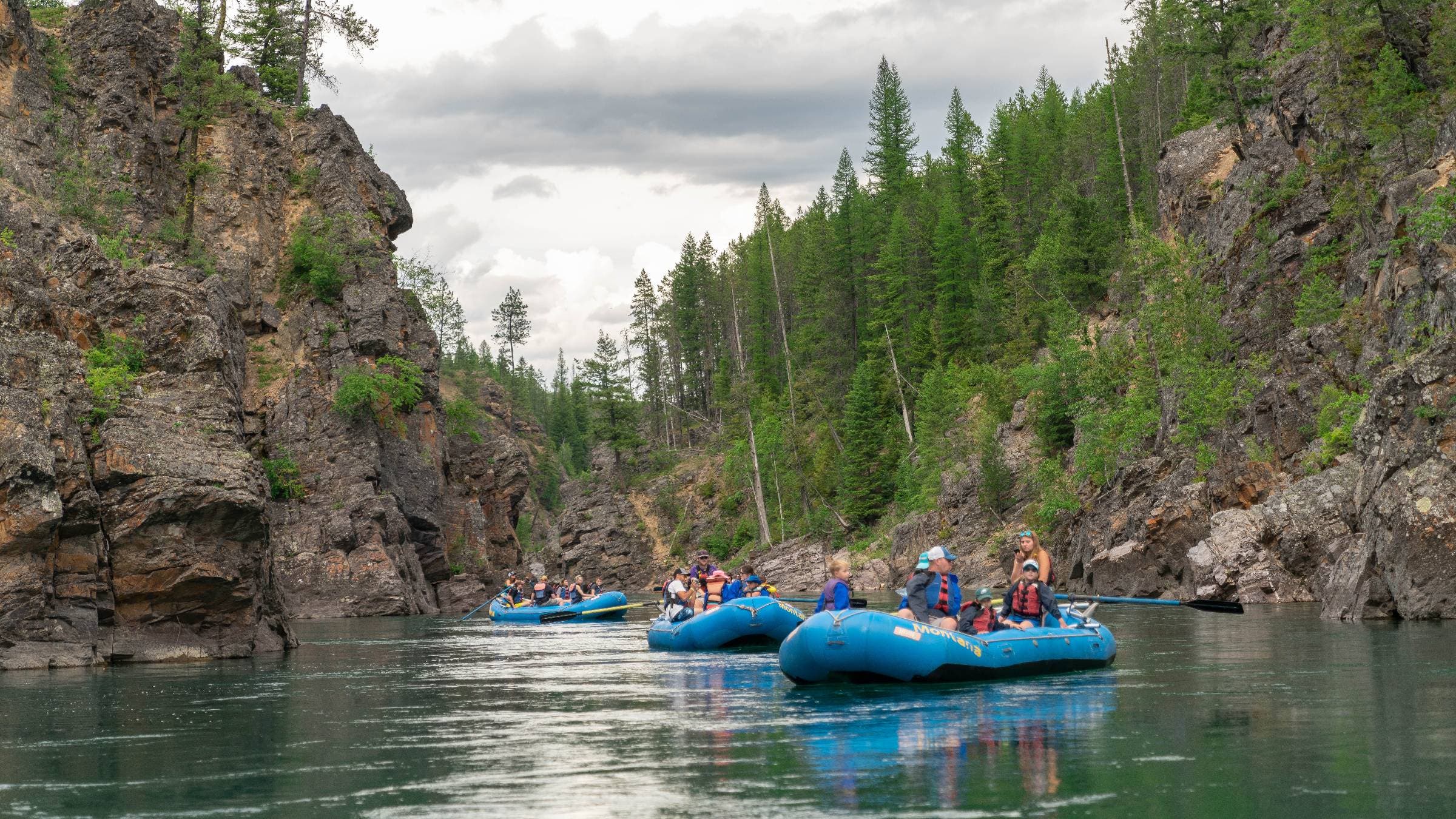
Glacier National Park is best known for its glaciers, but don’t sleep on the scenic rivers that flow through this national park’s borders. The Flathead, in particular, is the ideal summer escape offering mellow water where you can spend most of your time watching for wildlife instead of navigating rapids. The Middle Fork of the Flathead River has been designated Wild and Scenic thanks to its pristine qualities, and the stretch south of West Glacier forms the southern order of the park. It’s a three-hour float through five miles of water with big views into the park. You’ll also find rocky beaches that make for perfect swim breaks. Rafting season is dictated by snowmelt and typically runs from late May into October, but August is prime as the air temps are at their peak. Glacier Guides offers trips where the guides do all the paddling (from $84 per person).
Side Adventure: Hike to Avalanche Lake
This six-mile round trip hike passes through old-growth forest as it climbs to Avalanche Lake, a backcountry pool that sits at the base of towering, granite cliffs. Depending on the winter’s snowmelt, you’ll also see a handful of waterfalls tumbling down the face of the rocky backdrop. The water is cold, so taking a dip is totally up to you.
Cathedral Lakes, Yosemite National Park
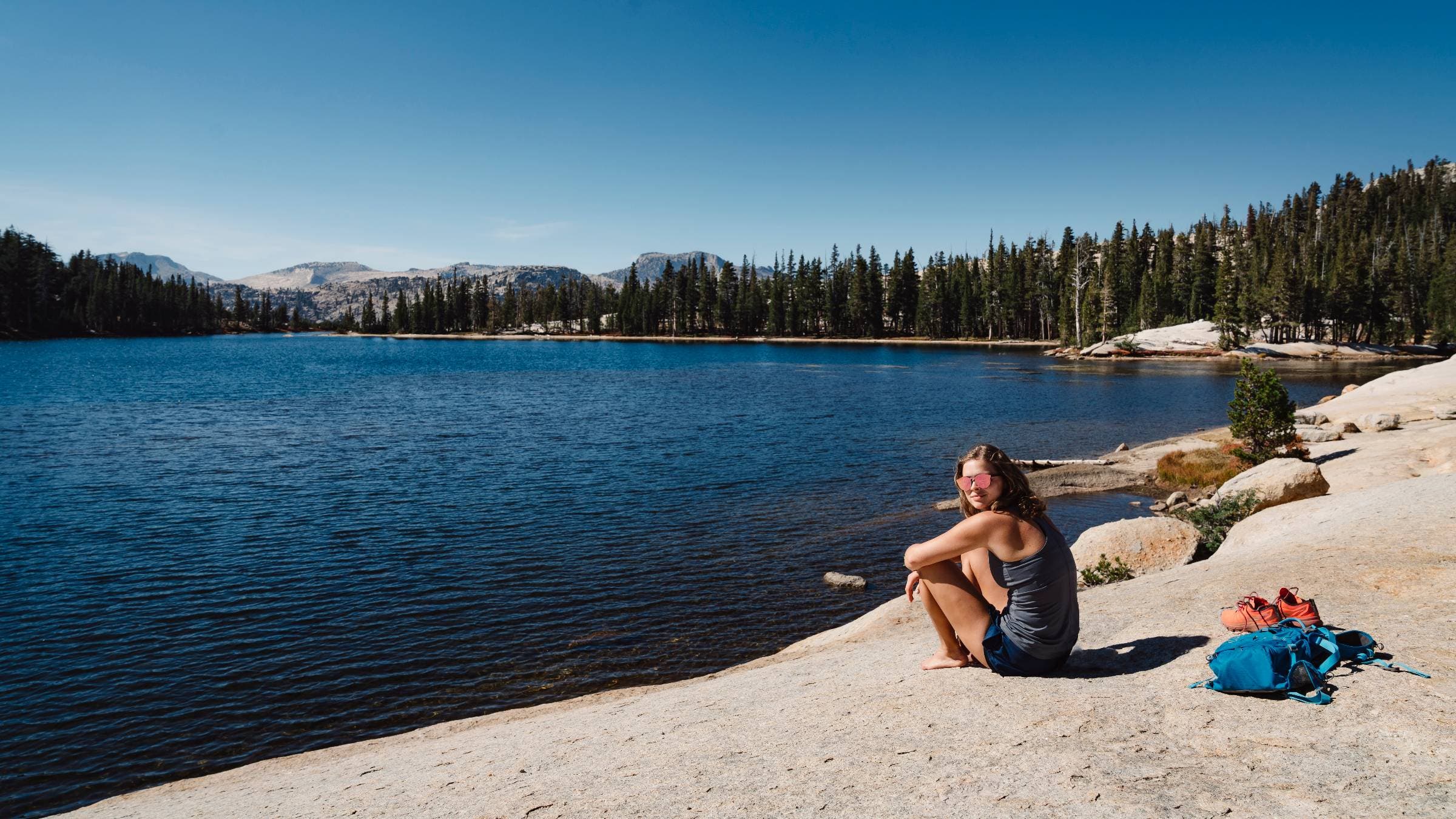
Think Yosemite National Park is all about the Valley? Think again. This duo of backcountry lakes are gorgeous as they sit at the base of 10,911-foot Cathedral Peak with its distinctive granite spires looming overhead. Start at the Tuolumne Meadows Visitor Center and hike a four-mile section of the John Muir Trail to reach the lakes. You’ll find small, rocky beaches on Upper Cathedral, where you can spread a towel and venture into the clear water. From the lakes, you’ll have views of Cathedral Peak and some smaller peaks within the Cathedral Range. August is prime season, as the trailhead doesn’t open until the snow melts and closes again once the snow starts to gather in October. But remember that these lakes are frozen until the middle of summer, so the water is going to be frigid. Consider this a cold plunge opportunity.
Side Adventure: Boulder Upper Cathedral Lake
Just hiking to and from the Cathedral Lakes is a full-day adventure, but if you’re into climbing, bring your shoes and a crash pad, as there are a handful of problems to be found on the granite ledges along the south side of Upper Cathedral Lake. Even if you’re not into bouldering, scrambling around the low-angle expanses of granite along the southern shore could entertain you if you have the energy.
Graham Averill is Outside magazine’s national parks columnist. He’s looking forward to fall, but he’s not willing to give up on summer quite yet, so you’ll find him paddleboarding the French Broad and swimming in lakes near his home in Asheville, N.C. for at least the next month.
