

Updated August 27, 2026 03:13PM
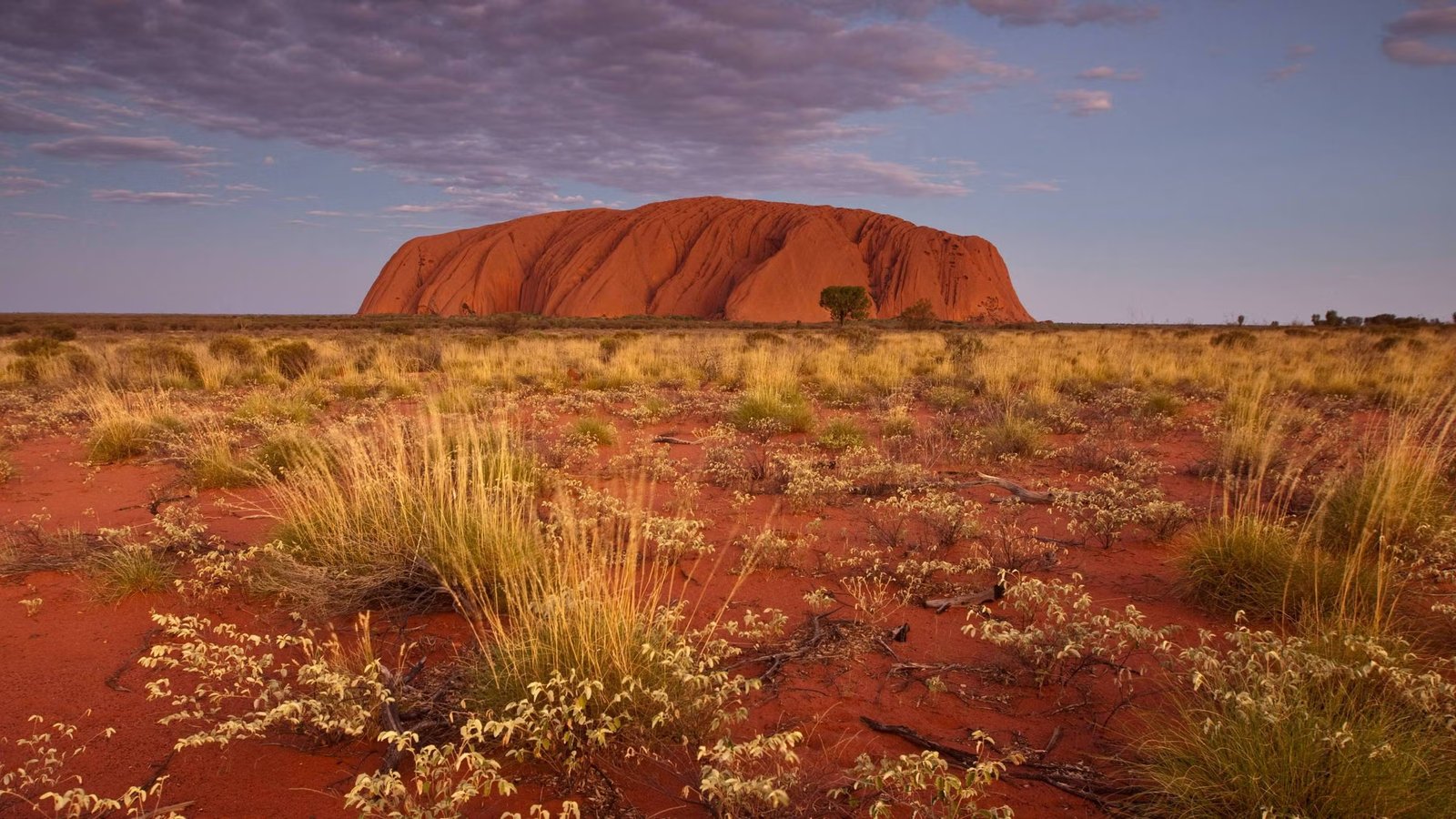
Before sunrise, the Outback seems to exist beneath two skies. A cobalt band—Earth’s shadow—hangs low over the horizon, while above it a seam of dusty pink bleeds into the darkness. The effect lingers for half an hour, sharpened by dry air, endless horizon, and an almost complete absence of artificial light. Then, dawn detonates across the plains. Low clouds flare neon orange. Songbirds erupt from spinifex. And Uluru, the world’s largest freestanding monolith, glows as if lit from within.
Visitors haven’t historically come to Australia’s “Red Centre” (a huge Outback region in the Northern Territory, home to many of the nation’s sacred Aboriginal sites) to ruminate on Uluru, nor its significance to the local Anangu community. For decades, their goal was simple: to stand 1,142 feet atop what the area’s Traditional Owners view as a living landscape—a place held sacred to the continent’s nearly 1 million Aboriginal and Torres Strait Islander people, who belong to about 500 distinct groups.
Then, in 2019, the Anangu finally put a stop to what they saw as a culturally insensitive climbing route. Many Australians treated this as the end of an era, but Brett Godfrey, co-owner of Tasmanian Walking Company, saw it as the beginning of something else.
“Whitefella would come here to conquer the rock,” he told me over coffee at the Ayers Rock Resort. “I thought, ‘There must be a way that people could connect with the rock instead.’” That idea inspired a new, nearly 40-mile trail linking Uluru with the nearby bornhardts (bald domical hills) of Kata Tjuta. A 13-person Anangu steering committee played a pivotal role in its creation, ensuring the trail aligned with Aboriginal values, cultural protocols, and long-term economic goals.
Building a sustainable trail near Uluru required navigating both ecological sensitivities and the cultural responsibilities of the Anangu Traditional Owners—all in a harsh desert-like environment. Godfrey first approached the Anangu in 2015, thinking he could have a trail operational within three years. In the end, it took a decade—and about three times the original budget—to get all stakeholders onboard and gain the necessary permissions to build within a national park.
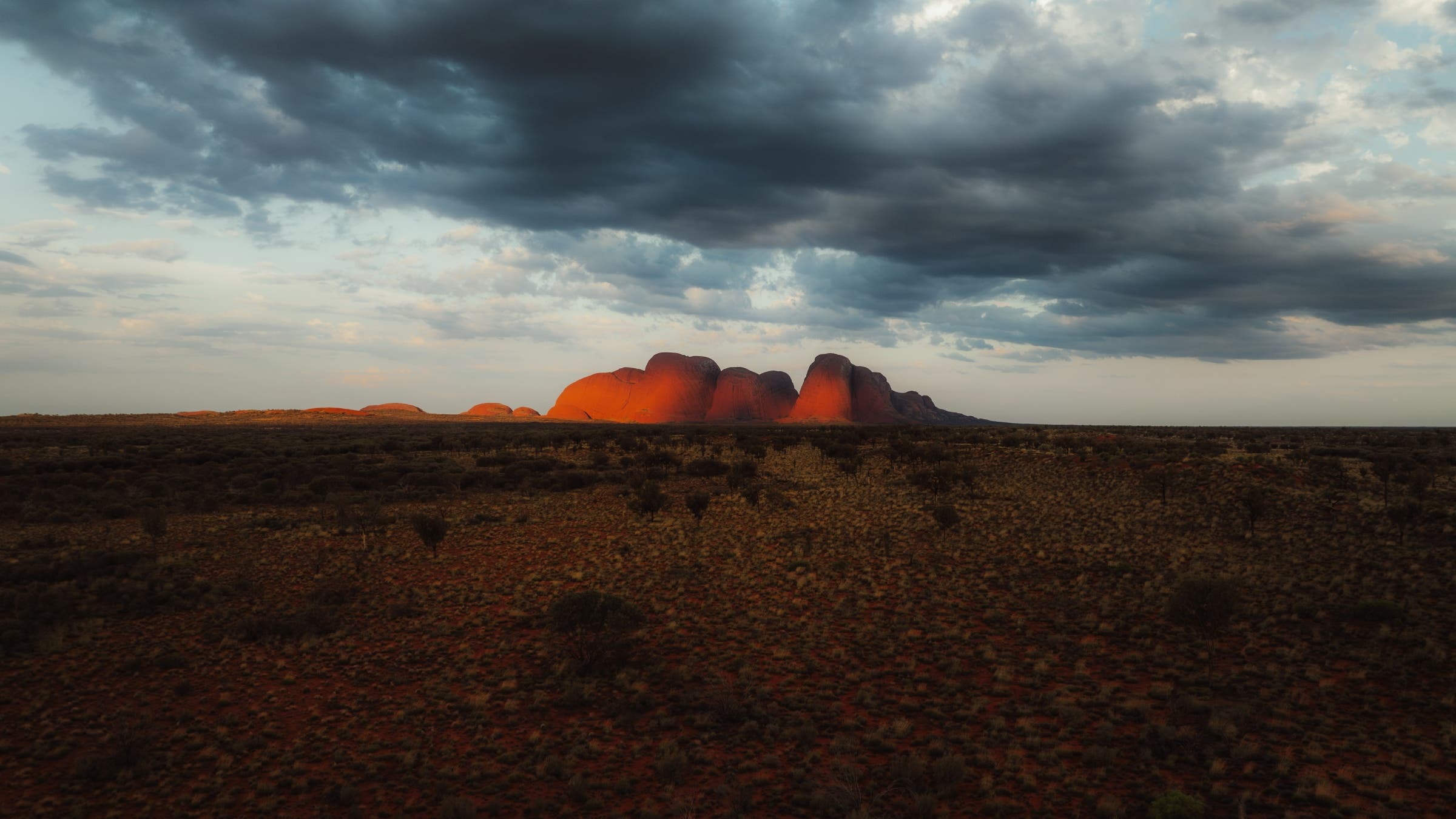
The Uluru-Kata Tjuta Board of Management, Parks Australia, and Central Land Council all played key roles, as did 13 Traditional Owners, who mapped out 24 miles of new trails that avoid culturally sensitive areas. Combined with existing trails around the domes of Kata Tjuta and the base of Uluru, that adds up to the nearly 40-mile Uluru Kakararra Trail. Every step of the process was slow and deliberate, involving extensive community input; even the name, Kakararra—which means “going east” in the western desert languages of Pitjantjatjara, Yankunytjatjara, and Ngaanyatjarra—wasn’t fully decided by local Anangu communities until a few days before the grand opening.
The $18 million project is the newest addition to the Great Walks of Australia, a collection of 15 iconic multi-day adventures first launched in 2013 and developed in partnership with Tourism Australia as part of its Signature Experiences of Australia program. More notably: it’s a lavish act of reconciliation. This April, I flew three hours west of Sydney to a dusty airstrip in Yulara to join the inaugural outing.
“Most Australians don’t even know what’s out here,” said Godfrey as I awaited a bus to the trailhead in Kata Tjuta. “Eighty-seven percent of the population lives within 30 minutes of a beach, so they don’t truly connect with the spiritual heart of our country.”
In 2015, after a decade-long stint as the founding CEO of Virgin Australia—and now moonlighting as a slow travel evangelist—Godfrey embarked on a 93-mile bushwalk (the Australian term for wild hiking). He trekked under the harsh Outback sun from the South Australian border to Uluru following Anangu guides, fueling up on kangaroo tails and learning about Tjukurpa, the basis of Aboriginal knowledge. “It was one of my life’s great experiences,” said Godfrey, who is white and grew up in Melbourne, and it set in motion an 11-year effort to open up the Red Centre in a more respectful way.
Steering Committee Chair Tapaya Edwards called the trail a major step away from climbing Uluru and toward a deeper, more respectful connection with Country, as Aboriginal people refer to their homelands. “This is an important place for healing the spirit,” he said in a statement announcing the new trail. “People will come here and feel the land as they walk through it. The spirit of the Dreaming will wash over them.”
Given the hefty investment (and cultural sensitivity), the route is only available to those who book on Tasmanian Walking Company’s four-night Signature Walk, which is expected to draw 2,000 high-yield travelers to the region each trekking season (late April to September). So, I set off with 14 Australian hikers, most of whom reserved two years in advance to be here.
Though I was the only American, I wasn’t meeting Uluru for the first time. In the early 2010s, I lived in Sydney and traveled frequently to the Outback. One reporting trip in 2013 brought me to Ayers Rock Resort shortly after it came under Indigenous ownership. The goal, then as now, was to boost Aboriginal employment, training, and business opportunities. Returning 13 years later, it was clear there was still a long way to go.
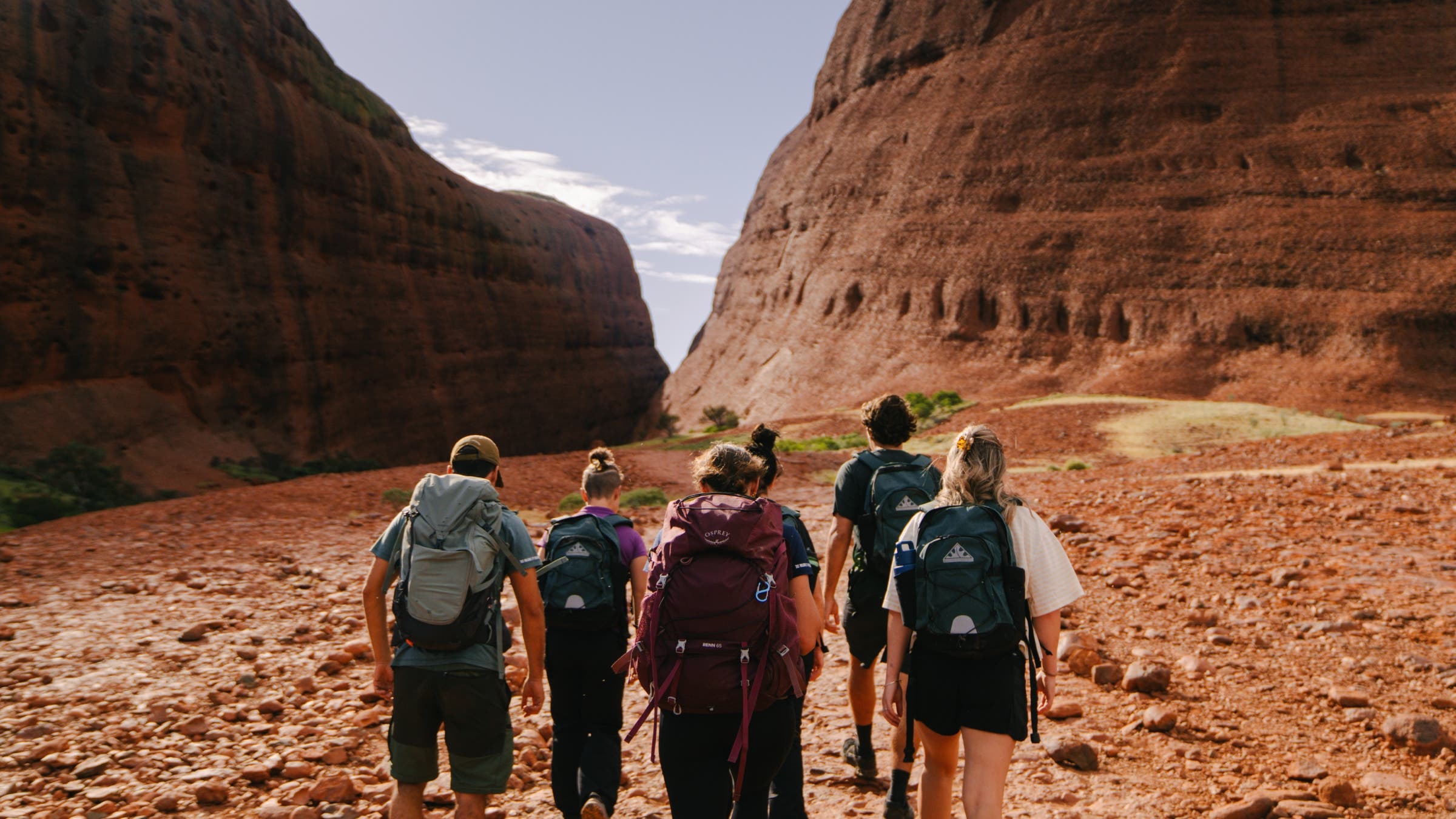
My trip in April with the Aussie hikers began on a public trail through the Valley of the Winds, a deep gully that cuts across some of Kata Tjuta’s 36 rust-red domes, which are made from a sedimentary rock called conglomerate. This entire area is a sensitive Anangu men’s site, and the Tjukurpa connected with it is considered restricted knowledge, kept private from visitors. In fact, my bush guide Joe Hammond forbade photography here, noting that the rock features were equivalent to sacred scriptures describing culturally important information, which shouldn’t be viewed out of context. Instead, I had roughly five miles to meditate on the terrain.
A diet of in-flight Mad Max films, shot in the Outback, had prepared me for an apocalyptic wasteland. Yet large swaths of the Red Centre are surprisingly green, filled with shrubby mulga trees, spindly desert oaks, and white-barked ghost gums. There are mutant-looking lizards like the thorny devil, human-sized red kangaroos, and up to a million feral camels, brought over by 19th-century cameleers. Also present: flies. So many flies! They wiggled up noses and down throats, buzzing in ears looking for moisture. Thankfully—and rather mysteriously—they entirely disappeared by sunset when we arrived at our first camp.
It’s been four decades since visitors were allowed to sleep within Uluru-Kata Tjuta National Park, which the Anangu own and lease back to the Director of National Park (who manages it through Parks Australia). So, the eight preset tents with real beds, four quick-timer showers with piping hot water, and communal dining area with chef-prepared meals felt like a lavish treat. Picking at lean kangaroo sausage that evening, which had a mildly gamy flavor, I couldn’t help but think of the humble kangaroo tails Godfrey ate on his expedition.
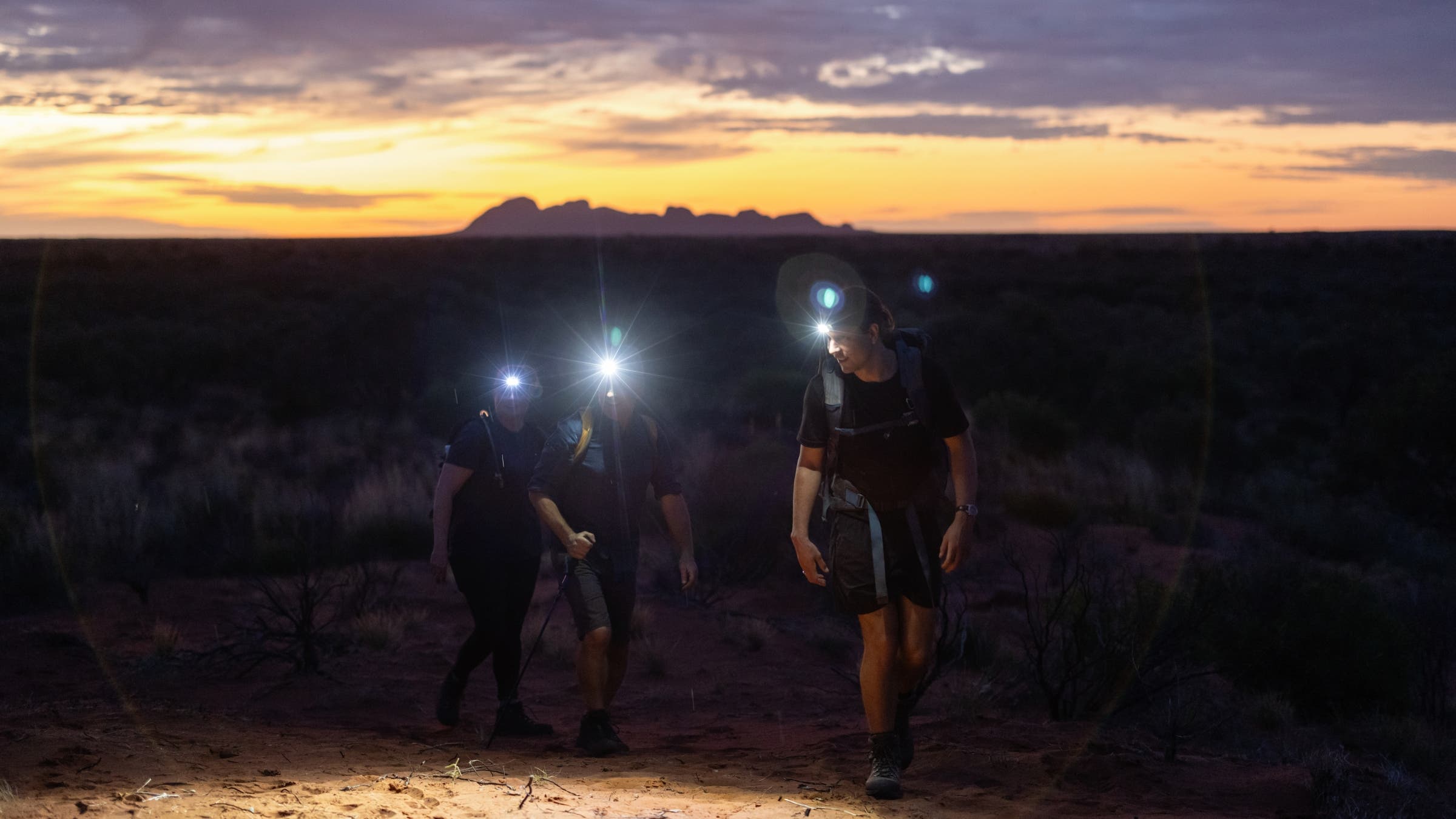
The next morning, following another villainous sunrise, I padded my boots with iron-rich silt as I clomped over red dunes, conscious that beneath my feet lay evidence of more than 30,000 years of continuous occupation. During construction of the trail, workers uncovered small quartz flakes that had been worked into flints, reminders that people have walked this landscape for millennia.
After ten miles of gently rolling tali (sandhills), I finally reached Camp 2, which had a similar safari-style setup as the night before. By the following day, Kata Tjuta receded into the distance while Uluru loomed ever larger ahead. A blustery windstorm swept across the plain as I covered another 11 miles, passing fluffy mulla mulla wildflowers and violet emu bush while skirting innumerable ant hills, which looked like tiny volcanoes.
Off in the distance, some 300 rufous hare-wallabies lived a semi-wild existence behind a chicken wire fence. Known locally as mala and woven through Tjukurpa stories, the doe-eyed marsupials survive here only because of intensive conservation; they’re otherwise extinct in the wild in mainland Australia. The culprits: habitat loss, invasive cats and foxes, but also the Australian government, which moved Aboriginal people to settlements in the 1930s, ending traditional patch burning that reduced catastrophic wildfires (and also ushering in decades of systematic oppression).
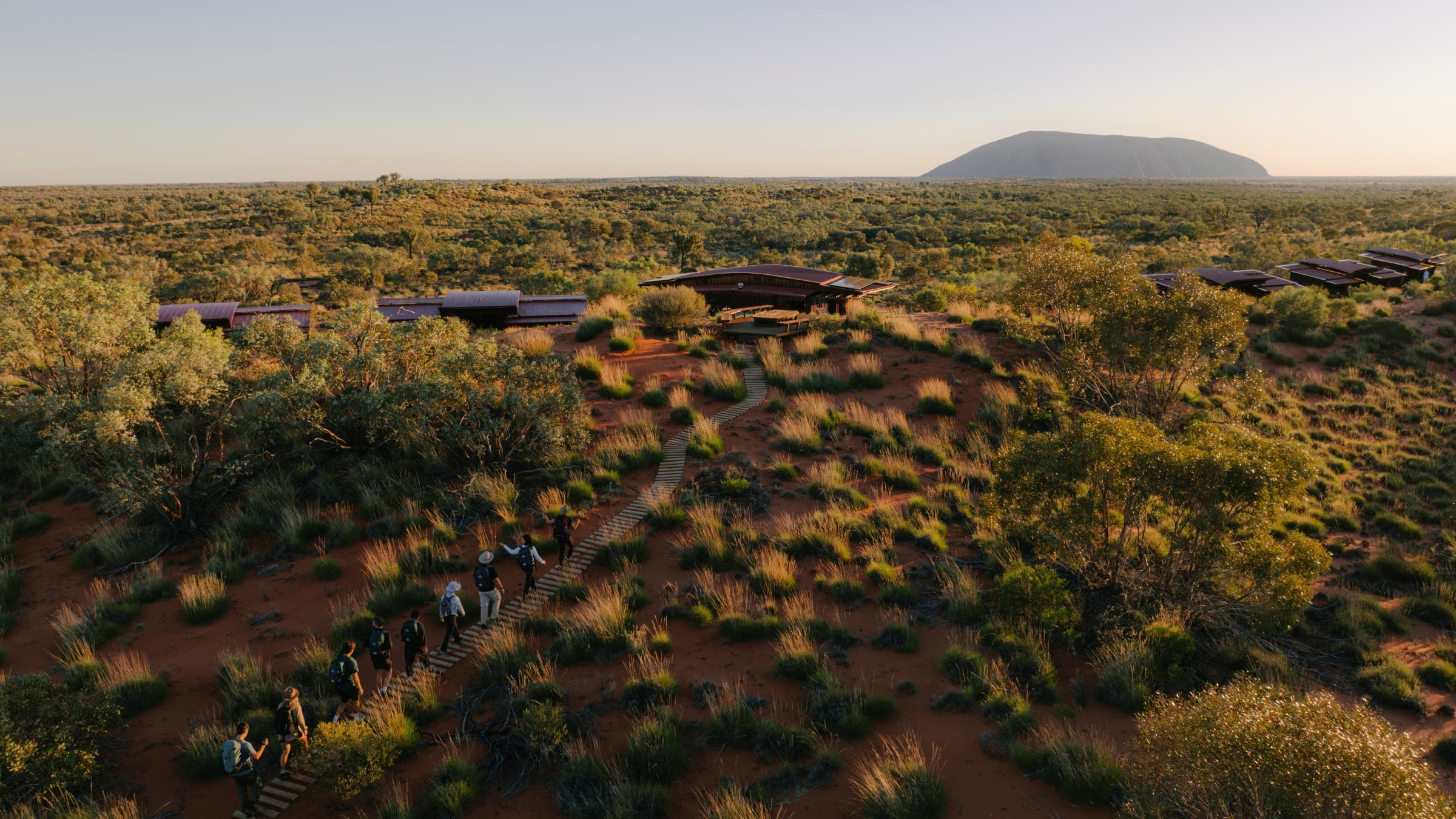
Day three finished at Tasmanian Walking Company’s solar-powered Mala Lodge, which is purpose-built for hikers and clad in weathered steel to blend in with the dunes. With no road access, the company called on Australia’s legendary bush fire pilots, who helicoptered in the 72 prefabricated modules needed to Tetris together this remote property.
Environmental requirements from Parks Australia dictated its unique “floating” design, with 16 stilted rooms overlooking either Uluru or the distant Kata Tjuta. Each lies on steel pylons designed for easy removal once Tasmanian Walking Company’s long-term sublease with Parks Australia ends. Meanwhile designers sourced everything from the Yaye-brand bath soaps to the hand-woven sculptures from Aboriginal artists and artisans.
That evening, Anangu knowledge-holder Tjiangu Thomas joined us over a billowing bonfire for inma, or storytelling, where he shared about Anangu culture and spirituality. Knowledge-holders safeguard and pass on Tjukurpa, inheriting responsibility for its tenets through kinship and family obligations.
The former park ranger (born in Uluru’s service village of Mutitjulu) recalled 2019, when local newspapers made him the face of Anangu resistance. “When the climb closure happened, we were all really hopeful that alternative activities like this one were going to move forward,” he said, stoking the flames.
Designing Around the Sacred
From Hawai‘i to the Himalayas, a look at how other sacred sites have balanced access with reverence.
The Uluru Kakararra Trail is a rare model for tourism on sacred lands—though not an entirely unprecedented one. Hawai‘i’s Ala Kahakai National Historic Trail on the Big Island was an early example. The 175-mile corridor, established in 2000, preserves and interprets traditional Native Hawaiian culture and consists of five different trail types, including across lava fields and on sand.
On Vancouver Island, the 16-mile ʔapsčiik t’ašii (pronounced ups-cheek ta-shee) is a new multi-use pathway through traditional First Nations territories built to mitigate impacts to the environment, archeology, and culturally sensitive areas.
Meanwhile, Uluru isn’t the only sacred peak whose management has been shaped by spiritual values. Nepal famously hasn’t given a permit to climb Machhapuchhre since 1957 as Hindu communities associate it with the god Shiva. Instead, tourists now hike around it on the Annapurna Circuit.
And in Wyoming, the Northern Plains tribes have worked with the National Park Service on a voluntary closure each June at Devils Tower, which allows for traditional ceremonial uses.
Tasmanian Walking Company has promised a target of 33 percent Anangu employment on the route in the first ten years of business. That figure is actually higher than Ayers Rock Resort, where a quarter of the staff is Indigenous, and reflects the realities of operating in a remote area with a small local workforce and unique cultural obligations. Many Anangu have responsibilities related to ceremony, family, and caring for Country that don’t fit neatly into a conventional full-time roster, so tourism employers have to accommodate this while also ensuring they can operate the business.
Anangu community members contributed directly to the design of the campsites and trail (the latter got a last-minute alteration when one knowledge-holder grew concerned about an area he considered sacred). There’s also a direct AU$500 ($360) per-guest contribution—a portion of which goes to Parks Australia for environmental upkeep, with the remainder split between Traditional Owner payments and an Anangu business development fund. The goal is to attract visitors who stay longer and spend more, while avoiding the pitfalls of the mass tourism that once defined Uluru.
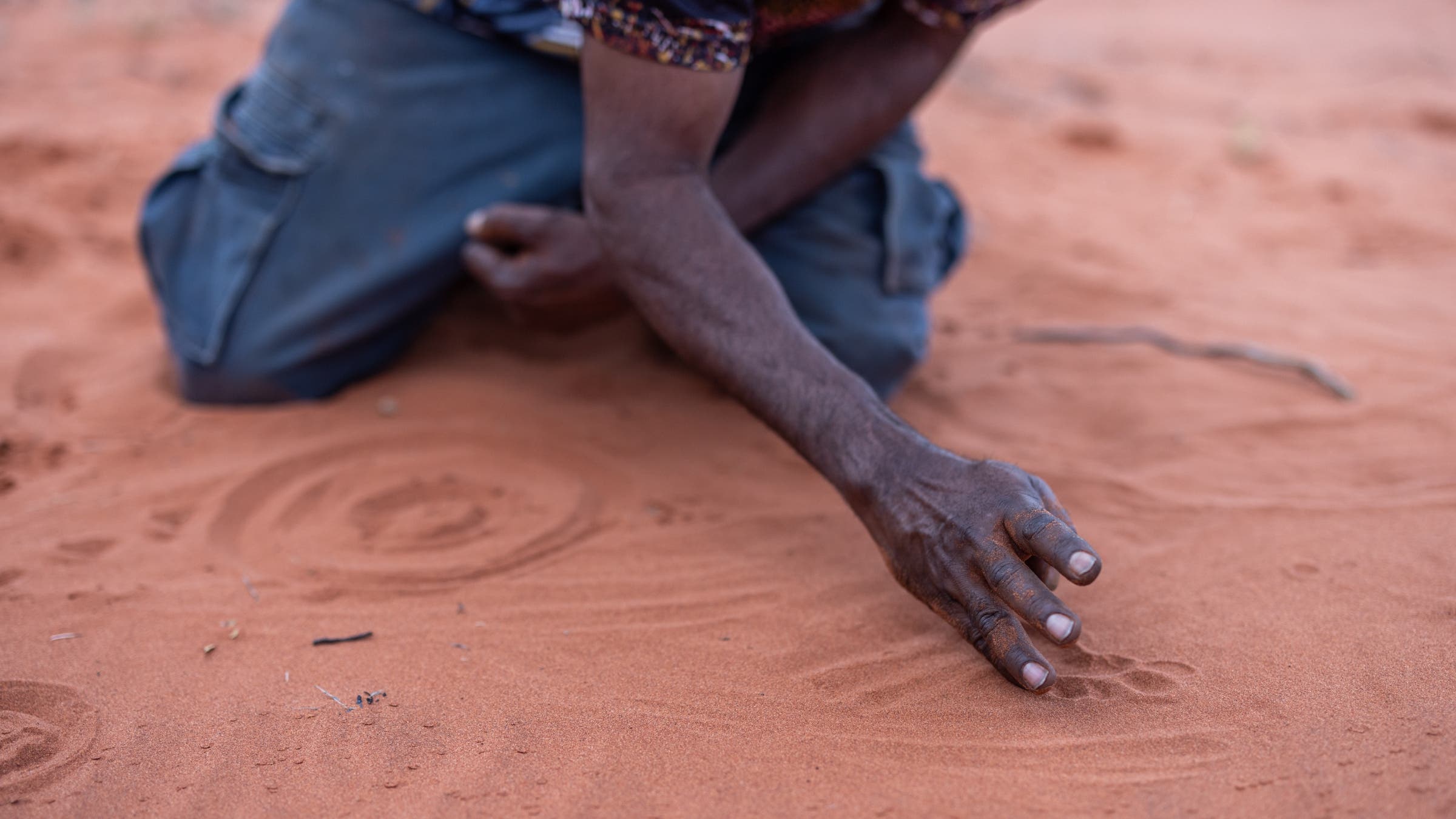
Thomas joined us for daily gatherings where he painted lines and circles in the sand to explain Tjukurpa and the parts of the Anangu cosmovision he was allowed to share. “Some of the earliest interactions out here involved researchers who documented all the sacred practices,” he said. “They took that information, published it, and it was no longer a simple conversation; it was something that was taken—and taken out of context—and it created a lot of problems.”
Knowledge-sharing these days is often confined to top-level explanations of Tjukurpa, which encompasses everything from religion and the creation period to laws and moral systems. This, the Anangu are happy to divulge. “A lot of people come here and miss out on the local stories,” Thomas said during a 14-mile walk to—and then around—Uluru my final day. “I know that when I travel, that’s what I want: I want to go somewhere, meet locals, hear their stories, and say, ‘Well, this is how they do things, and it’s a bit different to how I do things, but it’s also kind of the same.’”
As we approached Uluru, what had looked from afar like a giant dome revealed itself to be pockmarked with caves and ravines, rock art, and watering holes—all of which held deep meaning to the Anangu. Black algae stains on the arkose sandstone recalled recent storms, which turned Uluru into Niagara Falls. There was also an airstrip beneath the sacred northern face, which, along with its associated motels, closed in the early 1980s. This was the first acknowledgment of any environmental or cultural impacts at Uluru. Today, it serves as a reminder of Australia’s changing relationship with the rock: a rectangle of ruddy red slowly returning to the sage green bush.
Back at the lodge, trek complete, I shared a celebratory glass of Shiraz with fellow hiker Mary Frost, who was born to a rocket scientist in the Outback town of Woomera. “So many Australians think that the ‘empty center’ isn’t going to hold much for them,” she shared. “It makes me want to shake them and say: ‘go to the desert and see how much is actually there.’”
Frost is a psychiatrist in nearby Alice Springs. She came on this trip to get a deeper appreciation of the communities she works with. Unlike most of our fellow hikers, she’s actually been to Uluru before, been here nearly a dozen times. She saw tourism take off in the 1980s and nose-dive after the climb closure in 2019. Now, she’s a witness to the new era shaped by Anangu perspectives.
“I don’t ever feel completely satisfied, so I always need to come back,” she explained. “It’s a place that speaks to my spirit—so that means it is hard to put into words—but I always feel there is more to learn, more to find out about this place.”
We sat together watching the sunset, reflecting on the Tjukurpa Thomas had shared, much of it not meant to be repeated once we left. The buzzing flies vanished, and the zebra finches chirped. Uluru seemingly glowed from within. Then, the rock and all its lore dimmed slowly from view.
This article is from the Fall 2026 issue of Outside magazine. To receive the print magazine, become an Outside+ member here.
