

Published September 4, 2026 01:38PM
On the evening of August 31, a bear attacked a woman walking with her dog in Columbia Falls, Montana, a small town just outside of Glacier National Park. According to Montana Fish, Wildlife and Parks (FWP), the woman sustained significant injuries and was transferred to a medical facility for treatment.
The attack marks the latest in a long list of bear run-ins across North America this summer. Experts say that human-bear encounters have been higher in 2026 than in recent years.
“Especially with black bears, we’ve definitely seen an uptick in their activity and subsequent conflict activity across the state,” Dan Thompson, large carnivore biologist with the Wyoming Game and Fish Department, told Outside.
Bears have already killed two people this year. Anthony Pollio, 33, died while hiking in Glacier National Park in May. A black bear attacked and killed a New Mexico man in August, marking the state’s second bear attack on record. A grizzly attacked two Yellowstone hikers, a Wyoming woman was bitten in the butt by a black bear, an Alaska woman fended off a grizzly using jiu-jitsu, and a black bear charged a group of students in Washington State.
It seems the bears are everywhere.
Increased Bear Conflicts Driven by Environmental Pressures
Thompson attributes the heightened bear activity to a one-two punch of weather extremes: an unusually low snowpack across the West last winter, followed by scorching summer temperatures.
Together, those conditions have diminished the natural food sources bears rely on, including the berries, fruits, nuts, and grasses that make up the bulk of their diet. With less food available in the wild, more bears are venturing beyond their usual habitat and into neighborhoods in search of an easier meal.
“Human-bear conflicts in general tend to increase when there are shortages of natural bear foods,” Frank van Manen, a bear expert and emeritus ecologist with the U.S. Geological Survey, told Outside. “It is possible that conflicts suddenly drop off if high-calorie foods that bears pursue in the fall are abundant. In areas where such foods are in low supply, human-bear conflicts may intensify.”
Montana, home to nearly two-thirds of grizzly bears in the Lower 48, has reported 194 grizzly conflicts so far in 2026, and another 250 black bear-related incidents, according to Montana FWP data.
“This year is panning out to be one of the worst natural food failure years on record,” Jamie Jonkel, Montana FWP bear conflict specialist, said in a statement. “Our regional bear team is working around the clock, and we are asking the public to be patient and to please be diligent with containing all attractants.”
In Colorado, the state confirmed five black bear attacks amid an all-time high of more than 8,600 sightings, more than double the number of sightings in 2025. Connecticut wildlife officials reported that over 50 bears have entered homes. There have been at least 168 black bear incidents this year in Utah—also twice the amount from the previous year—and another 187 in New Mexico.
Bear populations in some areas are also rebounding, moving beyond their recovery zones, and this year’s low food supply has only compounded those pressures.
“There’s no silver bullet, no divine answer for why exactly,” Thompson said. “It’s a combination of factors: the lack of winter in other areas, moisture turning into a lot of heat, early blooms that froze and reduced the berry crop, and increased human use of these areas.”
What Is a Bear Attack, Exactly?
Vocabulary matters when you’re talking about bear data. Here’s how the experts distinguish between different events.
- An encounter refers to any situation where a human visually spots or comes across a bear without direct physical interaction or property damage. These might include seeing a bear on the trail from a safe distance, or watching a bear cross the road.
- A conflict or incident marks any situation where a bear exhibits unwanted behavior, causes property damage, or accesses human food sources. This could mean a bear rummaging through trash cans, entering a campsite or chicken coop, or breaking into a house or vehicle.
- An attack is any physical contact initiated by a bear that results in human injury. These most commonly happen during surprise encounters, such as when a hiker comes across a sow protecting her cubs.
- A fatality refers to the rare event in which a severe bear attack results in the loss of human life.
Bear Encounters Are Rising Globally, Too
Data suggests that brown bear attacks are rising around the world. According to a 2019 study, between 2000 and 2015 there were 183 attacks in North America, averaging 11 every year. Most of these victims were lone males recreating outside.
Research on U.S. bear attacks is consistent with these numbers. Between 1990 and 2019, North American black and grizzly bears have killed at least 150 people, and more people have died in recent decades than a century ago. Scientists involved in the studies concluded that’s partly because far more people may be encountering bears.
As remote bear territory diminishes, these encounters are even more likely to rise. Cody Miller, a wildlife scientist at Brigham Young University in Utah, wrote in his 2024 study that human–bear conflicts are still rare, but increasing at a steady rate because more people are hiking, camping, and hunting than ever before. Van Manen adds that more people in the landscape also increases the likelihood that bears encounter and pursue human foods, like garbage left behind at camp.
Grizzlies account for more conflicts than black bears and are more likely to injure people, Miller concluded. Interestingly, though, black bear conflicts are more likely to be fatal.
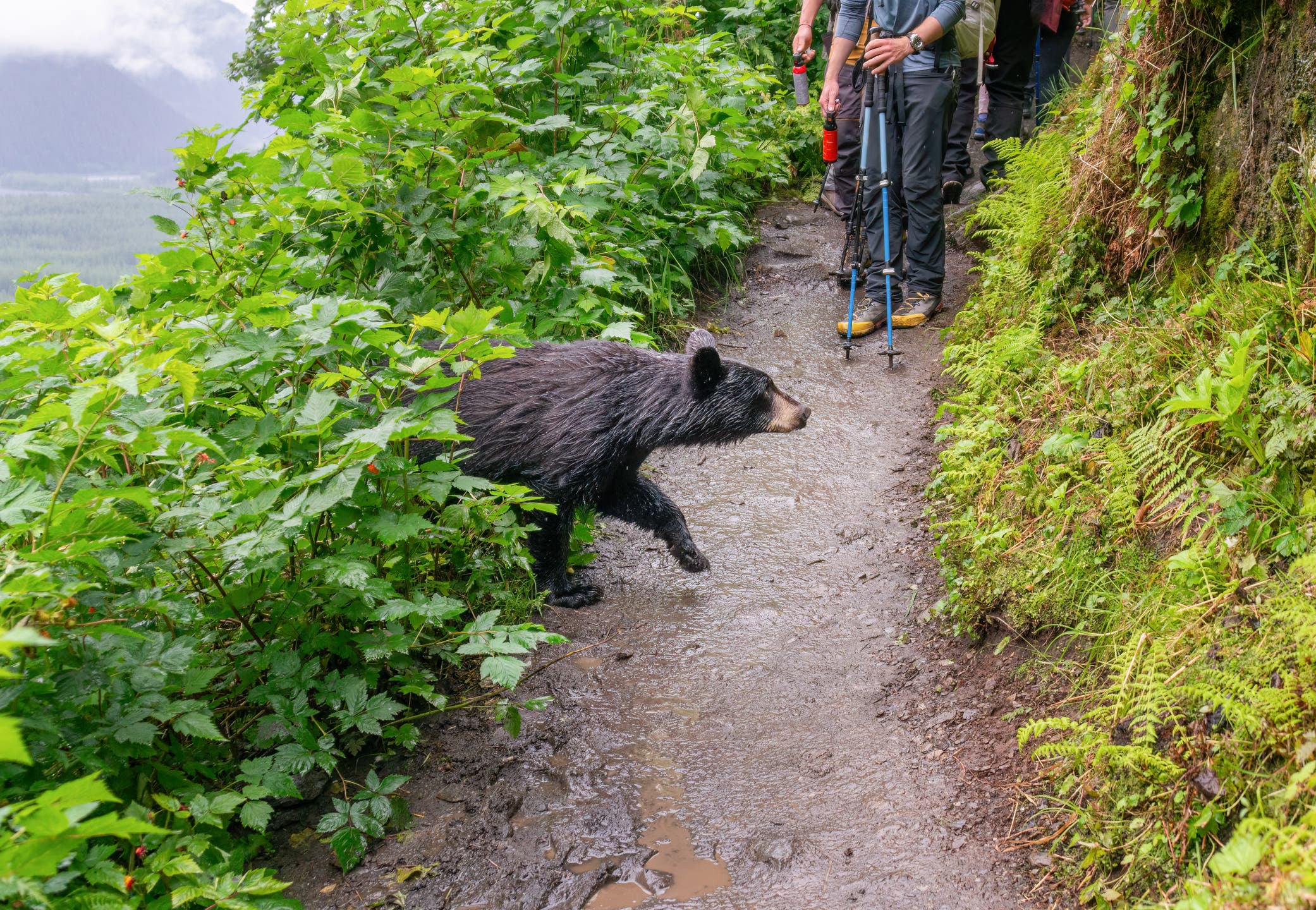
Most of these incidents began as surprise encounters, as with Pollio in Glacier.
Are Fatal Bear Attacks Increasing Too?
Van Manen cautions that although 2026 appears to be an unusually active year for encounters, it doesn’t necessarily mean that fatal bear attacks are on the rise—such a trend takes years of data to establish.
“Because of the rarity of these events, comparisons of a single year with a ten-year average are not meaningful,” van Manen said. “Decadal comparisons for North America do not suggest distinct trends.”
According to van Manen, grizzly bears killed 17 people in the United States during the 2010s, and 14 in the 2020s so far. American black bears, by comparison, killed ten people in the 2010s and 13 so far in the 2020s. Since 1892, researchers have documented 20 fatal attacks in the Greater Yellowstone area; some years have more, others less.
“This is an example of how unpredictable these events are: there was a fatality in 1986 followed by a 25-year period with no fatal incidents and then several years with multiple incidents,” van Manen said. Nationwide tracking doesn’t exist—states hold the data—and establishing a full, nationwide picture of bear deaths is challenging.
Chris Servheen, the former national grizzly bear recovery coordinator for the U.S. Fish and Wildlife Service, told Outside that statistically speaking, a grizzly kills less than one person annually, on average.
Even one death is a tragedy, and most fatal attacks are purely coincidental, van Manen adds.
“These are chance events that are driven by human and bear numbers: in areas with increasing and expanding bear populations,” he said. “Combined with increases in recreational visits, the chance of a bear encounter that may end in a physical attack increases as well, however small that may be.”
But all that could change as we head into the fall months. As more people move into bear country, and more bears come into towns looking for food, conflicts are sure to increase.
More Activity Expected As We Head Into Hyperphagia
Late summer and early autumn bring hyperphagia, a period during which bears spend almost all their time consuming calories to build fat reserves for winter. As more bears spend more time looking for food, the chances of people coming across them during fall hikes or bike rides increase.
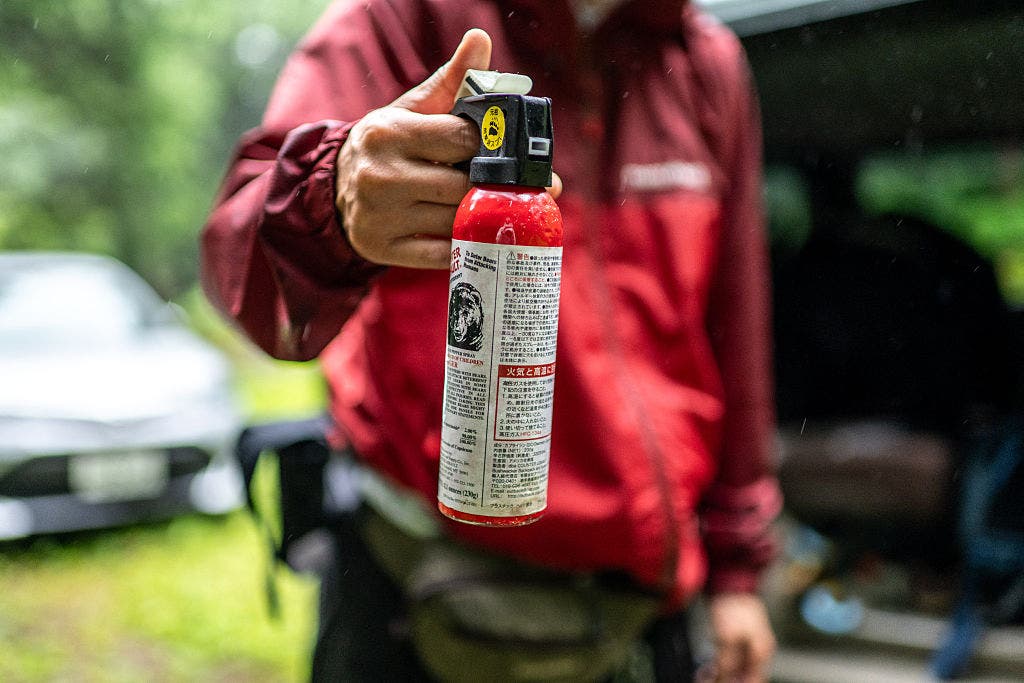
Nathaniel Bowersock is a biologist who spent nearly a decade working with bears in Yellowstone National Park. He is now a black bear specialist in Missouri and works with Bearwise, an interstate organization dedicated to mitigating human-bear conflict. He says the most important thing hikers can do is bring bear spray.
“Bear spray continues to be shown to be an effective tool at deterring or lessening an encounter with a bear, both black bears and grizzly bears, and bear spray will work under many conditions, even on a windy day,” Bowersock told Outside. “In addition, bear spray has been found to be more effective than a firearm at deterring a bear encounter, and bear spray is easier to use than a firearm. Therefore, any time someone is looking to recreate in grizzly country, I strongly suggest they carry bear spray.”
And if you see something, say something.
“We have a lot of bears that don’t get reported until it’s too late, or until their behavior is at a level that we can’t tolerate from a human safety standpoint,” Thompson said. “Don’t let garbage be available. Don’t let food be available. Bring in pet food. When you’re camping, make sure you’re keeping a clean camp.”
