

Published September 15, 2026 04:06PM
Don’t mess with Texas.
That’s the thrust of a lawsuit filed on Monday, September 14, in U.S. District Court in Washington D.C., by a coalition of Texas landowners who live near Big Bend National Park.
Six landowners, alongside the group Conserve Big Bend—which represents 230 additional Texas landowners—are suing the Department of Homeland Security (DHS), U.S. Customs and Border Protection (CBP), DHS Secretary Markwayne Mullin and CBP Commissioner Rodney Scott over the government’s proposed construction along the U.S.-Mexico border in the area.
Since the summer, construction crews have erected barriers, sections of walls, and roads through Big Bend National Park and its surrounding areas as part of a controversial border protection plan pushed by the Trump Administration. Opponents have argued that the barriers will do irreversible harm to the landscape and communities that rely on its resources.
“Construction of a 30-foot-high wall and other border barriers across the Big Bend region will irreparably harm plaintiffs by depriving them of their right to use and enjoy their property, extinguishing their economic interests, and impairing and damaging the region without legal basis or any rational reason,” the lawsuit states. “The massive project will cut through private lands, river corridors, wildlife habitat, cultural landscapes, and communities that depend on access to and enjoyment of the Big Bend region.”
The suit was announced on September 14 at a press conference in Marfa, Texas. According to Marfa Public Radio, the conference was attended by several dozen landowners, public officials, and even two horses.
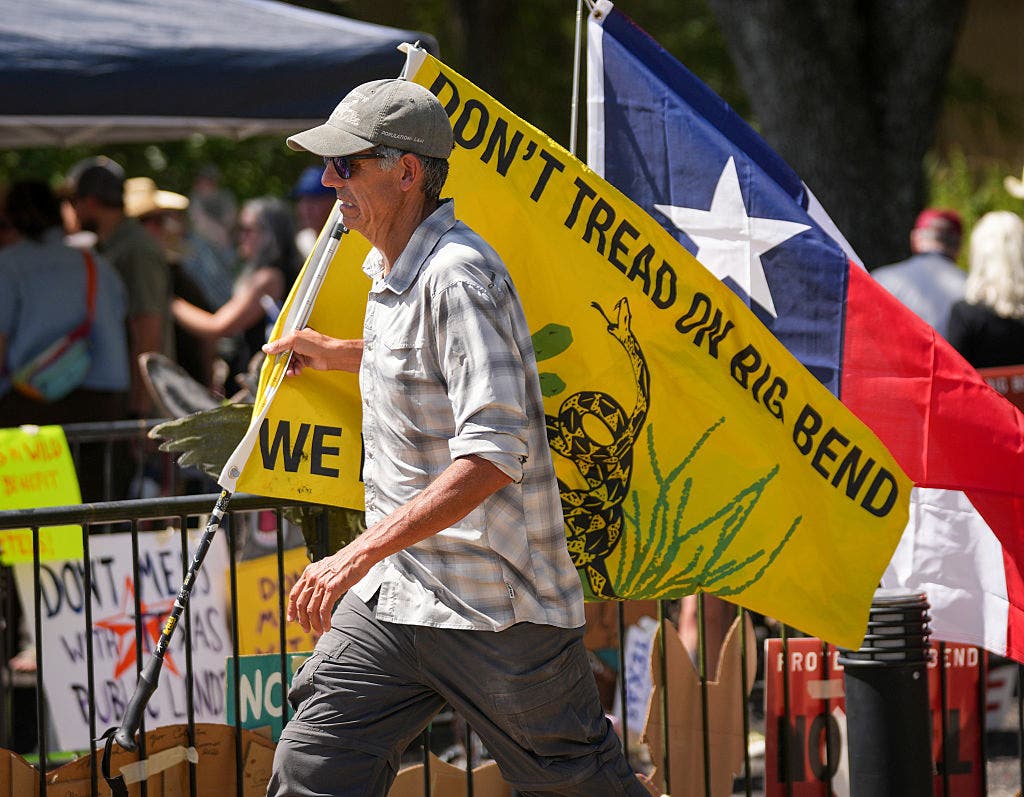
“ We have to believe that Texas’ sovereignty is being impinged upon,” Lico Miller, a rancher and member of the coalition, told Marfa Public Radio. “That all this tough guy Texas ‘don’t tread on me’ stuff at some point means something. We are the final line of people standing up against this.”
Outside reached out to CBP for comment, but we did not receive a response by the time of this story’s publishing.
Public Landowners Are Upset
The September 14 lawsuit differs from previous suits filed by nonprofits and conservation groups to stop the border construction on public lands.
According to the filing, private landowners in four counties near Big Bend National Park said they’ve received written notices from the CBP saying their land is needed for the construction of a border wall. And that the federal government would pursue temporary or permanent easements or land swaps with them that they could not refuse.
One of the plaintiffs, a rancher named William Joseph Zuberbueler, said the agency threatened to refer him to the U.S. Department of Justice “if a voluntary agreement is not reached” for construction crews to access his land.
The suit also alleges that the DHS issued federal waivers earlier this year that categorize the Big Bend region as an area of “high illegal entry” for undocumented immigrants. The case argues that the classification is false, and that the region is, in truth, an area that sees very little illegal entry into the United States.
Five-year data collected by the CBP on apprehensions along the U.S.-Mexico border does include statistics along the 517-mile Big Bend Sector. According to the CBP, just 1.5 percent of all apprehensions occurred there.
According to the lawsuit, the federal waivers allowed the CBP to bypass multiple laws that would have slowed or even prevented the project from moving ahead. The suit claims that the landowners’ Fifth Amendment rights, which grant due process, were also violated by the decision.
“Several coalition members rely on their land for their livelihoods,” the lawsuit states. “Including through ranching, tourism, and providing recreational opportunity to visitors.”
The Latest Opposition to a Controversial Project
The lawsuit is the latest opposition to the controversial border wall project, which the Trump Administration has quietly advanced throughout 2026. In February, the DHS waived more than two dozen laws for protecting the environment and historical sites to speed the construction of walls and barriers along a 150-mile stretch just outside of the national park. An online map posted by CBP also showed a so-called “smart wall” of cameras and barriers to be built within the national park.
The plan sparked immediate backlash, and by March, groups in Texas had begun speaking out against it. A group of five Texas border sheriffs published a letter to officials asking them to reconsider.
“Based on decades of combined experience working this terrain, we believe the construction of a continuous physical border wall in the Big Bend region would not represent the most practical or strategic approach to border security,” the signatories wrote.
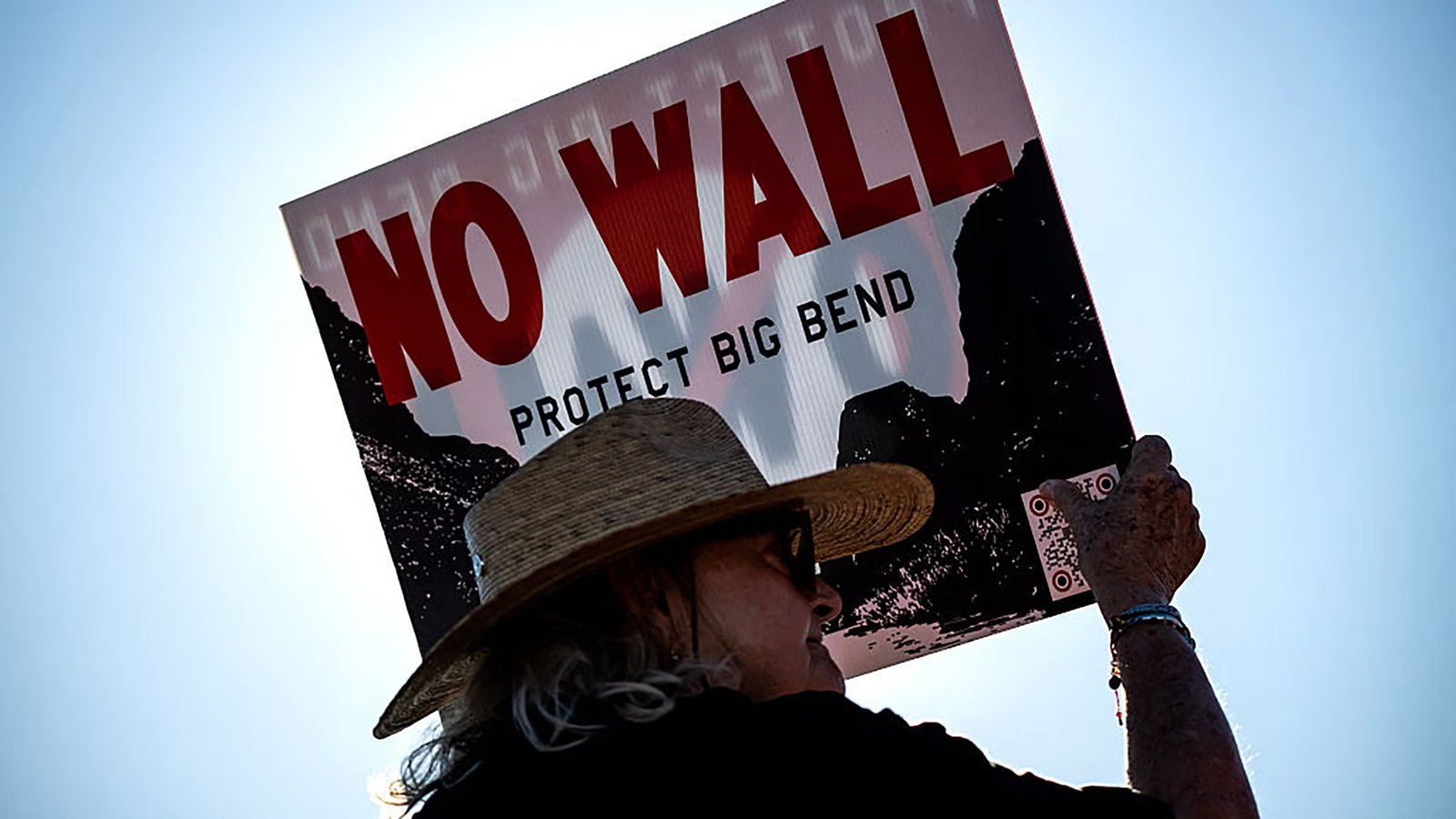
Opposition has also come from private landowners and residents in the area. Protesters held marches in Marfa, Austin, and other cities throughout the spring and summer.
The plan appeared dead throughout the spring and early summer, but in August bulldozers arrived in Big Bend National Park and began clearing trees and brush along the Rio Grande River. Overhead images of the region showed a lengthy new road cut through the cliffs and desert.
Politicians in Texas, including Governor Greg Abbott, a Republican, came out against the wall.
“Even among the folks who support stronger border security and have sought to work with CBP, the trust with the agency has been burned,” Laiken Jordahl, an environmental advocate with the Center for Biological Diversity, told Outside. “The constant reversals and changes and updates and contradictory statements have eroded people’s trust. A lot of people see this as an abuse of authority.”
On August 27, CBP secretary Scott ordered the heavy machinery to halt. Since then, the construction crews have not returned to work on the section of border barriers inside Big Bend National Park. According to NBC News, the construction pause is expected to expire on September 30.
