

Published September 22, 2026 01:08PM
In Greek mythology, one of the heroes of the Trojan War was Achilles, whose mother dipped him as a baby into the river Styx to make him impervious to enemy attacks. But he had one weak link: when his mother plunged him into the magic waters, she held him by the heel, failing to provide it with the same protection. Eventually, he would be felled by an arrow to the tendon now named in his honor.
This ancient story offers many lessons, but for runners, the most interesting is that one of Achilles’s great strengths was his running prowess. Back during the Trojan War, the ancient Greeks apparently already knew that the great tendon behind the heel is a potential weak link for runners.
Achilles Tendon Injuries Are the Most Common Type of Injury in Runners
Achilles tendon problems, in fact, are one of the most common injuries in distance running, and, according to a recent Czech study, the more you run (beyond 25 miles or 40 kilometers per week), the more problematic they become.
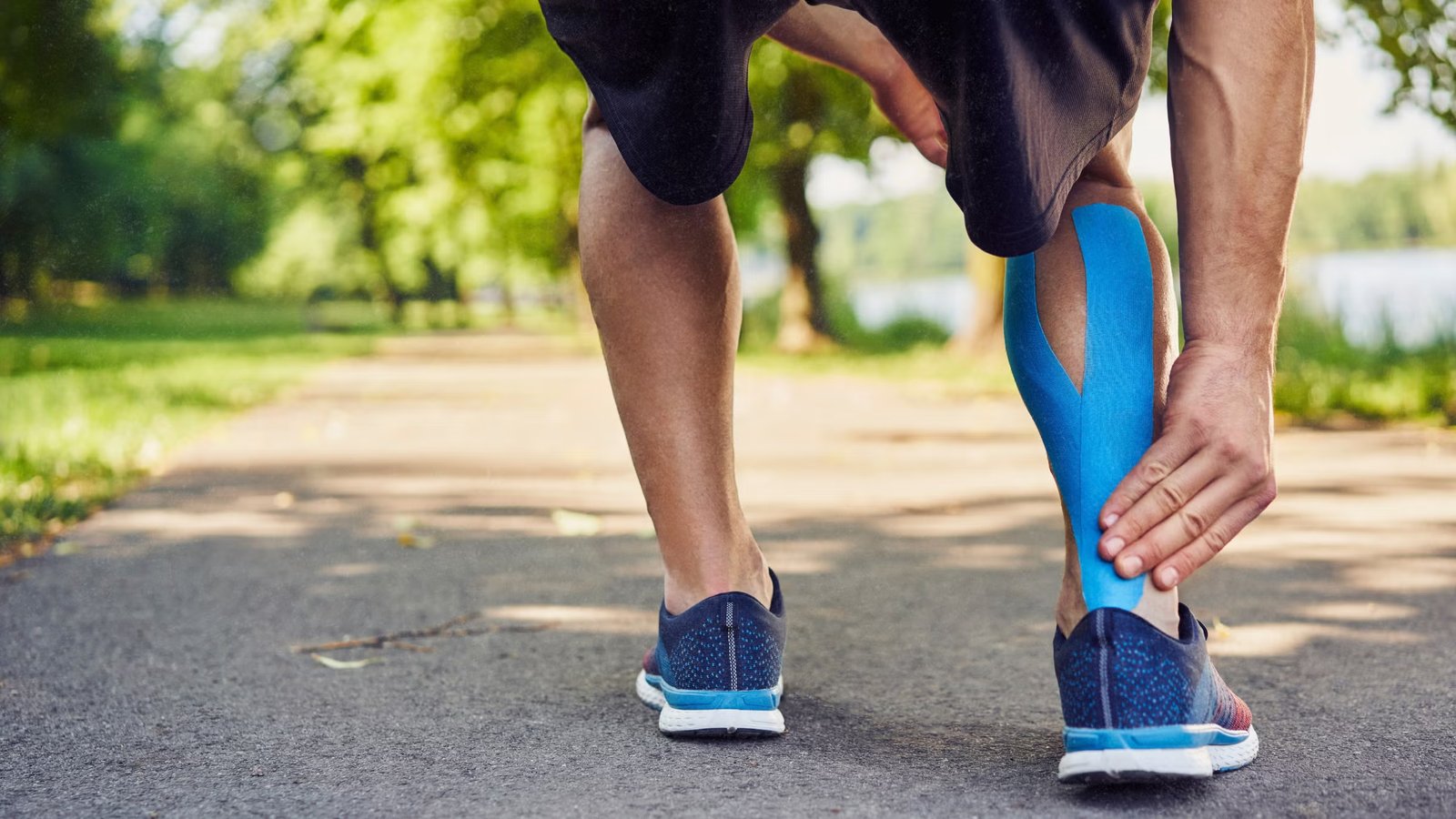
But recently, we may be seeing a plague not only of Achilles problems, but of slow-to-resolve calf problems (related to Achilles problems because the calf muscles connect to the Achilles tendon and are subject to the same biomechanical forces).
Modern Shoe Design Can Be Contributing to Calf and Ankle Pain
I first noticed it early this year, when problems to which I’d normally have said “take a few days off and go easy for a week or two” took months to resolve, not just in one runner in my group, but in more than one. Matt Klein, an assistant professor of physical therapy at George Fox University, Newberg, Oregon, has seen the same thing. “Recurrent calf strains have become a more frequent problem in the last couple of years,” he says.
The causes are unclear, but one prospect is modern trends in shoe design. There are a few design features that may cause issues. We get into them below.
1. Stiff Footwear
“What’s happening in the running industry right now,” Klein says, is that “footwear has gotten way stiffer. Even though not every shoe has a carbon plate, they have really increased the stiffness of a lot of shoes.” That’s an issue for calves and Achilles tendons, he says, because the stiffer the shoe, the harder your calves need to work to overcome it.
2. Foam Tech in Shoes
Another potential problem, Klein says, is that modern super-cushy foams may work against you, especially if you are a heel striker (and research shows that many of us are, even if we don’t think we are). The issue, Klein says, is that shoe specifications for things like drop and stack height are based on static measurements that may not apply when running. If you land hard on a soft, cushy heel, and it compresses substantially, then that shoe’s functional heel-to-toe drop is reduced by the amount of the compression.
“So, a lot of people that run in zero-drop shoes [who are] heel strikers are going to be running in a negative-drop shoe,” Klein says, “and when you put the ankle in an aggressively dorsiflexed (toe up) position, that is actually the maximum force the calf is required to produce.”
If you try to compensate by forefoot striking, he says, all it does is create “a different issue,” in which you are landing on an unstable surface, forcing your muscles to work harder not just to create propulsion, but to stabilize your foot. “So, [you] kind of don’t win when you have aggressively soft shoes,” he says.
3. A Curved Base in Super Shoes
Super shoes address this problem by using a curved base, called a rocker, that allows your foot to roll forward during each stride, like a rocking chair. This comes with its own drawbacks, but if it is properly tailored for your foot/stride, it means you don’t need to flex the shoe or battle against excessive cushion to toe off into the next stride. The shoe simply rolls you into it.
But if that doesn’t work for you, alternative options are limited. All of the shoes in my own closet are extremely inflexible by the standards of a few years ago. More flexible minimalist footwear still exists, but semi-minimalist? Happy hunting.
What the Latest Research Says
Not that any of this proves that modern shoe designs are causing calf/Achilles problems. All that can really be said, says Daniel Jandacka, a kinesiologist at the University of Ostrava, Czech Republic, is that it’s a hypothesis “certainly worthy” of more rigorous investigation. To the extent his own team has investigated it, he adds, they have not identified footwear as a major risk factor, though he adds, “this does not prove that footwear has no effect.”
Most likely, he says, the inability of studies like his to find an association is because Achilles tendon problems (and calf problems) are multifactorial. “Footwear may play a role,” he says, “but training load, recovery, tissue capacity, running biomechanics, and individual adaptation are also likely important contributors.”
That said, there are occasions when shoes can play major roles. For me, the first sign that my running shoes were getting overly worn was often knee pain. And I once had a pair of shoes that gave me a crippling case of iliotibial band syndrome the first time I tried them out, even though it was only for a two-mile run.
The One Foot Strengthening Exercise You Should Be Doing
But that doesn’t mean that a new pair of shoes will fix your calf or Achilles issues. Instead of relying solely on shoes to take the impact load off of vulnerable portions of your body (like the calves/Achilles), says Jay Dicharry, a professor at Oregon State University—Cascades and author of Running Rewired: Reinvent Your Run for Stability, Strength, and Speed, you should also work on improving how your feet function when you are running. “Shoes do affect where the load goes, but they don’t fix your problems,” he says.
How best to do this is a major part of his book, but one way to start, Dicharry says, is with “the hardest easy exercise in the whole world.”
A Calf and Ankle Exercise to Prevent Injury and Ease Pain
Equipment Needed:
- A piece of wood, a large book on a slant, or even a slanted rock
How to Do It:
- Find a slanted surface big enough for your foot and sturdy enough to stand on—a board, a piece of plywood, or a sturdy coffee-table book works well.
- Set it at roughly a 15-degree angle.
- Take your shoes off and stand on it on one leg, facing sideways (so your foot is parallel to the ground) with your big toe on the downhill side.
- Grab a full water bottle and pass it back and forth from one hand to the other.
- Keep going for three full minutes.
At first, you’ll think it’s ridiculously easy…then you won’t. When it does become easier, start tossing the water bottle from one hand to the other, or progress to something heavier such as a kettlebell. If you are having balance problems, touch the other foot down lightly to stabilize yourself. That won’t ruin the exercise and will give you confidence.
Or, he says, you can buy a device he himself invented, called the MOBO board, and try several exercises designed for it. Either way, the point is to strengthen the muscles of your feet while doing activities akin to what your feet should be doing while running.
Want more Outside health stories? Sign up for the Bodywork newsletter. And for tips on how to train, fuel, and recover better, sign up for the Sweat Science 101 newsletter.
