

Key Takeaways
- Most school buses in the U.S. remain diesel-burning, despite risks cited by WHO.
- McIntyre founded Massachusetts-based Highland Electric Fleets in 2018.
- Today, Highland Electric is eyeing fleets in 200 cities and will sponsor the Olympics in 2028.
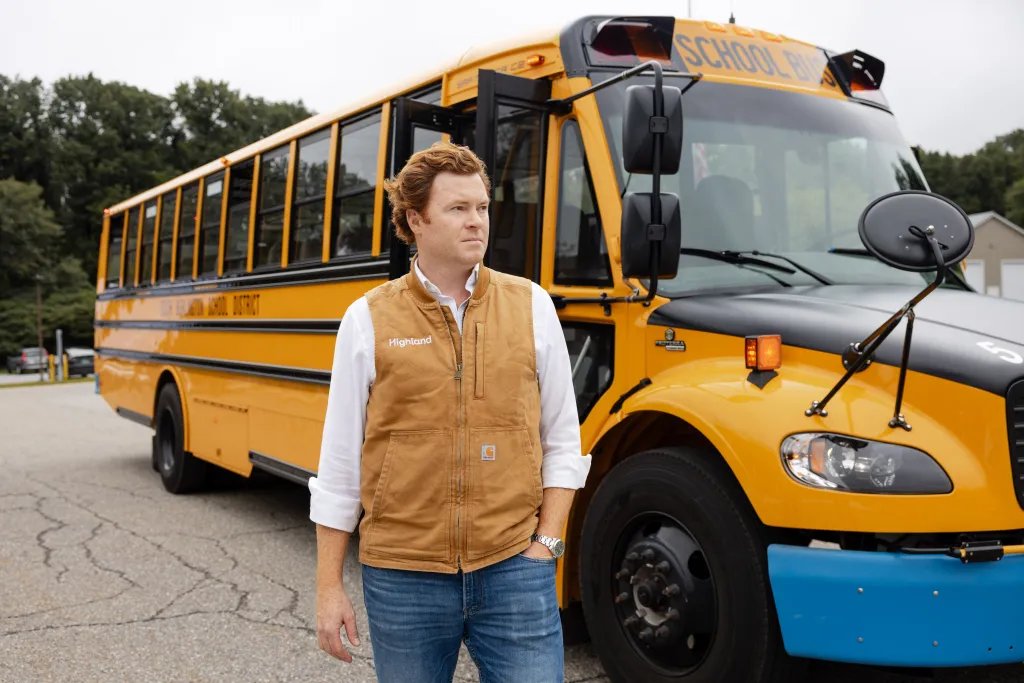
When the oldest of Duncan McIntyre’s children was in second grade, the father of three made a disconcerting discovery: The school bus’s tailpipe sat level with his young son’s face. “These kids are standing there all over this country in the morning, and again in the afternoon, breathing those exhaust fumes,” McIntyre tells Entrepreneur.
Most school buses in the U.S. today are still diesel-burning. Yet the World Health Organization classifies diesel exhaust as a known human carcinogen, and children with developing lungs are particularly vulnerable, according to data from World Resources Institute.
But diesel fumes didn’t have to be an inevitable part of school commutes; the technology, equipment and manufacturing necessary to transition to a zero-emission, electrified fleet already existed, McIntyre notes.
With a background in energy and emissions technology and financing, McIntyre decided to found a company to change the status quo in 2018: Massachusetts-based Highland Electric Fleets.
Founding Highland Electric Fleets in 2018
The early steps in building any startup involve articulating your product offering in a compelling way, then convincing your first customer to bet on you, McIntyre says. So that’s exactly what he did. It took about a year and half for Highland Electric to sell its first project to the city of Beverly, Massachusetts.
Up to that point, McIntyre funded the endeavor on his own. Then the need for more capital became clear.
“The business that we’re in is hugely capital-intensive, so anyone who’s successful [needs] a real strategy around raising capital,” McIntyre explains. “We’ve raised equity capital to fund the platform and build the business, and we’ve raised a ton of project-level financing that helps us buy equipment and capitalize projects.”
The company announced a $150 million equity investment from Aiga Capital Partners to accelerate national expansion last December, adding to multiple other forms of capital, including roughly $200 million in construction debt and tax advantaged financing from long-term partners.
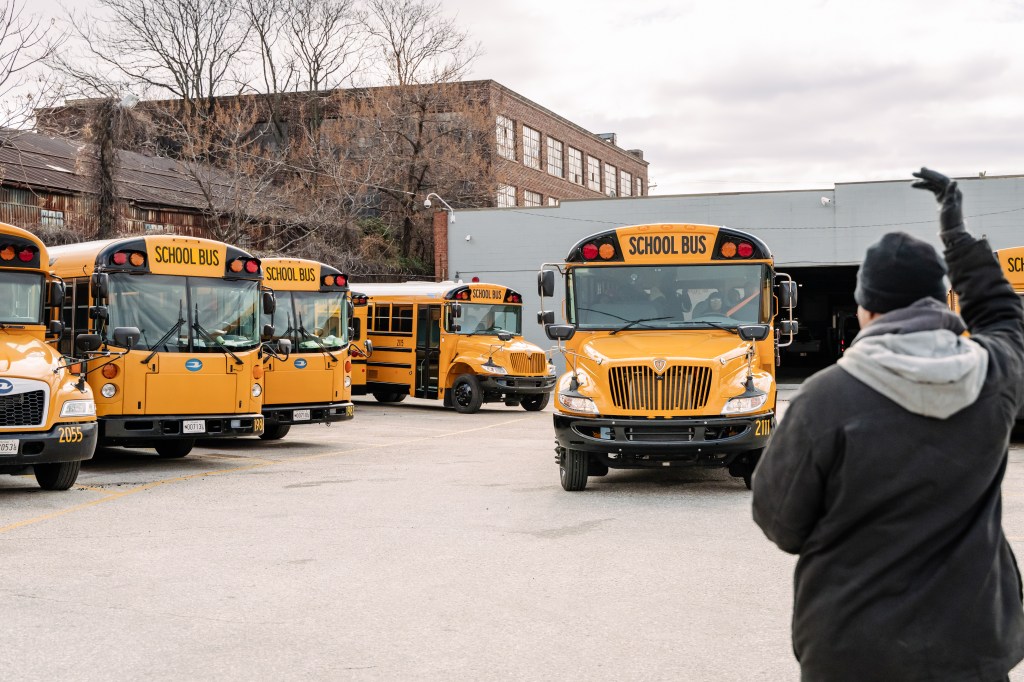
Now, Highland Electric runs fleets in more than 100 cities across the U.S. and boasts an estimated current annual revenue of $45 million to $50 million, per the company.
“We’ve basically doubled year-over-year for a number of years now,” McIntyre says. “And we’ll double again next year in 2027. The industry’s growing quickly, and we’re the largest provider in the space.”
Highland Electric serves many different communities
Highland Electric serves many different communities — part of the vision from the beginning — with its fleets ranging in size from 300 buses with over $100 million of equipment to ones with just two or three.
“ We’re in urban, we’re in rural, we’re in affluent, and we’re in historically very underserved communities,” McIntyre says. “Our goal is to serve everyone. So the process of putting all the pieces in place and making that work is a little bit different [depending on customer needs].”
Highland Electric doesn’t recommend that a city attempt to flip its entire diesel fleet to electric overnight. Rather, in keeping with its long-term view, the company suggests replacing diesel-fueled vehicles ready for retirement with electric ones.
Initially, it took Highland Electric about a year and a half to get a project up and running. However, these days, fleet implementation typically takes about six months to complete, McIntyre says.
Manufacturing and implementing Highland Electric’s fleets
Manufacturing the vehicles with the company’s domestic partners might kick off a project — but that’s just one factor in a much larger equation.
“A lot of people think of an electric bus or an electric truck purely as that piece of hardware,” McIntyre says. “You buy it from a dealership, pay for it and take it home. The reality is, when you’re transforming the way a transportation system works citywide, there’s an incredible amount of other pieces that have to all come together seamlessly.”
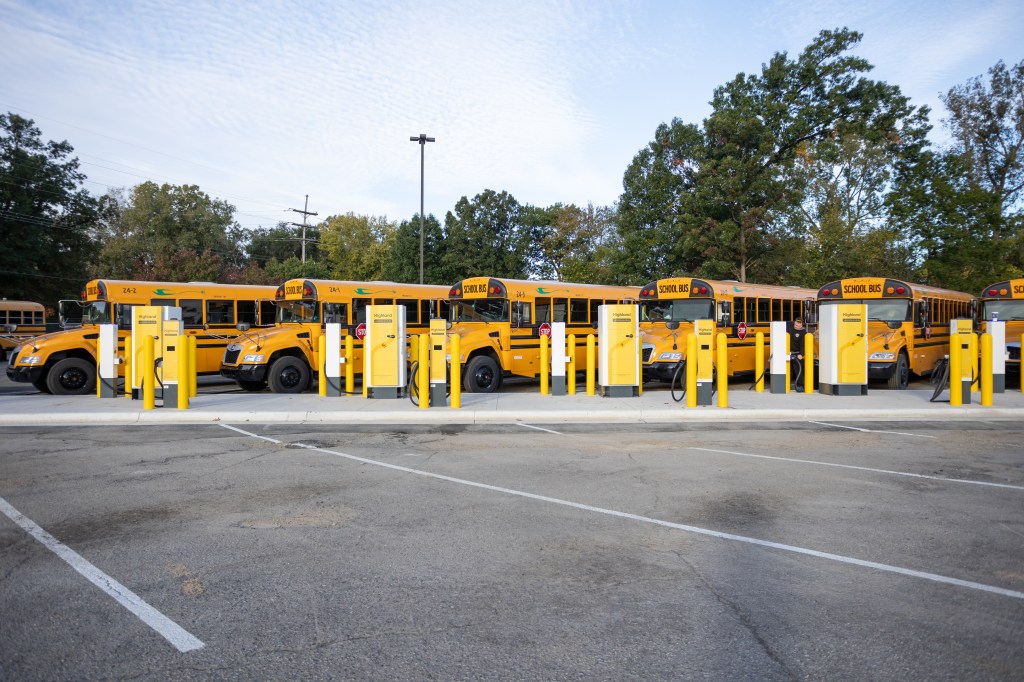
Highland Electric brings in all of the required teams, from the workforce development training local city staff how to operate and work on the vehicles, to the construction management designing, permitting and building electrified depots.
“We may invest $5 or $10 million in equipment underground at that site, but with the view of ensuring that it’ll run reliably for 25, 30 years,” McIntyre explains. “ We have to finance all of it. So we are truly experts in bundling and packaging capital, technology and services, and then bringing it all together very elegantly.”
Staying within budget, collecting payment based on mileage
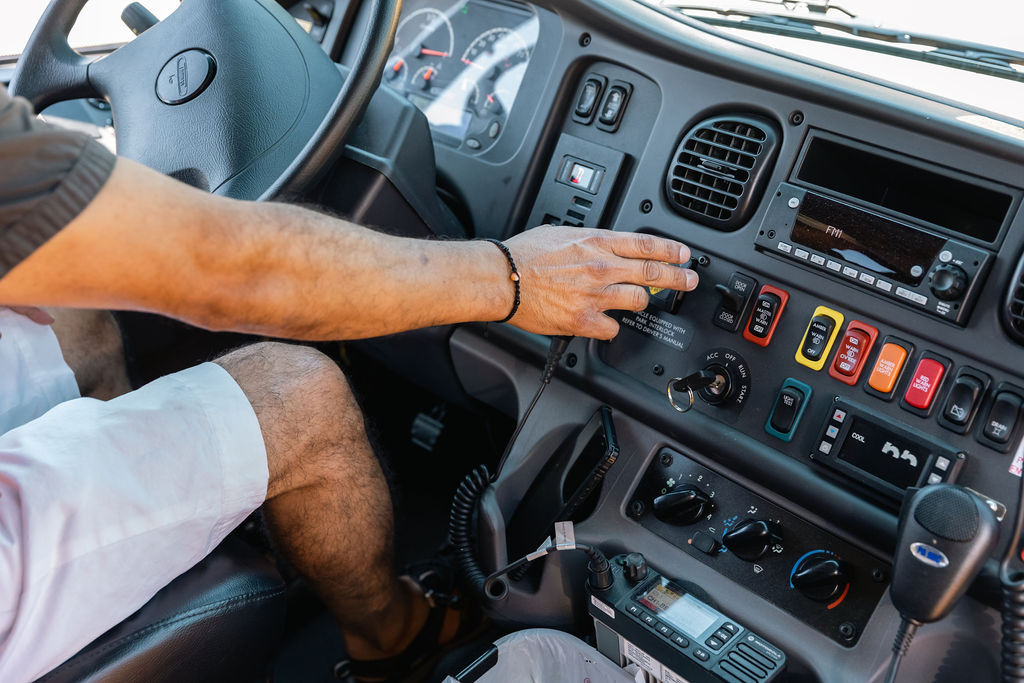
The goal with every single customer is to come in at or below the equivalent costs of running a diesel fleet. With fewer moving parts, including no need for diesel particulate filters or oil changes, there’s much less maintenance required overall, McIntyre says.
The founder understands that city budgets are often tight.
“School districts always want to put any money they have available back into curriculum for better educational outcomes,” McIntyre says. “So keeping costs at the current budget is essential everywhere. We do that very successfully. In some places, we’re able to save 10% or 20% compared to running a diesel fleet.”
Highland Electric doesn’t ask a city for any money upfront either. Once the fleet is running, the company starts collecting a payment based on each mile of successful transportation.
Partnering with electric utility companies
What’s more, one of Highland Electric’s key growth strategies is partnering with electric utility companies.
“Because the vehicles have these big batteries, when they’re sitting idle, we can actually help balance the local grid, which creates incredible resiliency for the community and helps to lower cost for electric rate payers,” McIntyre says.
Not only do such partnerships drive revenue for Highland Electric, but they also allow the company to lower the costs for the cities and schools it serves.
Now, McIntyre looks forward to Highland Electric achieving fleets in 200 cities within the next 12 months and sponsoring the Olympics in Los Angeles in 2028.
“We’re out of the world of people tinkering around electric vehicle technology as a hobby, and we’re really more into mainstream adoption,” McIntyre says. “The market is truly taking off, and that’s exciting to see. It’s no longer viewed as something that might or might not exist. It’s viewed as something that’s here for the long run.”
Key Takeaways
- Most school buses in the U.S. remain diesel-burning, despite risks cited by WHO.
- McIntyre founded Massachusetts-based Highland Electric Fleets in 2018.
- Today, Highland Electric is eyeing fleets in 200 cities and will sponsor the Olympics in 2028.
When the oldest of Duncan McIntyre’s children was in second grade, the father of three made a disconcerting discovery: The school bus’s tailpipe sat level with his young son’s face. “These kids are standing there all over this country in the morning, and again in the afternoon, breathing those exhaust fumes,” McIntyre tells Entrepreneur.
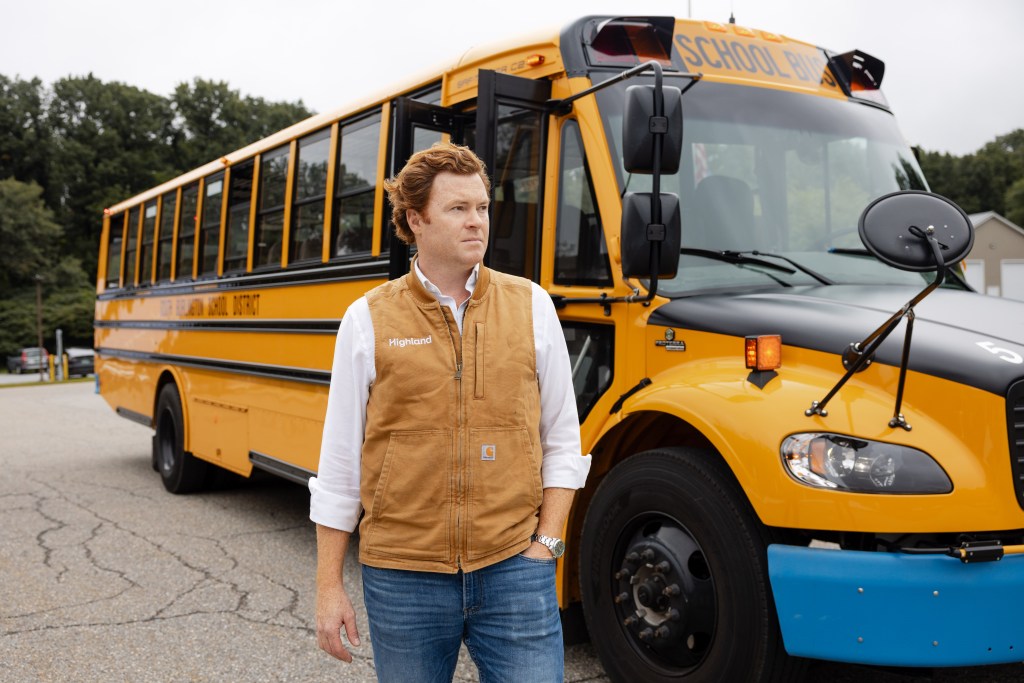
Most school buses in the U.S. today are still diesel-burning. Yet the World Health Organization classifies diesel exhaust as a known human carcinogen, and children with developing lungs are particularly vulnerable, according to data from World Resources Institute.
But diesel fumes didn’t have to be an inevitable part of school commutes; the technology, equipment and manufacturing necessary to transition to a zero-emission, electrified fleet already existed, McIntyre notes.
