

Published September 22, 2026 03:57PM
Apple is famous for launching products late. The new Duo foldable phone came out years after Samsung launched its foldable models. This month, Apple finally dropped the new Apple Watch Ultra 4 that provides a training readiness score—a feature Garmin and other brands have had for years.
Apple can get away with this because their rollouts are almost always better. The Duo is a feat of engineering and a pleasure to use. The new readiness score promises unmatched training help because the Ultra 4, along with the Apple Watch Series 12, now has what Apple claims is the most accurate heart rate sensors on the market, at least in the wearable space. And, like all of Apple’s software products, the readiness score is simple to read and provides user-centered feedback in a way that’s unmatched, in my opinion, by other companies.
Apple’s “most accurate” claim is backed up by a study the company conducted against a host of competing wrist- or arm-based wearables (not chest straps)—90 percent of the wearables market, according to Apple. The study included diverse participants across sex, age, body mass index, and skin tone.
Apple Watch Ultra 4
Accuracy and Clarity
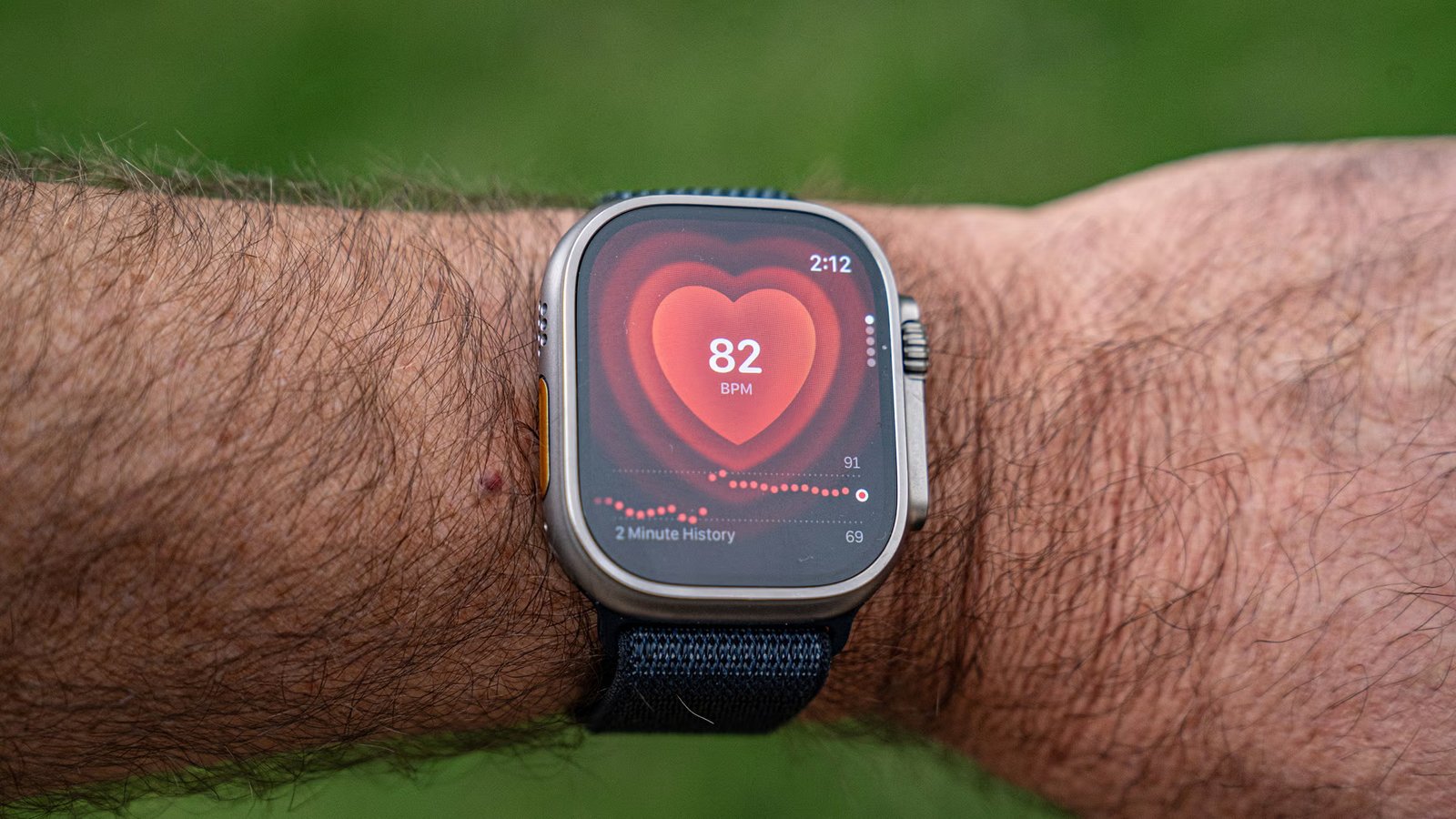
Improved wrist-based accuracy is exciting on its own for athletes who base their workout intensity on heart rate, but the new hardware also lets Apple go all-in, with increased confidence, on Heart Rate Variability (HRV)—a metric that tracks the slight beat-to-beat changes in heart rate. A higher HRV indicates better health, good recovery, and overall fitness, while a lower HRV signals physical or mental stress, overtraining, or sickness. The Ultra 4 measures HRV as often as every five minutes throughout the night and day while the user is at rest. The Ultra 4 also takes general heart rate readings every five seconds all day long.
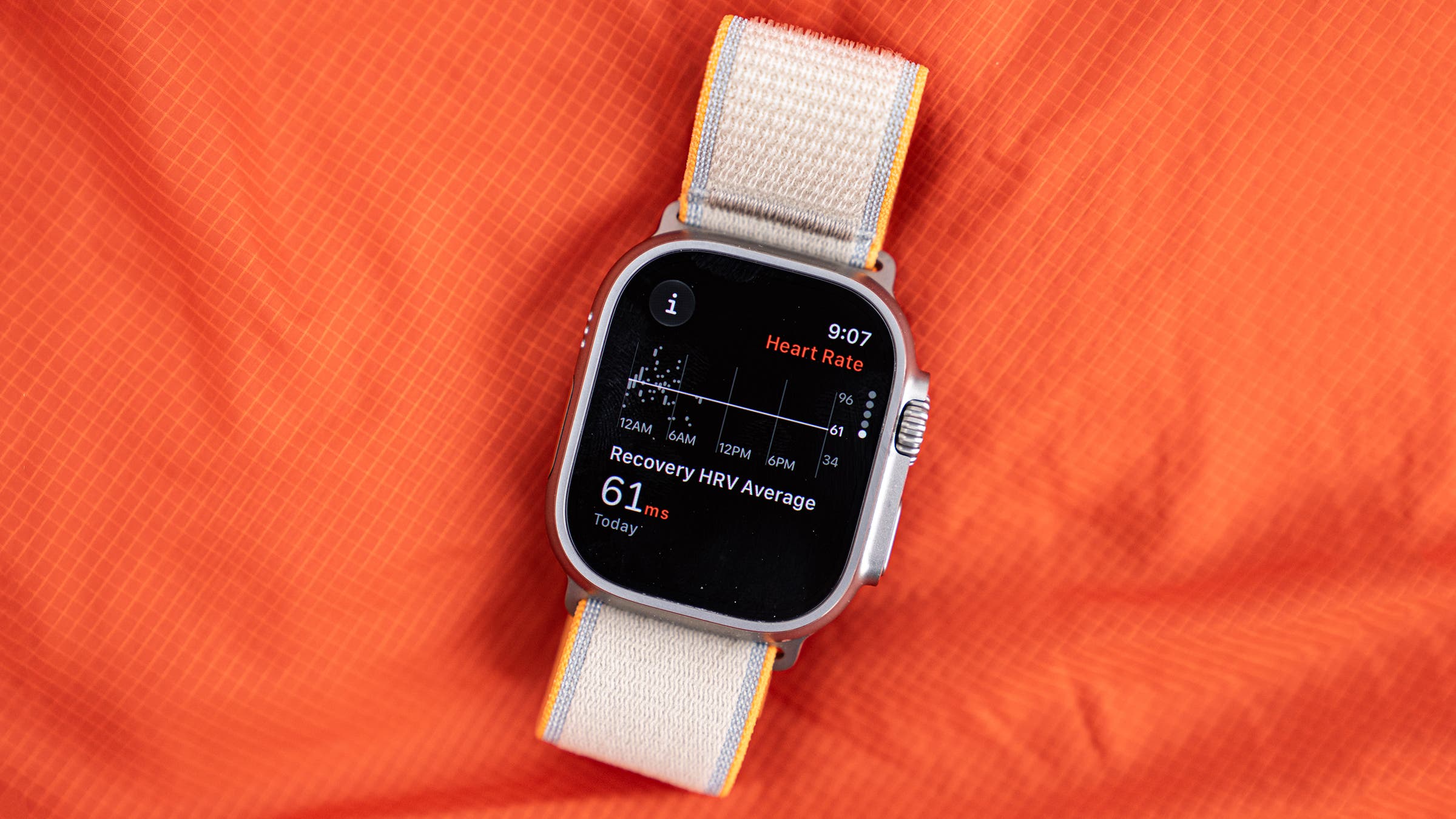
These measurement frequencies are much higher than what’s offered on the Ultra 3, but in line with other top-tier sports watches. Garmin, for example, takes multiple heart rate readings every second, all day long, no matter what you’re doing. Coros, by default, records heart rate every second during a workout and every 10 minutes otherwise. Garmin, like Apple, measures HRV every five minutes throughout the night but does not measure it during periods of rest during the day. It does, however, let a user take a daytime “snapshot” where the device will do a one-time read of HRV.
Combined with other vitals, activity, and sleep data, Apple’s new heart rate and HRV readings become the basis for the readiness scores. Apple’s scores this on a scale of 1 to 10 and users also get simple phrasing to help them interpret the numerical rating. If you have a score of 0-1 the watch tells you to “Recover,” a score of 2-4 tells you to “Pace Yourself,” 5-7 is “Ready,” and from 8-10 you’re encouraged to “Go For It.”
Once again this is similar to Garmin’s approach. Garmin provides a 1-100 score that some of the editors at Outside love. I’ve never paid much attention because as a mid-tier athlete, it felt like too much information and something I wasn’t ready to parse. Apple’s 1-10 score, on the other hand, matched with the simply phrased instructions, feels much more approachable. Like all of Apple’s products, their data delivery feels like it was written by someone on their communications staff instead of an engineer.
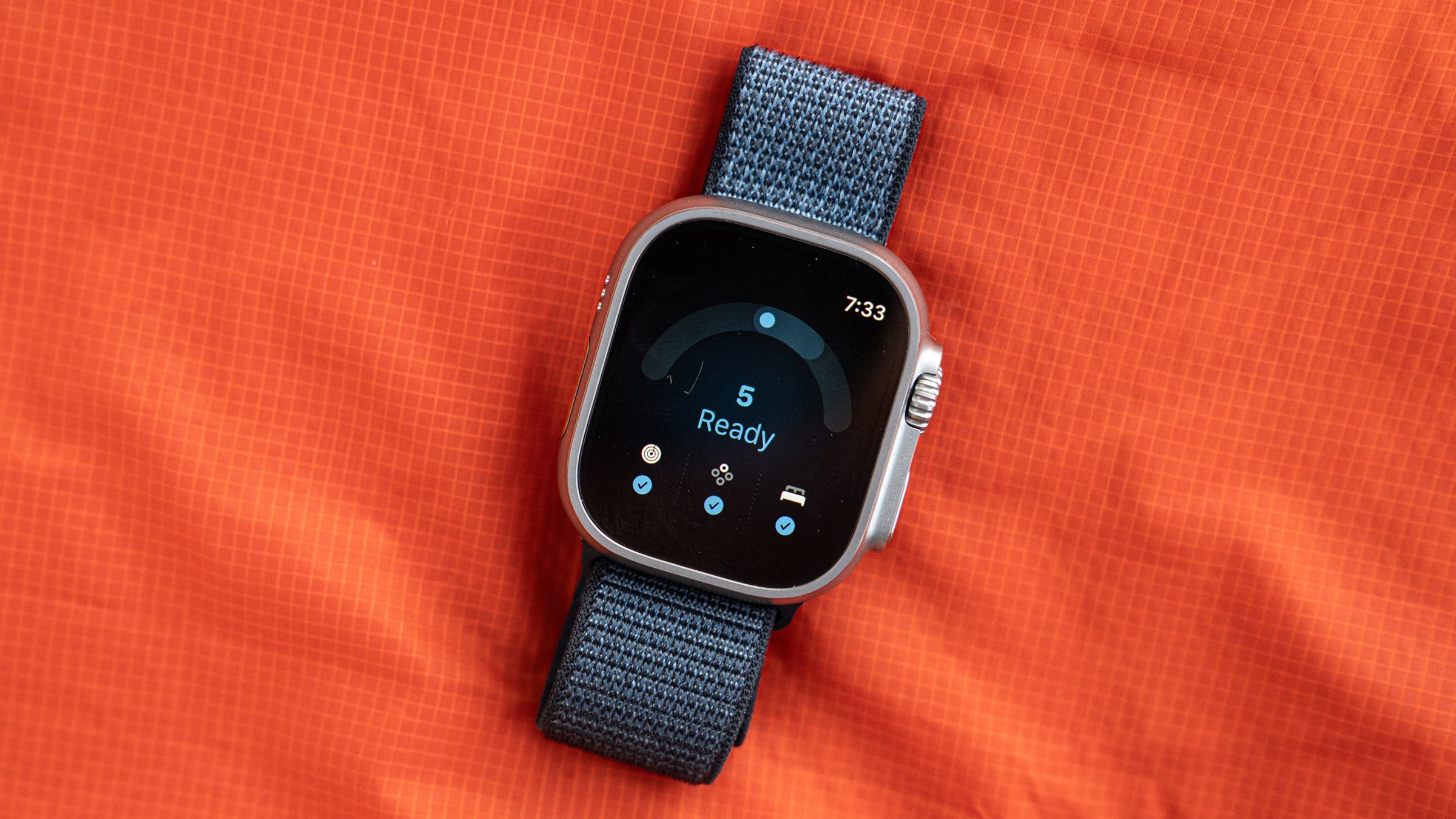
So far I’ve gotten four days worth of readiness scores on my Ultra 4 and all have been in the 5-6 range—the watch tells me I’m ready but still tired. My sleep has been in the 90th percentile and I’ve always gone on a run or walked at least 15,000 steps. The score matches how I feel and I’ve enjoyed adding a recovery check into my routine. My only quibble is that the watch doesn’t give me a readiness score right away—I don’t get it until after my morning runs.
Later this year, the watch’s new heart readings will also feed into a more comprehensive, redesigned health app on the iPhone that delivers a host of other data and coaching features. An “Insights” tab will cover daily metrics and trends in heart, sleep, fitness, vitals, readiness, and cycle tracking and then use Apple Intelligence to offer personalized guidance. A “Health Age” feature (Garmin provides a “Fitness Age”) will tell me whether my body is functioning older or younger than my actual age, and the “Longevity” tab will analyze longitudinal health data across heart health, sleep, mental wellbeing, movement, metabolic health, hearing, and nutrition.
A Better Battery
The Apple Watch Series 12 provides the same readiness features as the Ultra 4, but I always lean toward the Ultra because of better battery life. The Apple Watch Series 12 maxes out at 24 hours of normal use while the Ultra 4 can stretch to 50 hours (eight more than the Ultra 3). I also get 18 hours of full-power workout tracking on the Ultra 4 compared to 10 on the Apple Watch 12.
During testing, I’ve worn the watch every night and through multiple workouts without ever worrying about the battery dying. This is partly because, thanks to new fast charging, I can pop the watch on the charger for 15 minutes and get 18 hours of additional battery time, which gets me through the night. Any time I’ve had a couple hours of downtime during the day, I fully charged the battery.
With 18 hours of workout tracking, I could use the Ultra 4 to run a 50 or 100K. Apple says the Extended Workout mode, which turns off some features, provides up to 25 hours of workout tracking with full GPS and heart rate readings. Max Extended Workout tracks outdoor runs, walks, and hikes for up to 45 hours while taking just GPS readings every second.
Tracking these long workouts is where the Ultra still falls short. The Garmin Enduro 3 sets the bar with 120 hours of GPS use, or 320 hours with some solar charging. The just-announced Coros Pace 4 Pro gets 60 hours of GPS use and costs $350 less than the Ultra 4. I guarantee you’ll rarely, if ever, see someone lining up for a 100- or 100-plus-mile race with an Ultra 4 on their wrist because runners don’t want to turn off features off or worry about battery life.
Who Is the Ultra 4 For?
Anyone who’s not an endurance athlete but still takes their training seriously and wants to dig into their metrics should consider the Ultra 4. Only the 4 and Apple Watch Series 12 get the new readiness score because of the hardware, and, if my experience is any indication, users will be impressed and easily hooked.
Those of us who are normal athletes will be happy for the greater battery life and the fast charging. I’m not sure if Apple will ever make a watch that competes with Garmin on battery life because they’ll continue to prioritize the everyday functionality that drains juice. For the first time since the Ultra launched, I’m okay with that compromise because the battery and charging never got in the way of my training or adventures.
If you don’t care about everyday, non-athletic tasks that the Ultra 4 handles with ease, and just want to track your workout metrics, I recommend you go with a cheaper watch like the Coros Pace 4 Pro or the Suunto Run 2.
