

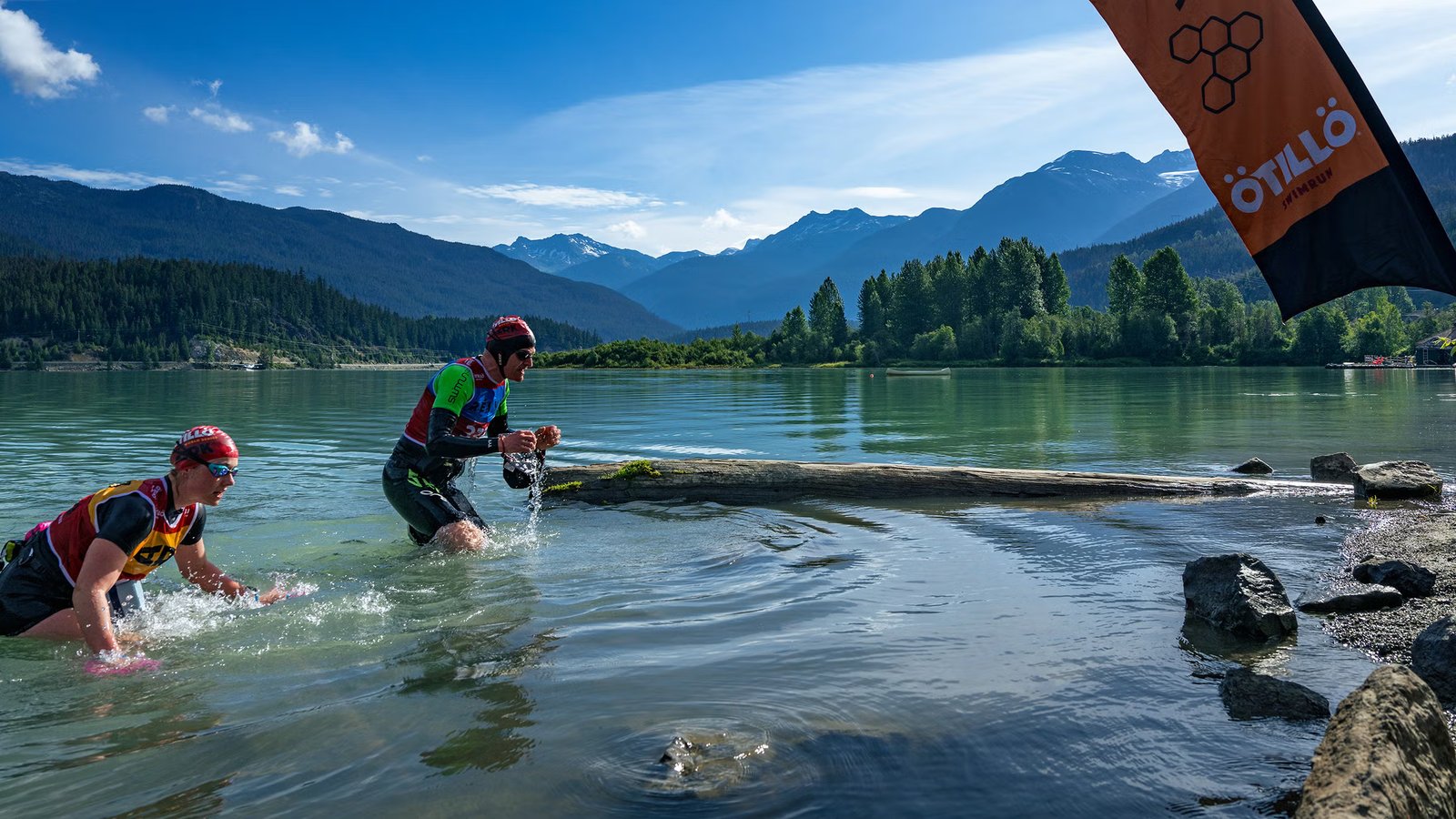
Published October 6, 2026 02:58PM
Outside features editor Frederick Dreier participated in the October 4 Ötillö Swimrun race at Horsetooth Reservoir, Colorado. Dreier has competed in triathlons, bicycle races, and other endurance sports for 25 years.
A few memories come to mind from my recent Ötillö Swimrun, the endurance race that combines open-water swimming with trail running.
In one, I flounder in the chilly waters of Colorado’s Horsetooth Reservoir near Fort Collins, my arms feeling heavy as concrete as I struggle to swim in a straight line. In another, I sit by the side of a rocky trail plucking cactus spines out of my backside, moments after a clumsy toe-strike sent me tumbling into clump of pricklypear.
Both of these scenes, however, are superseded by a memory with an altogether different vibe. That, of course, is crossing finish line and exchanging a flurry of high-fives and hugs with a bunch of random sweaty strangers, all of us clad in wetsuits, goggles, and running shoes.
You see, I had a blast racing my first Ötillö Swimrun race this past Sunday, October 4, despite the dead-tired arms and cactus butt.
What the Heck Is a Swimrun?
If you have never heard of the swimrun racing format, here’s a quick primer. Picture a triathlon, minus the biking. Now, chop up the swimming and running portions, sitch them together in smaller portions, and spread the whole event out on a point-to-point course. You run, then swim, then run again, then swim, and so-on. The event I did was a “sprint” distance event, comprised of five swims and six runs spread out across 12 miles of trails and lake.
It took me nearly three hours to complete, and at no point was I sprinting.
Unlike triathlon, where you abandon your gear after each portion, swimrun requires you to carry all of your stuff from start to finish. Thus, you must swim while wearing your running shoes, run while clad in your wetsuit, and carry your pull buoy, hand paddles—swimming gear that is allowed—for the entire journey. This makes for some hilarious blunders along the way (more on this later).
Within the swimrun world, Ötillö is the proverbial Ironman—the most recognizable brand of events. Outside has a somewhat rich history of chronicling the Swedish company, first in 2013, and then in 2014, and also in a 2017 Brad Stulberg column. In 2019, longtime contributor W. Hodding Carter wrote an Outside feature story about his foibles at the Ötillö world series race in Cannes, France, where he and his partner paddled across the green-blue Mediterranean jogged through the French Riviera.
In all of those stories, Ötillö swimrun races come across as grueling, fun, and distinctly European. The racing format, after all, was developed in Sweden, and first held on the chain of islands just east of Stockholm, which is still the site of the annual Ötillö world championships. The name “Ötillö” is a Swedish word that loosely translates to “island to island.”
Otillo Expands to North America
Good news for Americans: Ötillö is no longer just for the Euros. Back in 2023, the series expanded to North America after it purchased a budding collection of U.S. swimrun races called the Odyssey series, that were co-founded by a guy named Lars Finanger. Finanger and I were roommates in Boulder 20 years ago, back when we were both dirtbag triathletes chasing a daily endorphin high.
Now, Finanger is trying to spread the Swedish swimrun gospel in the U.S., where jogging trails while wearing a wetsuit is about as popular as pickled herring.
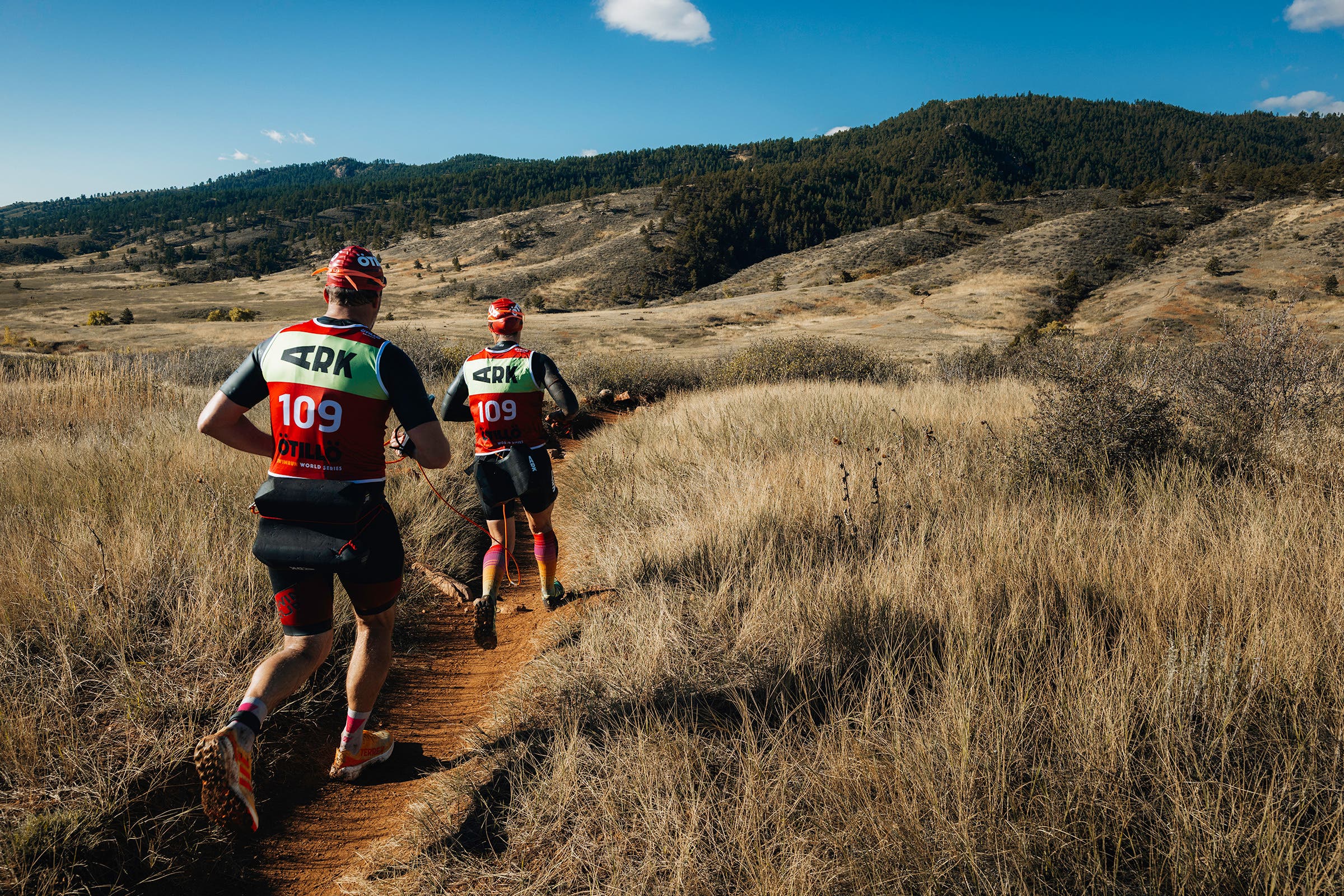
“We started out with a lot of triathletes, Ironman finishers, Eco-Challenge racers—it was a really eclectic group of endurance athletes,” Finanger told me. “Now we have a small but dedicated following of athletes who see themselves as Swimrunners first, even though they might do a triathlon or a bike race, too.”
Finanger first learned about Ötillö from the 2013 Outside story. He was burned out on triathlon and road bike racing and was looking for a new challenge, so he signed up for the world championship event in Stockholm, which is comprised of 38 miles of running and 5.7 miles of swimming, and requires participants to compete in teams of two. It’s a grueling test of endurance and grit that takes many teams upwards of ten hours to complete.
“I had this big grin on my face throughout the whole thing, even though the water was so frickin’ cold and the trails made you feel like you were running through the hobbit scene from Lord of the Rings,” Finanger told me. “I realized we didn’t have anything like it in the USA.”
Finanger wanted to start his own race but didn’t know how. As luck would have it, he wasn’t the only person intrigued by the format. Jeffrey Cole, a veteran of the endurance sports industry and a longtime triathlon race director, emailed Finanger about the swimrun format. Cole said that Casco Bay, Maine, near his home in Kennebunkport, was a perfect place to recreate the island hopping of Sweden’s Ötillö. In 2015, they started the inaugural Odyssey event along the Maine coast.
“I think about the history of triathlon, where athletes raced in Kona and then went back home to put on their own races where they lived,” Finanger said. “We wanted to produce a swimrun that we’d have wanted to do ourselves.”
Their model was a success. Finanger and Cole started other swimrun races the U.S.: Orcas Island, Washington, Cedarville, Michigan, Austin, Texas, and even one on California’s Catalina Island. These events are held annually, and the participation numbers now surpass 400 at some races.
Cole died in 2018, and Finanger kept the business going alongside a handful of new partners. In 2023, Ötillö approached them about purchasing the Odyssey series and bringing it under the corporate umbrella. Finanger said it was a no-brainer.
“It meant partnering with the gold standard in our sport,” he said.
These days, the former Odyssey races award points to elite athletes that help them qualify for the world championships race in Stockholm. But they also boast shorter distances, solo categories, and a laid-back vibe. Because the purpose of the events, Finanger told me, is to attract newbies like yours truly to the format.
“We are still this meeting ground for all of these different types of athletes—swimmers, cyclists, triathletes,” he said. “The one they they have in common is the are adventure-minded.”
Jell-O Legs and Juggling Gear
Qualifying for a race in Europe was not on my mind as I prepared for the 2026 Colorado Ötillö. The shorter sprint distance did not offer qualification points toward the Ötillö world championships, however the much longer World Series race in Colorado (23 total miles) did.
When I asked Finanger for strategic advice, he just laughed me off. “Just have fun out there dude,” he said. He reminded me that the whole point was to have a personal adventure while swimming and jogging my way around the lake.
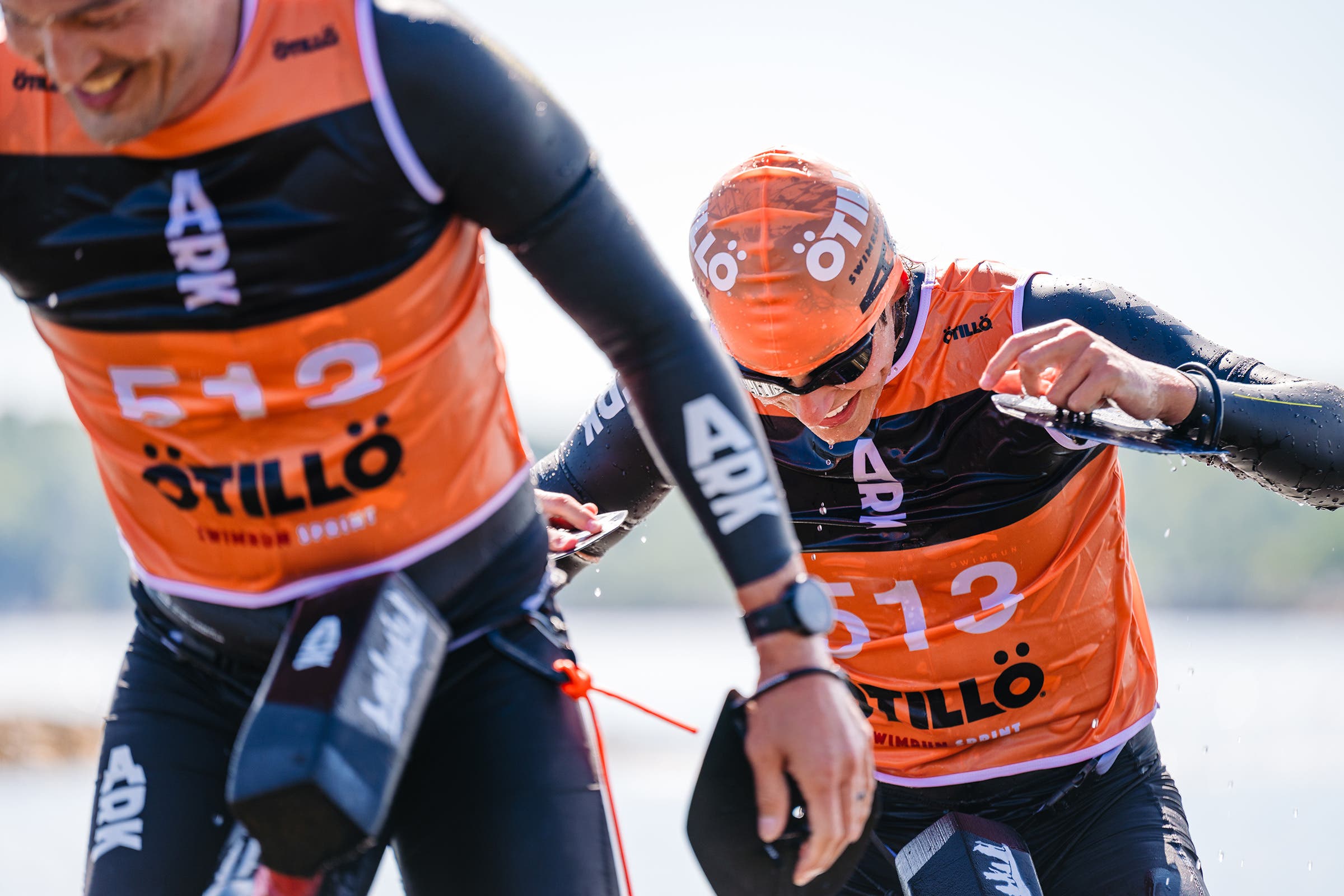
The laid-back atmosphere at the start line reinforced Finanger’s advice. Over the years I’ve nervously awaited the start of Ironman triathlons, marathons, and almost every type of bike race out there. At Ötillö, the vibe was extremely chill—like what you’d expect at the start of a 5k color run or a boozy bicycle parade and not a three- to five-hour test of stamina.
Still, I had to remind myself to have fun more than a few times during the early moments of the race. Following a fast one-mile run to start the race, we plunged into Horsetooth Reservoir for the first swim.
I’m a former NCAA Division-III swimmer and multiple Ironman finisher, and I’m accustomed to swimming in choppy water filled with thrashing arms and legs. But I struggled to find my groove with the swimrun gear, and I had to stop a few times to position my pull buoy between my legs and learn to swim while wearing sneakers. An even bigger challenge hit when I exited the water.
I stepped onto the clay beach and immediately stumbled around like a newborn fawn. I felt like I’d just gulped a tequila shot or three. I lumbered toward the trail and zigzagged my way up a hill like a punch-drunk boxer.
Upon exiting the water, seasoned swimrunners fasten their pull buoys to their waists with a cord, tucking the apparatus to their lumbar sections like a fanny pack. I fumbled to secure mine as I trotted along, the buoy bouncing off of my butt. As I twisted and twirled the buoy, one of my plastic swim paddles slipped from my hand, and I heard it crash into a bush. Should I stop to look or keep going? I wondered. I chose to stop.
The short pause allowed my thumping heart rate to chill. Soon, my brain fog cleared and I was able to focus. I found the paddle, and as I jogged along the trail, I familiarized myself with the goofy gear. I practiced tucking and untucking my pull buoy into its tether. I threaded the fingers of my right hand through the elastic loops on my hand paddles to keep them secure.
During a triathlon, you’re constantly using products that are over-engineered for the specific modality of the moment: aerodynamic bike stuff, cushioned shoes, high-visibility swim goggles. Part of the fun quirk of a swimrun is learning to manage the wrong gear when it’s not used for the right job.
My confidence increased, and I picked up the pace, jogging past swimrunners and moving to the side as others jogged past me. People seemed stoked to be on the trail. Nobody seemed so caught up in their own struggles as to skip the customary “Lookin’ good!” or “Go get ’em!” during a pass.
An Adventure Where Things Go Wrong—and It’s OK
The sprint course deviated from the World Series route near the five-mile mark, and I bid adieu to the athletes who were tackling the longer distance. I saw a handful of sprint racers up ahead of me and decided push my pace on a long switchback ascent to try and catch them.
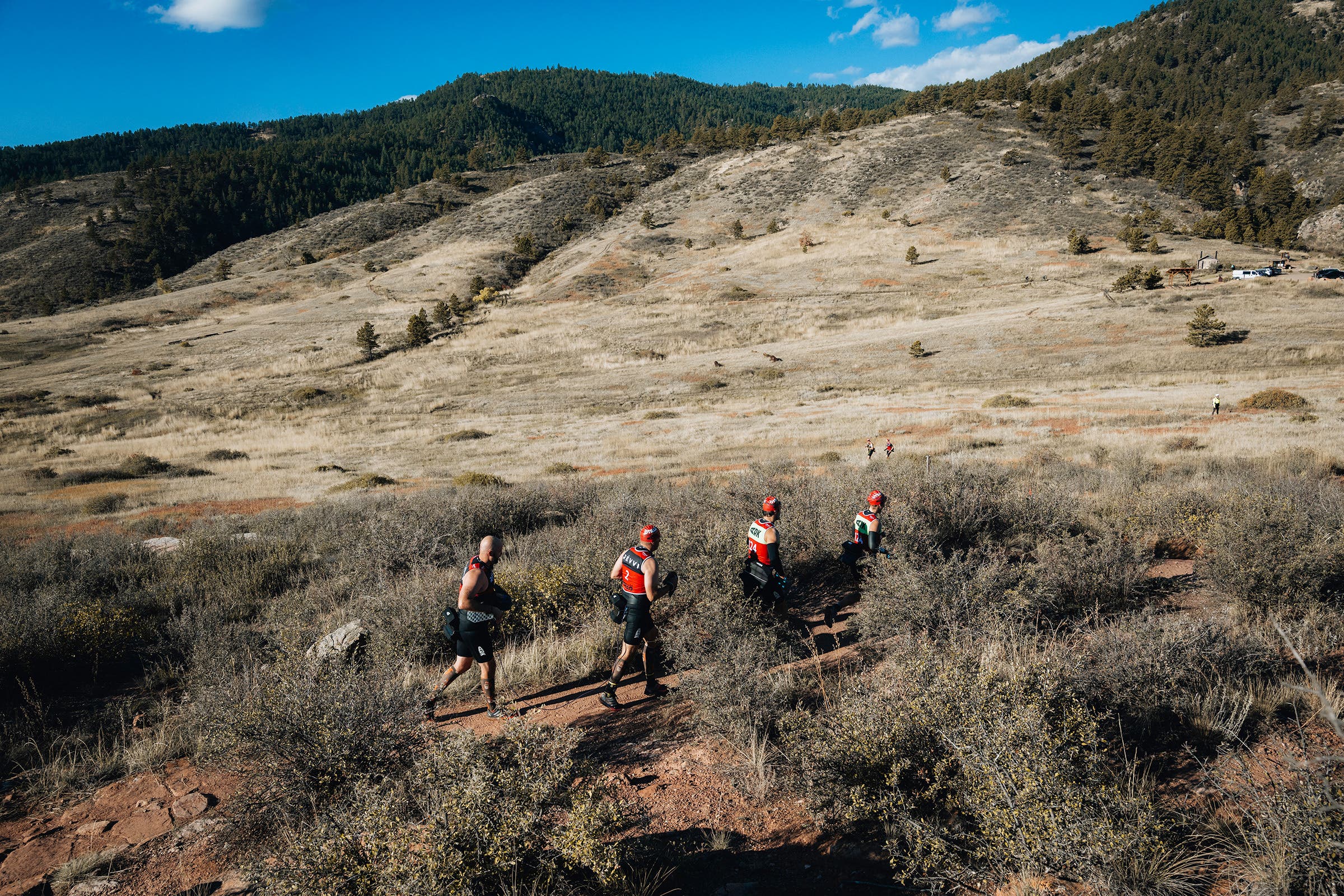
Perhaps it was my soaring body temperature inside my wetsuit, or my lingering buzz. But as I closed in on the guy ahead of me, my mind wandered, and I tripped on a rock, completed a somersault, and landed in the cactus. Bewildered, I made a mental note about swimrun: shit can hit the fan if you don’t pay attention.
The fall meant that I had to spend a few minutes plucking spines from my backside once I crossed the line. But the ordeal delivered one of my lasting takeaways from the race.
Perfection does not exist during a swimrun. Even during a shorter distance race, you’re bound to inhale water, drop your gear, battle through exhaustion, or trip and stumble. How you deal with these setbacks defines your experience out there.
I’ve spent the last 25 years trying out different endurance sports. And I’m familiar with the progression that most athletes follow with these sports. You try out a sport and fall in love with the adventure, camaraderie, and community. Then, as the years go by, you focus more on your results, and before you know it, you’re completing a training regimen, following a performance-oriented diet, and dreaming of a top-ten finish.
I will absolutely compete in another Ötillö Swimrun event, but I don’t envision myself ever getting too hardcore about the format. Simply doing a swimrun gave me enough feeling of adventure and carefree silliness, without an ounce of self-seriousness. Sucking at the format provided half of the joy. And I’m more than happy to chase that feeling again.
