

Published October 7, 2026 12:55AM
How we reported this: The author, Ali Nolan, is an experienced runner and an editor at RUN. She spoke with Liz Patient, founder of Pilates for Runners, about how runners can use Pilates to build strength and optimize performance. Nolan tested three moves herself and included pictures showing how to do each one.
Ask me to run ten miles, and I’ll ask how fast. Ask me to put my legs in straps with my knees bent at 90 degrees, curl up to engage my core, pump my arms in time with rhythmic breathing while counting to 100, and I’ll cry. I’ll cry because Pilates—with all its small-muscle-focused, intentional, and coordinated movements—is my least favorite workout ever. And I’ve done it all: CrossFit, Orangetheory, hot yoga. Nothing feels as torturous as a Pilates session. And yet, three years after starting, I’m still doing it. Why? Because it might be one of the best cross-training complements to running.
Rewind to three years ago, when a nasty calf tear forced me into long-term physical therapy. My PT, Kendell Jno-Finn, said no running (of course) and no unsupervised lifting (wah). But he suggested joining his beginner Pilates class. Pilates, he explained, would help me build balanced strength and mobility so that when I returned to running, I’d be more well-rounded.
It sounded great in theory, but why should a runner do Pilates instead of any of the million other alternatives? Just because it’s popular?
What Is Pilates?
I’d seen Pilates classes before and assumed it was all grippy socks, cute outfits, a weird machine, and a lot of lying on the floor. But five minutes into my first class—with sweat dripping down my face and every core muscle screaming—I wondered if I’d stumbled into runner’s hell.
Nope. It was just basic Pilates: a low-impact form of exercise that focuses on core strength, stability, flexibility, and controlled movement. Developed in the early 20th century by Joseph Pilates, it can be done either on a mat or with specialized equipment like the Reformer, which uses springs and pulleys to create resistance. (But don’t worry, as you’ll read below, most runners will benefit plenty from the former, no-equipment style.)
As I lay there in agony, I couldn’t help but question what Jno-Finn was thinking. How was this slow, confusing, miserable-feeling workout supposed to make me a better runner? My heart rate wasn’t elevated in any meaningful way. The muscles I was using didn’t feel like “running muscles.” Mostly, I was just uncomfortable—and really bad at it.
But according to Liz Patient, founder of Pilates for Runners and a longtime instructor, that might be the point.
“Running is so high impact, and it’s so repetitive in nature,” Patient says. “That’s fantastic for specificity and nailing your form, but it takes a huge toll. The body doesn’t like anything too repetitive—that’s why we get overuse injuries. Pilates balances that out: mobility, strength, stability, variety. Balance is the biggest thing.”
Is Pilates Good for Runners?
Much to my dismay, there is scientific evidence that Pilates isn’t just a nice cross-training option for runners—it actually makes runners perform better.
In a small 2018 study, researchers followed a group of trained runners for 12 weeks, splitting them into two groups: one did their normal running workouts, while the other added Pilates to the mix. Both groups got faster, but the Pilates group saw a much bigger payoff.
On average, the control group improved their 5K times by about 43 seconds (25:33 down to 24:61). The Pilates group? They cut more than two minutes, dropping from 25:65 to 23:23.
The Pilates runners also became more efficient. They used less energy to run at the same pace; their VO2 max (a measure of aerobic fitness) jumped, and their postural muscles weren’t working as hard to hold them together during submaximal runs. In plain terms: their bodies learned to run smarter, not just harder.
Reasons Why Pilates Works for Runners
The researchers pointed to three key reasons why runners find improvements via Pilates:
- Better running economy: Pilates sharpened their movement patterns, so they spent less energy at the same pace.
- More strength: Especially in the stabilizing muscles of the core and hips, which keep form steady and powerful.
- Improved flexibility: Looser, more mobile muscles meant smoother strides and less tension.
In a larger 2023 analysis, researchers found that Pilates improved postural stability, balance, agility, muscle strength, flexibility, core strength, muscular endurance, general sprint performance, VO2 max, coordination, and technical skills in athletes in a wide variety of sports.
It seems crazy to me. How does an exercise program that uses minimal weight produce improvements across the board? Patient explains that it comes down to the focus on connecting the whole body. When Joseph Pilates started out, his goal was to help people get the most out of their bodies and feel their best.
“That requires a real holistic approach because you know you can’t just work your biceps and then expect to feel great in the rest of the body,” she says. “Pilates requires you to coordinate and stabilize and use lots of complex muscle groups altogether, which is fantastic for developing your body as a whole.”
Pilates Versus Strength Training
With Pilates, I’m often struggling in the moment, but rarely feel delayed onset muscle soreness (DOMS) or a huge amount of fatigue that often accompanies overzealous gym sessions. So why does Pilates feel so hard, but in a different way?
Patient says it could be a number of things, but that Pilates’ focus on lengthening muscles and promoting blood flow could explain why DOMS is less intense. And she explains that while gym sessions often target big muscle groups like quads and hamstrings, Pilates digs deeper with a focus on building stabilizing core strength.
“If you think about standing on a paddleboard and trying to throw a ball, you’ll struggle to deliver much power. But if you’re stable on solid ground, suddenly you’ve got all this power. It’s the same with your core: the more stable it is, the more power your arms and legs can produce.”
That’s why Pilates often feels humbling in the moment. “Pilates reminds you that feeling strong in one area doesn’t always mean balance across your whole body,” Patient says.
Patient believes that Pilates is also a great way for runners to be more present in their bodies and understand how things move and feel at a baseline. Instead of crushing a three-rep max back squat and hobbling away from the squat rack, the quieter nature of Pilates and its slow, breath-based moves allows you to be more present and assess where you are that day.
“With regular practice, runners can start to develop a much better feel for their bodies,” Patient says.”For example, during a roll down, they might feel, ‘Oh, my back’s a little tight, it doesn’t usually feel like that.’ That awareness gives them the chance to ease off, get more sleep, or go lighter on a weight session or interval workout. By adjusting before something becomes an issue, they reduce injuries because they’re simply listening to their bodies better.”
3 Pilates-Based Moves Runners Should Do Right Now
Patient is quick to point out that you don’t need fancy equipment. “I haven’t been on a reformer in over ten years,” she says. “Most runners don’t have the time, money, or motivation for that. You can get a long way with just body weight.”
The moves she has runners start with aren’t even classic Pilates moves but functional exercises that fit into her Pilates practice. The key is to do them with control and intentional breathing. These foundational movements will prepare the body for more intense core and stability work later on, like the 100 and side kicks—moves that many Pilates aficionados will likely recognize.
Her biggest piece of advice? Keep it simple and consistent. “Whether that’s ten minutes a day or one hour a week, consistency matters way more than intensity. You’ll feel the benefits quickly—in recovery first, then in mobility, then in strength, and finally in your running power. It’s amazing.”
Her three go-to moves for runners, which should take about 10 minutes to complete.
1. Single-Leg RDL (Hip Hinge)
“This challenges your hamstrings and glutes while also building ankle stability and foot strength. Single-leg work is brilliant for runners because it mimics the demands of running, where you’re always on one leg,” Patient says. She advises doing these barefoot if you can.
How to Do It:
2-3 sets of 6-10 reps per leg
- Stand tall, feet hip-width apart. Shift your weight into one foot (the standing leg). If balance is an issue, keep shoes on at first or hold onto a wall or chair.
- Soften the standing knee (don’t lock it). Hinge at the hips by sending your butt back—keep a long, neutral spine and chest open.
- Let the non-standing leg reach straight back (toe pointed or flexed) so the body makes a long line from head to heel. Arms can hang toward the floor.
- Descend until you feel a hamstring stretch or your torso is roughly parallel to the floor—stop before your lower back rounds. Keep hips square (don’t let the standing hip open).
- Drive through the standing-foot heel, squeeze the glute, and return to standing. Exhale on the way up.
- Repeat on the same side for all reps, then switch legs.
2. Side-Lying Leg Lifts
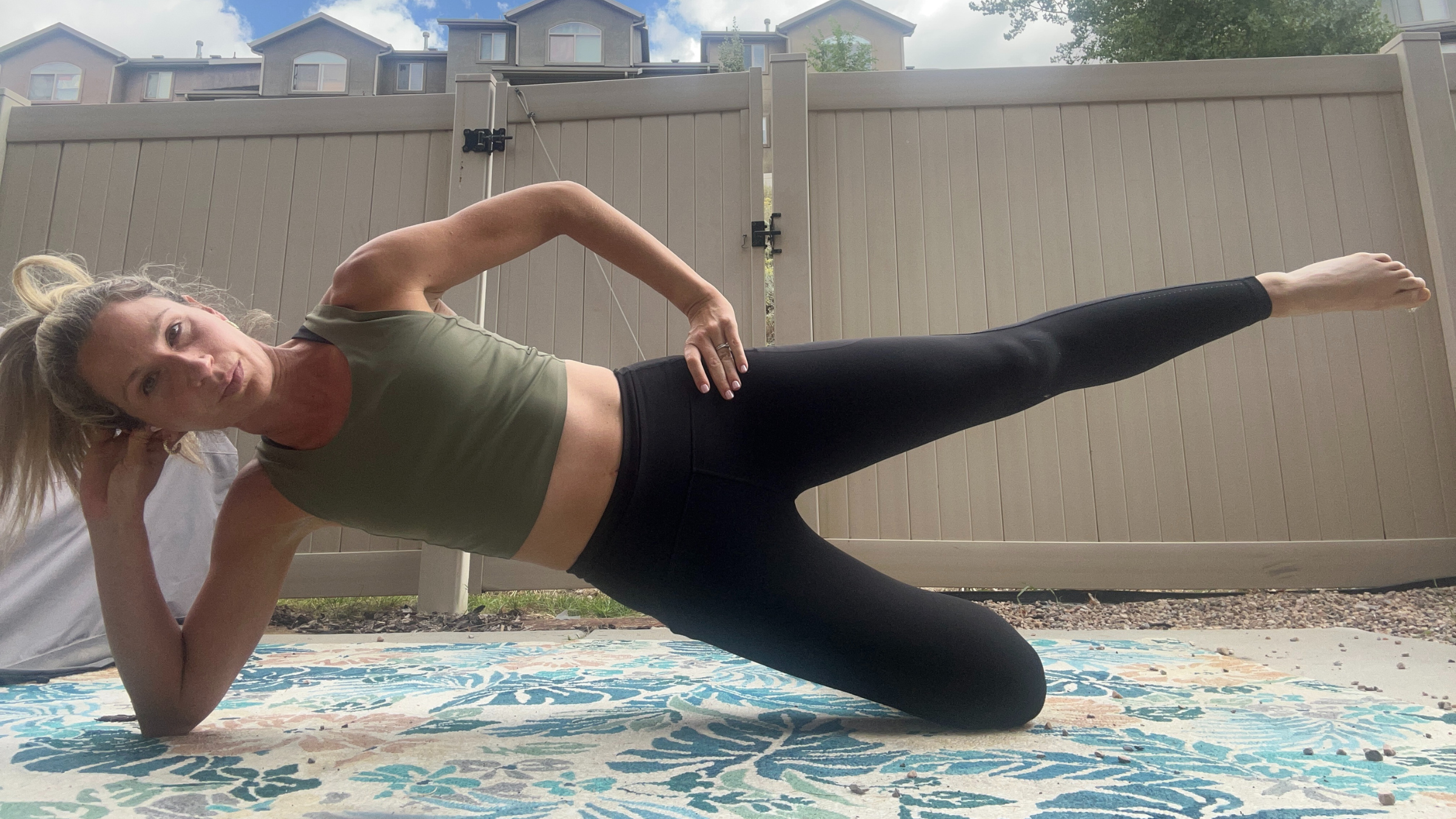
“Lateral hip strength is hugely important for pelvic stability, running economy, and reducing injuries like runner’s knee or IT band syndrome. Running is all forward-backward motion, so you need to balance that out,” Patient says.
How to Do It
2-3 sets of 10-20 slow reps per side
- Lie on your side on a mat, legs stacked. Your bottom leg can be slightly bent for stability, and your top leg should be straight.
- Draw your belly button in (core engaged) so your pelvis is neutral—avoid letting the top hip roll backward.
- Inhale to prepare. Exhale and lift the top leg a small, controlled distance—lead with the heel so the outer glute does the work (translation: you’ll feel it in your side butt). Keep toes pointing forward or slightly down.
- Lower slowly with control (inhale). Don’t let the leg drop. Keep the pelvis stable through the whole set.
- Repeat, then switch sides.
3. Heel Raises Off a Step
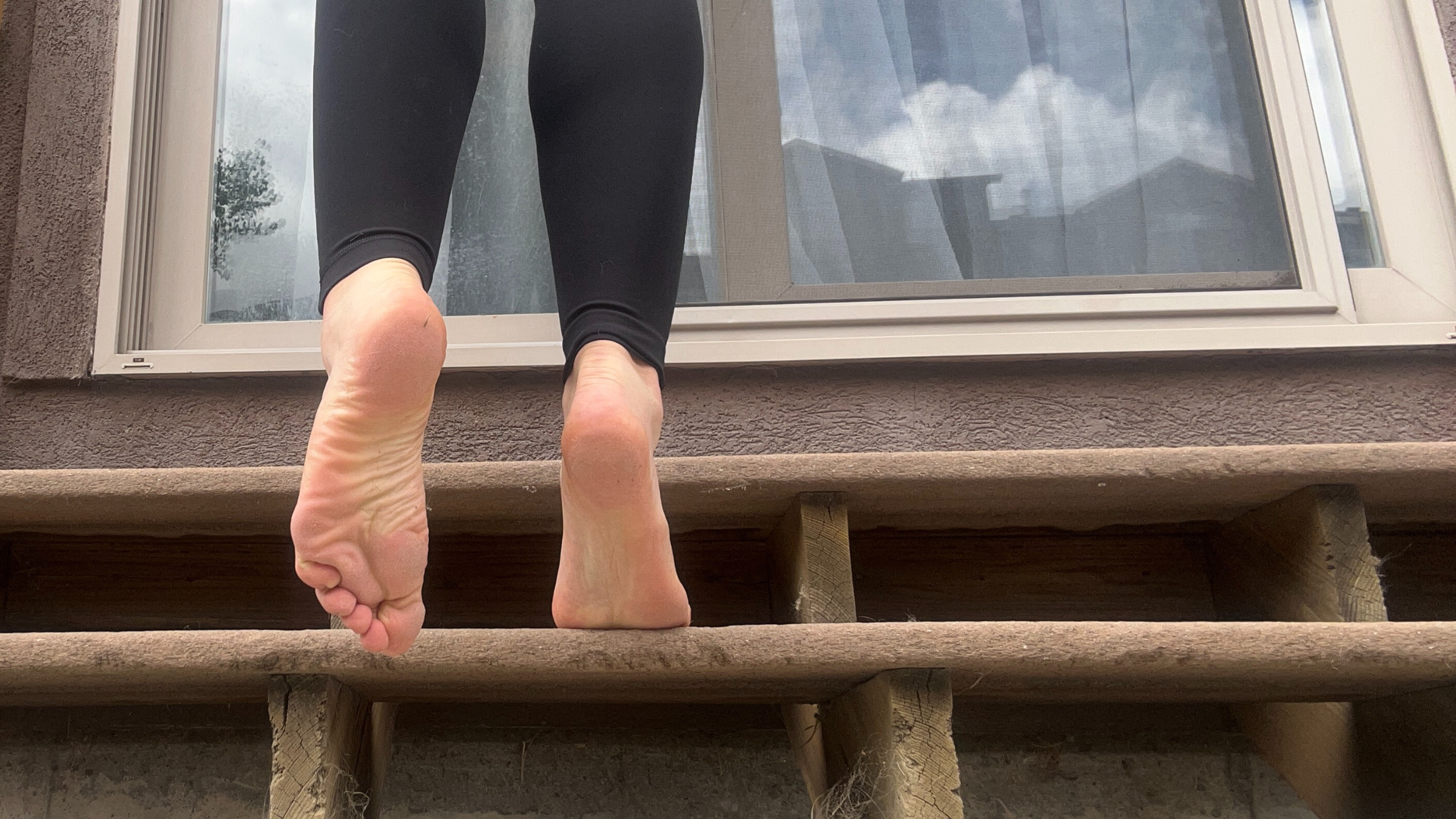
“Lower leg injuries are some of the most common in runners. Your calves are loading between four and eight times your body weight with every stride. Strengthening them—and improving ankle mobility with this move—is essential.”
How to Do It:
Bilateral: 3 sets of 10-15 reps (tempo 1 second up, 3 seconds down)
Single-leg progression: 3 sets of 8-12 reps per leg
- Stand with the balls of your feet on the edge of a step, heels hanging off. Hold a wall/rail for balance. Start with bilateral (both feet).
- From the neutral position, exhale and rise onto the balls of your feet. Pause for one second at the top and squeeze your calves.
- Inhale and slowly lower the heels down for three seconds, ending with your heels below step level until you feel a comfortable stretch in the calves/Achilles.
- Repeat for the set. When bilateral becomes easy, progress to single-leg heel raises.
Want more Outside health stories? Sign up for the Bodywork newsletter. And for tips on how to train, fuel, and recover better, sign up for the Sweat Science 101 newsletter.
