

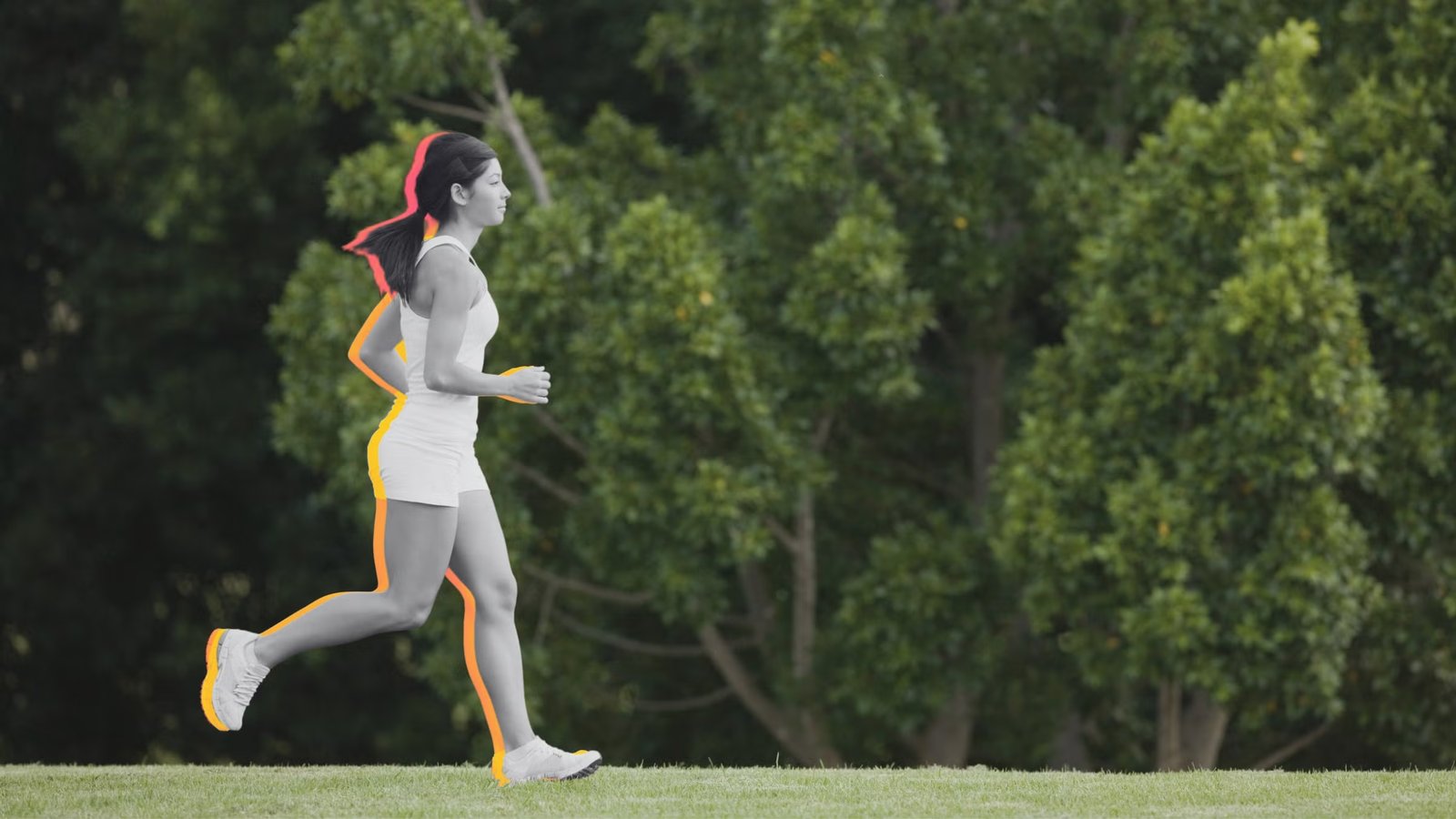
Tough trails require strong bones, but you don’t need to spend hours in the gym to make that happen. A new study finds that short daily walks and mind-body exercises can slow down bone loss and prevent fractures.
(Photo: Ayana Underwood/Canva)
Published October 12, 2026 11:34AM
How we reported this story: The author, Danielle Zickl, a health journalist, interviewed two experts, a physical therapist and a sports scientist, who explained why exercise is necessary for bone health.
Whether you’re scrambling up a mountainside or shredding uneven singletrack on your bike, outdoor athletes need a sturdy foundation. While the focus is usually on cardiovascular stamina or muscle strength, strong bones matter just as much—and are often overlooked.
But recent research in the BMJ journal makes a compelling case for paying attention to your bone health—and how your favorite activities could actually slow down age-related loss of bone mineral density (BMD). BMD measures the amount of minerals in your bone—the more minerals there are, the denser it is, and the less likely it is to break.
“Bone is living tissue and responds to stress and load, so regular weight-bearing activity and resistance exercise are important for maintaining bone health as we age,” Lori Diamos, MS, PT, FAFS, told Outside. Diamos is a physical therapist and founder of PT Pearls, a physical therapy practice based in Chicago, Illinois.
Here’s what the study found and how you can protect your bones as you age.
Moderate-Intensity Exercise Keeps Bones Healthy
The study’s researchers examined data from 124 clinical trials involving 18,429 participants aged 40 and older and looked at which types and amounts of exercise best preserve bone density and prevent fractures.
Results showed that roughly two to three hours per week—or about 20 to 25 minutes a day—of brisk walking, jogging, or similar moderate-intensity activity helps protect bone health by slowing age-related loss of bone mineral density in people aged 40 and up.
The Most Effective Exercises for Each Bone Group
For protecting the spine, brisk walking or jogging, as well as combined aerobic and resistance training, were effective. For protecting the thigh bones, brisk walking or jogging and mind-body exercises, such as Tai Chi or yoga, were effective. And for protecting the hip bones, brisk walking or jogging was particularly beneficial. Mind-body exercises were also associated with an approximately 42 percent lower risk of fractures.
The study authors note that data on race, ethnicity, and socioeconomic status “were rarely reported and could not be incorporated,” which they acknowledge is a “limitation for assessing equity in exercise effects on bone health.”
Why Good Bone Health Benefits Hikers and Other Outdoor Athletes
Walking and jogging create repetitive ground reaction forces that travel through the bone and stimulate new bone growth, Susie Reiner, PhD, told Outside. Reiner is an assistant professor of exercise and sport science at Seton Hall University and founder of TheoryEx, a sports science consulting firm. Muscle contractions against resistance also put force on tendons, ligaments, and bone, which can help preserve and improve bone mass, she said.
Yoga and Tai Chi incorporate body-weight resistance while also challenging mobility, stability, balance, core control, and coordination, Diamos said. The outdoors are unpredictable, she noted. Surfaces, slopes, and footing can change quickly, and you may need to climb, descend, step over something, balance on one leg, or quickly recover from a misstep.
Lower bone mineral density can increase susceptibility to stress injuries and fractures, especially when falls are an inherent risk when navigating rocks, roots, unstable, sometimes wet surfaces out on the trails, Reiner added.
“Training the body in different positions and directions gives it more movement patterns to draw from when those situations happen in real life,” Diamos said. “Having strong bones will give you the structural foundation to tolerate those repeated stresses and loads.”
Ultimately, building strong bones doesn’t have to be extremely strenuous or time-consuming. “One of the biggest barriers I see with busy adults is the belief that exercise only counts if it’s long or intense,” Diamos said. “Around 20 to 25 minutes a day feels much more approachable and realistic.”
Want more Outside health stories? Sign up for the Bodywork newsletter. And for tips on how to train, fuel, and recover better, sign up for the Sweat Science 101 newsletter.
