

Published October 16, 2026 11:24AM
In 1953, Tenzing Norgay, alongside mountaineer Edmund Hillary, made the first ascent of Mount Everest. Usually, the names are reversed, but Tenzing—Apple TV+’s new feature film about the first summit of the world’s highest mountain—takes this historic mountaineering figure out of the shadow and into the foreground. Both men stood on the 29,032-foot peak together, but Tenzing, a highly experienced Nepali-Indian Sherpa who spent two decades pioneering Himalayan routes, had not been the main focus of this moment in mountaineering history until now.
The first ascent of Everest has often been told as a story of British achievement, as it was funded by the Royal Geographical Society, without much focus on the Himalayan climber’s role and his little-known origin story. The film’s director Jennifer Peedom first traveled to Everest more than 20 years ago and said in her director’s statement she left changed by the people who work in its shadow. Her 2015 documentary Sherpa focuses on the lives of Himalayan guides and the human side of mountaineering around Mount Everest.
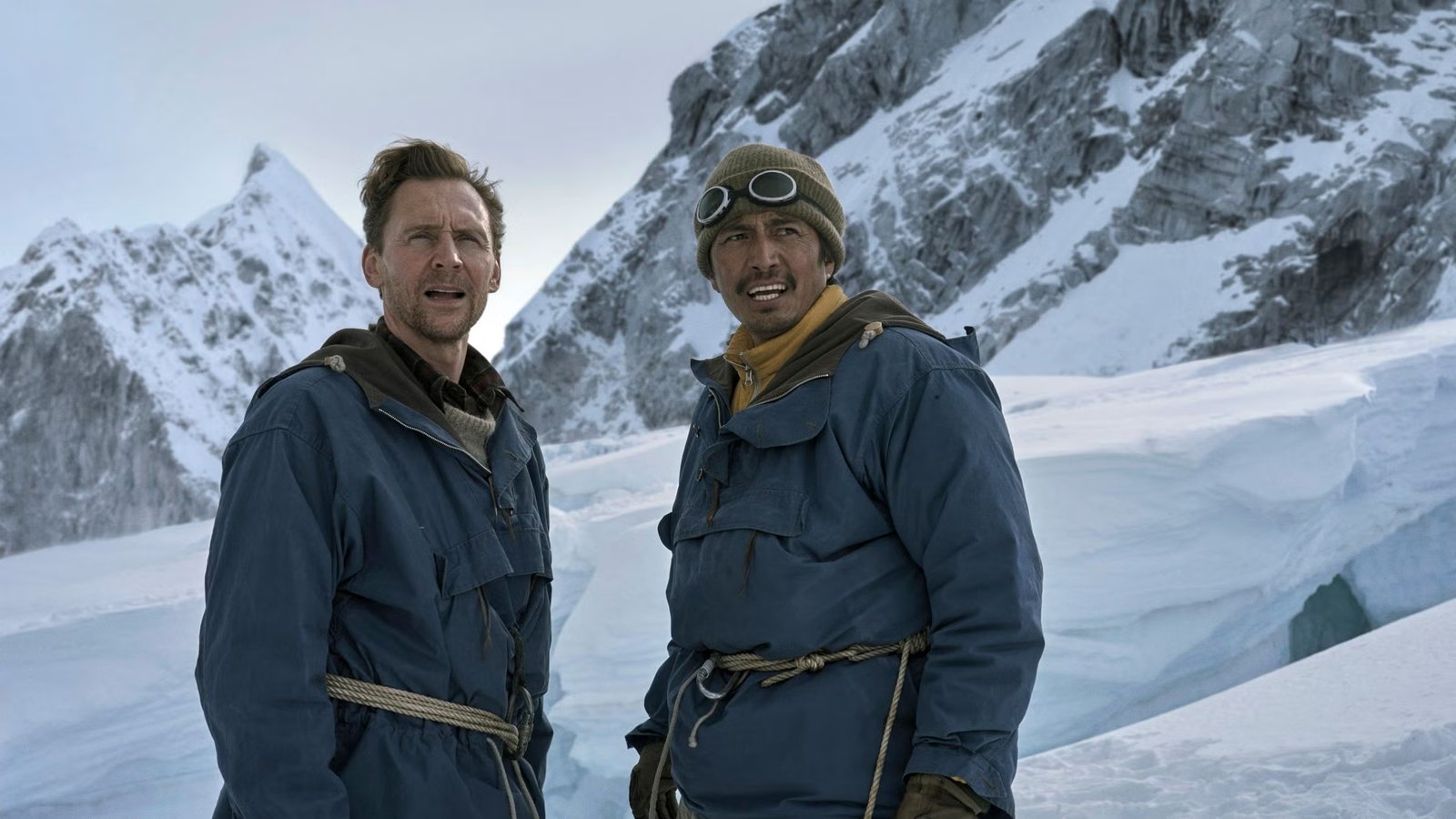
Now Tenzing, her first feature film, shifts the focus to Tenzing Norgay (Genden Phuntsok), who made history alongside Edmund Hillary (Tom Hiddleston) in an authentic, visceral film that rejected green screens and studio sets. Instead, the crew shot in sub-zero alpine conditions across Nepal and New Zealand, capturing visceral climbing footage on real glaciers, rock walls, and crevasses. The production across these two countries ultimately connects Tenzing’s heritage in Nepal with Hillary’s national significance in New Zealand where he was from.
We sat down with Tenzing’s cinematographer, Stefan Duscio, to find out what it was like to recreate the historic first summit of Mount Everest, filming in extreme environments.
Filming Locations at a Glance
- Tibetan Plateau / Tenzing’s Early Life: Lower Mustang region and Dangarjong village, Nepal
- 1953 Kathmandu Expedition Walk: Patan Durbar Square, Lalitpur, Nepal
- Everest Base Camp and Landscapes: Khumbu Valley and Everest Base Camp, Nepal
- Khumbu Icefall: Darwin Icefall, Aoraki (Mount Cook) region, South Island, New Zealand
- Hillary Step and Summit Push: The Remarkables mountain range and Malte Brun Pass, New Zealand
New Zealand’s Southern Alps Double for Mount Everest
In 2024, Peedom and Duscio scouted locations across Nepal to establish Tenzing’s early life on the Tibetan Plateau, Nepal, and India. They intended to capture cultural and lower-elevation scenes in Nepal, while taking the technical alpine sequences to the Southern Alps of New Zealand.
“We wanted to use Nepal to represent all three of those countries. We wanted to do as much of the movie as possible in Nepal, and then really only take the high-altitude alpine sequences to New Zealand because it was safer to film those there at a lower altitude,” Duscio tells Outside. The New Zealand peaks are at a low-enough elevation that oxygen wasn’t needed while filming on them.
The filmmakers enlisted veteran New Zealand mountaineer Guy Cotter, CEO of Adventure Consultants and an Everest expedition leader of 25 years, as mountain safety supervisor. He was part of the first commercially guided expedition on Everest in 1992.
Cotter suggested the region around Aoraki, also known as Mount Cook, in the South Island of New Zealand, to be a good match for the Himalayas and Everest. “Guy is intimately familiar with both landscapes,” says Duscio. “So Jen and I worked with him to help understand those alpine locations and to get his advice on: What do you think is a really good match for the Western Cwm or what’s a really good match for Base Camp or Advanced Base Camp, or the Lhotse Face?”
Duscio says they found close approximations in the Aoraki region to double for all their Everest locations. New Zealand’s Aoraki still has extensive glaciers, icefalls, and seracs. They found an approximation of the Khumbu Icefall in New Zealand: the Darwin Icefall.
New Zealand’s stand-in locations for Everest certainly didn’t make the filming easy by any means. It dropped to negative negative 13 degrees Fahrenheit (negative 25 degrees Celsius) during filming in some locations in New Zealand. Duscio says he remembers some of the mountaineers, like Cotter in particular, say they were wearing more layers here than they would on an Everest expedition. “It was tough… but we were safe,” says Duscio. “The struggle was real, though.”
Filming on Location in Nepal: Lower Mustang to Everest Base Camp
Western climbers often see Everest as something to be conquered, but Tenzing revered the mountain, which the Tibetans and Sherpas call Chomolungma, as the sacred mother goddess. It was a lifelong dream and a spiritual calling for Tenzing to climb Everest. And high above the world, with its class structures and social divisions, he found mutual respect and trust with Hillary
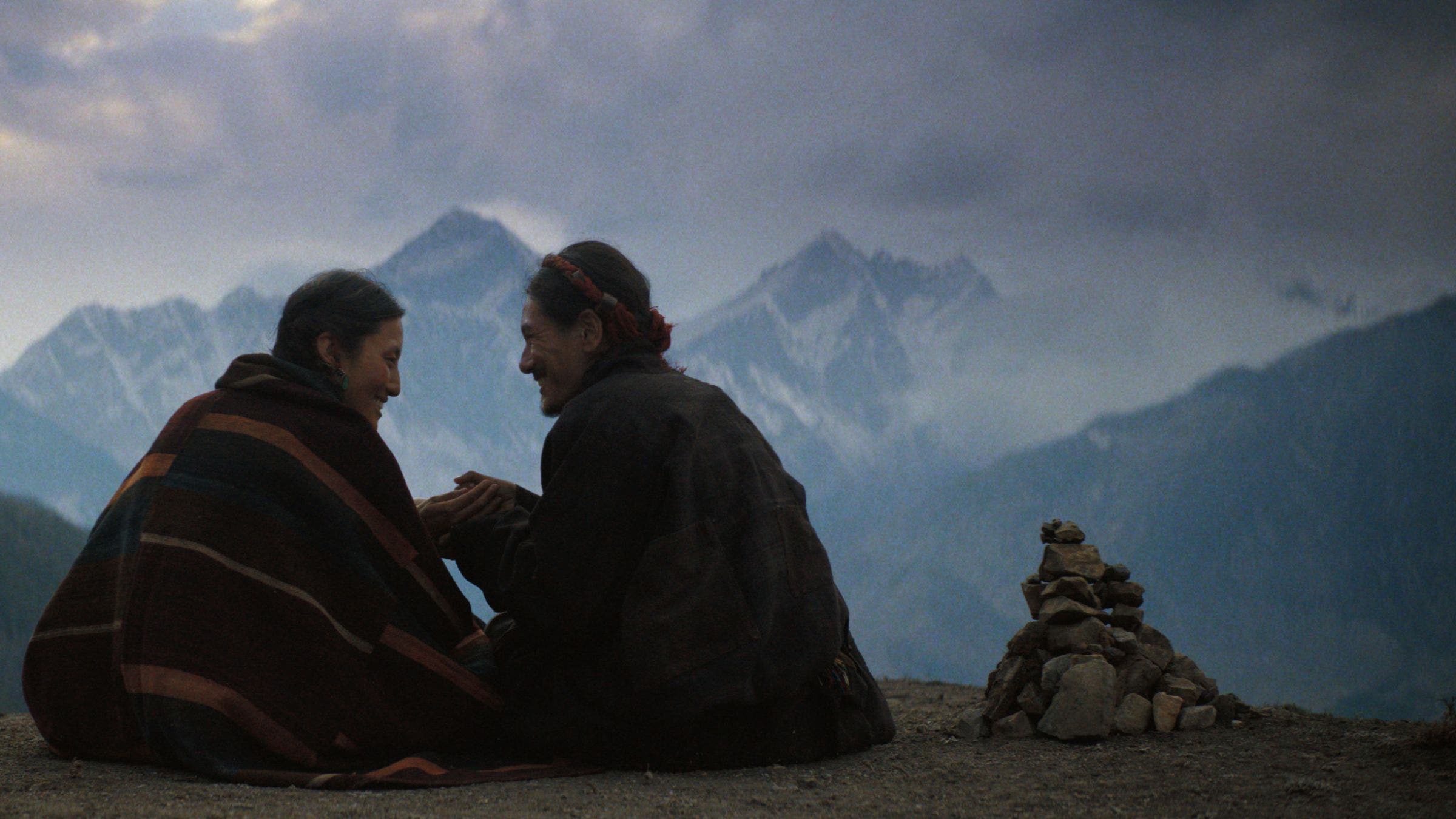
Tenzing’s early life was filmed in Nepal’s Lower Mustang region, a high-altitude desert near Nepal’s northern border. “That was a great double for the Tibetan Plateau because the geology there just feels ancient,” says Duscio. “The rock faces, the mountains are absolutely enormous, and it felt like a really good approximation of what his childhood would have looked like there. The ancient village of Dangarjong felt like it had been untouched for hundreds of years.”
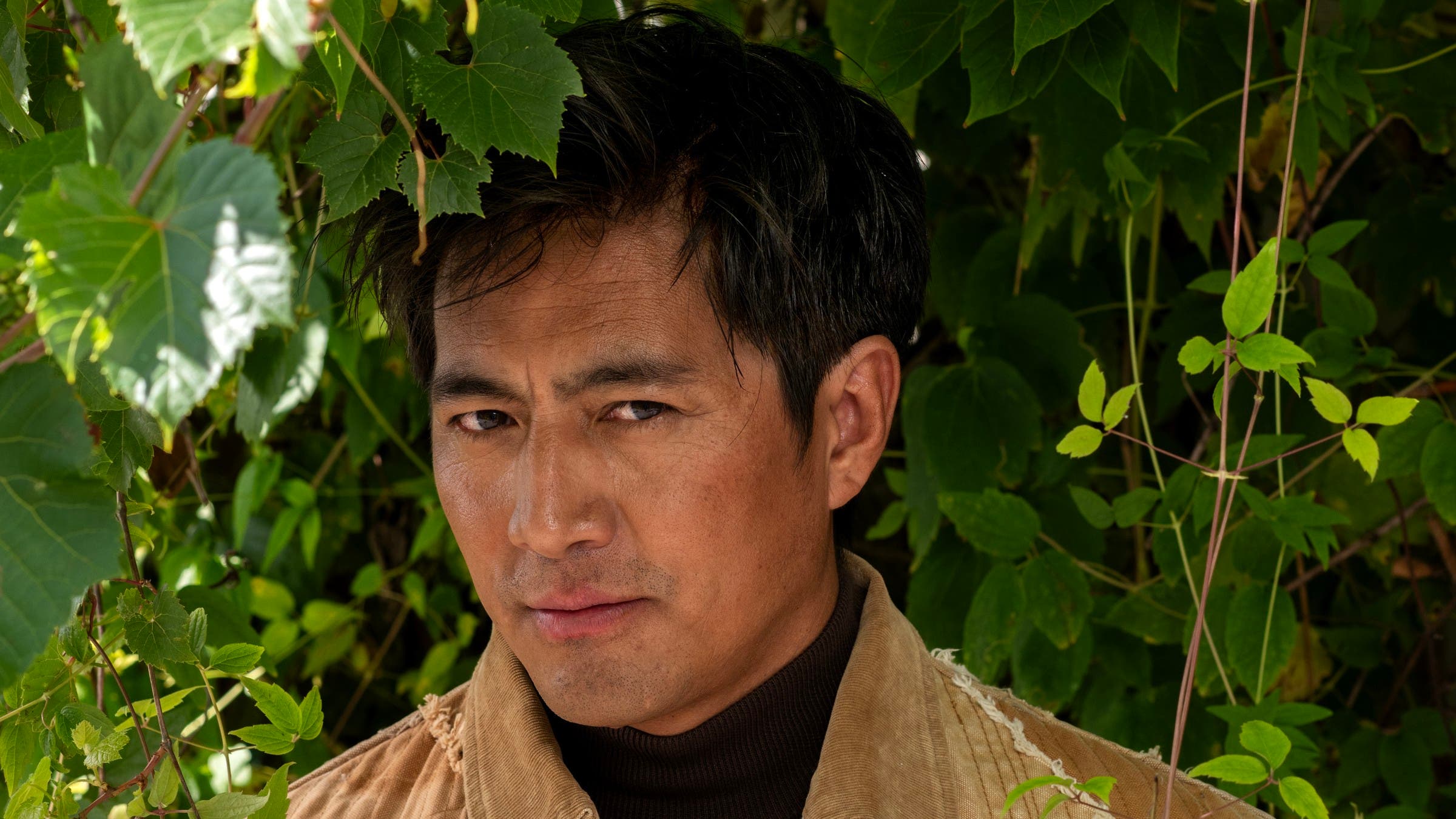
Filming in Nepal also meant carrying the responsibility of portraying a revered national figure. “Tenzing’s a national hero over there, and he looms large,” says Duscio. “A lot of people love him and respect him, and so when they’d hear about our film, they had a lot of questions.” The most common one was, “Who’s playing Tenzing?” “They wanted to make sure he spoke their language and wasn’t some Hollywood star,” says Duscio.
Genden Phuntsok had never climbed a mountain when Jennifer Peedom cast him in Apple’s ‘Tenzing.’ He talks to us about what it took to carry a film about the first ascent of Everest. Read the interiew here.
Duscio, five film crew members, and porters had special permission from the Nepali government to film at Everest Base Camp outside of the climbing season. After hiking through the Khumbu Valley, the team camped at Base Camp to shoot landscapes from the ground, drones, and helicopters. “We wanted anyone who’s climbed Everest to feel like it was very accurate,” says Duscio.
The production also cast 12 Sherpa climbers who took the climbing season off to work on the film, which added another level to the authenticity of what a real Everest expedition is like. “Between them, our 12 Sherpa cast members had summited Everest over 65 times,” Duscio says. Beyond being cast members, they offered their expertise to make sure the production was safe.
How the Crevasse and Hillary Step Stunts Were Filmed
One of the film’s most physically demanding sequences recreates the moment Hillary slips into a crevasse, leaving Tenzing to self-arrest with his ice axe and haul him to safety.
“It was very taxing to film, and it took months to plan it as everyone was nervous about putting actors and crew in a real crevasse and a real icefall, says Duscio. Both Phuntsok and Hiddleston filmed the sequence anchored by safety lines. “Tom was very keen to prove he could cut steps and climb out. He sort of needed to swing his body to get momentum to start cutting steps,” Duscio says.
The sequence toward the end of the film where Tenzing and Hillary have to climb the ice face to get to the summit was also one of the cinematographer’s most intense scenes to capture. They filmed it in the highest ridgelines on the Remarkables mountain range near Queenstown, New Zealand, to recreate the Hillary Step—the iconic 40-foot vertical rock face on Everest’s southeast ridge.
“It was vertigo-inducing,” Duscio recalls. “It was so high and hectic, and I could barely stand with a camera next to the cast. It was really impressive what [the actors] achieved there, but we wanted it to be very dramatic and showcase their athleticism,” notes Duscio.
The Parallel of Filming in the Homelands of Tenzing and Hillary
Filming in the homelands of Tenzing and Hillary across Nepal and New Zealand mirrored the historic bond between the two climbers. Hillary is a national hero in New Zealand, just as Tenzing is in Nepal. “Shooting in both homelands was a wonderful parallel,”says Duscio. The two climbers became lifelong friends, and the Aoraki region contains the mountains that Hillary trained on as a young man.
The connection came full circle when Tenzing’s son, Norbu Tenzing, visited the alpine set in New Zealand and was formally welcomed by local Māori leaders, bridging the shared legacy of the two climbers who reached the top of the world together.
“There were just so many beautiful moments of synchronicity where you could feel the heritage of Tenzing and Hillary blessing our film,” says Duscio.
