

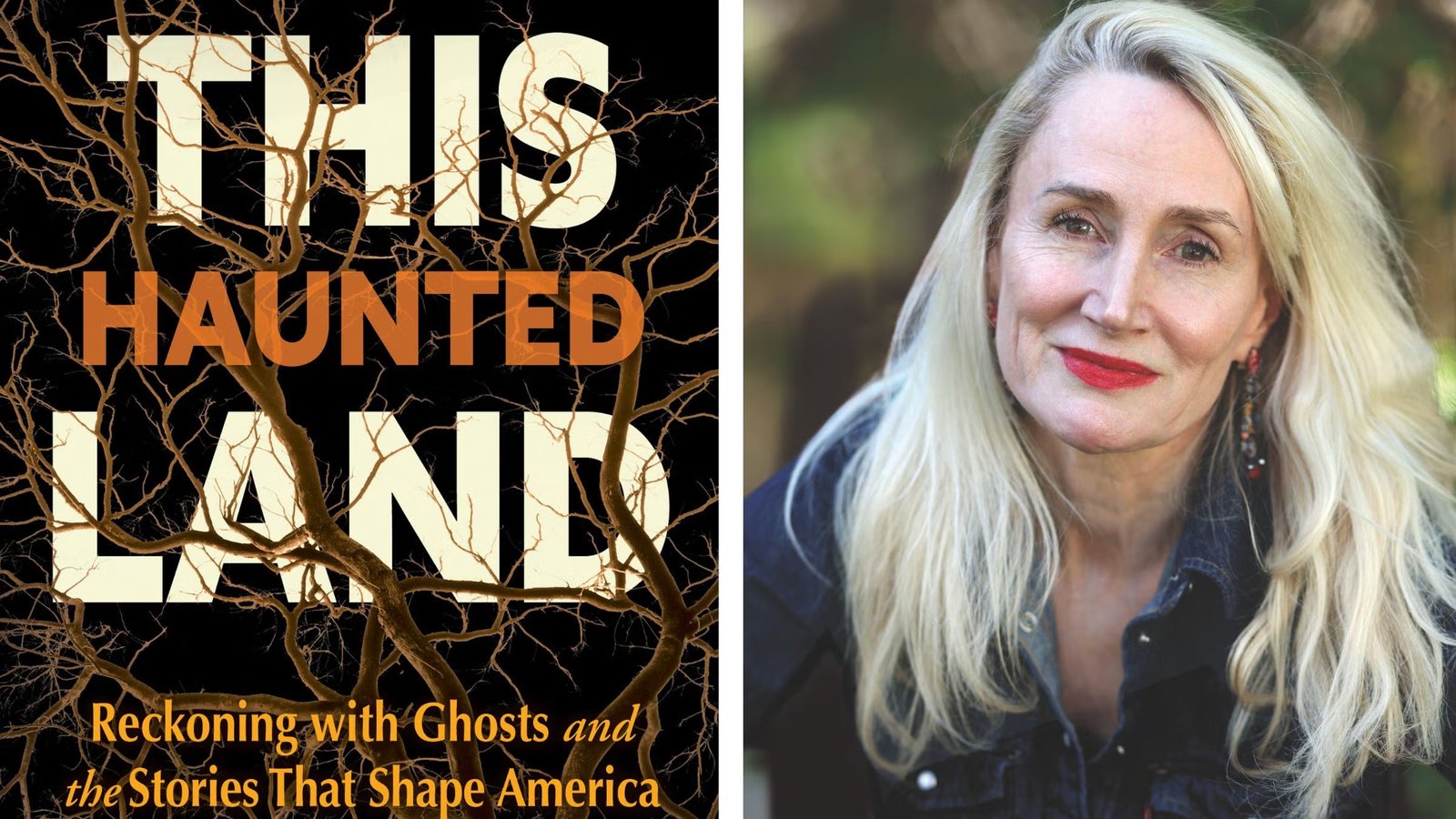
Author of ‘This Haunted Land,’ Betsy Gaines Quammen, explains why turning haunted places into thrills ignores centuries of unresolved trauma. Reckoning with that painful history, she argues, is the only way to truly understand the country’s ghost stories.
(Photo: Courtesy Torrey House Press)
Published October 23, 2026 03:02AM
Author Betsy Gaines Quammen believes in ghosts. In college, she and her roommates shared their rented house in Colorado Springs with one. Florence, as the spirit is named in Gaines Quammen’s new book, This Haunted Land: Reckoning with Ghosts and the Stories That Shape America (Torrey House Press; September 2026), really spooked the college housemates at first. But as time went on, Gaines Quammen learned more about Florence’s tragic history, and she began to talk to the spirit as she might a friend. By the time Gaines Quammen moved out of the haunted house, she was at peace with Florence, and the feeling was mutual.
The chapter reflects a theme that appears again and again in Gaines Quammen’s new book: Ghost stories are our way of dealing with unsettled history. And to find peace with our troubled pasts, we must learn about them first. Each chapter explores different legends and hauntings, whether it be a ghost bird in the woods of Arkansas, spirits of travelers of the Underground Railroad route at a bed and breakfast in Cincinnati, Ohio, or a haunted theater in the idyllic mountain town of Telluride, Colorado.
“This is just not some ghost story book; I’m really trying to look at ghosts and what they tell us about American history,” said Gaines Quammen. “And I’m a historian, so I can’t help myself.”
Outside called up Gaines Quammen to learn more about ghosts, her new book, and the haunting of America.
OUTSIDE: This Haunted Land is made up of a lot more than ghost stories; it’s about an often dark and unresolved history in America. Were you already aware that it would be a richer book when you went into it, or did you initially set out to simply tell ghost stories from across the country?
Betsy Gaines Quammen: My first two books [American Zion and True West] were about extremism, so I really did think doing a ghost book would be a fun next project. I love ghost stories. I just think they’re wonderful to hear, and I wanted a more light-hearted project. But I began to see that ghost stories, the ones I was collecting, were reflective of an unsettled country. Some of the issues that I’d worked on when I was looking at extremism were the same things that I was coming across studying ghost stories. These chapters are still very much unresolved, unreconciled, and they do create a culture that is untethered from the past. I’m not sure I had put that together before I started the book, but it became very clear as I was writing.
Your book dives into some of the problems that paranormal investigators and curious tourists might bring when they explore or recreate on haunted land without understanding its true background. Can you speak to the importance of knowing a place’s history and why that matters?
Gaines Quammen: I grew concerned when I was writing this book about ghosts as pure entertainment. This whole movement of paranormal investigators creates problems, because they sometimes come to Indigenous lands looking for ghosts without understanding the trauma that Indigenous people have gone through. Without understanding the enormous trauma, pain, and horror that came out of the genocide, stolen land, assimilation, and Indian boarding schools, we white people are not bearing the responsibility of understanding history, and it’s imperative that we do. Not only is it wrong to treat these areas as just entertainment, but it perpetuates the horror; it perpetuates the genocide.
The book also has a chapter that looks at how ghost tours and dark tourism continue to exploit primarily enslaved Black women, and how these stories become sort of entertainment in the sense that people have a cocktail and are hearing spooky stories, and they’re not fully understanding the gravity of a country that used enslaved people to build it. There’s a danger when you chase that kind of ghost story without understanding the deep history.
Is there a specific ghost story or haunting from your research that’s stayed with you that is deeply tied to the natural environment, whether that be to a park or to the land?
Gaines Quammen: As I’m hiking, I know that Western places have been homelands to many for countless generations. Although white conservationists have tried to erase the deep history of national parks and other public lands, even when I’m alone, the truth of the past keeps me great company.
There is also a chapter about a ghost bird. There’s something really important about considering the wildlife that lived on the land that is no longer there.
Among the other things that I mention in the book—unsustainable extraction, the legacy of Indian boarding schools and assimilation, stolen land, slavery, violence, and being haunted by this lack of true acknowledgement of history—I also think we’re haunted by extinction.
I talk about Marc Reisner’s Cadillac Desert and how he said our western future is haunted by the scarcity of water. We’re in the middle of being haunted by the scarcity of water. There are many layers of haunting.
Was there a moment, or was it an amount of experiences that stacked up over time, that made you believe in ghosts?
Gaines Quammen: I did grow up hearing ghost stories that I believed. There’s one story that I have in the final chapter where I overheard my dad talking about a haunted house in rural Ohio, and it really scared me. When I was really little, I had something come and visit me in my room, and I still can’t explain it. My mom said I was dreaming, but it was too real.
I’m a historian, and before that I got my master’s degree in environmental studies, so I’m very science-oriented, too. I don’t want people to think, “If I read this book, I have to believe in ghosts.” I think there’s plenty of room for skepticism. But I also think that European-American culture is limiting, and that has to do with enlightenment principles and rationalization. I believe that it’s OK to have a sense of mystery, and I actually think it’s healthy.
Editor’s note: This interview has been edited for clarity, length, and flow.
