

Published October 27, 2026 03:06AM
It’s more fun for everyone when a study works. I love writing about research suggesting that, say, drinking beet juice or zapping your brain with electricity or simply smiling will make you faster.
But this weakness—which, to be fair, I share with just about everyone—has a cost. If I only write about positive studies, we get the impression that pretty much everything works. Ten scientists might study a new supplement, and nine of them find it doesn’t work, but if we only read about the tenth study, we assume the new supplement is awesome. This is publication bias in action.
So, in recognition of this danger, I’m sharing here the results of three studies that didn’t work—or at least, where my first reaction to the findings was “Oh, that’s too bad.” In reality, all three of these studies were successful, because they answered a question that researchers were wondering about. There’s some valuable data and interesting insights here—just not necessarily the ones we were hoping for.
Ketones Don’t Improve Recovery
First up is a test of the idea that ketones boost recovery from hard training or competition. I first wrote about ketones back in 2018 when they were all the rage in the pro cycling peloton as a potential performance-booster. That idea has gone out of fashion, but subsequent research (which I wrote about here) has suggested that the real magic of ketones might be in enhancing recovery and warding off overtraining.
The new study, which appears in Medicine and Science in Sports and Exercise, comes from the same Belgian group at KU Leuven that has pioneered the idea of ketones for recovery. They decided to put their theoretical ideas to the test by having 18 cyclists complete a brutal eight-day simulated cycling stage race, modeled after the Absa Cape Epic mountain bike tour. The cyclists were given either KetoneAid ketones or a placebo after each stage and just before bed each evening.
The researchers hoped that the ketones would accelerate post-exercise recovery, enhance sleep time and quality, and preserve physiological and cognitive function in the face of fatigue. Put all this together, and they hoped the cyclists would go faster on ketones. In the end, none of this happened. The cyclists got tired and slower, but there was no difference between the ketone and placebo groups.
There are a few possible explanations. One is that the sample size was too small to pick up differences. Another is that eight days of racing more than three hours per day didn’t fatigue the cyclists enough for the benefits of ketones to show up. A further possibility is that, despite earlier promising studies, ketones simply don’t make a practical difference in the real world. At this point, we don’t know which of these is correct. But the results should put a ceiling on our expectations: even if ketones work to fight cumulative fatigue, the effect can’t be enormous or it would have shown up here.
Sweat Science 101
Sign up for a ten-part email series from Alex Hutchinson on how to train, fuel, and recover. Each week, Alex covers a new topic, including strength training, supplements, and more!
Low-Level Laser Therapy Doesn’t Stimulate Your Mitochondria
What used to be called low-level laser therapy (or sometimes red light therapy) has now been rebranded as photobiomodulation, because you can use LEDs instead of lasers. The idea is that certain wavelengths of light in the red and infrared range can interact with your cells to produce beneficial effects. It’s been around for a long time: Hungarian scientists in the 1960s claimed that it accelerated hair growth and wound healing in mice; more recently, Alberto Salazar reportedly shipped a full-body photobiomodulation unit to Brazil for his athletes to use before the Rio Olympics in 2016.
There are a lot of claims about what miracles this technology can perform, but a big one is that the relevant wavelengths of light are absorbed by a specific enzyme in your mitochondria, boosting mitochondrial function and other metabolic pathways. This has been demonstrated in test-tube experiments, but never in humans—so Luc van Loon’s research group at the University of Maastricht decided to test the claim, publishing the results in Medicine and Science in Sports and Exercise.
The study involved 12 volunteers who got three five-minute doses of photobiomodulation with a K-Laser Cube Plus 30 on one leg, and three placebo doses with the light turned off on the other leg. The researchers took muscle biopsies and skin samples to test mitochondrial function and the expression of genes related to muscle metabolism half an hour after the treatment.
The results are easy to sum up: there was no difference between legs, other than a bit of surface warming at the skin. The claims for this kind of technology are so broad (Achilles tendinopathy! lumbar discopathy! pressure ulcers! range of motion!) that a single study can’t possibly debunk all of them. But these results should give you pause.
Ice Baths and Hot Tubs Are Equivalent for Post-Exercise Recovery
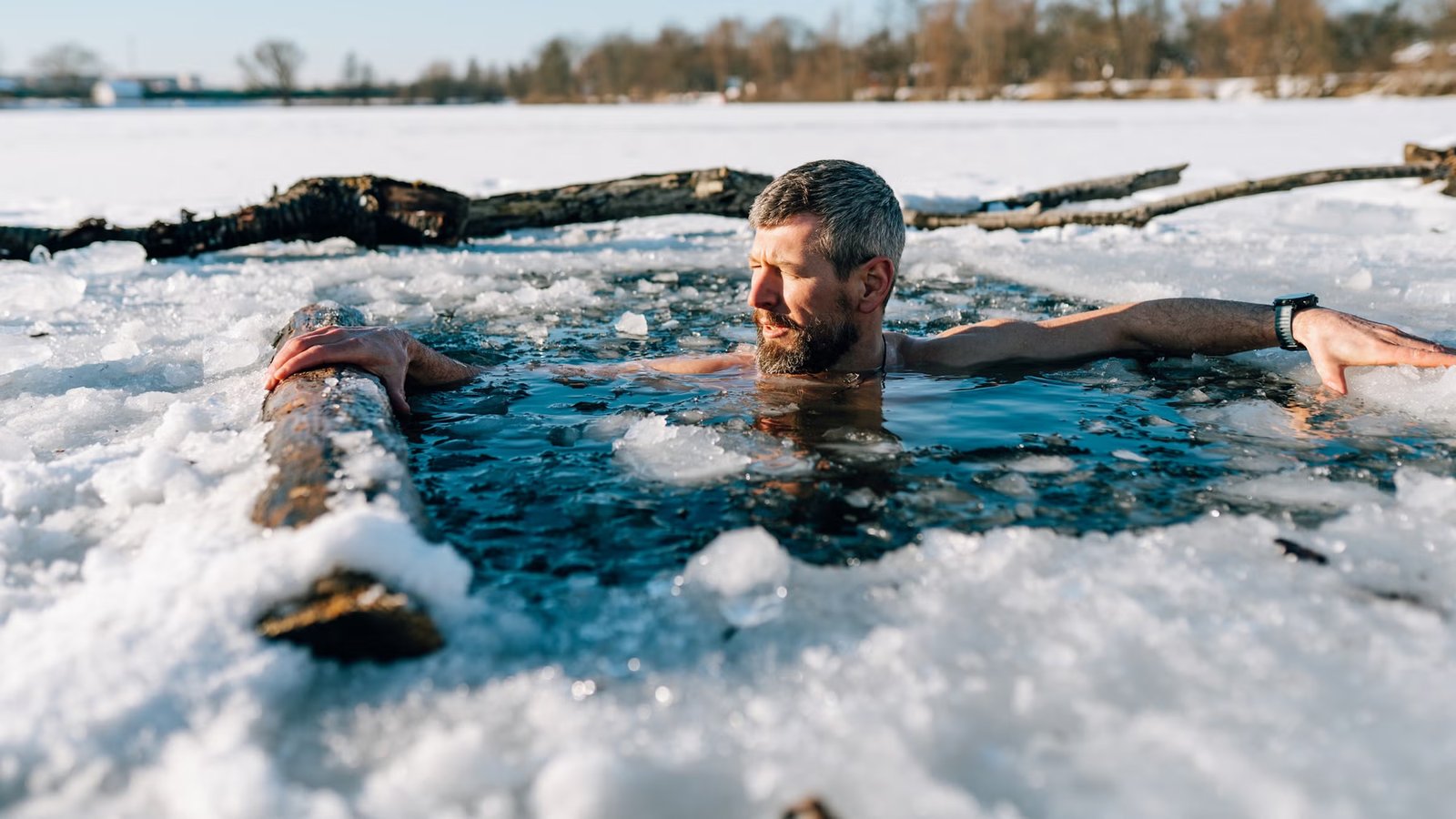
This study in the Journal of Sports Sciences, from a French group led by Thomas Rupp and Sébastien Racinais, is a “glass half-empty or half-full?” test. They put 22 volunteers through a simulated soccer game, then gave them 25 minutes in either an ice bath (at 57 degrees Fahrenheit) or hot tub (at 108 degrees Fahrenheit) immediately afterwards, a day later, and two days later. They tested soreness, muscle fatigue, and neuromuscular function.
Once again, the results are easy to sum up: there were no differences between the groups. To me, the logical conclusion is that neither of them does anything. It seems highly unlikely that doing a thing, and also doing the opposite of that thing, will both produce positive effects. Whatever cellular mechanism you think is at play here—changes in blood flow, inflammatory signals, antioxidant levels, or whatever—cold and heat should have opposite effects. If they both produce the same results, those changes probably don’t matter.
That’s not how the researchers frame it, though. The actual purpose of the study was to test hot-tubbing for recovery; the ice bath group was the “standard of care” control group. If you assume that ice baths are effective, then the fact that hot-tubbing produces the same result means that it’s “a practical and effective alternative” for recovery, as the paper concludes.
Personally, much as I love how ice baths feel after a hard workout, I’m not sold on their physiological benefits. There’s still debate among scientists, and I’m open to being convinced, but it looks to me like a placebo—which means “just as good as an ice bath” is a half-empty glass.
For more Sweat Science, sign up for the email newsletter and check out my new book The Explorer’s Gene: Why We Seek Big Challenges, New Flavors, and the Blank Spots on the Map.
