

Published November 2, 2026 05:05PM
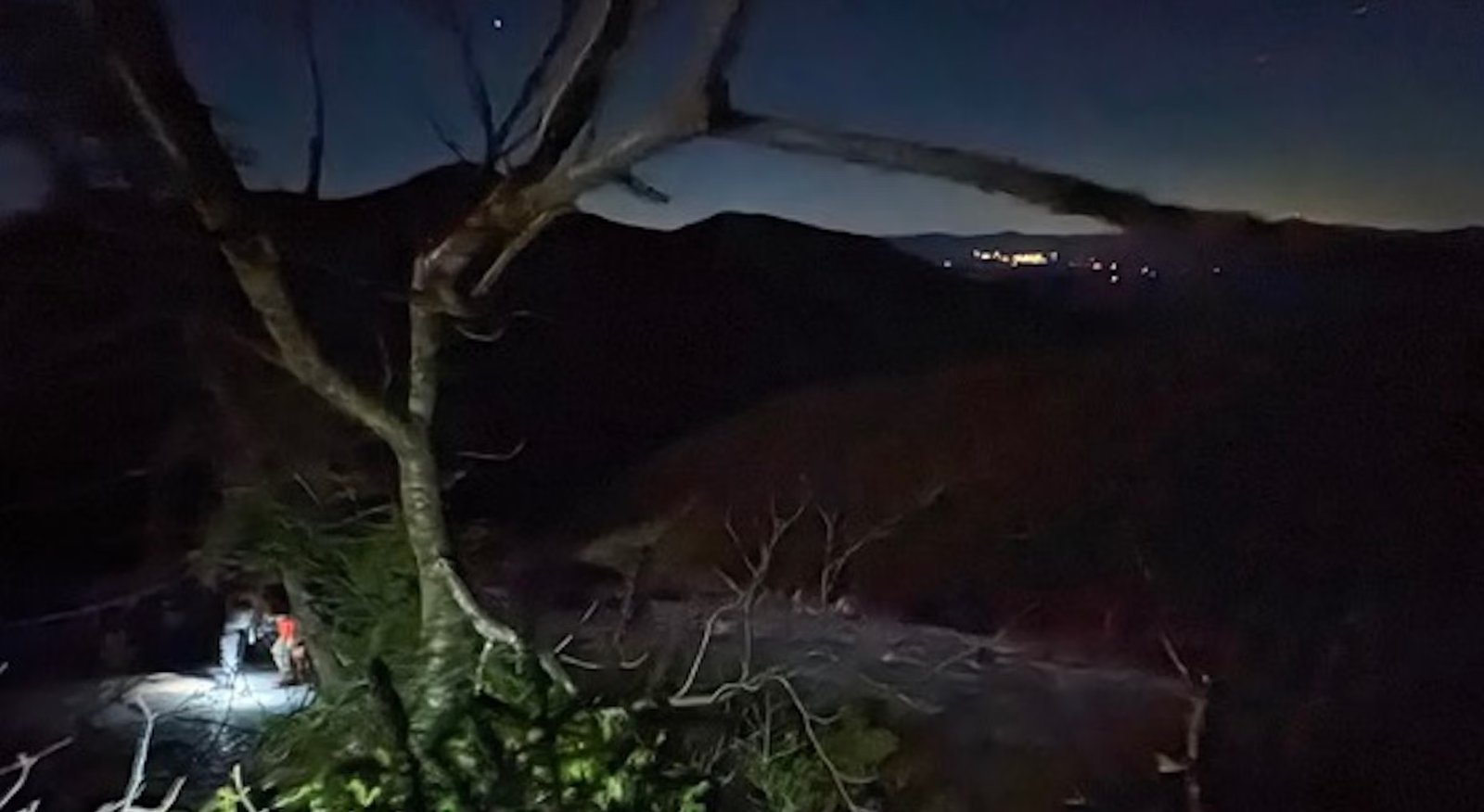
A 60-year-old Canadian climber was rescued from New York’s Adirondack Mountains on October 22 after spending seven hours standing on a frozen patch of rock and ice no bigger than a coffee table waiting for search and rescue.
For the climber, named Eric Le Bourhis, that miserably stationary wait made him a model subject for rescuers.
Le Bourhis was climbing Mount Colden, a 4,714-foot peak near Lake Placid, when he encountered ice and stopped to put on his crampons, the rescue report said.
But the bag containing them slipped away and slid down the mountainside, leaving him without the traction he needed to climb any higher. Worse, the wet rock he’d climbed earlier was now frozen, making it too slippery to descend. Le Bourhis was effectively trapped. There was a cluster of trees just seven feet away offering a possible escape, but reaching them meant risking a potentially deadly jump across the icy slope.
In a video interview released by the New York State Department of Environmental Conservation, Le Bourhis said he resisted the temptation to jump, a decision that spared him the risk of a potentially deadly fall.
“I agonized over that, should I try to jump this gap? Should I jump? Should I not jump? Should I activate the beacon? Finally, when I saw the sun was setting, I decided to activate the beacon,” he said.
And according to Chris Boyer, executive director of the National Association for Search and Rescue, it’s precisely those moments of desperation that can turn an already dangerous situation into something much worse.
“The more you move, the more desperate you get, and the worse the decisions you make are,” Boyer told Outside. “You start to take on more risk about, can I make it across this stream? Can I climb this area? Things like that. So we want to minimize their risk and maximize their survivability and findability,” he said.
Seven Hours With Nothing to Look At
Le Bourhis was climbing a route known as the Trap Dike, which winds through a steep, rocky passage on Mount Colden before opening onto broad, exposed slopes near the summit. He had climbed it before. Classified as a Class 4 climb, the route requires using both hands and feet, and a fall can be fatal.
After dropping his crampons, Le Bourhis activated his satellite distress beacon as the sun went down. Dispatch received the signal at 6:22 P.M., but Le Bourhis didn’t know whether help was coming. With no room to sit, he spent the next seven hours standing and trying to keep his increasingly tired legs steady.
“I wanted to entertain myself by looking at Lake Placid, or maybe the lights of people coming for me,” he said. “But I didn’t even have that as entertainment because it made me a bit wobbly. So I just put my headlamp on low and looked at the ground right in front of me for hours and tried to stay upright.”
When panic sets in, stranded travelers often convince themselves that help isn’t coming and that they will starve or freeze before anyone notices they are gone, Boyer told Outside.
“That flight response kicks in,” Boyer said. “All those things start to manifest, and that can do weird things to you. You think, ‘Nobody’s going to come find me, no one knows I’m missing, and the only way for me to survive is to walk out on my own.’”
Staying put is not an absolute rule, of course. Boyer clarified that travelers facing immediate dangers, such as avalanches or lightning, may need to move to safety. Absent an immediate threat, however, remaining stationary gives rescuers a reliable starting point without worrying that someone has wandered into an area they’ve already searched.
Why Rescuers Say There’s No Shame in Calling
Forest rangers reached Le Bourhis at 1:16 A.M. on October 22. One ranger ventured onto the icy slope to secure him to a rope system before the team guided him into the trees. A punishing bushwhack uphill and a trail descent followed before the operation ended at 8 A.M., nearly 14 hours after his initial SOS.
Forest Ranger Nate Jeffery, who helped rescue Le Bourhis, described the climber as unusually well prepared, despite the mistakes that had left him stranded.
“I don’t think there’s too many subjects that could pull off the composure to stay calm and collected and maintain their position on that ledge for that long,” Jeffery said in a separate DEC video interview.
Despite carrying an emergency beacon, Le Bourhis never imagined he’d be the one calling for help.
“I felt a huge rush of guilt and shame,” he said. “Well, why did I have a beacon then? I don’t know. But I never thought I would have to use it.”
Boyer says backcountry users should always feel free to call for help during an emergency. Volunteer teams devote their time, money, and training to helping people in trouble, he said.
“Ninety-nine percent of search and rescue personnel in the U.S. are volunteer. They live for this,” he said. ” They beg for this. They train hard. They get certifications. They spend personal money on gear. They prepare for this, and they want to help. They’re an altruistic service that’s available, and don’t feel bad about calling them.”
