

Published November 4, 2026 09:08AM
What to know: After testing 38 pairs of snowboard boots, our crew’s favorite all-mountain options are the Nitro Team Double BOA (men’s) and the ThirtyTwo Lashed Double BOA (women’s). If you’re looking for a comfortable, more affordable pick, it’s hard to beat the Nidecker Altai, which is available in men’s and women’s sizes. Heading into the backcountry? Check out the versatile ThirtyTwo Focus BOA x Sweetin or the skintrack-slaying K2 Waive.
Testing snowboards is one of our favorite things in the world. Testing snowboard boots? Not so much. Quite frankly, it’s hard to find a pair of snowboard boots that fit your anatomy and riding style (not to mention budget), and breaking in a new pair can be daunting even for seasoned snowboarders.
Luckily for you, our crew of diehard testers risked blisters and toe bang while putting 38 pairs to the test in the Rockies, Wasatch, and Sierra over the past couple seasons to bring you the best snowboard boots available today. Below, you’ll find our top picks for boarders on a budget, tried-and-true favorites for all-mountain riding, as well as powerful freeride boots and our go-to option for splitboarding.
Best Snowboard Boots: At a Glance
Snowboard Boots Comparison Chart
| Specs | Price | Sizes | Flex / Feel | Outsole |
| Best All-Mountain: Nitro Team BOA | $460 | 7–15 | Mid-stiff | Vibram |
| Best Value: Nidecker Altai | $320 | Men’s 7–14; Women’s 5.5–10 | Medium | Lightweight foam |
| Best All-Mountain/Freestyle: ThirtyTwo Lashed | $400 | Men’s 6–14; Women’s 5–10 | Medium (after break-in) | Rubber with foam cushioning |
| Best All-Mountain/Freeride Women’s: K2 Trance | $410 | Women’s 5–11 | Mid-firm | Lugged rubber |
| Best Adjustability: Head PSI | $459 | 23–31.5 (Mondo) | Medium / intuitive | Recycled rubber |
| Best Mid-Stiff: Bataleon Salsa | $430–$440 | Men’s 7–13; Women’s 5.5–10 | Stiff | Vibram with foam midsole |
| Best Stiff/Freeride: Ride Insano | $500 | 8–14 | Ultra-stiff | Michelin with TPU shank |
| Best for Resort and Backcountry: ThirtyTwo Men’s Focus BOA Sweetin | $550 | Men’s 6–13 | Stiff (with removable stiffeners) | Michelin Fiberlite rubber with carbon shank |
| Best Splitboard Boot: K2 Waive | $590 | Unisex 5–13 | Mid-stiff (walk mode) | Vibram with crampon heel welt |
| A Step On Alternative: Burton Waverange X Pro Step On | $730 | Men’s 6–15; Women’s 5–10 | Mid-soft / forgiving | Vibram with PU/gel inserts |
The Reviews: Best Snowboard Boots
Best All-Mountain Snowboard Boots
Nitro Team BOA
Sizes: 7-15
Pros and Cons
+ Versatile for true all-mountain use
+ Comfy out of the box
+ Solid heel hold
– Hard-chargers may crave a stiffer freeride boot
– Fit can be snug
Nitro’s best-selling Team is an all-mountain menace that’s dependable from park to peak. This double BOA version pairs new H5 BOA coilers with Nitro’s fast-and-easy inner lace system, which kept our ankles locked in place for responsive turns and smooth transitions.
The main draw of the comfy-out-of-the-box Team is its versatility. A Tahoe tester who loves throwing down in spring parks as much as he does exploring Palisades hike-to terrain found the mid-stiff Nitro supplied the sweet spot of support and shock absorption. There’s enough lateral give for jib laps and tweaked airs, and the molded backstay provides stability on steeper descents. Meanwhile, the EVA foam liner, EVA midsole, and an airbag pocket in the heel make for velvety-smooth landings. Plus, the Vibram outsole was at home scrambling in the alpine. “Zooming around on melted rocks was totally chill,” reported that Tahoe tester.
These Nitro boots are best for intermediates and up, but heavier, hard-chargers may gravitate toward a stiffer boot in serious freeride terrain. Fit was on the snug side, so it’s smart to size up a half size. It also comes in a wide version.
Best Value
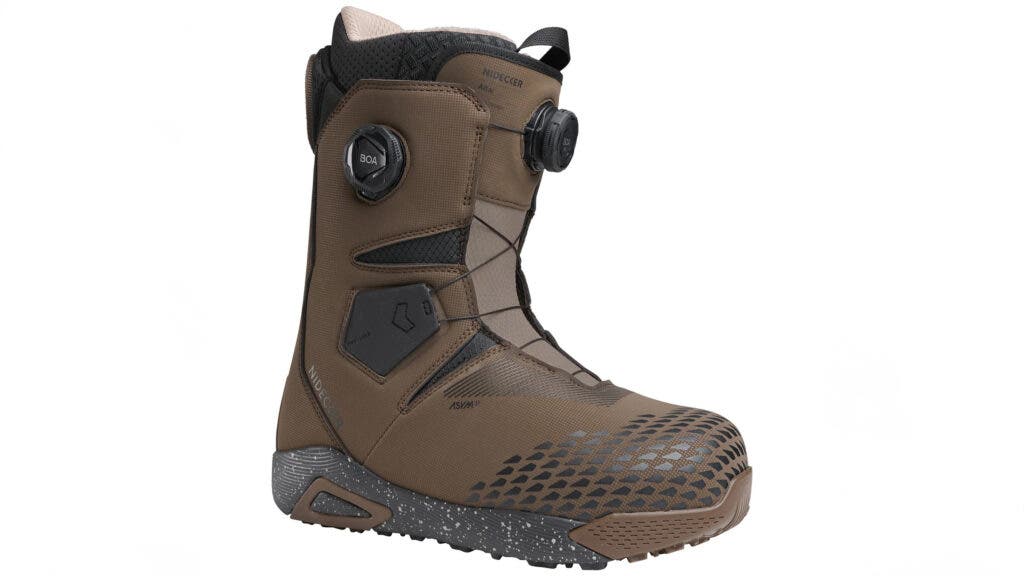
Nidecker Altai
Sizes: 7-14 (men’s); 5.5-10 (women’s)
Pros and Cons
+ Comfy out of the box
+ Lightweight
+ Good shock absorption
– Flimsy insoles
– Durability concerns around the foam outsole
– Doesn’t pair with FASE bindings
The lightweight, affordable, and medium-flexing Nidecker Altai also happened to be one of the top rated snowboard boots in the comfort department. An Eastern Sierra tester with a history of foot pain was impressed by the coziness from lap one. “I haven’t had these professionally fit, and they are remarkably comfortable out of the box,” she reported, shouting out the plush, foot-hugging liner and the roominess of the 3D-molded toe box.
After replacing the “flimsy” stock insoles with custom footbeds, a snowboard instructor called the Altai “perfect for everyday riding” thanks to “a blend of comfort and responsive mid-flex.” She co-signed the double-BOA lacing and Velcro-cuffed liner that stayed tight and secure. The asymmetrical closure, which shifts BOA lacing inwards and over the flattest zone of the forefoot, is a hallmark of Nidecker boots, and the Swiss outfitter claims it reduces pressure and discomfort. Testers confirmed as much: “Stayed tight, no pressure points, super comfy,” said one.
By loosening the upper BOA, a freestyle-oriented rider could dip in and out of the park, boning tweaked grabs and buttering to his heart’s content. The lightweight, cushy foam outsole absorbed flat landings well, he reported, although multiple testers worried about the foam sole’s durability compared to harder-wearing rubber outsoles found on the pricier options in this guide. Additional dings? The lipped backstay doesn’t fit well with FASE bindings while unstrapping, and a couple of testers had to size up a half size.
Beyond that, our crew recommended the boot for lower intermediates to advanced riders, warning that newbies could benefit from a softer flex and hard-charging speed demons would crave more support.
Best All-Mountain/Freestyle
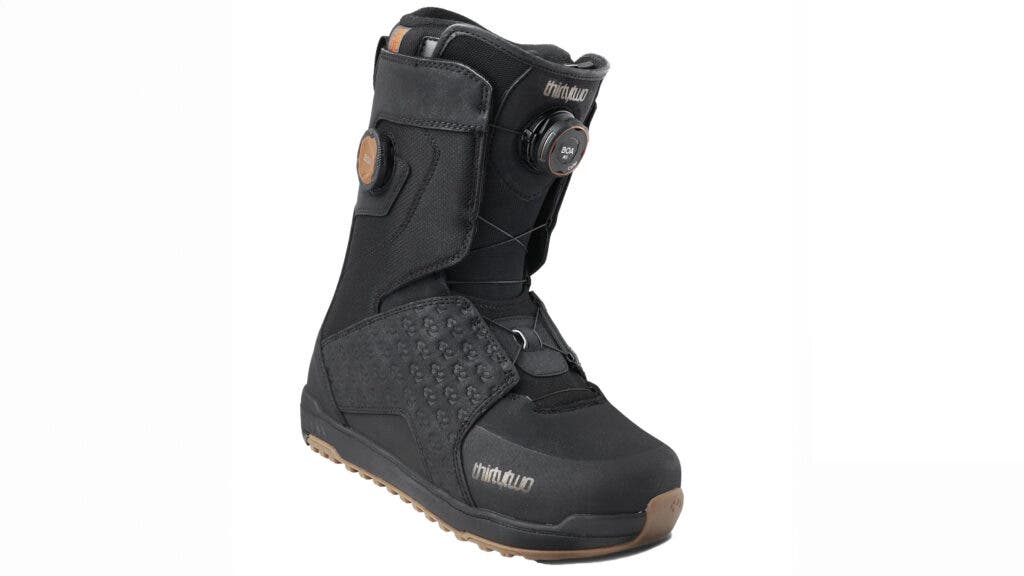
ThirtyTwo Lashed Double BOA
Sizes: 6-14 (men’s); 5-10 (women’s)
Pros and Cons
+ All-mountain boot that loves park laps
+ Great cushioning and shock absorption
– BOA needs frequent retightening
– Beefy build
ThirtyTwo’s frills-free Lashed Double BOA walks the tightrope between power and playfulness. It gives all-mountain freestylers enough comfort for bell-to-bell riding, response for off-piste exploration, and lateral flex to flow through the park. “Cushy and comfortable,” said a longtime snowboard instructor who spends full days on her feet.
The dual-density, heat-moldable liner and light yet robust rubber outsole with integrated foam cushioning spared testers’ joints from impact. A classic dual-BOA design cinches down the tongue, and an internal ankle harness hugs the forefoot. Testers had mixed feedback on lacing: The inner lacing and BOAs work in harmony to dial fit, but we noticed some fraying of the eyelets and needed to continually tighten throughout the day. Additionally, the Lashed doesn’t have the most low-profile silhouette. But that didn’t bother our test crew too much, as the beefier build helps provide durability, warmth, and comfort. Our biggest complaint this year? One tester had a pressure point from the liner’s revamped, structured heel.
While the Lashed can be overkill for beginners in search of Sorel-level softness, after a brief break-in period, it mellows to a medium flex that’s well suited to resort ripping and freestyle applications.
Best All-Mountain/Freeride Women’s
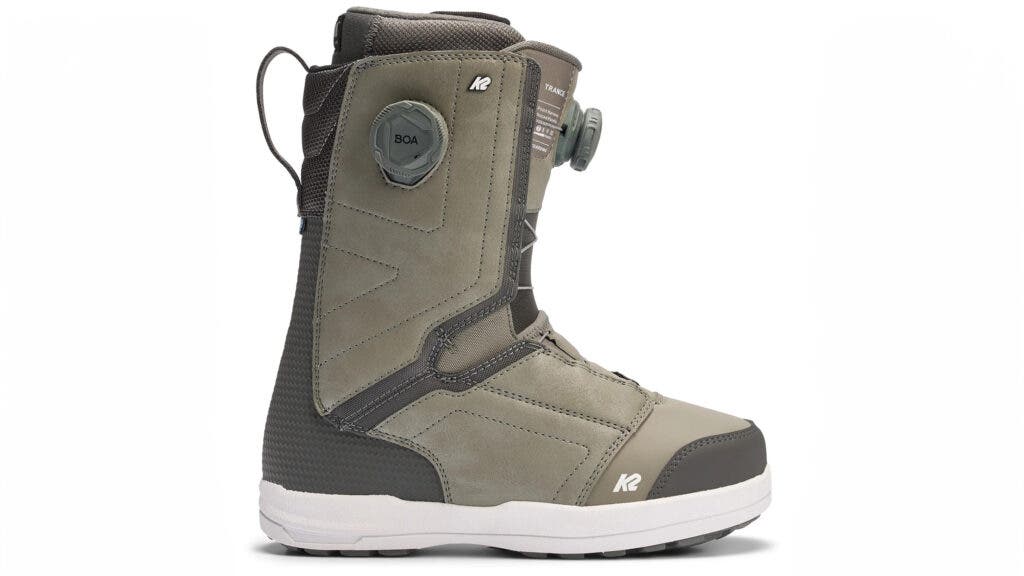
K2 Trance
Sizes: 5-11 (women’s)
Pros and Cons
+ Enough backbone for hard-charging
+ Versatile enough for all-mountain use
+ Comfortable and secure fit
– Sloped toe caused some cap-style binding straps to slide off
One of K2’s stiffest women’s offerings, the Trance features a mid-firm backstay that speaks to all-mountain and freeride rippers. “There’s plenty of stability for freeriding, but enough flex for cruising on a pow day, too,” said a Tahoe all-mountain tester, who gave the Trance a Goldilocks flex rating: “Not too stiff, not too flexible—a great middle ground.”
We were major fans of the heat moldable and multi-density Intuition Control foam liner, as well as three-point liner lacing harness that locks it in place. One BOA dial controls the upper half of the boot, and another tightens the lower, while an articulating cuff allows the two halves of the boot to flex independently. The result? “No blisters or heel lift—my foot fits nicely, snug but not squished,” our tester said, which is especially high praise coming from someone with chronic ankle pain.
Another Tahoe rider with a wider foot agreed: “The BOA stays tight, with no pinch points, rubbing, or foot sleepiness.” She dug the lugged rubber outsole’s superior traction. However, we had one concern: Due to the sloped shape of the toe, certain binding straps designed to fit over the toe cap would slip off, no matter how much one tester tightened them.
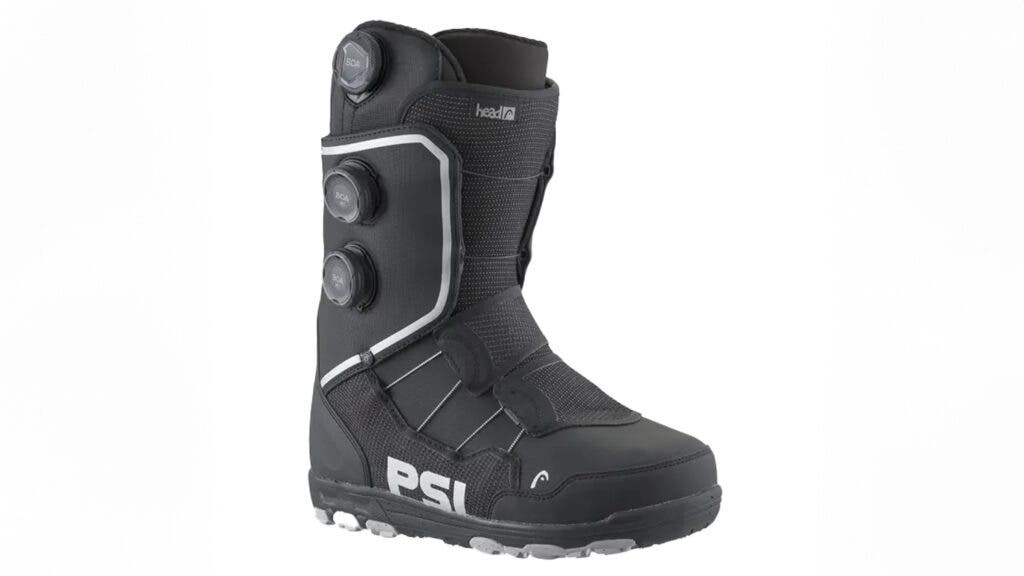
Best Adjustability
Head PSI Triple BOA
Sizes: 23-31.5
Pros and Cons
+ Unbelievably adjustable
+ Top-tier responsiveness
+ Low profile
– Freeriders may want a stiffer boot
– May be too constricting for wide feet or high arches
Head isn’t the first to bring a triple-BOA snowboard boot to the market, but they’ve created the best integration of a dial in the liner, resulting in a perfect Cinderella fit. One BOA helps lock the heel in place, while the other two independently adjust the upper and lower shell. After heat-molding the liner, one tester was pleased to report “no pressure points, hot spots, or blisters.”
One of the biggest selling points of the PSI, though, was the asymmetrical shell, which is reinforced with aramid mesh (a key component of Kevlar) to provide a natural, intuitive all-mountain flex. “They work without thinking about them,” said a tester. The PSI earned additional kudos for a sleek, low-profile silhouette that one tester said felt as nimble as “ballerina point shoes”— a quality that was highlighted while riding and scrambling on the recycled rubber sole during a spring photo shoot.
We recommend the PSI for all-mountain riders and aggressive park rippers who like to go big in the jump line or pipe, but feel hardcore freeriders may want a touch more stiffness. Also, the liner construction and overall shape limit vertical space, making the PSI best suited to average-width and lower-volume feet. Those with wide feet or high arches may find it too constricting.
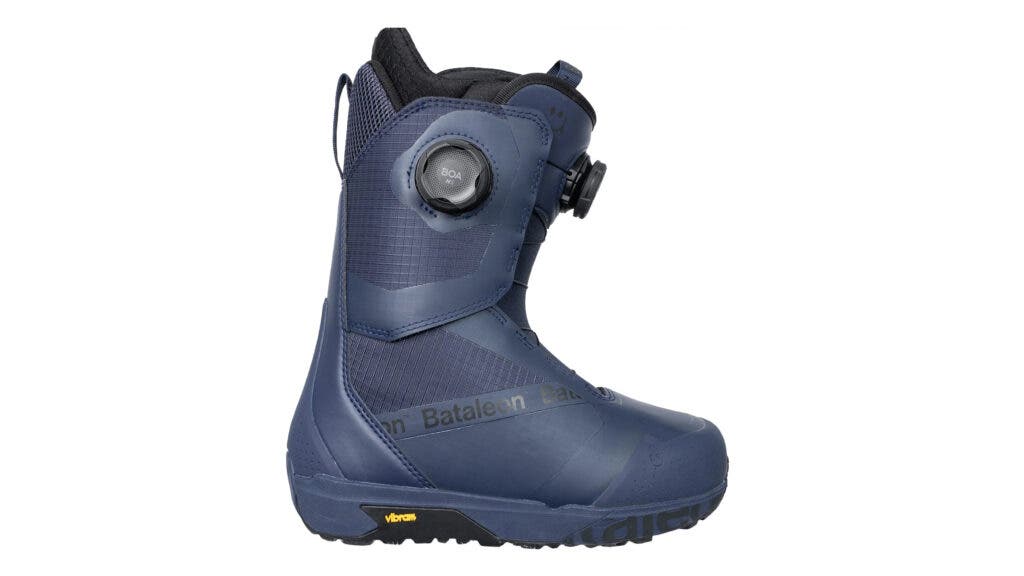
Best Mid-Stiff
Bataleon Salsa Double BOA
Sizes: 7-13 (men’s); 5.5-10 (women’s)
Pros and Cons
+ Stiff, high-performance responsiveness
+ Wide toe box
+ Durable
– Stiffer than advertised
– A test boot had a pressure point
Have you ever ordered “mild salsa” only to have a rogue jalapeño light your tongue on fire? That’s how we felt in the Salsa boot. While Bataleon scores the boot’s flex a 6 out of 10, we’d give it an 8 or 8.5 since testers felt Bataleon’s rating lowballed the Salsa’s stout, sturdy build and high-performance flex from the injected spine along the Achilles and a curved, firm tongue. “Highly responsive,” said a Colorado all-mountain rider. “Excellent boots for hard-charging when you want to turn on a dime.”
Our tester gave the adjustability of the double-BOA high marks, though he occasionally had to retighten the inner lacing system and found fit best for normal to medium-wide feet. “A real highlight of this boot for me is the squared-off, wide toe box, which allows my toes some breathing room laterally,” he reported. It earned additional points for its durability, showing little wear after a heavy spring. Same goes for a foam midsole that ate up landings and a Vibram outsole that handled Aspen bootpacks like a boss.
The Bataleon Salsa is available in both men’s and women’s sizes. On the men’s side, we were hyped. On the women’s side, a pressure point from the liner’s stitching made riding difficult. This was likely a one-off issue, seeing as it was in just the left boot, not the right. But it’s a good reminder that it’s always a smart idea to try boots on at your local shop or double-check return policies if you shop online.
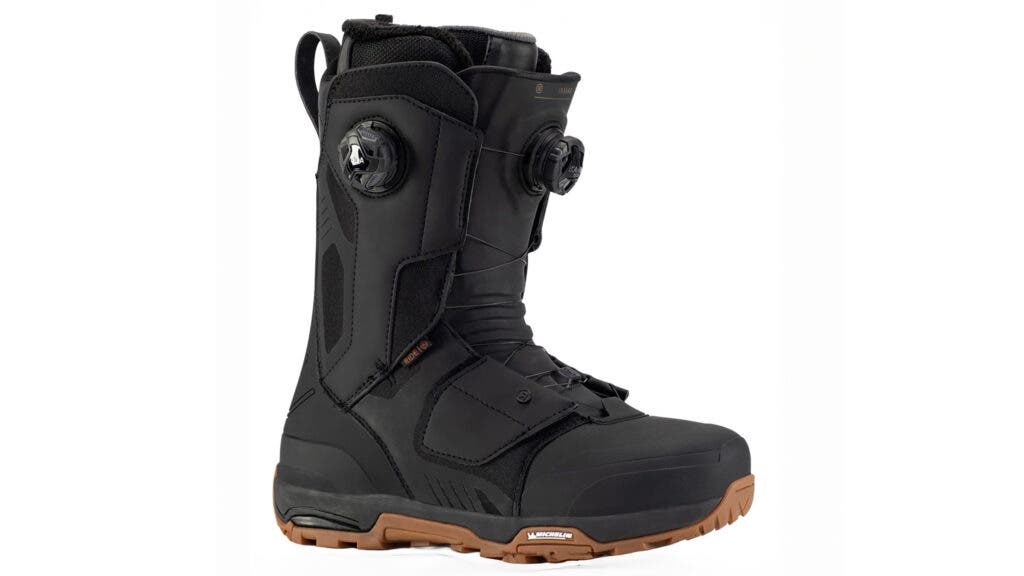
Best Stiff/Freeride
Ride Insano
Sizes: 8-14
Pros and Cons
+ Ultra-stiff and powerful freeride charger
+ Durable and long-lasting
– Long break-in period
– Overkill for most riders
Much like a lithe mama cheetah hell-bent on feeding her offspring, the Insano is a slim, aggressive hunter, and its prey of choice includes cliff drops and technical freeride faces. It’s also the most durable option in this guide, though breaking it in can take a week or two of hard riding.
“Insanely stiff,” signed off a hard-charging Tahoe tester. Despite its low-profile silhouette, the Insano’s TPU-heavy construction delivers power and responsiveness. Cold-resistant thermoplastic urethane bolsters the toe cap, heel counter, and steely yet smooth-flexing tongue. There’s even a TPU shank embedded into the Michelin-made, bootpack-ready outsole, stabilizing the foot and transmitting energy to your edges. “Most aggro boots I’ve ever ridden,” applauded another tester.
The negatives are obvious: It requires significant break-in, and it’s overkill for 99.8 percent of readers (maybe more). But the 0.2 percent will appreciate the cushy multi-density foam liner and heel-locking BOA lacing on ambitious freeride missions.
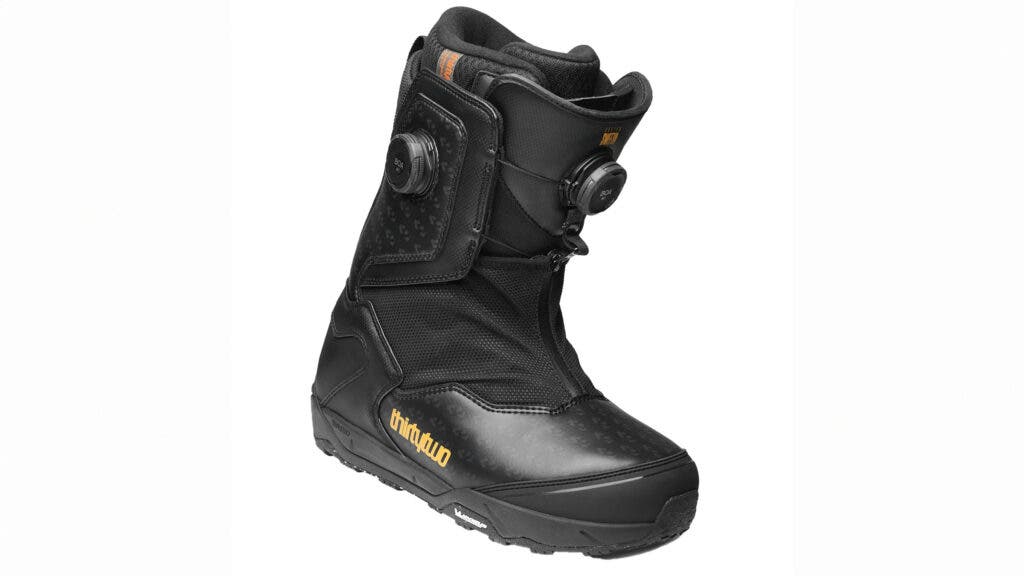
Best for Resort and Backcountry
ThirtyTwo Men’s Focus BOA Sweetin
Sizes: 6-13 (men’s)
Pros and Cons
+ Responsive charger
+ Removable flex stiffeners
+ Top-tier outsole with crampon-compatible heel welt
– No walk mode for splitboarding
– Pricey
Austen Sweetin’s pro model boot, the Sweetin Focus BOA is not a split-specific boot and it doesn’t have a true walk-mode. But this boot was “born to scramble,” said a Tahoe tester who claimed the molded toe cap “kicked steps like a soldier.” “If you travel frequently or just want one boot to do it all, this is hard to beat,” another tester said.
Zippered gaiters help protect against powder when bootpacking, and the relatively slim Michelin Fiberlite rubber outsoles with a carbon shank provides stability—ideal for riding between the resort and backcountry. The Focus relies exclusively on BOA lacing—not our favorite for bigger missions and multi-day trips, as field repairs are a nightmare. However, pop the upper BOA dial to loosen it for some skintrack mobility.
The Sweetin’s stout construction pairs a dual-density liner with removable stiffening inserts for “direct response on any turn initiation.” Testers praised the liner’s Velcro wrap for eliminating heel lift and recommended the boot for all-mountain riders and freeriders, calling “couloirs and big, aggressive lines” its bread and butter.
The boot’s “overbuilt” construction and exceptional durability are both pluses for backcountry riders. However, a gap between the liner and tongue near the upper calf compromised some of its responsiveness and made it incompatible with closely cropped pant legs. Still rocking the Shaun White skinnies? Keep looking.
Best Splitboard Boot
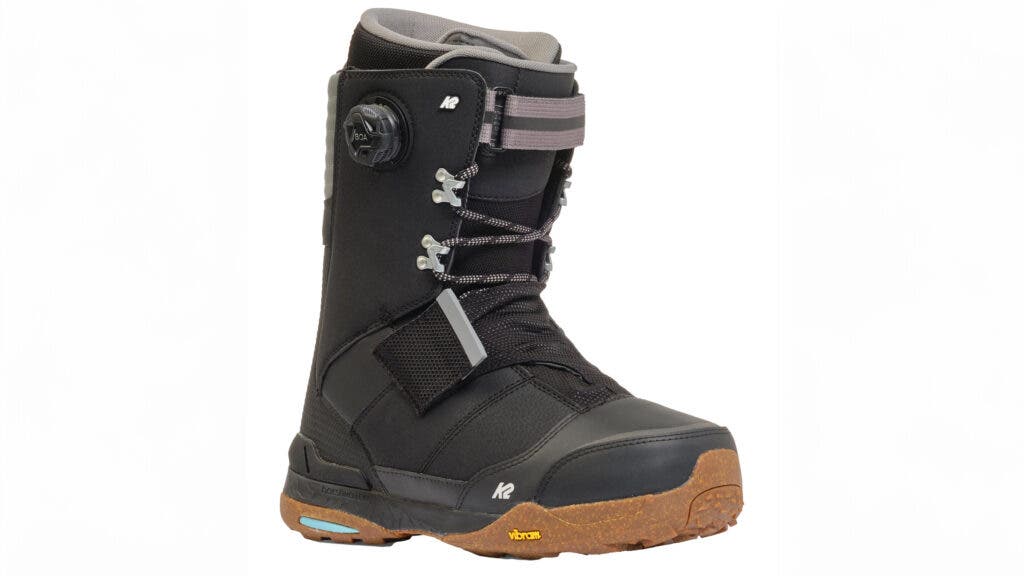
K2 Waive
Sizes: 5-13
Pros and Cons
+ Stellar walk mode for a soft boot
+ Great downhill performance
+ Burly outsole, reinforced toe, and heel welt for climbing
– Expensive
– Walk mode is poor compared to hardboots
K2’s unisex Waive is a standout on the uphill and downhill alike, providing the balance our backcountry-bound testers appreciate. Uphill, the BOA dial “frees up range of motion in the upper calf, delivering an unparalleled walk mode for a soft boot” according to a Tahoe tester. The Waive also boasts a burly, Vibram sole with a reinforced toe for bootpacking and a heel welt for semi-auto crampon compatibility—both must-have features for ridge scrambling and spring objectives.
Though hefty compared to some resort boots, the Waive is still fairly low-profile for the split-specific category. And on the descent, the Waive’s mid-stiff flex doesn’t feel too stiff or aggressive, especially once you loosen the strap and pop the BOA, testers said. “You can surf pow, no problem. But there’s plenty of performance when you batten down the hatches on top of a sketchy line,” reported that Tahoe tester, calling the Waive his ideal split boot for daily use and travel.
No real demerits here, although it’s worth noting that hardboots are much more efficient at skinning and sidehilling than soft boots. Also, the price is tough to swallow. But remember: splitboarding is cheaper than therapy!
A Step On Alternative
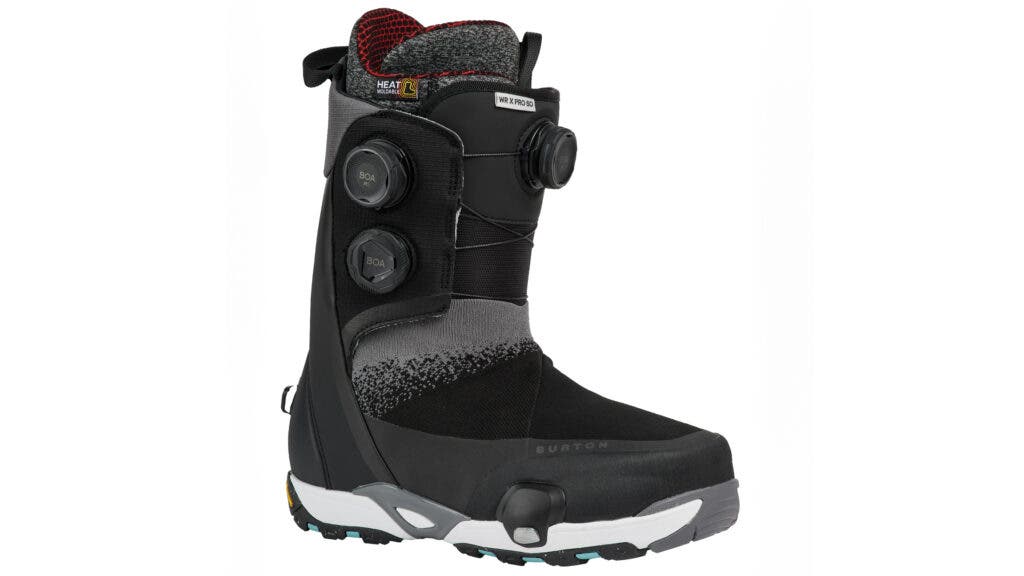
Burton Waverange X Pro Step On
Sizes: 6-15 (men’s); 5-10 (women’s)
Pros and Cons:
+ Great adjustability
+ Cushy feel
– Ridiculously priced
– Step On design not for most
The Waverange X Pro is a playful, comfortable, mid-soft-flexing, surf-inspired boot designed to be used exclusively with Step On bindings. (If you’re unfamiliar with the Step On system, all Step On boots feature two cleats on either side of the toe box and one connection point at the heel. These three locking points snap into place when you step onto a compatible binding.)
High-end snowboard boots trend stiffer and more responsive, speaking to more advanced all-mountain rippers and freeriders, but the Waverange X Pro is softer and more approachable, yet still packed with high-end features like triple BOA dials for adjusting fit of the upper boot, lower boot, and asymmetrical liner. “Having three BOAs really allowed fine-tuning the fit, and choosing where I want the boots to be more or less snug,” commented a Mammoth snowboard coach. Testers appreciated the grippiness of the winter-ready Vibram outsole, as well as the cushy shock absorption supplied by integrated polyurethane and gel inserts. “Felt like walking on a cloud,” said a tester.
On the descent, testers recommended the Waverange X Pro for “mellow cruiser laps,” and “playful riders” because the flex is too forgiving for aggressive riding. In pursuit of more response, multiple expert-level testers found themselves cranking the BOA aggressively, resulting in some ankle discomfort. Most testers found themselves missing their traditional strap setups, but grom-wrangling instructors and parents, beginners, and folks unable to bend down may appreciate the convenience of this Step On boot.
How to Buy the Best Snowboard Boots
No piece of gear is more subjective to the rider than a pair of boots. Nothing will inform your decision-making like a visit to your local snowboard shop, as trying boots on in person is invaluable. Not to mention, boot-fitting, heat-molding, and aftermarket or custom insoles go a long way to ensure a comfortable, high-performance fit. Here are seven tried-and-true tips to make the process of shopping for snowboard boots as smooth as possible.
Shop for Boots First: If possible, shop for snowboard boots before boards and bindings. Your boot size influences both your binding size and acceptable board widths. Some boots have compact footprints, which means you’re less likely to have toe or heel drag on a narrower board. If you end up buying a boot with a bigger footprint, or you have a size 10.5 boot or higher, you may want to consider a mid-wide, wide, or volume-shifted board.
Stick to Brands You Know and Love: Every brand has a slightly different fit. Some are known for being wider or skinnier, or running bigger or smaller. If your last pair of boots fit well, consider repeating your experience with that specific brand, as chances are the fit hasn’t changed much over time. Many testers swear by the strategy of purchasing a newer version of the same boot model.
Go Wide: Many popular boot models are available in both standard sizes and wide sizes. If you have trouble squeezing into snowboard boots, or you already shop for wide sneakers or running shoes, you might want to consider a wide option.
Invest in Insoles: Even high-end snowboard boots often sport garbage insoles (as reported by a tester who fits boots for a local shop). One of the best ways to improve fit, comfort, and performance is with an aftermarket insole. We’re partial to Superfeet in most instances, but Remind Insoles aren’t a bad play if you’re looking for more shock absorption. If you really want to go the extra mile, get a custom pair from a bootfitter.
Put Your Faith in Bootfitters: There’s a misconception that only skiers need to get their boots fitted. Once you’ve had your snowboard boots professionally fit, however, you’ll never go back—especially if you have a history of foot pain. Ideally, schedule an appointment with a bootfitter who is also a snowboarder, as they’ll have a better idea of what problems you’ll face on the hill. Bootfitters can help you with everything from run-of-the-mill heat-molding to boot punches, heel-hold adjustments, liner replacements, and custom insoles.
Look for Demos, Snowboard Shops, and Return Policies: Every foot is different, so it’s worth attending demos at your local hill, where you can try boots from local shops, or visiting your local shop to try on boots in person. When you do make a purchase, support your local snowboard shop if you can. (There is a special place in hell for people who try on boots in a shop and then go home and buy them online.) If you prefer to shop online, buy from a reputable online retailer like Evo, REI, or Backcountry that has a flexible return policy.
When to Consider Step Ons: Our snowboard testers strongly prefer traditional snowboard boots to Step Ons. But if you’re battling injuries that make bending over tricky, or you are a parent or instructor wrangling groms, it can be worth considering this alternative boot-and-binding system.

How We Test Snowboard Boots
- Number of boots tested: 38
- Number of testers: 32
- Biggest blister: Approximately the size of a silver dollar
- Biggest spin of the test: 900
- Beers drank out of a snowboard boot: 1
This year, we sent snowboard boots to testers at their home mountains in the Wasatch, Rockies, and Sierra to put them on the chopping block all spring long. Long-term testing is crucial for picking the best snowboard boots, as break-in periods vary. A boot might be stellar out of the box, only to blow out in ten days. Or a boot might be stiff, uncomfortable, and difficult to break in for the first week, then turn into our favorite boot once it’s been out on the hill for a spell.
We encouraged testers to swap out insoles and get boots heat-molded and professionally fit—whatever they would normally do if purchasing a new pair of boots.
Once chairlifts stopped cranking and splitboarders hung up their skins for the season, we asked our test crew to fill out review forms, answering questions like: Would you purchase these boots? What rider would like these boots? Are the boots bulky or low-profile? What are your impressions on the inner and outer lacing systems?
Finally, I—test director Drew Zieff—sifted through the review forms, compared this year’s favorites to our previous, unchanged favorites from years past, and compiled these reviews on the best snowboard boots of 2027.
Meet Our Testers
Drew Zieff is a Tahoe-based freelance writer and a lifelong snowboarder. Burdened with unnaturally long second toes and skinny calves and ankles, Zieff is no stranger to the boot-fitting chair (he’s a regular at Tahoe SportsHub), and he generally doesn’t trust stock insoles any more than he’ll sniff rental ones. In addition to directing Outside’s snowboard test, a role he’s handled since 2016, he directs Backcountry Magazine’s splitboard coverage and nerds out on snowboard gear and travel for Whitelines Snowboarding, REI, Gear Junkie, among others. He spends his winters testing gear in his backyard backcountry zones or up at Palisades when he’s not chasing stories and storms around the globe.
In a word, Kordell Black is a character. An esoteric ripper and veteran gear tester based in the Wasatch, Black has traveled the world with his splitboard in pursuit of powder and off-the-beaten-track adventures. He approaches big mountain lines with creative, freestyle energy, specializes in finding powder stashes overlooked by the Utah crowds, and thrashes boots into oblivion in a matter of weeks. He will also obliterate you in a flat ground game of SKATE.
Truckee’s own Jenna Shlachter is as brilliant on the hill as she is off it—which is saying something since she’s a Doctor of Psychology, after all. When she’s not on the clock, she’s usually on her snowboard, ripping everything from park to powder. Her trophy shelf needs regular reinforcement, as every year she seems to add banked slalom awards to her already impressive collection. Lucky for us, Shlachter is also an unabashed snowboard nerd, and she’s been a key contributor to our snowboard test for the last few seasons.
