

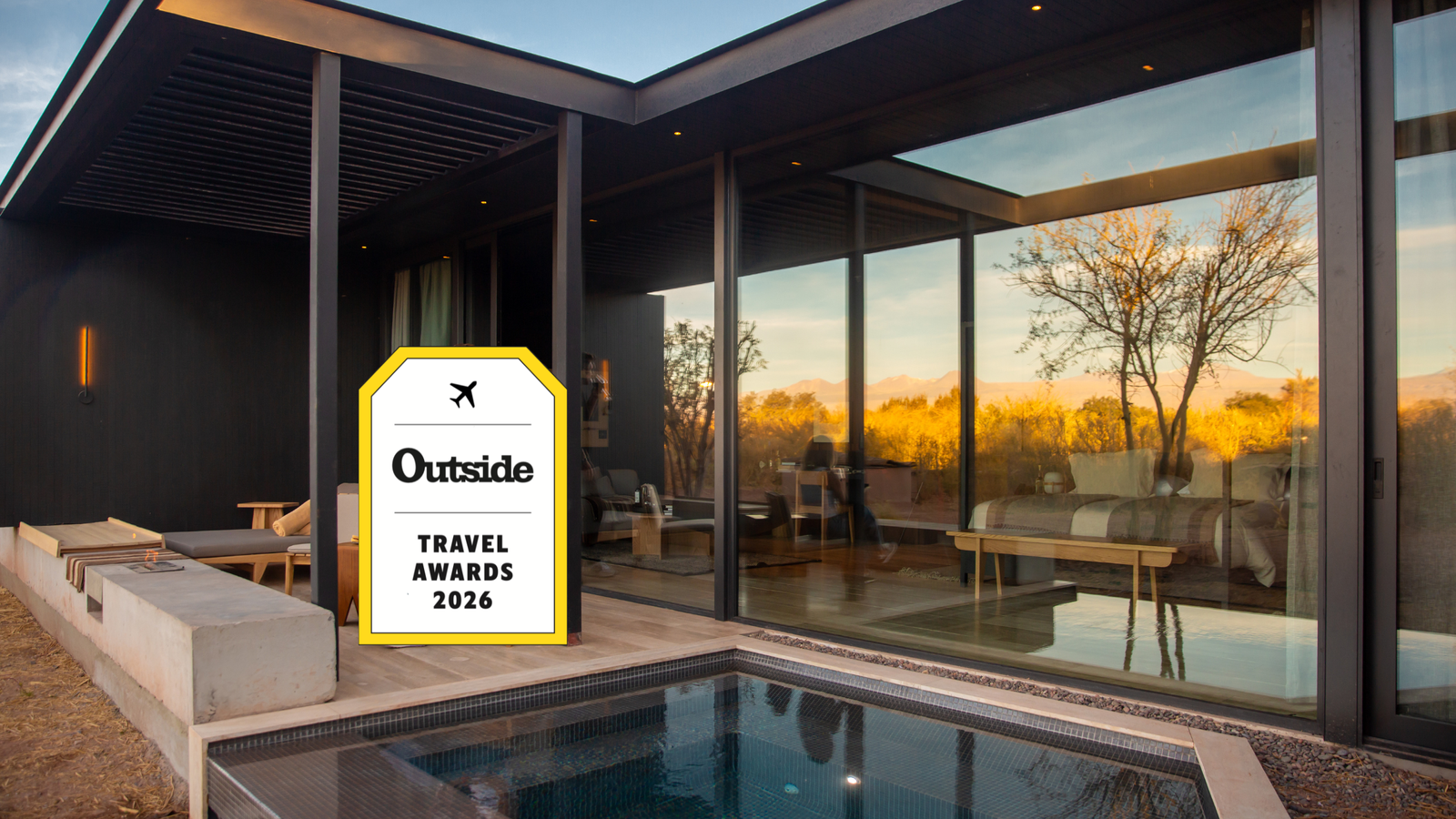
Tierra Atacama officially reopened in the driest place on Earth. Following a massive renovation, the lodge offers a high-design launchpad for exploring salt flats, high-altitude geysers, and the world’s clearest night skies.
(Photo: Courtesy of Tierra Atacama)
Updated March 18, 2026 07:39AM
Licancabur Volcano is, to the Indigenous Lican Antay community of northern Chile, a sacred deity known as “the people’s mountain.” For the all-inclusive adventure lodge Tierra Atacama, located in San Pedro de Atacama, it’s a lodestar on the eastern horizon. Floor-to-ceiling lobby windows frame Licancabur as surreal landscape art. At the Uma Spa, the pool reflects its sharp cone like a glassy mirror. And when you wake at dawn in one of the 28 suites, the sun crests behind the volcano’s 19,409-foot peak.
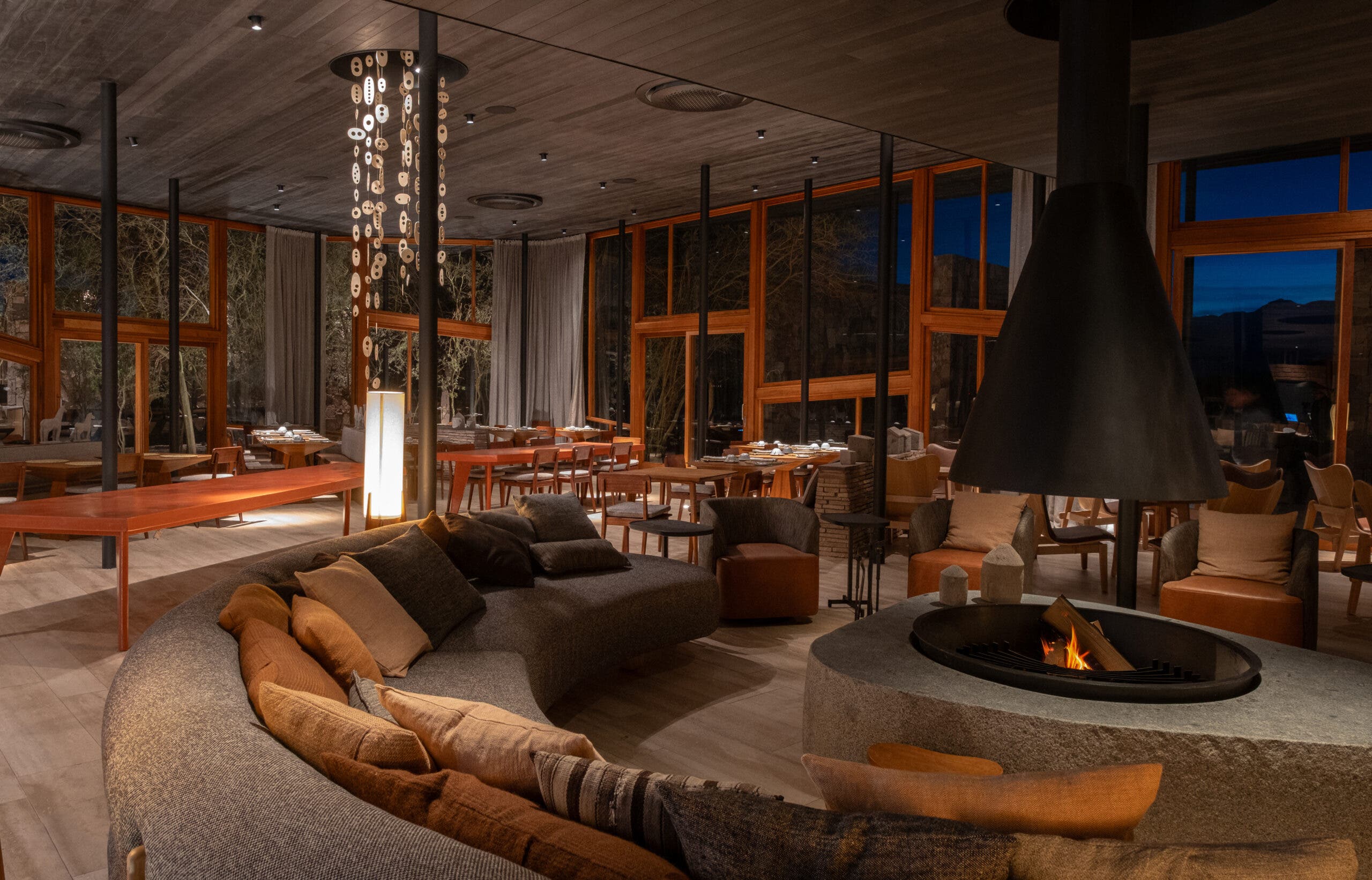
Tierra re-opened in April 2025 following a year-long $20-million gut renovation spearheaded by Baillie Lodges, its new owner. Matías González, the original architect, and Carolina Delpiano, the interior designer, returned for the refurb, working with more than 40 local artists to create unique pieces inspired by the Sun and Moon—both of which seem to shine brighter here. Wood panels in the revamped rooms soothe desert-worn eyes, while amenities—both practical (a humidifier) and tactile (a soft Andean blanket)—ease you into the harsh environment.
How harsh? The Atacama is the driest non-polar desert on Earth. Yet, in the verdant oasis of San Pedro, there’s actually a sprinkling of life. Regional cactus fruits and desert herbs are a highlight of Tierra’s three-course feasts, including the minty and rosemary-like rica-rica, which is as delicious in a sorbet as a frothy pisco sour. Between meals, you set off on guided adventures, walking through high-altitude geyser fields, hiking to remote pre-Inca rock art, and floating in salt pools near flamingo-filled lagoons.
“Guests are actually, most of the time, not in the hotel,” admits general manager María José Galleguillos. Yet, that’s kind of the point. Tierra is a comfy launch pad where you can plot grand adventures to places higher, drier, and more alien than most of us have ever been.
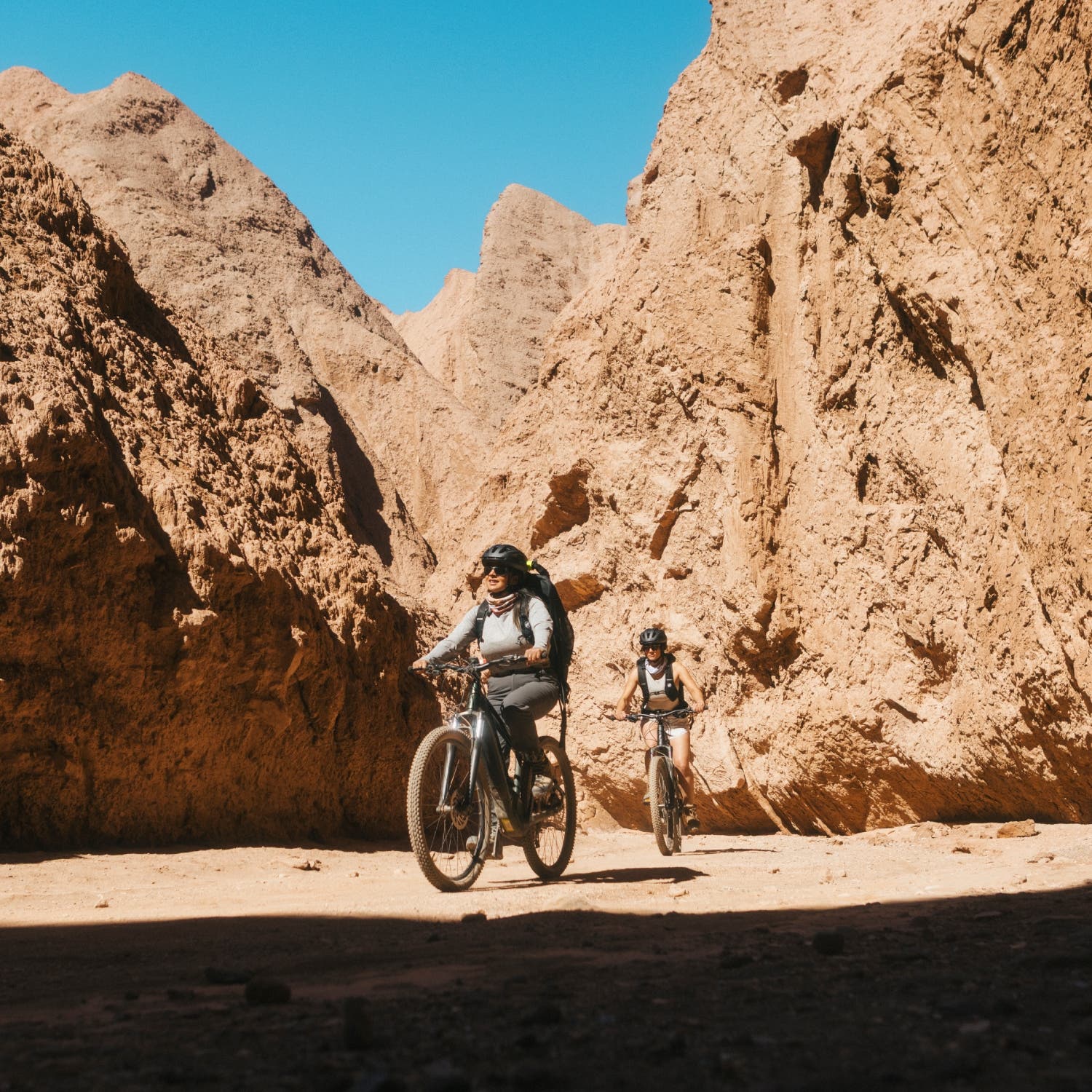
Standout excursions include a cycling trip into the waterless canyons and riverbeds of the Cordillera de la Sal mountain range, as well as a hiking trip through the dunes of the lunar-like Valle de la Luna, which morphs in color each sunset from amber to lilac to a moon-lit slate blue. You can also wake before dawn to ascend the 18,700ft Cerro Toco, which offers sweeping views over the lithium-rich Salar de Atacama salt flat.
Meanwhile, the town of San Pedro has gone through its own makeover in recent years. Several of Chile’s top chefs have opened new desert-inspired restaurants here, including Unai from Juan Pablo Mardones and Maureen Jones, and Ephedra from Sergio Armella, which was named Chile’s Best Restaurant at the 2025 World Culinary Awards. There’s even an experimental winery, Viña Ayllu, run by a Lican Antay co-op (some of the best restaurants in Santiago serve its Haalar label). All of this adds up to a more comfortable base for visitors to return to after working up a sweat under the desert sun.
Of course, the nightly star show may be the ultimate reward. The Atacama is home to some of the world’s wildest ground-based astronomy projects, including the Vera C. Rubin Observatory, which debuted in June with earth’s largest digital camera: a car-sized machine that takes 3 billion-pixel images of the evening sky!
Though it pales in comparison, Tierra Atacama opened its own small observatory in June. Amateur astronomers can squint into an eight-inch Schmidt-Cassegrain telescope and learn how to identify a dwarf galaxy from a planetary nebula. Stargazing sessions also encompass Andean cosmology, looking at how the Lican Antay interpret the night sky. That means searching for the bright spots in the Milky Way, but also the constellations hidden in the shadows.
