

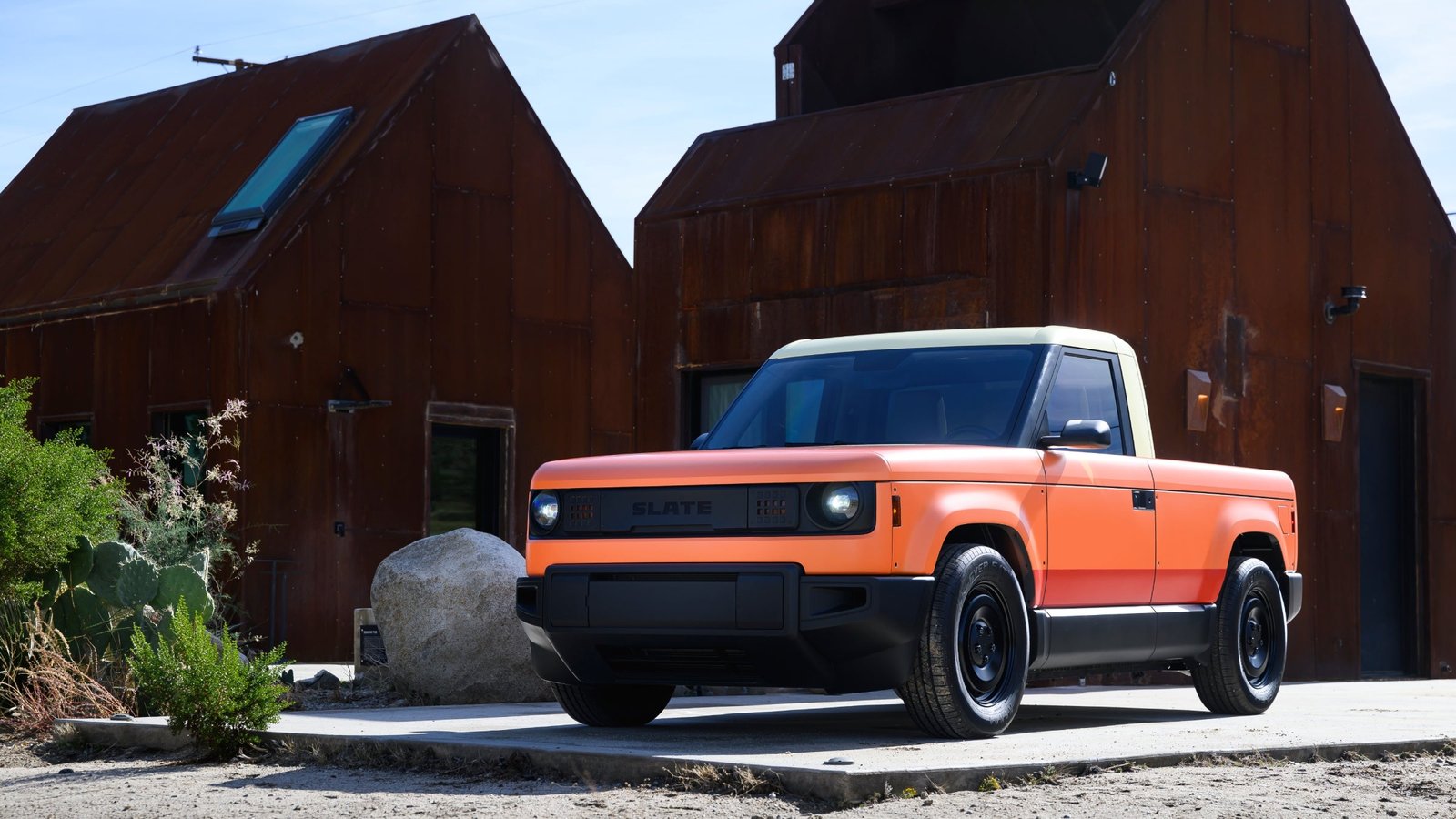
It looks like a Bauhaus manifesto and costs less than a generic crossover. The Slate is the first electric truck designed for the rest of us.
(Photo: Courtesy Slate)
Updated March 18, 2026 12:18PM
The Slate, an electric pickup truck from a California-based startup, emerged with a simple premise: What if an EV didn’t have to cost as much as a graduate degree? The company is betting on a market of people who want something distinctive and customizable without the six-figure price tag. It’s a bold gamble in a space crowded with legacy automakers and well-funded upstarts, but then again, the whole vehicle is a study in going against the grain.
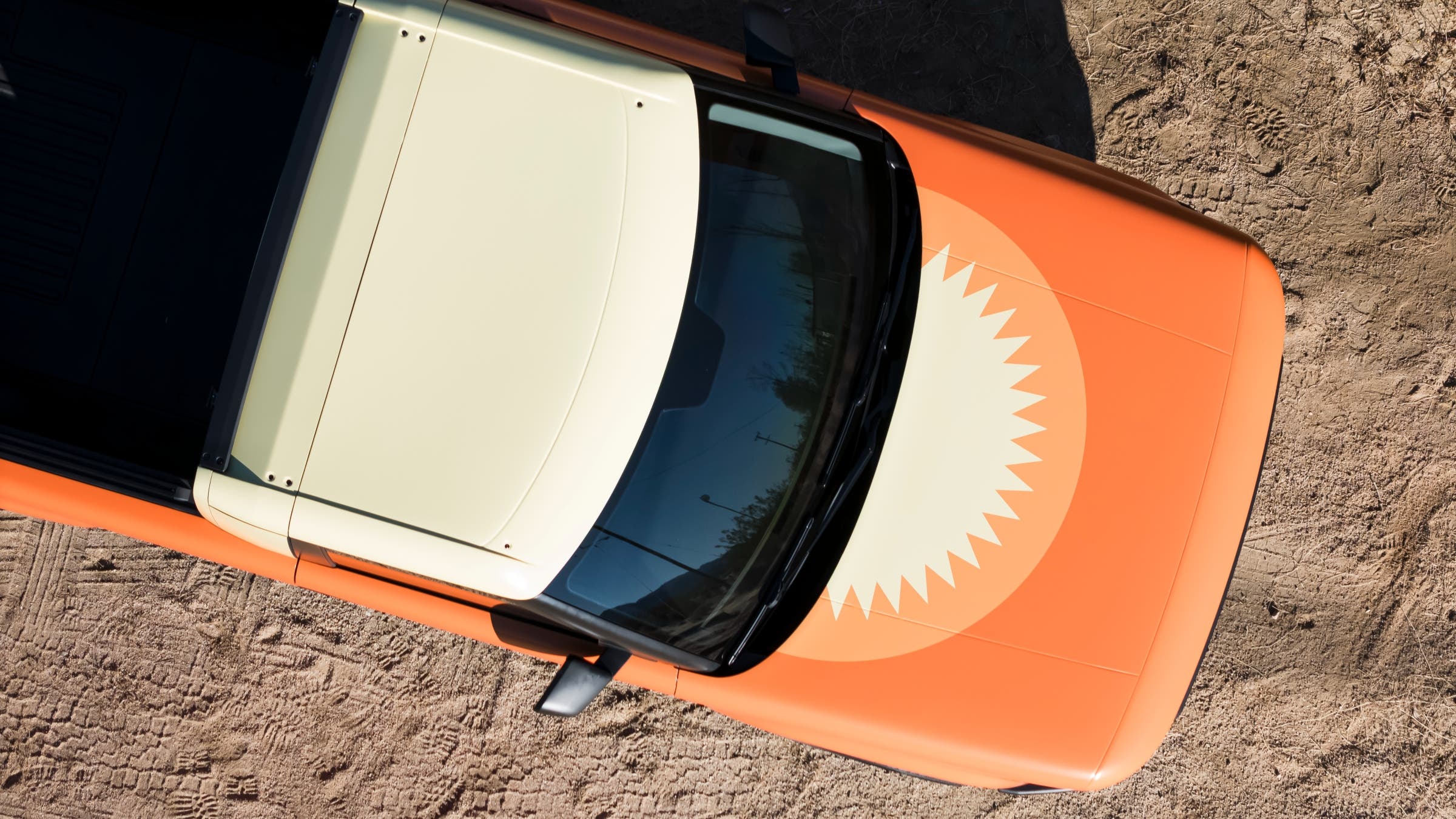
The first thing to understand about the Slate is that it arrives as a proposition, not a finished product. The model you see here, shot outside Palm Springs, was wrapped in a sun-bleached orange and sunburst graphic to give it Outside-in-the high-desert vibes. But this is just one vision of the Slate. The vehicle is a blank canvas—literally, the base model is called the “Blank Slate”—something you custom-wrap and configure to match whatever vision of yourself you’re trying to manifest. The car can be your creative space, not just transportation. You know, if that’s your thing, dude.
And in an era where every EV looks like it was designed by the same algorithm, this feels radical. The Slate cuts a silhouette so aggressively, joyfully boxy that it feels like someone fed a Bauhaus manifesto into ChatGPT and hit “generate SUV.” It is the anti-aerodynamic middle finger to the jelly-bean curves of modern EVs, a rolling proclamation that says: “We prioritize vibes over drag coefficients, and we’re not sorry about it.”
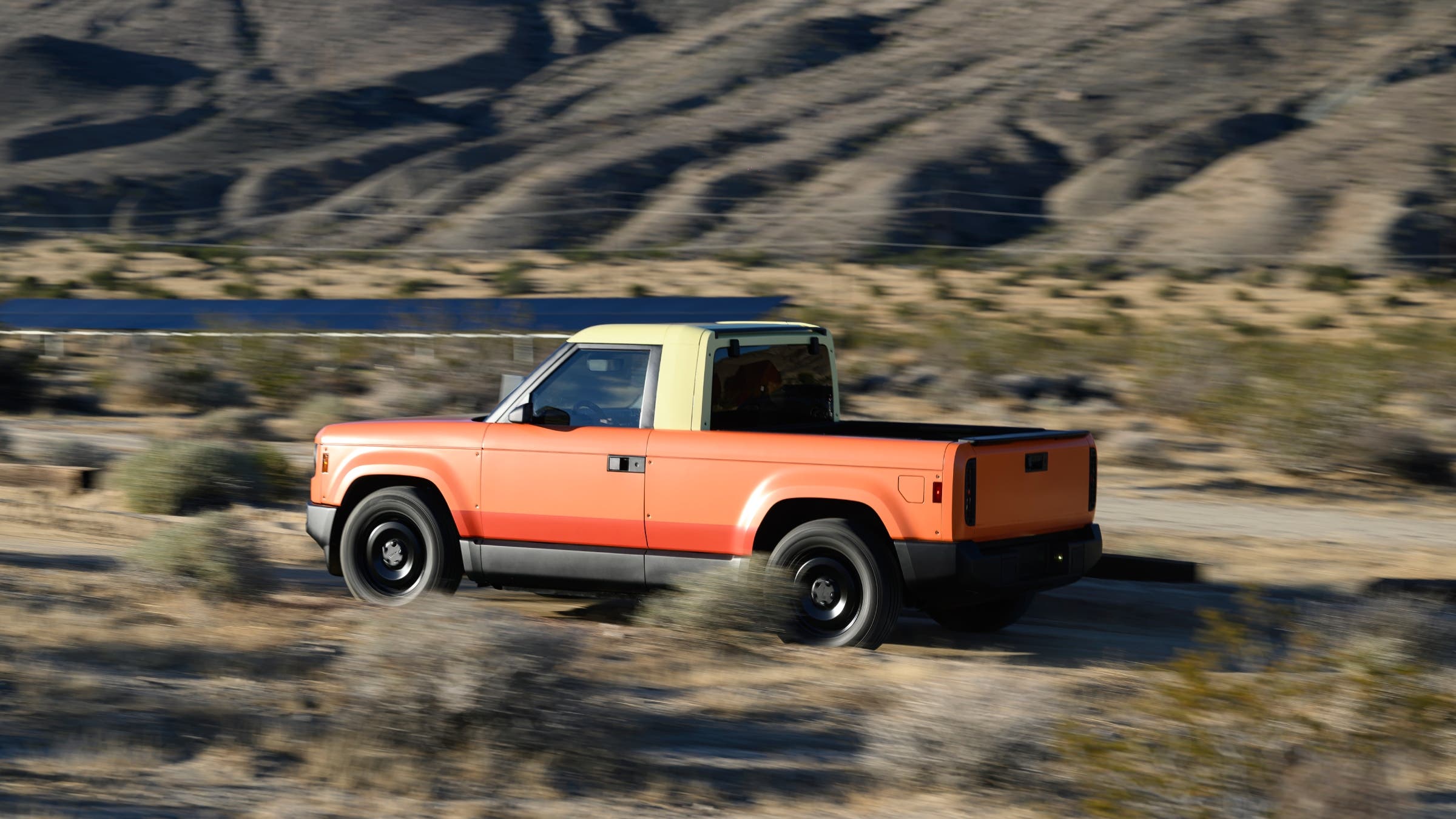
Starting under $28,000, the Slate is pitched at a wildly different price point than the luxury overlanding rigs currently dominating the space. Instead of a $125,000 statement piece, it’s an accessible entry point for the kind of person who thinks camping should involve a French press—it can!—but doesn’t necessarily want to take out a second mortgage to get there. The Slate knows its audience, and it’s betting that audience is bigger than we think.
RELATED: 7 Stunning Road Trips for Electric Vehicles
We live in an era of overlanding cosplay, where guys bolt five-figure rooftop tents to trucks that have never seen anything gnarlier than the Whole Foods lot in Ojai. The Slate cuts the pretense with the efficiency of Marie Kondo holding a flamethrower. With a range of up to 240 miles on the larger battery pack (150 miles on the standard), this is a vehicle designed to get you to the trail, not necessarily up the sheer vertical face of it. And that is fine.
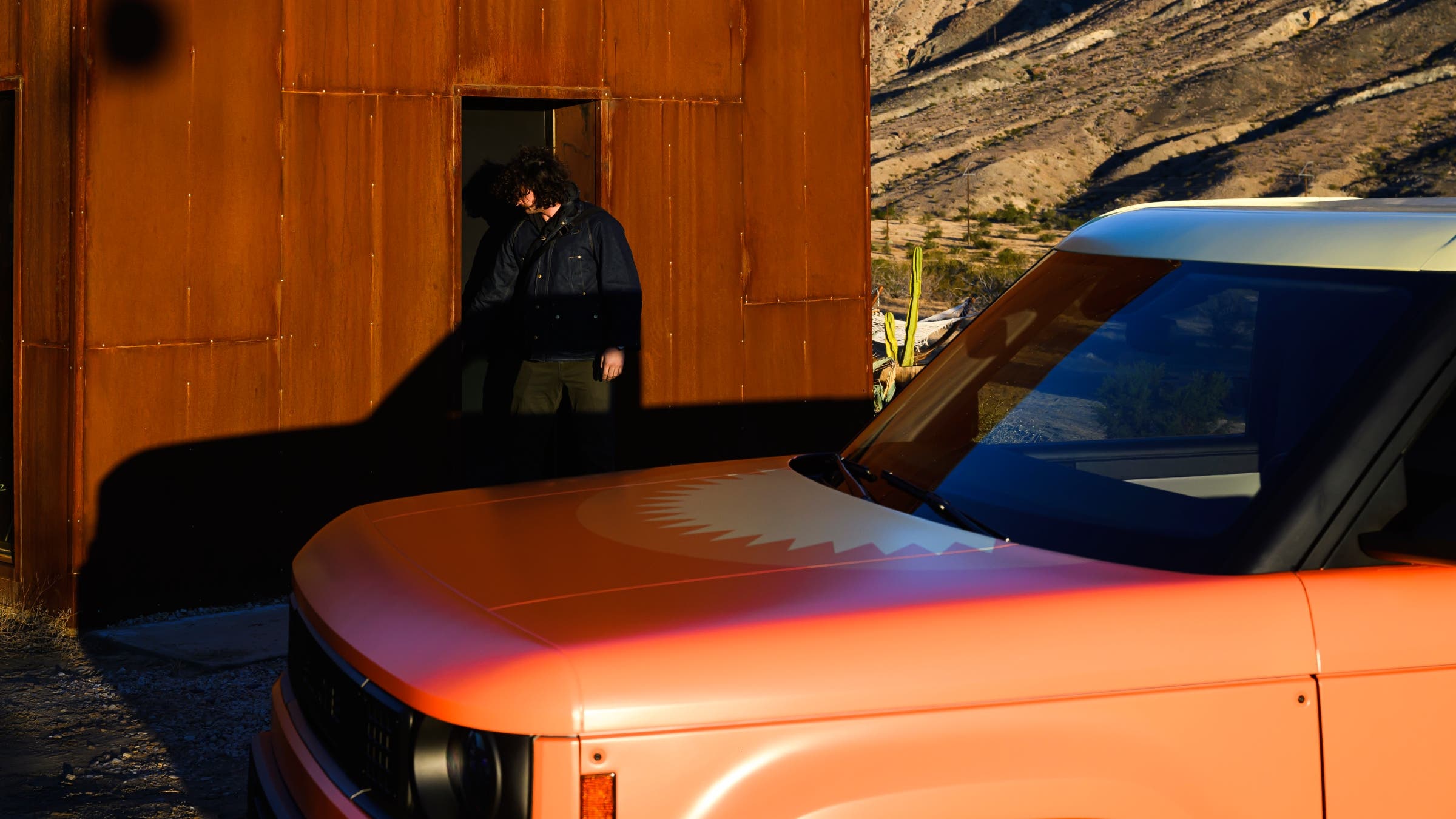
It’s a soft-roader with a soul, which feels like the automotive equivalent of doing yoga but admitting you can’t touch your toes. It’s reasonably quick—0 to 60 mph in eight seconds for the rear-wheel-drive version—but the speed feels secondary to the atmosphere. Sliding into the driver’s seat, running my hands along the rugged-but-tactile materials, the whole experience felt less about performance metrics and more about utilitarian presence.
The real magic happens when you stop thinking of this as a vehicle and start thinking of it as a space. The modular design allows you to convert from pickup truck to enclosed SUV, transforming the bed into an interior cargo area with a simple reconfiguration. The bed itself offers about 35 cubic feet of volume, plus a 7-cubic-foot frunk (front trunk)—not cavernous, but smartly designed and easily personalized.
The materials feel like they were designed to be touched, sat on, spilled on, and lived in, like a pair of broken-in Birkenstocks. There’s a playfulness here that’s missing from the angry, overly masculine faces of modern pickup trucks, which all look like they’re perpetually about to ask you if you even lift, bro. The Slate invites you to throw in gear—dirty climbing ropes, soaked wetsuits, camping equipment you swear you’ll use this time—without worrying about scuffing fine Corinthian leather, because there isn’t any. It’s functional, honest, and unapologetic about what it is.
Ultimately, the Slate feels like a piece of democratized lifestyle gear—the anti-luxury luxury object. It’s carving out space for people who want something distinctive, customizable, and actually affordable. It might not be the truck you take to the literal end of the world, but when deliveries begin in late 2026, you could absolutely take it to the edge of civilization to watch the sunset with a six-pack and a perfectly curated playlist. And sometimes, that’s far enough.
