

Published March 19, 2026 03:25AM
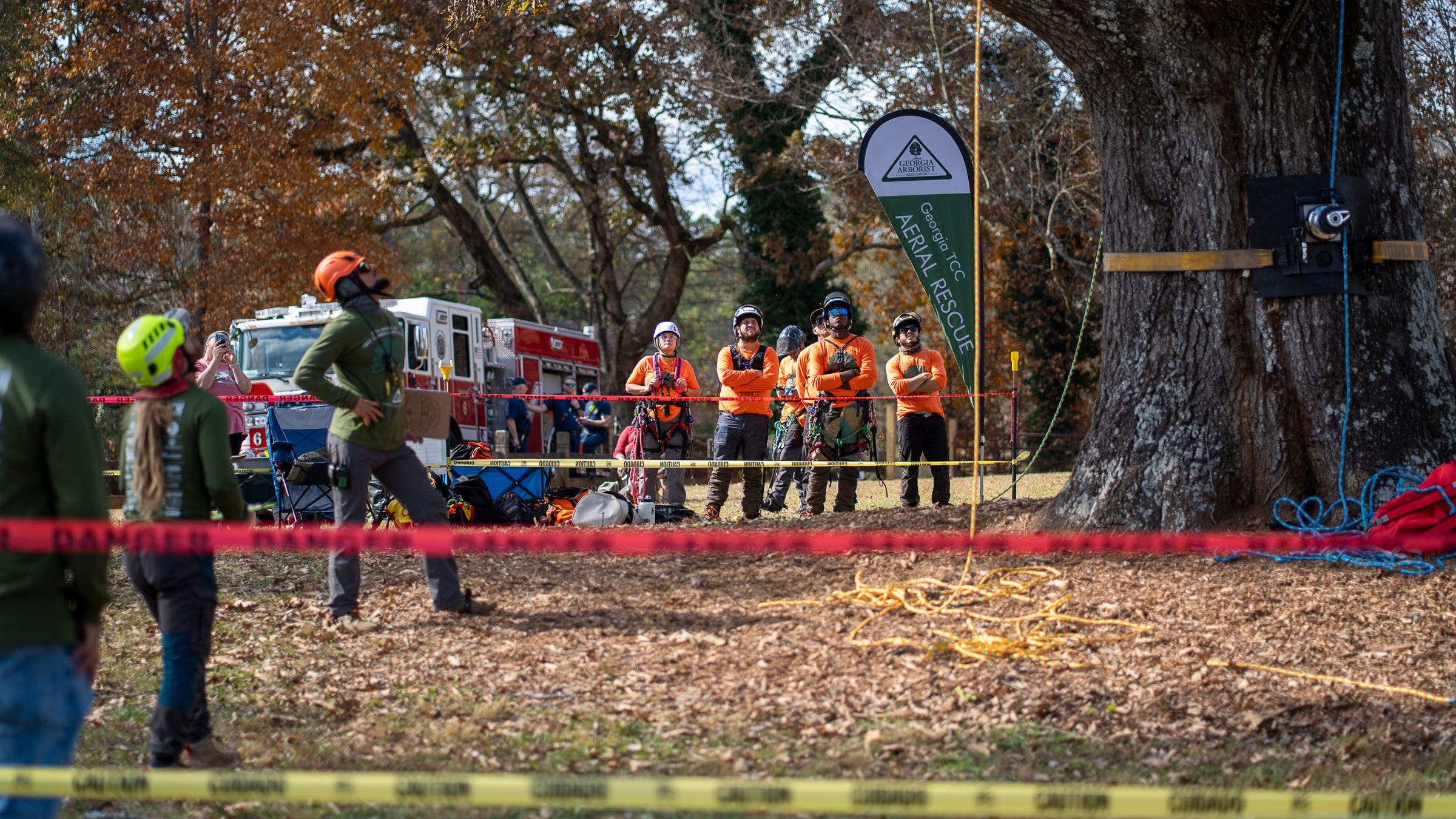
The body draped over the upper branches of the red oak does not move. An unseasonably warm November breeze frees leaves from the tree, fallen foliage swirling around the group that has gathered around the trunk. Somewhere, Morgan Wallen plays faintly from a Bluetooth speaker. We stare up at the canopy and the man’s lifeless form, waiting.
His name is Camper Kyle, and he’s a dummy. He’s also the de facto star of the Aerial Rescue event, one of five in today’s Georgia Tree Climbing Championship.
“EMTs have arrived!” yells a judge from the ground. Spoiler: There are no EMTs here to help Camper Kyle. Like most of the weekend’s events—which also include Throwline, Work Climb, Open Ascent, Speed Climb, and a final Masters’ Challenge for the top five competitors—Aerial Rescue is designed to simulate a day in the life of an arborist. In this case, a dramatic one.
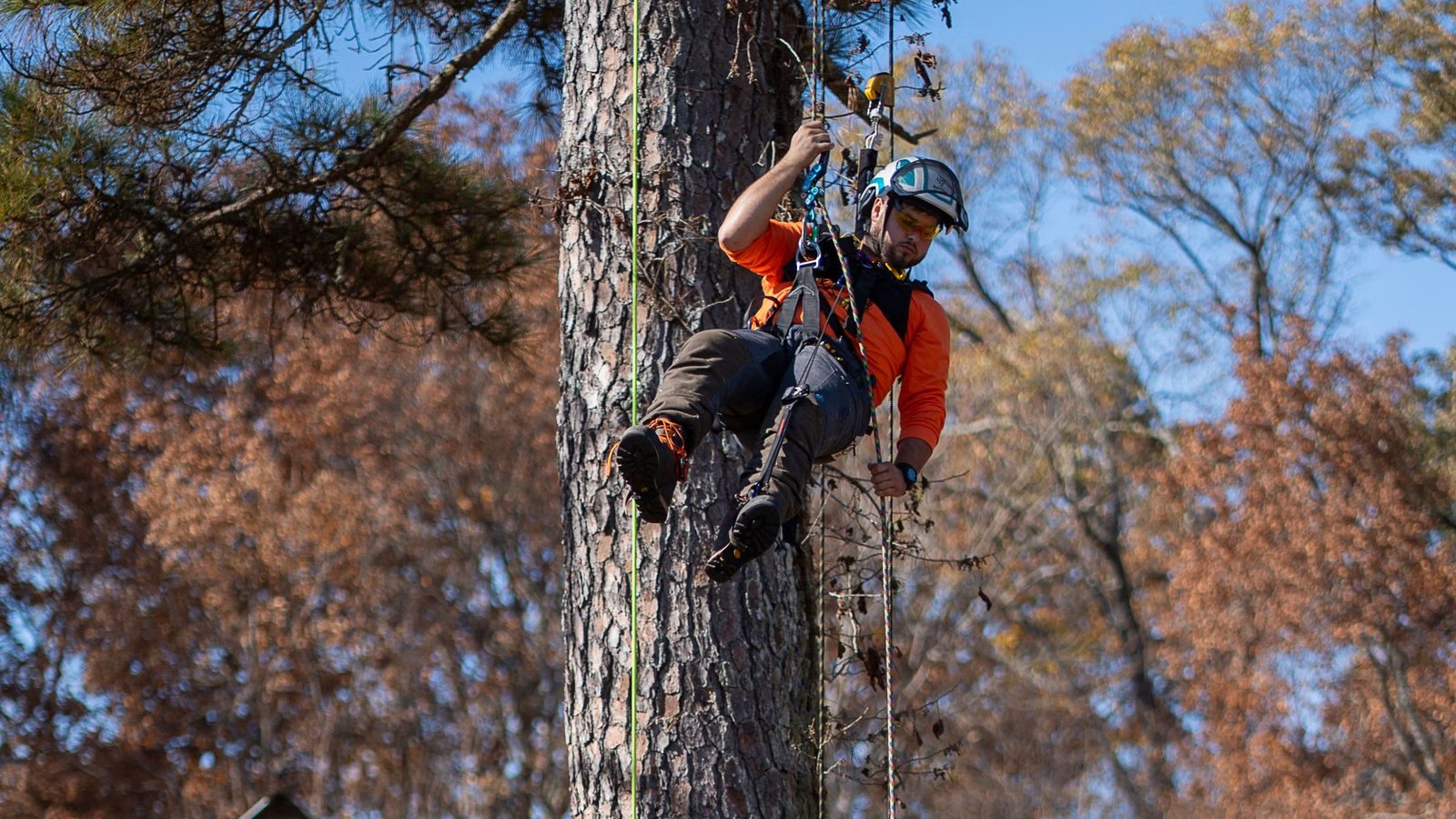
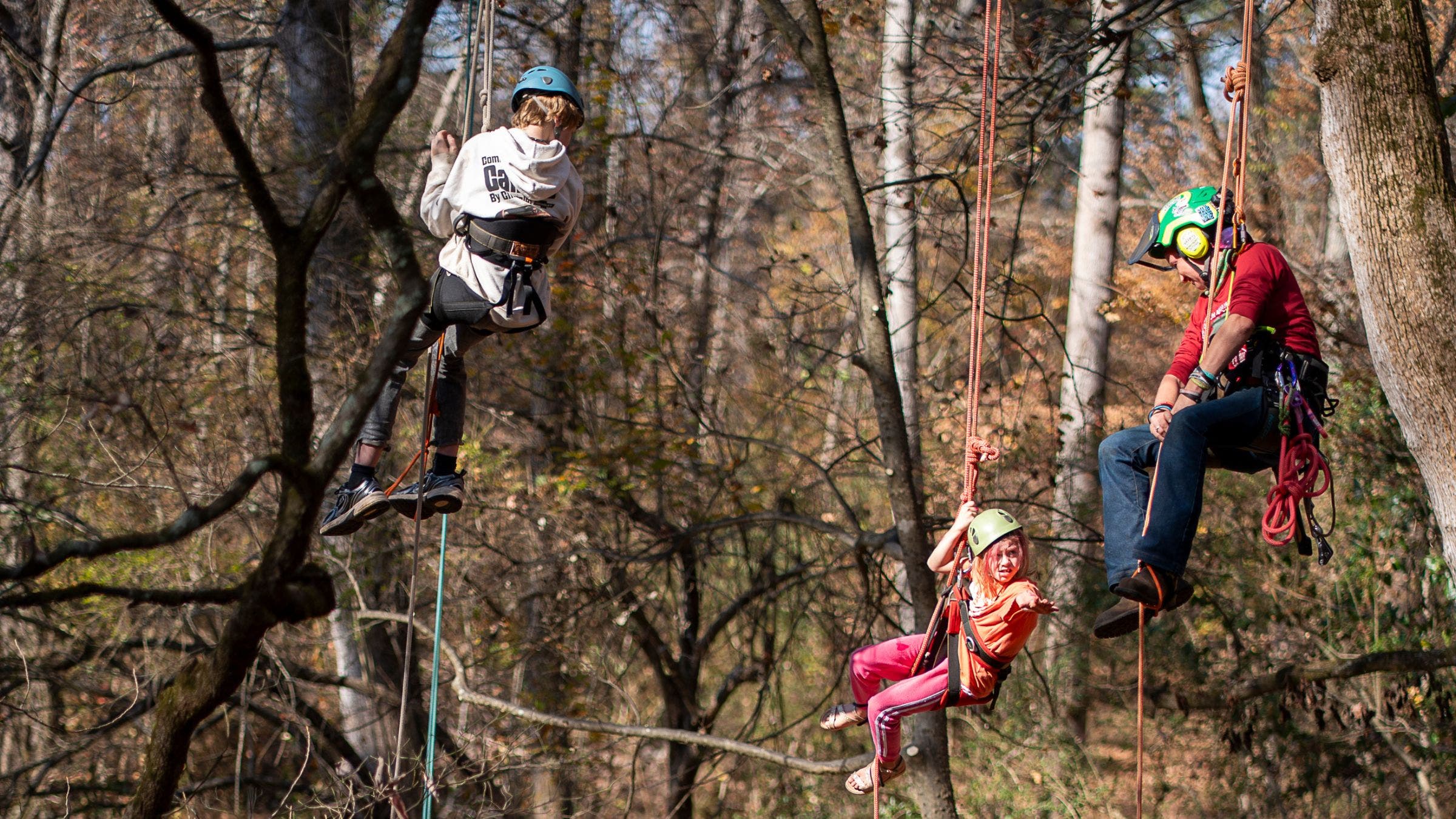
Competitor David Loats swings around the tree on a self-rigged ropes system about 30 feet off the ground. Tree climbing, it turns out, is kind of a misnomer—it’s more about climbing rope. The two-day competition is just getting started, but some of the mature red oaks and pines that tower throughout the landscape are already strung with 50-foot lines of climbing rope. Others have colorful ribbons and large bells tied to the branches, ready to be rung by successful competitors.
“EMTs, my name is David Loats. I’m trained in aerial rescue as a certified arborist,” he yells, ensuring his words are heard over the wind. “How would you like me to proceed?”
“They’re expected to talk the entire time,” Jessie McClellan, executive director of the Georgia Arborist Association and my guide for this weekend’s competition, whispers to me without taking her eyes off the tree. Six judges clad in helmets and carrying clipboards circle the oak, watching Loats from every angle as he navigates the branches. One technician is harnessed in the tree itself, ensuring safety from the canopy. “He stays up there all day long,” says McClellan.
Violet F. Stout Park in Lithia Springs, Georgia, is a quiet preserve, even when swarmed with several dozen members of the country’s tree care industry. You can spot the competing climbers by their gear: they’re in bright orange shirts, harnessed and helmeted and trailed by the collapsible wagons that they pull all around the park. The wagons are brimming with the stuff they need to scale a tree: piles of rope, carabiners, all manner of metal safety devices, and the occasional personal handsaw.
I’ve been here since 8 A.M. and am not completely sure when the competition began. There was no big announcement or massive crowd gathering; it just sort of…started. Wandering around the park, dry leaves crunching underfoot, feels like crashing a dress rehearsal, or an extremely chill treeworker renegade. The no-frills vibe makes sense for an industry of trade workers who aren’t used to getting noticed. Today is all about skill sharing, safety, and the trees. Performance isn’t the point.
The lack of fanfare is reflected by the turnout. The audience ebbs and flows throughout the weekend, but volunteer judges, event workers, and the 35 competitors (32 men and 3 women, half of whom traveled from out of state) nearly outnumber attendees for much of it. And everyone seems to know everyone else.
A climber steps away from his clapping colleagues to greet what looks like his entire family as they set up folding chairs. “I told them we were with you, so we got VIP parking!” a graying man jokes. There is no VIP-anything. Kids scamper like squirrels toward a lone food truck selling chicken and fries. You can also get coffee, but it’s self-serve, and the dudes manning the booth are busy watching a football game.
I’m not sure what I expected a tree climbing competition to be like, but an appreciation for the mellow attitudes of these arborists quickly takes root. Because in reality, they have one of the most dangerous day jobs in the country.
It’s easy, whether trekking through protected parks or your own neighborhood, to ignore the labor that goes into caring for the ecosystem. It’s meant to be missed. But those trees that provide shade on hot days, fill fall with vibrant color, and add a welcome infusion of nature to public spaces are all managed by arborists.
Arboriculture is an industry of many branches. A lowercase-a arborist describes anyone who does tree work. Uppercase-A Arborists, on the other hand, are certified by the International Society of Arboriculture (ISA). As of 2026, there are around 32,000 certified arborists in the U.S. ISA credentials include a spectrum of technical specialties. Tree Risk Assessment requires Arborists to understand what’s going on with trees and the people and property around them. An Aerial Lift Specialist knows how to trim and prune in very high places. Urban Forest Professionals plant and preserve trees in an urban environment, while Utility Specialists manage tree maintenance in high-voltage situations. A Tree Climber ascends trees to trim, prune, and sometimes remove. And a Board Master Certified Arborist represents the pinnacle of tree care knowledge (there are only around 1,500 in the U.S.). Certs are gained via an exam, work experience, and continued education. There are additional qualifications and licenses available in each state.
Capital-A arborist, author of The Trees Around You: How to Identify Common Neighborhood Trees in the Pacific Northwest (Mountaineers Books; 2025) and co-host of the podcast Completely Arbortrary, and capital-A arborist Casey Clapp ticks off career options like Dr. Seuss. “You can be a regulator or municipal arborist, a consulting arborist; you can work in a bucket truck and clear lines as a utility arborist,” he says. “There are so many different ways to be an arborist.”
The arborists (both a and A) who partake in tree climbing competitions use ropes to access canopies for close-up inspection, pruning, or removal. And the job pays. Dan Bauer, owner of Georgia tree care company Arbor Equity, tells me that he recruits newbies from high school FFA programs and starts them at $60,000 to $70,000.
But climbing trees requires a lot of learned skill. “You have to know 10,000 knots and how they work and when to pull and when to push,” says Clapp. “It’s like accomplishing a puzzle every day.”
All the rope and wrangling make me think of cowboys. And if climbing arborists are tree cowboys, climbing competitions are their rodeos.
The first-ever ISA tree climbing competition, Tree Trimmer’s Jamboree, was held in 1976 in St. Louis, Missouri. The goal was the same then as it is today: brush up on safety protocols while educating the public about the tree care industry. Over the decades, the Jamboree has expanded all over the world, and is now known as the International Tree Climbing Competition (ITCC). The Georgia Tree Climbing Championship, established in 1999, is a regional ISA event, and just one of more than 60 competitions held annually in the United States.
One in-state man and one woman from this weekend’s event will go on to compete at ITCC 2026, which will be held in St. Louis this October. The location changes every year; 2025’s comp was held in New Zealand and welcomed 92 climbers competing for some high-end gear, and the pride that comes with the win.
But at their core, the competitions are about safety. Tree work is consistently ranked among the most dangerous professions in the country. The main risks come from accidents involving tools and branches, gear malfunctions, unpredictable conditions, and, of course, falling out of trees.
The ropes systems that keep climbing arborists from crashing to the ground are complicated, and competition rules leave no room for nuance. All rope snaps must be self-closing and self-locking. Connecting links cannot connect to other connecting links. All unlisted knots must be approved. Mechanical ascenders and descenders, metal climbing devices that help climbers up and down the rope, require a backup system in case of failure. The rules are incredibly dense. For example:
“Competitors may work from a stationary (static) rope system provided that when using an in-line configuration, engaged ascenders are not within the anchoring system. Fall-protection anchoring systems shall include an approved stopper knot, or hitch on the stationary (static) rope system no more than 45 cm (18 in) below the anchoring system unless the climbing system is directly connected to an approved knot in the access line.”
I am only on page 17 of the 83-page ISA rulebook, but I get the gist: in short, any unsafe act is grounds for disqualification.
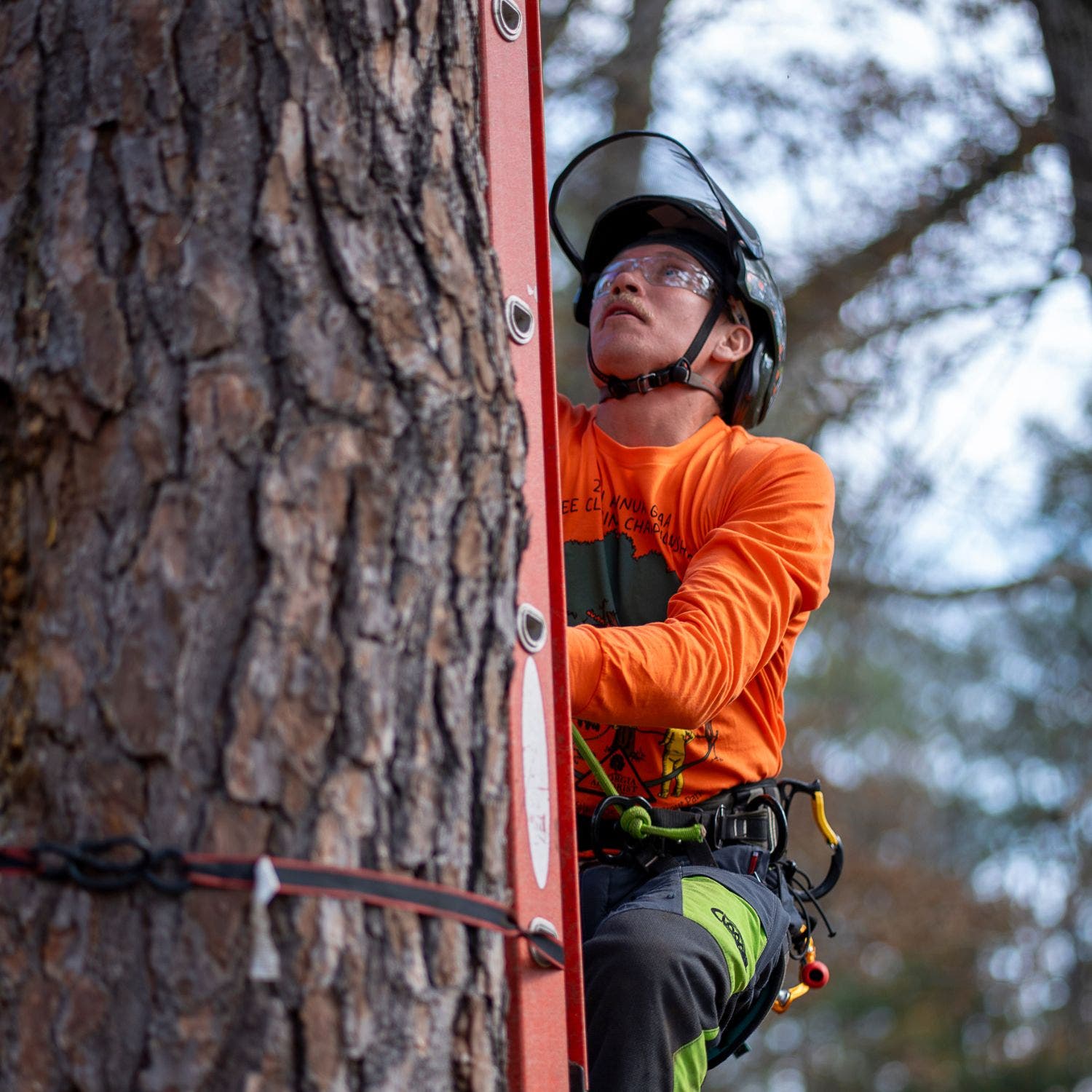
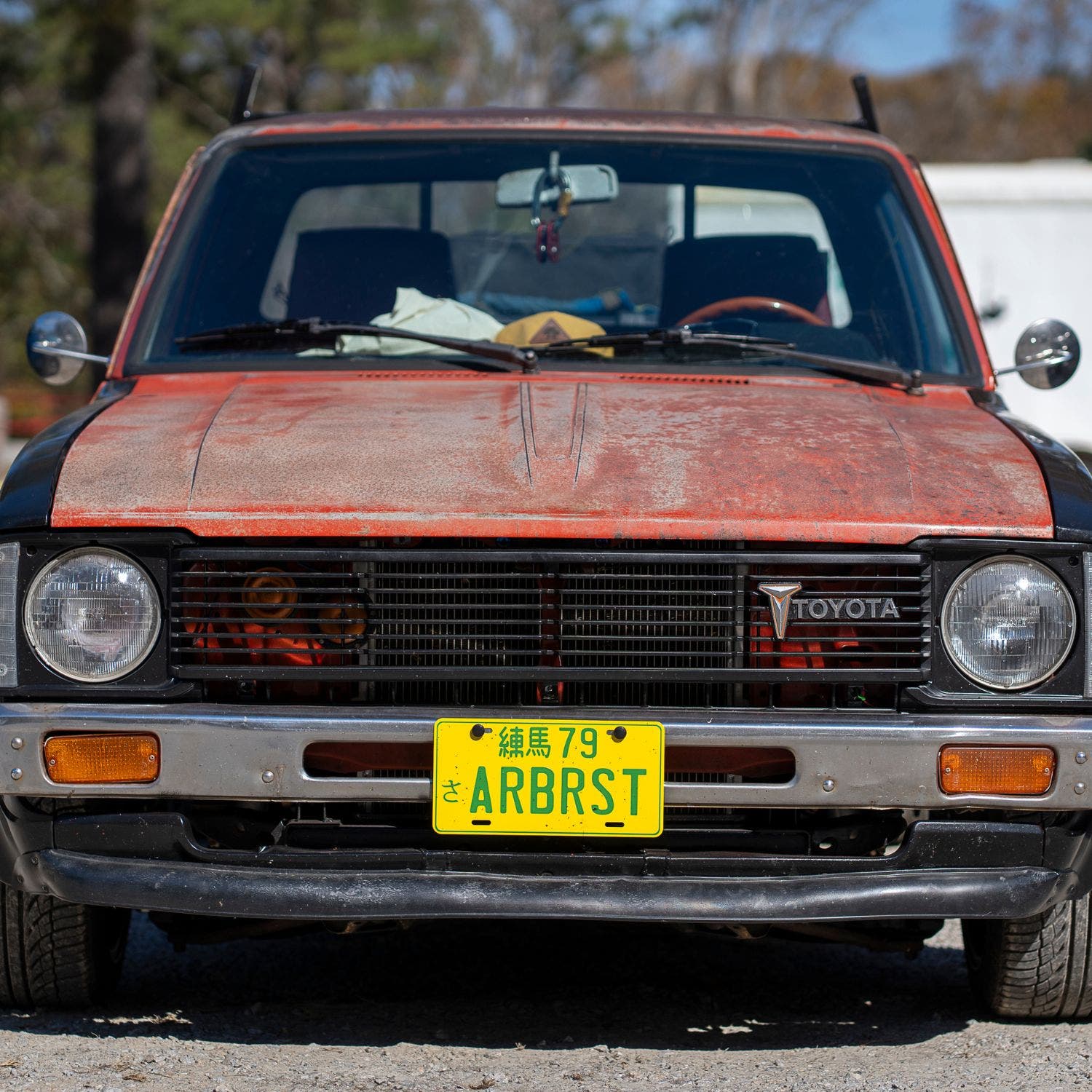
All through the park, competitors and onlookers hit vapes and shout tips and encouragements into trees.
“Smooth is fast!”
“Take a break. Make this one stick.”
“Atta way!”
“GO, CLIMBER!”
Aerial Rescue, with dummy Camper Kyle, is the day’s most theatrical event, but each station comes with its own appeal. All events are timed, which makes for some low-stakes drama.
Arm and aim are showcased at Throwline, where climbers toss a weighted ball with a thin line attached to it through a specific union, or forked branch, in the tree. Important, as placing a ropes system is what allows arborists access to the trees they care for. Across the park, the Speed Climb is a belayed event where contestants haul harnessed ass up a rope as quickly as their bodies and gear can carry them.
Then there’s the main attraction, Work Climb, a series of five in-tree tasks, assessing the ability to maneuver through the tree while handling equipment. Bells positioned at various points in the branches are rung with the help of hand saws. (The teeth are removed or covered during the weekend’s climbs.) Loose limbs are thrown into a bucket. Finally, climbers must rappel from the tree toward a specific target on the ground. This event will serve as tomorrow’s Master’s Challenge.
Work Climb is modeled after a typical climbing arborist’s workday, but it makes for a great show. Arborist (capital A) Chris Alexander moves deftly through the event, walking branches like balance beams, ringing task bells, and narrating every move while “Samba” by Cléa Vincent plays too loud to be anything but purposeful. We all bob our heads to the beat.
Why aren’t there more people here? I tap into my Notes app, not wanting to miss a moment. Each event in tree care doubles as an extreme sport. Why don’t more people know about this?
The next oak over from Aerial Rescue plays host to Open Ascent—good old-fashioned climbing—where a riot of cheers is erupting.
“1985 called! They want their climber back!” someone shouts.
“YEAAAHHHHH!” competitor Becca Haught yells as fellow climber Luis Vasquez wraps his feet in Prusik cord, using the loops to propel himself up the 50-foot rope dangling from the oak’s canopy. He’s harnessed and carefully clipped in, but the whole thing is reminiscent of gym class.
“That’s called footlocking. That’s oldschool. Now they have these,” Haught says, gesturing to her metal foot and knee ascenders, “and we just take off up the rope.”
The rapid evolution of tree-climbing gear actually led to Open Ascent, which is pretty much a showcase of each competitor’s technical climbing system, perfected and personalized for their everyday work. Prior to 2017, it didn’t exist, and Footlock was an event unto itself. Old-school moves are cool (like, really cool; search “footlocking” on YouTube), but the comps are about highlighting present-tense safety standards, not nostalgia.
All of the equipment present survived last night’s gear check, a mandatory and extremely thorough pre-competition inspection of every single piece, and is subject to another at any point throughout the weekend.
Judges introduce each Work Climb competitor by announcing his or her least favorite tree, inspiration, and favorite piece of equipment. Everyone hates a Crape Myrtle. Everyone loves the Rope Runner Vertec. I start to think of the comp as a sort of show-and-tell.
“This is my favorite climbing device.”
“This is how I toss my throwline.”
“Here’s what I yell when a piece of equipment is tumbling to the ground.”
More than one climber tells me that safety techniques mastered in competition—particularly Aerial Rescue—have helped save lives and human limbs at work.
But even in the arboriculture world, there’s a bit of a disconnect around competitive climbing. For participants like John Carlson, who has enrolled in about 30 tree tournaments, climbing comps seemed wholly separate from actual tree work until he finally attended one. As someone who spent seven years trimming branches and felling trees before ever competing, Carlson says that it’s easy to think that “this is all these guys do—travel around ringing bells. You don’t really believe that they start chainsaws and actually do tree work.”
They do, though. Arbor Equity owner Bauer has come to bridge the professional-competitive gap. He’s after the Company Axe, a literal axe on a plaque that’s awarded to the local company with the top three competitors. Out of Arbor Equity’s 22 employees, 7 are competing this weekend.
“We have won it before and we want to gain it back,” he says, arms crossed as he watches an FFA recruit take his turn at Aerial Rescue. “We want to be leaders in the state of Georgia and we want to be the best of the best.” Being the best is good business. His climber fails to get Camper Kyle to the ground in time, but Bauer claps enthusiastically.
I bop around the Georgia Tree Climbing Competition like an undercover Lorax from a Dr. Seuss book, wrapping every conversation with something like, “Be honest: Do you love the trees?”
The answer is a resounding yes. Arborists learn to identify the balance between necessary removal and strategic preservation (most with a focus on the latter), all backed by an appreciation for and understanding of the tree.
But McClellan cautions me against applying this sentiment too broadly. “There are certified Arborists, people who care about the trees, and then there’s the tree industry as a whole. They’re not always the same,” she says, adding that there’s a strong correlation between believing in safe tree work practices and striving for the overall health of the tree.
McClellen gestures to the top of the Aerial Rescue oak, pointing out that the crown of the tree appears to be dying back, bare branches rising from the leafier lower canopy. This, I learn, is called retrenchment, when an older tree conserves its energy into the lower part of the crown. “It’s basically aging out,” she says.
All of the trees underwent a full risk assessment—complete with ground-penetrating radar—ahead of the competition. Members of the Georgia Arborist Association spread mulch around the base of each trunk to reduce soil compaction caused by competitors and judges, provided soil care, and, for this tree, threw in a growth regulator as well.
The Georgia competitions change locations every couple of years to avoid putting undue stress on the trees. But you’ll only find the comps in city and county parks—the state of Georgia has opted out. I ask McClellan if it’s the fault of influencers who climb trees for clout. She thinks it might have more to do with the state’s burgeoning filmmaking industry. (Stranger Things, for example, was filmed in Georgia.)
“Competitive tree-climbing is banned at the parks in an overabundance of safety and precaution for both our visitors and the trees,” says Austin Suhr, marketing and communications manager at Georgia State Parks of the state-sanctioned rule. He acknowledges that there are safe and responsible ways for the sport to be done; they just lack the staff to oversee it.
The same is echoed by the National Parks Service (NPS): no climbing to protect life of all kinds. “This approach aligns with Leave No Trace principles, which emphasize minimizing human impact and respecting natural and cultural resources,” reads a provided statement from NPS.
There’s some irony to guarding parks against the showcases of an industry dedicated to tree health and human safety. But allow one climber, even a certified one, and you run the risk of welcoming them all.
And, of course, not everyone loves the trees. Some people don’t even notice them.
“A lot of people don’t know how many species of tree there are out there, and if they don’t know and can’t recognize a tree, they don’t really care about it as much,” says Clapp. “If you know the name, then you also know things about it. People just don’t know how much is right outside their front door.”
Sunday morning’s Master’s Challenge is quiet. So much so that when I arrive, I’m worried I missed it. After some searching, I find the climb set up within a mature oak, gnarled and towering, on a neighboring piece of private property, near silent save for the occasional car zooming down the highway. Even day-of, competitors aren’t allowed to see the tree ahead of the modified Work Climb, so the five of them are sequestered, materializing in the lot one by one.
The morning’s second climber is defending champion Jhonny Lopez.
Lopez has been climbing (and winning) in these tree climbing competitions since 2012. He tells me later that he’s never trained. He enters the ring to Heroes Tonight by Janji and Johnny and begins circling the tree. Throwline is his thing—he tosses the small ball with precision and places his line in the oak’s highest union on his first try.
There’s no sense of urgency. He moves slowly and methodically, untangling lines of rope as he bops from branch to branch, rigging up mini systems to rappel to bells out of his reach.
Through it all, I can’t take my eyes off the tree. The way its branches twist against the gray morning sky, its thinning canopy of leaves sheer like lace.
Red oak, I think. This is a red oak. I check with McClellan to confirm. It feels important.
If I had just been driving by, would I have even seen it?
“Atta way!” yells an onlooker.
My eyes are back on Lopez, who freezes in the oak. He thinks the shout is a warning from a judge. “What?”
“I was just cheering you on!”
Lopez will later be crowned the men’s championship title for the weekend. Haught will win women’s.
Lopez completes four of the five tasks before climbing down the tree with plenty of time to dismantle his ropes system. As he pulls his line off of the oak, he flicks his wrist and the cord lassos briefly before falling into a neat pile on the ground.
“Style points,” someone yells. We were all thinking the same thing.
Walking through a favorite neighborhood near my old apartment in Portland, Oregon, a week later, I notice the trees. I love trees—I always have. I can’t really comprehend not loving trees. But could I name every species that rose from my favorite Southeast sidewalks, offering shade and oxygen and atmosphere? Sadly, no.
Trees, like trade work, can easily go unnoticed. And if you can’t recognize something, you don’t care about it as much. But we’re all part of the same ecosystem, and noticing seems like a good place to start.
So I’m learning. Silver Linden. Leyland Cypress. Black Hawthorn. All thriving, reaching toward the sky without infringing on homes. Webbed branches and canopies of evergreen and pale yellow protect me from the day’s drizzle. They’re thoughtfully placed and well pruned. No limbs hanging haphazardly. I notice all of that, too.
