

Published March 19, 2026 12:57PM
As the winter sun dipped behind the Rocky Mountains of Glacier National Park, Linnea Mills, 18, waded into the frigid, glass-clear waters of Lake McDonald. It was just after 5 P.M. on November 1, 2020. The air was crisp, the shoreline quiet, and fresh snow clung to the alpine peaks above.
Linnea was participating in a scuba dive certification class designed to introduce her to the technical demands of cold-water diving, including how to use a drysuit. Within an hour, the training exercise unraveled into a cascading accident.
She would not resurface alive.
Her death has since raised difficult questions about the hidden risks of diving in one of the country’s most iconic parks, and about the safety protocols that diving companies must follow. Linnea’s life, and the events that led to her accident, are presented in a new documentary, How to Kill a Mermaid: The Linnea Mills Story. The film explores the events surrounding her death using law enforcement body-camera footage and video from her final dive.
Outside sat down with the filmmaker, Damon Ristau, and spoke with her brother and father to learn more about her death and its implications for the scuba-diving industry as a whole. Outside reached out to the dive instructor who was present during Linnea’s death, as well as the instructor’s attorney, but we did not receive a response by the time this story was published.
Linnea was named for a bell-shaped pink-and-white flower found throughout Montana: Linnaea borealis. We share a hometown, Missoula, and that sense of small-town intimacy is portrayed throughout the documentary. As I spoke with her family, we ran through our many degrees of interconnectedness—Linnea and I attended the same high school, though a decade apart.
During our interview, her brother Nick, now 25, recalled receiving a phone call no big brother should.
“When my parents told me on November 2 that Linnea had died in a scuba diving accident, I didn’t know that she was even diving at Lake McDonald,” Nick told me. “But what followed was just a period of disbelief and trying to figure out how that could even have happened.”
Linnea’s death was ruled an accident. As new details about her last dive emerged, so did a fresh wave of questions. Outside reviewed the documents from the 2020 National Park Service (NPS) investigation into Linnea’s death, as featured in the film.
Ultimately, NPS special agent Jacob Olson determined in his report on the incident that “a number of standard operating procedures for that type of diving were violated, to include but not limited to, known faulty equipment, a lack of familiarization and training for the specific equipment.”
One of the students, Bill Gentry, was wearing a camera that recorded the entire incident. “I have not watched nor will I ever watch this video,” said Gentry in the film.
But what his camera captured would become a key to the investigation.
A Routine Incident Turned Deadly
The Dive
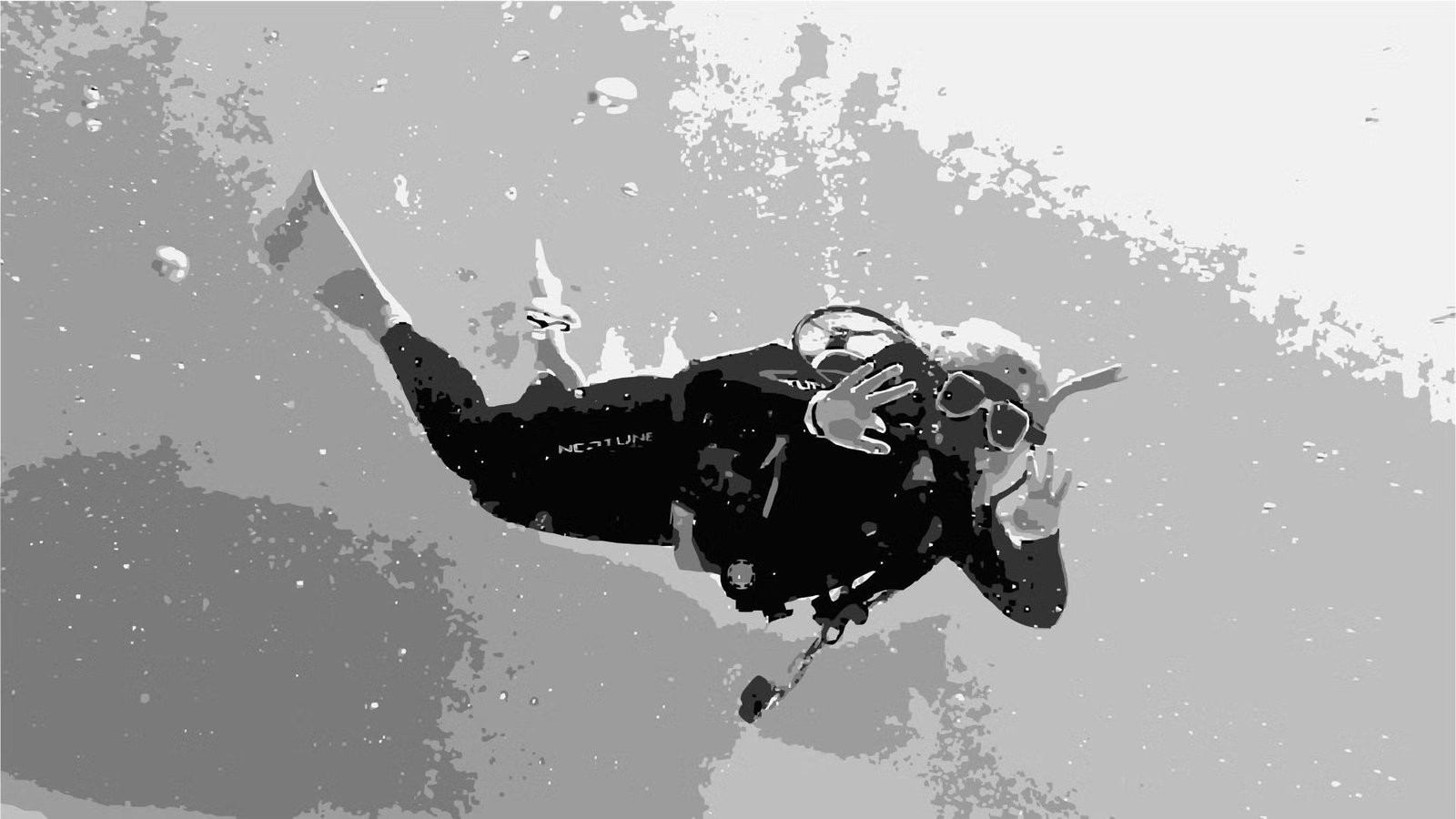
In the NPS report, the instructor said that the Lake McDonald dive was meant to be simple: a ten-minute descent to no more than 60 feet to complete both Advanced Open Water and drysuit certifications. Five people, four students and one instructor, waded into 49-degree water just before sunset on November 1, 2020.
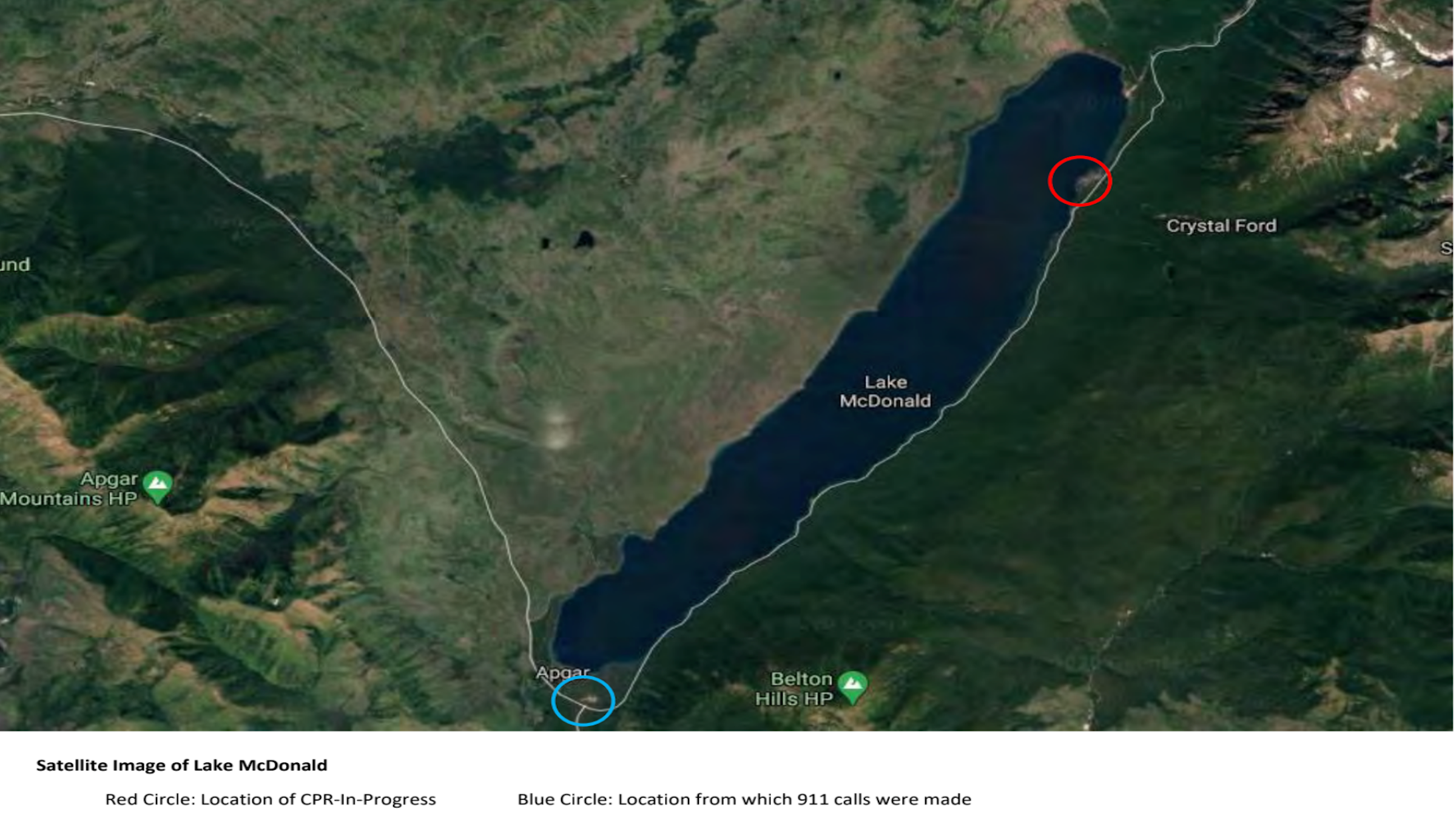
At 3,153 feet above sea level, Lake McDonald appears tranquil. But like a bathtub, it features a short, shallow lip that hugs the shoreline before giving way to depths of nearly 500 feet. In winter, the park is closed, and given Glacier’s remote location, cell service is often unreliable. Help can be at least an hour away.
Footage from Gentry’s camera, as featured in the film, shows the darkness setting in while the group walks into the lake.
The Equipment
A drysuit is a technical piece of diving equipment that requires specialized training, typically including a single pool dive to meet certain standards. Before this dive, Linnea had never worn one, her instructor told investigators.
Unlike a wetsuit, a drysuit is filled with air and requires buoyancy control through an inflator hose and exhaust valve. Without proper inflation, pressure can compress the suit against the diver’s body as they descend into more pressurized waters—a phenomenon known as suit squeeze.
But Linnea’s suit had problems even before she entered the water, Gentry told NPS officials. The suit itself was oversized, he added, and investigators reported that the mouthpiece on her regulator was plastic, not rated for such cold water. David Concannon, an attorney representing Linnea’s family, also told Outside that the hose used to inflate the drysuit didn’t fit properly. The connection was metric, which Concannon alleges was incompatible with the U.S. fittings on her suit.
Then there was the weight.
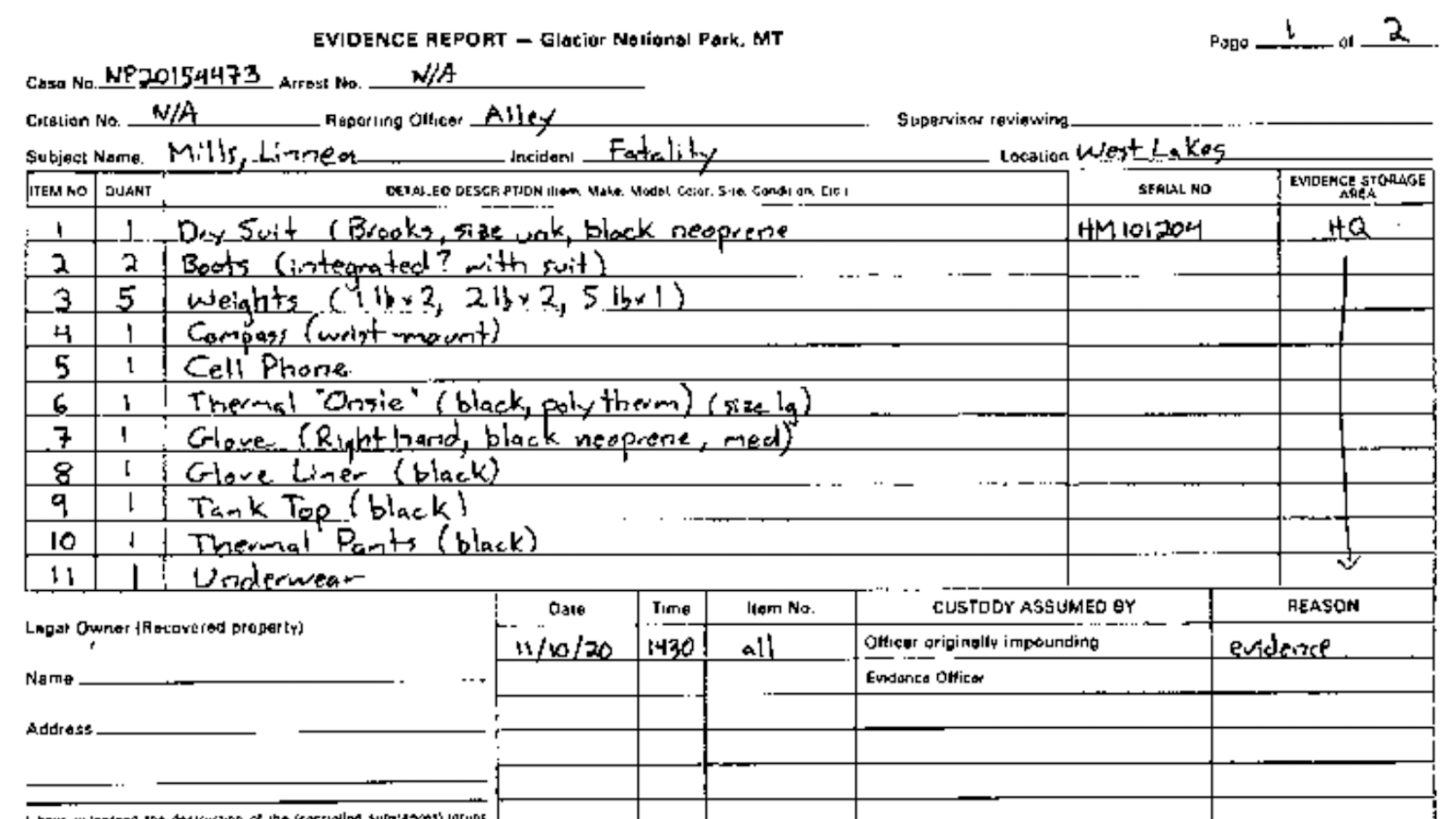
Proper buoyancy would have required roughly 22 pounds. According to the NPS report, Linnea carried 44 pounds of dive weights zippered into her pockets, making them difficult to remove.
The Descent
The NPS report includes eyewitness accounts and investigative findings describing Linnea’s last dive.
Shortly after the dive began, she reportedly showed signs of distress. At around 45 feet, she made what was described in the NPS report as a “feeble, reaching gesture” toward her instructor. At 55 feet, she stood on a ledge and signaled again. Linnea then lost her footing and slipped into deeper, darker water. Gentry swam after her as she eventually came to rest on the lakebed, at a depth of 94 feet. Her regulator was no longer in her mouth, and she was hardly moving.
Gentry said in the report that he tried to give Linnea oxygen through a practice known as buddy breathing, but the suit’s pressure was already setting in, and its squeeze prevented her from taking in air. According to the NPS report, one witness later said, “Her body was so constricted…it just squished her.” Gentry said he could not quickly locate her weights to release them. With 44 pounds attached and no functioning drysuit inflation, she was too heavy to lift from the bottom alone.
Gentry surfaced for help.
The Recovery
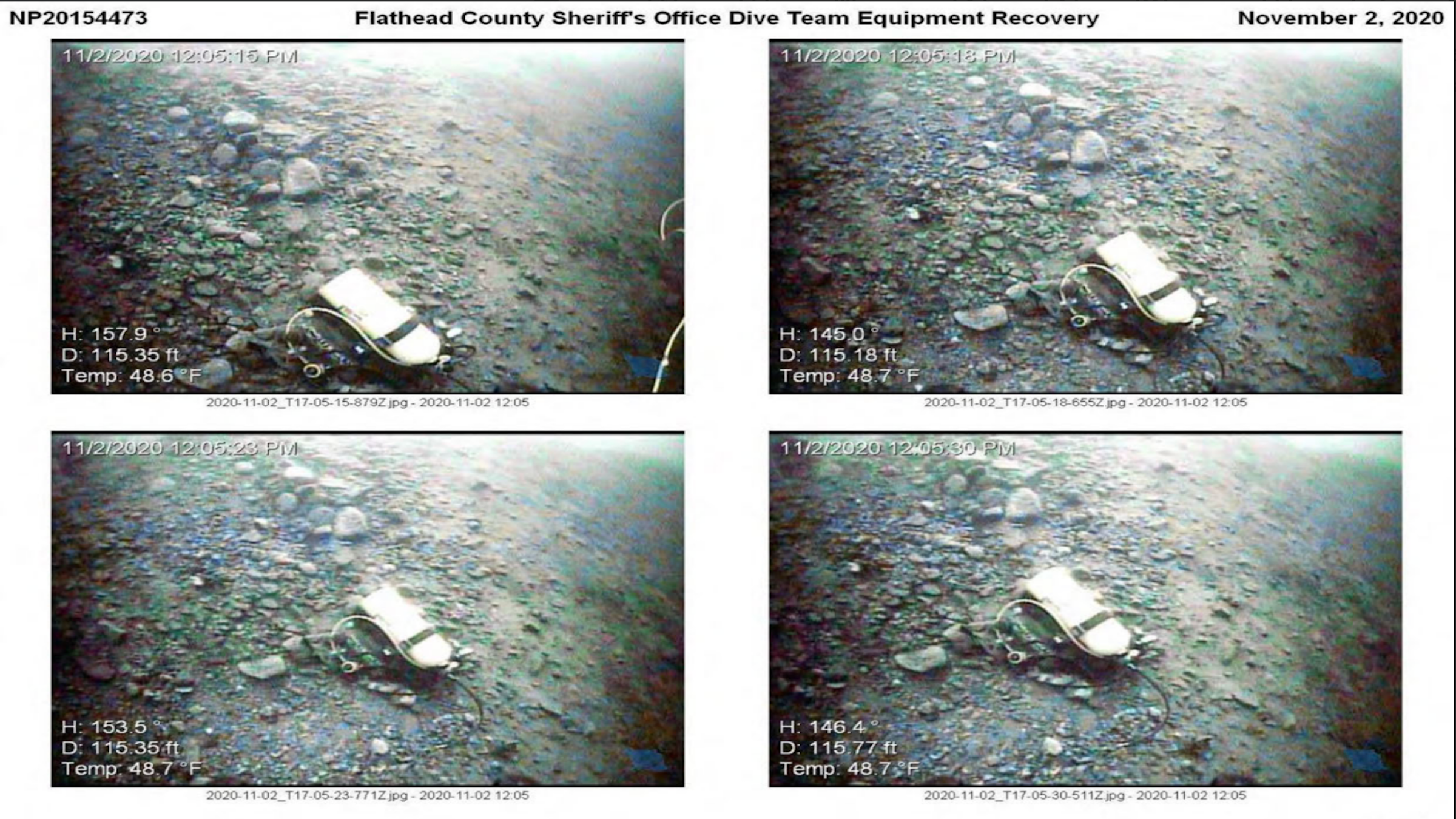
Roughly 20 minutes later, the instructor and another student returned to recover Linnea’s body.
The report notes that the two found her at 127 feet, where the water temperature hovered at 39 degrees Fahrenheit. According to the investigation, the duo stripped Linnea’s gear to lighten her body and brought her to the surface. Once on shore, the group performed CPR on Linnea—she was unresponsive, and a witness recalled in the NPS report that her face appeared blue. In the autopsy report, the coroner ruled the cause of death as asphyxia by drowning.
The Chain of Events
Lake McDonald in winter qualifies as an appropriate training site under the standards set by the Professional Association of Diving Instructors (PADI), Concannon told Outside. But he added that the lake’s terrain and remote location could have made the site unsuitable for novice divers, especially in winter conditions.
In their report, investigators later cited violations of standard operating procedures, including the use of known faulty equipment and a lack of proper training and familiarization with the drysuit. The dive occurred in a cold-water, high-altitude environment late in the day. Nearly everyone in the group had never dived under those conditions, particularly in a drysuit. Linnea was given too much additional weight, and her drysuit inflator was disconnected.
The incident was ruled accidental.
Prosecutors Declined Criminal Charges
Linnea’s family and other plaintiffs settled a lawsuit in 2021 against those involved in her death. But criminal charges were never pressed.
In its June 2021 report, the NPS Investigative Services Bureau wrote that the instructor “was negligent—and perhaps grossly so—in several respects.” The report stated that the instructor did not ensure Linnea had a functional dry suit with appropriately placed weights and failed to properly supervise her during the dive. Investigators ruled that the instructor “was likely at fault to some extent” for Linnea’s death, but that the agency could not prove “beyond a reasonable doubt that the instructor was criminally culpable.”
Linnea’s family said they’re not done fighting.
“What we’re hoping now is that the U.S. attorney will reconsider criminal prosecution in light of information that should have been, but was not included, in the investigative report,” Scott Mills, Linnea’s father, told Outside. “This issue of scuba diving being unregulated and without oversight applies to many other outdoor training industries as well.”
The Film Asks: Is there a Systemic Problem at Play?
In 2019, Jesse Hubbell, 40, died while scuba diving in Montana’s Canyon Ferry Reservoir, about 200 miles east of Glacier. His equipment failed—he rented from the same dive shop where Linnea had received instruction.
On August 16, 2025, 12-year-old Dylan Harrison died during a North Texas certification class at a scuba training lake in Terrell. A lawsuit filed by the family claims systemic safety failures led to her death. After Harrison’s death, Scott spoke to her father.
“When her father called me on the morning of his daughter’s funeral, he could hardly speak. I remembered being like that. I asked her name, how to spell it, and if he could tell me something he loved most about her,” recalled Scott.
The film asks a big question of whether the dive industry is due for a regulatory overhaul.
Remembering Linnea
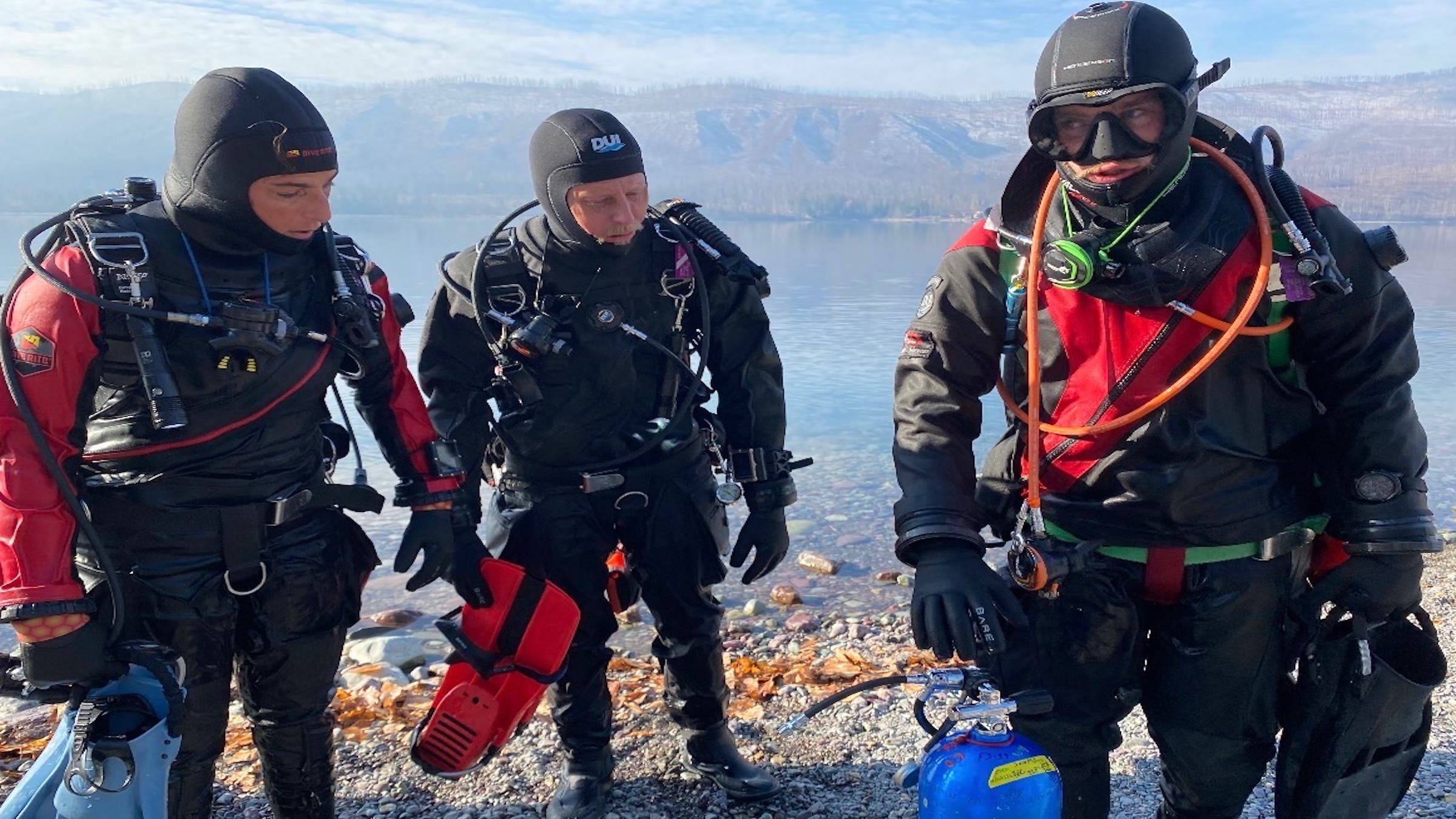
On the third anniversary of Linnea’s death, Nick repeated the dive that his sister never got to finish in Lake McDonald. He’s now a divemaster and has explored waters around the world, from Southeast Alaska to the Caribbean.
“Her love of diving inspired me, and I knew that diving was the only way for me to continue honoring her in my own way. Diving gives me a lot of peace and a feeling that I’m carrying on something that she really cared about, even if there is always that sadness that her life was cut short,” Nick said.
He hopes people see the film and walk away with a newfound passion for diving—and a commitment to tightening industry standards.
“If I could talk to her today, I would tell her that I see it now. I understand why she was so passionate about diving, and I’m sorry that I wasn’t able to experience it with you,” Nick said. “I would also tell her that she’s already saved a lot of lives.”
Nick now heads The Linnea Foundation, an organization that supports social and environmental causes his sister cared deeply about.
Ristau spoke about the film’s effect and how one life can change many. “Linnea died in this tragic situation, but her story has rippled around the world in a way that hopefully will prevent this sort of thing from happening again,” he said.
For her father, Scott, remembering Linnea is an everyday, hourly occurrence.
“I am now getting to the point where I hold both grief and joy,” he said. “I think about her almost every hour of every day, and it’s been six years. I don’t ever want to lose that. It makes me a better person to think about her. She always inspired me, and she continues to inspire me. That’s the phase that I’m moving into now—one of appreciation and inspiration.”
How to Kill a Mermaid: The Linnea Mills Story premiered at the Big Sky Film Festival in Missoula, Montana, on February 14, 2025.
