

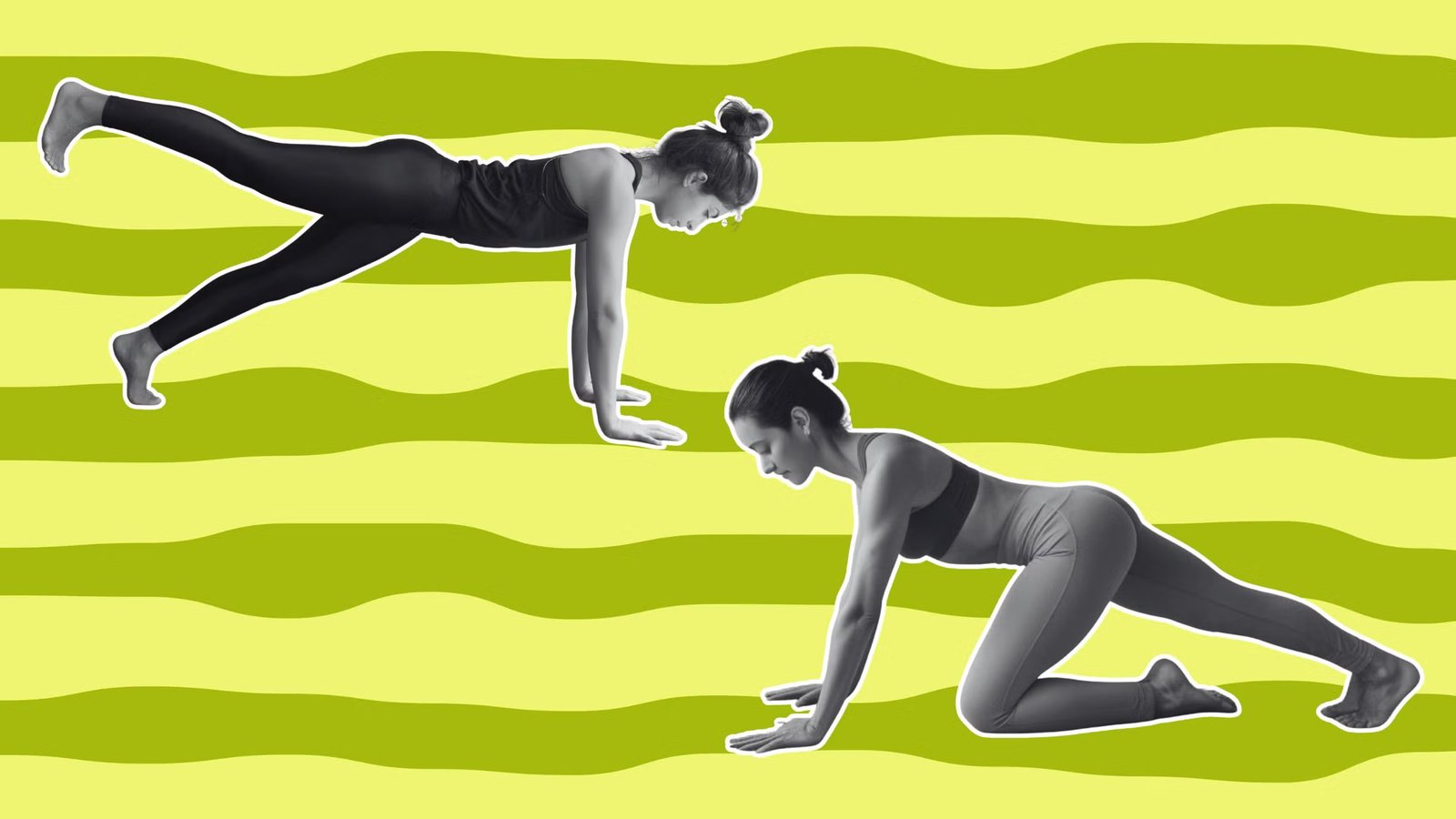
These moves work every part of your core, boost spinal stability, and lower blood pressure.
(Photo: Ayana Underwood/Canva)
Published March 23, 2026 03:16AM
“Engage your core” is a common cue in exercise classes, but core activation is actually a pretty automatic process.
In fact, during most movements, your core muscles naturally activate to stabilize your spine while your limbs move, says certified strength and conditioning specialist Susie Reiner, who’s also an assistant professor in the exercise science department at Seton Hall University. Despite this, it’s still beneficial to deliberately work your core. That’s because doing so makes your core stronger and more stable. One of the best ways to bolster your core is through a classic bodyweight exercise: the plank.
Unlike other common ab exercises, such as crunches and sit-ups, that primarily just work your rectus abdominis (the front-side ab muscles that form a six pack), planks engage multiple core muscles at once.
Planks are considered isometric exercises, meaning the position remains static (another example is a wall sits or dead hangs). Isometric exercises have been shown to lower blood pressure more effectively than aerobic exercise and resistance training, according to a 2023 review.
More specifically, planks train the core to protect your spine in a really functional way. “During activities like running, lifting, or carrying something heavy, the trunk muscles work to prevent excessive bending, twisting, or arching of the spine while the limbs generate force,” Reiner says. And planks, she explains, “train that stabilizing role directly.” That’s because they help keep your spine as still as possible while you hold a fixed position (in the case of the traditional plank) or as you add movement to the mix (as is the case with many plank variations).
To boot, planks fire up your shoulder girdle, glutes, and muscles along the back of the spine that help stabilize the trunk (erector spinae and multifidus), “making them a more complete core exercise than many traditional ab moves,” Reiner adds.
A 5-Minute Plank Workout Routine That You Can Do at Home
I pulled together a 5-minute plank challenge you can tack onto the end of any workout for a quick yet effective ab workout. Five minutes of straight planking probably sounds intense, but this routine incorporates a different variation every 30 seconds, which lessens the intimidation factor and also gives certain muscles a breather while others take on more work.
This plank routine starts and ends with the classic high plank hold, where the goal is to keep your entire body as still as possible. In between, it incorporates lots of dynamic movement with variations like the knee-to-elbow mountain climber, side plank hip dip, and plank body saw, where the challenge is to keep engaging your core muscles to prevent your spine from bending, twisting, or arching as it naturally wants to.
The objective is to complete this as one continuous set, but please drop to your knees and/or take breaks if your form falters at any point. It’s important to perform these plank moves correctly to avoid straining your lower back. You can also do this plank challenge with your hands on an elevated surface, which would make the entire sequence less challenging.
After doing a similar plank challenge myself the other week, my core was sore (in an amazing way!) for days. I hope you feel the impact of this, too.
How to Do This 5-Minute Plank Routine
There are ten exercises in this workout. Do each one for 30 seconds, then immediately move on to the next. The goal is to complete this as one continuous set, but drop to your knees and/or take breaks if your form falters at any point.
1. High Plank Hold
- Start on all fours with wrists under shoulders and knees under hips.
- Lift your knees off the ground and extend your legs to come into a high plank.
- Engage your core so that your back is straight, and squeeze your glutes and quads, too. Your body should form one long, straight line from your head to your heels.
- Hold for 30 seconds.
2. High Plank Knee-to-Elbow Mountain Climber
- From High Plank, drive right knee towards right elbow. You should feel a crunch on the right side of your torso.
- Place your right foot back on the ground.
- Then repeat on the other side, driving your left knee towards your left elbow. You should feel a crunch on the left side of your torso.
- Continue this pattern, alternating sides, for 30 seconds.
3. Side Plank Hip Raise (Right Side)
- Transition from High Plank into Forearm Side Plank (Right Side) by lowering your right forearm onto the ground, shoulder directly over elbow.
- Lift your left arm up as you rotate your body to the right.
- Stack your left foot on top of your right, or stagger your feet so both are on the ground.
- Place your left arm on your left hip or raise it straight up.
- Engage your core and lift your hips so that your body forms one line from your shoulders to your feet. You’re now in the starting position.
- Keeping good core engagement, lift your hips straight up several inches, pause for a moment.
- Lower your hips back to the starting position. This is one rep.
- Continue performing reps for 30 seconds.
4. Forearm Plank Knee Drop
- From Side Plank (Right Side), come into Forearm Plank: Rotate your body towards the floor and place your left forearm on the ground. Engage your core so that your back is straight, and squeeze your glutes and quads, too. Your body should form one long, straight line from your head to your heels. You’re now in the starting position.
- Gently tap your knees to the ground while keeping the rest of your body as still as possible.
- Once your knees touch the ground, lift them back up to the starting position. You should really feel this in your lower abs. This is one rep.
- Continue performing reps for 30 seconds.
5. Side Plank Hip Raise (Left Side)
- From Forearm Plank, come into Forearm Side Plank (Left Side): Lift your right arm up as you rotate your body to the left.
- Stack your right foot on top of your left, or stagger your feet so both are on the ground.
- Place your right arm on your right hip or raise it straight up.
- Engage your core and lift your hips so your body forms a single line from your shoulders to your feet. You’re now in the starting position.
- Keeping good core engagement, lift your hips straight up several inches, pause for a moment, then lower them back to the starting position. This is one rep.
- Continue performing reps for 30 seconds.
6. Forearm Plank Body Saw
- Return to Forearm Plank.
- Keeping forearms grounded, press through your toes and shift your weight forward so that your whole body rocks forward several inches.
- Now rock backwards several inches. Make sure your back stays flat the whole time (i.e., don’t let your butt hike up or your hips sag). You’ll feel this in your shoulders as well as your entire core.
- Continue rocking back and forth, in one continuous motion, for 30 seconds.
7. Side Plank Thread The Needle (Right Side)
- From Forearm Plank, come back into Forearm Side Plank (Right Side).
- Raise your left arm straight up and let your gaze follow. You’re now in the starting position.
- Lower your left arm and reach it under your body and towards the right, letting your gaze and body naturally follow.
- Pause.
- Reverse the motion to return to the starting position. This is one rep.
- Continue performing reps for 30 seconds.
8. Forearm Plank Hip Sway
- From Forearm Plank (Right Side), return to Forearm Plank.
- Keeping your core engaged and back flat, rotate your hips to the right several inches.
- Now rotate them to the left several inches.
- Continue rotating side to side, in one continuous motion, for 30 seconds.
9. Side Plank Thread The Needle (Left Side)
- From Forearm Plank, come back into Forearm Side Plank (Left Side).
- Raise your right arm straight up and let your gaze follow. You’re now in the starting position.
- Lower your right arm and reach it under your body and towards the right, letting your gaze and body naturally follow.
- Pause.
- Reverse the motion to return to the starting position. This is one rep.
- Continue performing reps for 30 seconds.
10. High Plank Hold
- From Forearm Side Plank (Left Side), place both palms on the ground and straighten your arms, return to High Plank.
- Hold for 30 seconds.
Want more Outside health stories? Sign up for the Bodywork newsletter. If you’re ready to become a runner, join The Weekly 45 Challenge on MapMy. The goal is to log 45 minutes of running or run-walking each week in March. That’s it. You can use these tips for guidance. Plus, you can earn badges along the way and even win some cool prizes.
